
I love making gingerbread cookies during the Christmas Season, and I decided to try making a Latvian version. Two things differed from my recipe at first glance, the use of pepper as one of the spices, and the use of ground ginger and not fresh ginger. Another thing I discovered as I ventured deeper was that you actually mix everything in a pot! I liked this part of it a lot, it made it so easy for ingredients to combine faster.
My recipe comes from this Blog. It is from an American-Latvian woman who’s grandparent’s are/were Latvian. Well, it is really is her mom’s recipe. And… her mom’s recipe is based on the recipe that appear in: Dzidra Zeberiņa’s Cepumi – kā vēl nekad (Baking – As Never Before), published in the USA, 1965.
By the way Piparkūkas translates to Pepper cakes… with a little accent it sounds like pepper cookies!
With gingerbread cookies dough it is always great to refrigerate the dough at least 3 hours. Even better and it is what this recipe calls for, from one day to the next!
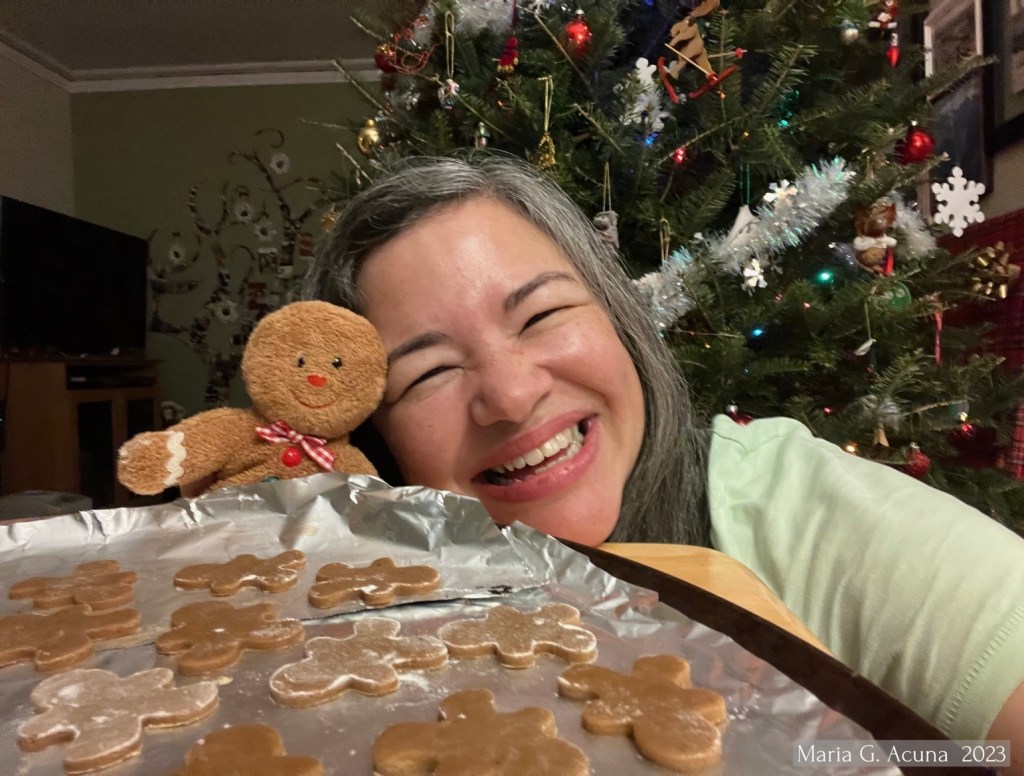
About the quantity, I made half of the recipe and it yielded around 30 regular sized cookies and about 30 small bite size ones.
By the way, Hansel my son’s gingerbread beanie from when he was around 7 joined me! ^ ^

Ingredients
Part 1
a soup pot or dutch oven
a strong wooden spoon
⅓ cup honey
½ cup dark molasses (I use “Grandma’s Robust” with the green label.)
1 cup dark brown sugar (dark enhances the color and flavor more so than light)
½ cup (1 stick) salted butter (or unsalted, if that’s what you have)
3 tablespoons lard (yeah, I know, LARD – but it’s good for crispiness!). (I used butter!)
Part 2
2 teaspoons ground cinnamon
2 teaspoons ground ginger
1 teaspoon finely ground black pepper
1 teaspoon ground cloves
1 teaspoon ground nutmeg
1 teaspoon ground cardamom
1 teaspoon ground coriander
Part 3
2½ cups sifted all purpose flour, all at once.
½ teaspoon baking soda (replaced with baking powder)
a pinch of baking powder
½ teaspoon cream of tartar (left it out)
¼ teaspoon corn starch. (left it out)
Part 4
2 eggs
Part 5
2 cups of all purpose flour
Directions
A. Heat on stovetop in a large soup pot or Dutch oven all the ingredients in part 1.
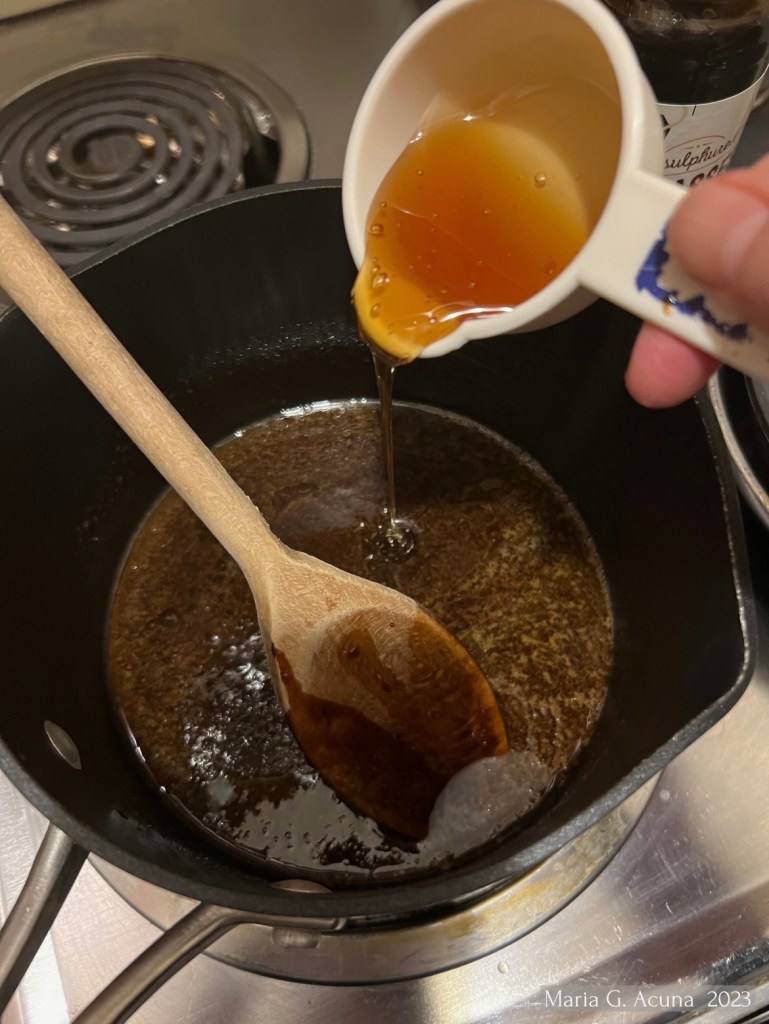
B. When it is about to boil, remove from the fire and add all the spices in part 2. De light in your sense of smell!

C. Add all of the ingredients in part 3. Sifting the flour does help to make it all come together faster. By this point the dough should be cooler to the touch.


D. Add the 2 eggs slightly beaten. (part 4). Because it has cooled down a lot it should not cook it but mix in.

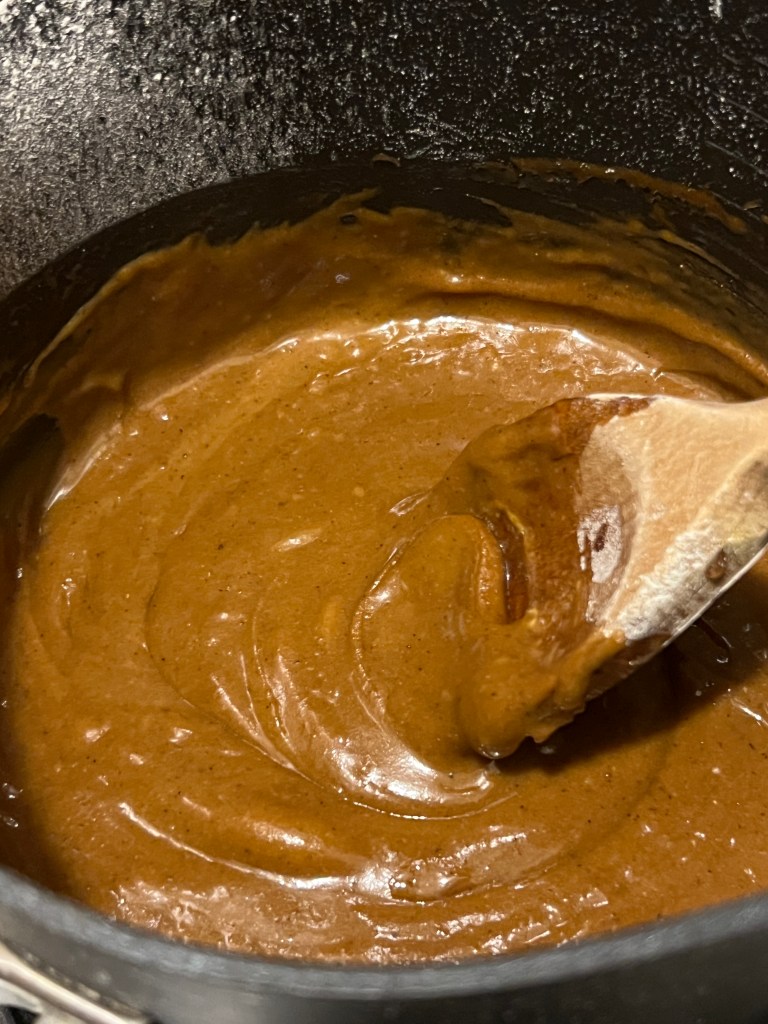
E. Add the two cups of flour in part 5 sifting slowly into it… it will get heavier and heavier so when you can’;’tt stir anymore with a wooden spoon, it is time to use your hands!

This dough is a lot coarser than other recipes I’ve made… so don’t worry it it’s hard… it is supposed to be like that (I guess!)
THE NEXT DAY…
F. Let the dough sit outside for like 20 minutes… roll out the dough… be ready to use those arm muscles to the max. And even though the recipe called for doing them as thin as you can, I went for thinner (half) of what I do.

G. Use cookie cutter shapes to cut the dough, re-roll the remaining flour and use until the last bit!

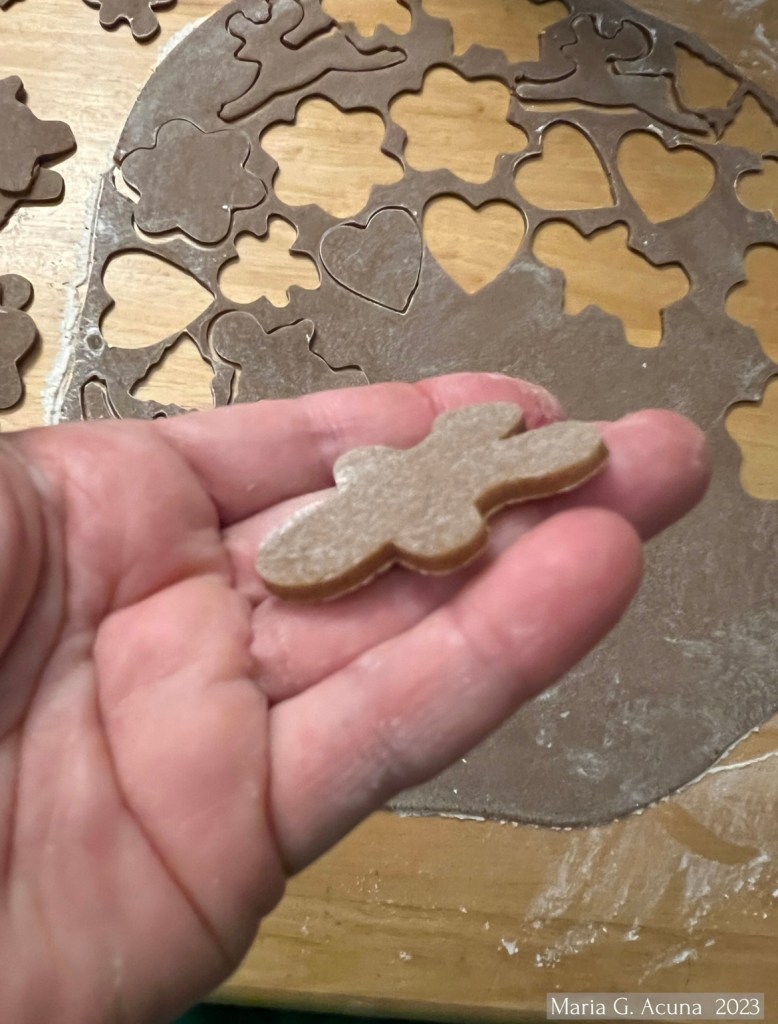
Then bake them in a hot, 400°F oven until golden brown for about 4–5 minutes. Be careful! piparkūkas burn very easily so take them out as soon as that timer goes!

If you want decorate it with icing… white is classic. (I do not decorate mine usually as I think they already have enough sugar… only when I’m using them in a gingerbread house scene.
Enjoy your Piparkūkas with tea…

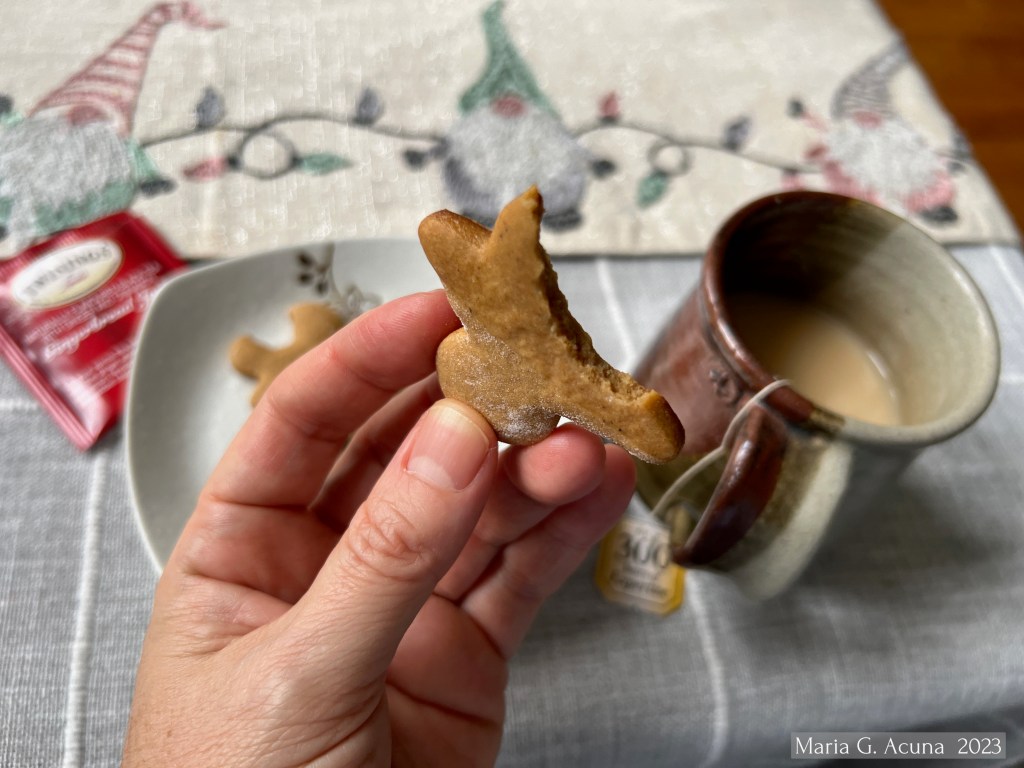
… or in shakes… (this one has almond milk, eggnog, mango, almonds and a dash of cinnamon)


… or however you like!
I hope that your Piparkūkas turn out well! Thank you so much for joining me and before I go, here I am sharing a very short history of how gingerbread cookies came to be… Yes, I was curious! ^ ^
A Spicy Journey Through Time: The History of Gingerbread Cookies
1. Ancient Whispers of Spice (2400 BC – 1st Century AD):
- Evidence of honey cakes flavored with ginger has been found in Egyptian tombs dating back to 2400 BC, suggesting an early appreciation for the warming spice.
- Similar ginger-infused sweets were enjoyed in ancient China and Greece, further solidifying ginger’s global culinary influence.
2. Medieval Metamorphosis (5th – 15th Century):
- In medieval Europe, gingerbread evolved into a “preserved ginger” bread, a dense and long-lasting treat often enjoyed by monks and nobility.
- By the 15th century, gingerbread artisans had mastered intricate shaping techniques, crafting stunning sculptures and even gilding them for extravagant feasts.
- Trade flourished during the Hanseatic League, a network of merchant cities, connecting Latvia to other European regions. Along with goods, cultural influences flowed freely, including the tradition of gingerbread baking.
- Early Latvian gingerbread likely took inspiration from German “Lebkuchen,” featuring similar spices and dense texture.
3. Royal Renown (16th – 17th Century):
- Queen Elizabeth I of England is credited with popularizing gingerbread portraits of her guests – imagine nibbling on a cookie resembling your royal neighbor!
- German gingerbread houses, inspired by the Brothers Grimm fairy tale, emerged during this period, adding another layer of festive magic to the tradition.
4. Atlantic Crossing and Beyond (18th – 19th Century):
- Early Colonists brought gingerbread across the Atlantic, where it flourished in kitchens and even served as a form of currency!
- George Washington’s mother is rumored to have had a prized gingerbread recipe, further solidifying its place in American culinary heritage.
5. Modern Mosaic (20th – 21st Century):
- Today, gingerbread comes in an endless array of shapes and flavors, from classic gingerbread men to whimsical snowflakes, dipped in chocolate or studded with nuts.
- Its adaptability keeps it a beloved tradition, evolving with each generation’s creativity and reflecting diverse cultural influences.
Sources:
- “Bread: A Global History” by Eric B. Rath
- “A Cultural History of Food” by Colin Tudge
- “Gingerbread Houses: A History” by Ginger Smith
- “The Gingerbread Book” by Patricia Barnes
- “Gingerbread Treats for All Seasons” by Katherine O’Donnell
I’m so glad ginger exists in this world! And we wish you a happy, healthy and prosperous 2024!
 My Virtual World Trip