
South Korea is officially known as the Republic of Korea. It is a country located in Asia, in the lower part of the Korean Peninsula. It borders North Korea on the North, the Yellow Sea on the West and the Sea of Japan on the East and South. South Korea and North Korea both claim to be claims to be the sole legitimate government of the entire peninsula and adjacent islands, so according to this claim, it also borders China and Russia to the North.
South Korea has an area of approximaely 38,751 square miles (100,364 sq km). 110 square miles ( 290 sq km) are occupied by water. It has a population of 51.6 million people of which about 27 million live in the countries capital metro area. Seoul is ranked as the 9th most populated city (metro area) in the world.

The name Korea was derived from a historical kingdom name: Goryeo (Revised Romanization) or Koryŏ (McCune–Reischauer).
Land
South Korea can be divided into four general regions: an eastern region of high mountain ranges and narrow coastal plains; a western region of broad coastal plains, river basins, and rolling hills; a southwestern region of mountains and valleys; and a southeastern region dominated by the broad basin of the Nakdong River. South Korea’s terrain is mostly mountainous, most of which is not arable. Lowlands, located primarily in the west and southeast, make up only 30% of the total land area. South Korea has 20 national parks and popular nature places like the Boseong Tea Fields, Suncheon Bay Ecological Park, and Jirisa (a mountanous area).
South Korea is one of the countries with most islands in the world. It has approximately 3,358 islands! Most are small and uninhabited, lie off the western and southern coasts of South Korea. Jeju Province is about 100 kilometers (62 miles) off the southern coast of South Korea. It is the country’s largest island, with an area of 1,845 square kilometers (712 square miles).

South Korea has a complex system of administrative divisions, but when considering cities in the traditional sense, there are approximately 34 cities with a population of over 100,000 people. The following are some of its largest cities:
The Seoul metropolitan area, also known as the Seoul National Capital Region (NCR), encompasses a number of cities and counties surrounding Seoul. These include:
- Seoul (the capital city)
- Incheon (a major port city)
- Gyeonggi Province (a province surrounding Seoul, which includes numerous cities and counties)
Some of the major cities within Gyeonggi Province that are considered part of the Seoul metropolitan area include:
- Suwon
- Bucheon
- Anyang
- Pyeongtaek
- Gwangmyeong
- Seongnam
- Yongin
- Kwangju
Together, these cities form a densely populated urban area with a population of over 25 million people, making it one of the largest metropolitan areas in the world.
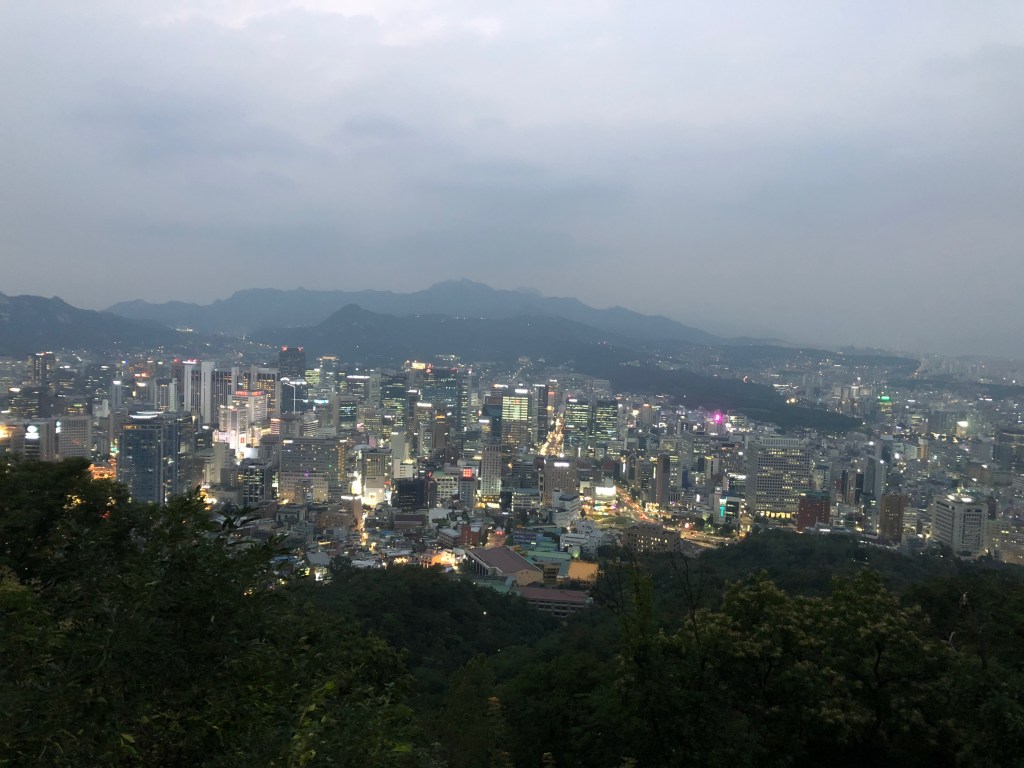
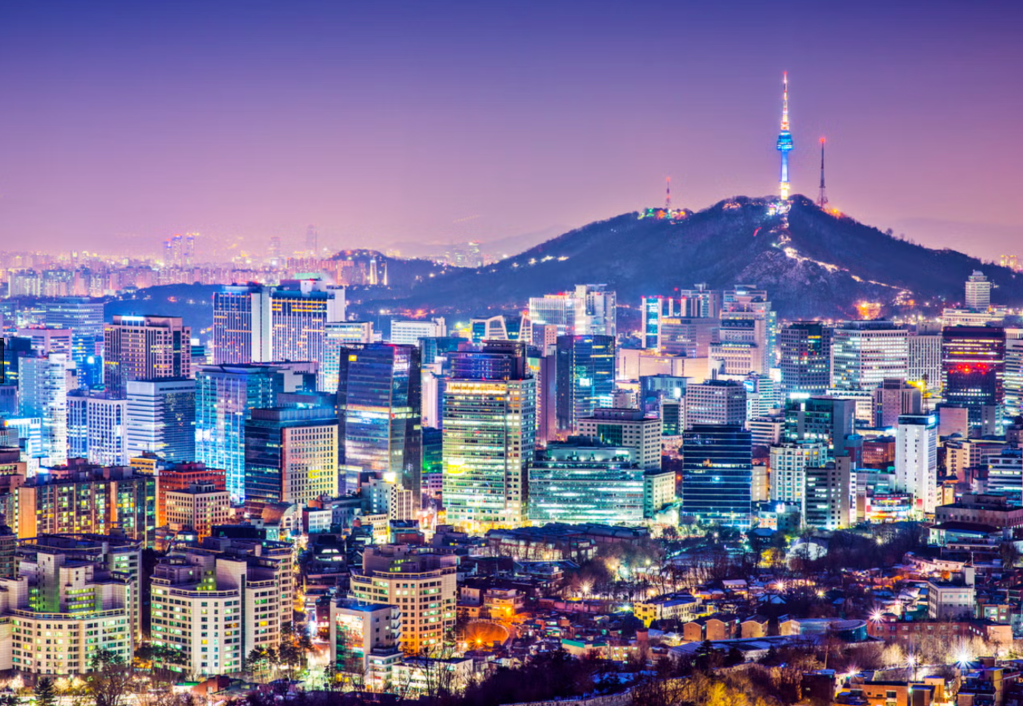
Busan: Located in the southeast of the country, Busan is the second-largest city with a population of approximately 3.5 million.

Incheon: Located near Seoul, Incheon is a major port city with a population of around 3 million. (Incheon is part of the Seoul metro area.)
Daegu: Situated in the southeastern part of the country, Daegu has a population of around 2.5 million.
Gwangju: Located in the southwestern part of South Korea, Gwangju has a population of around 1.5 million.
Daejeon: A major technological and research hub, Daejeon has a population of around 1.5 million.
Ulsan: Known for its shipbuilding industry, Ulsan has a population of around 1.2 million.
People
South Korea’s population is predominantly ethnically Korean, with a small minority of ethnic Chinese permanent residents. While the number of foreigners is increasing, particularly in major cities, they still constitute a relatively small portion of the overall population. The largest foreign populations come from Japan, the United States, and China, including military personnel. Many foreign nationals work in business or diplomacy, and a significant number of workers come from China and Southeast Asia.
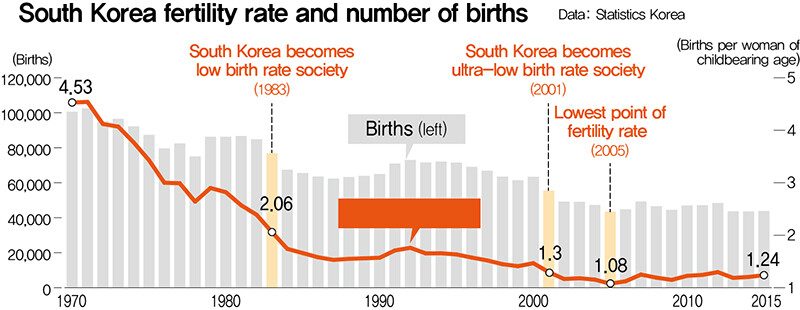
South Korea had an estimated population of roughly 51.7 million in 2022. Despite its population more than doubling since 1960, in 2021, the fertility rate stood at just 0.81 children per woman, well below the replacement rate of 2.1, and fell further to 0.78 in 2022 and 0.72 in 2023—the lowest in the world. Consequently, South Korea has the steepest decline in working age population among OECD nations, with the proportion of people aged 65 years and over slated to reach over 20% by 2025 and close to 45% by 2050.


Flag
The flag of South Korea is known as Taegeukgi. It was designed by Lee Eung-jun, adopted by Park Yung-hyo and approved by Emperor Gojong of Korea.

The following text describing the flag comes from the Ministry of Interior and Safety:
The Taegeukgi consists of a white background, a red and blue taegeuk circle in the center, and four black trigrams (collectively called geongongamri), one in each corner of the flag.
The white background represents brightness, purity, and peace, qualities that are highly valued by the people.
The taegeuk, which has long been a commonly used motif, denotes the harmony between the negative cosmic forces (yin : blue portion) and the positive cosmic forces (yang : red portion), depicting the truth of nature that all things are created and evolve through the interaction of yin and yang.
The four black trigrams Each trigram represents one of the four classical elements, as described below:

Together, they create harmony around the Taegeuk symbol.
In short, the Taegeukgi flag embodies the vision of the Korean people who, like the universe, seek continuous creation and enrichment. By upholding the spirit and significance of the Taegeukgi, the people seek to realize unity and unification and contribute to the happiness and peace of humanity.
This is one of my favorite flags in the world. It has such a unique, deep, meaningful and elegant design!
Coat of Arms
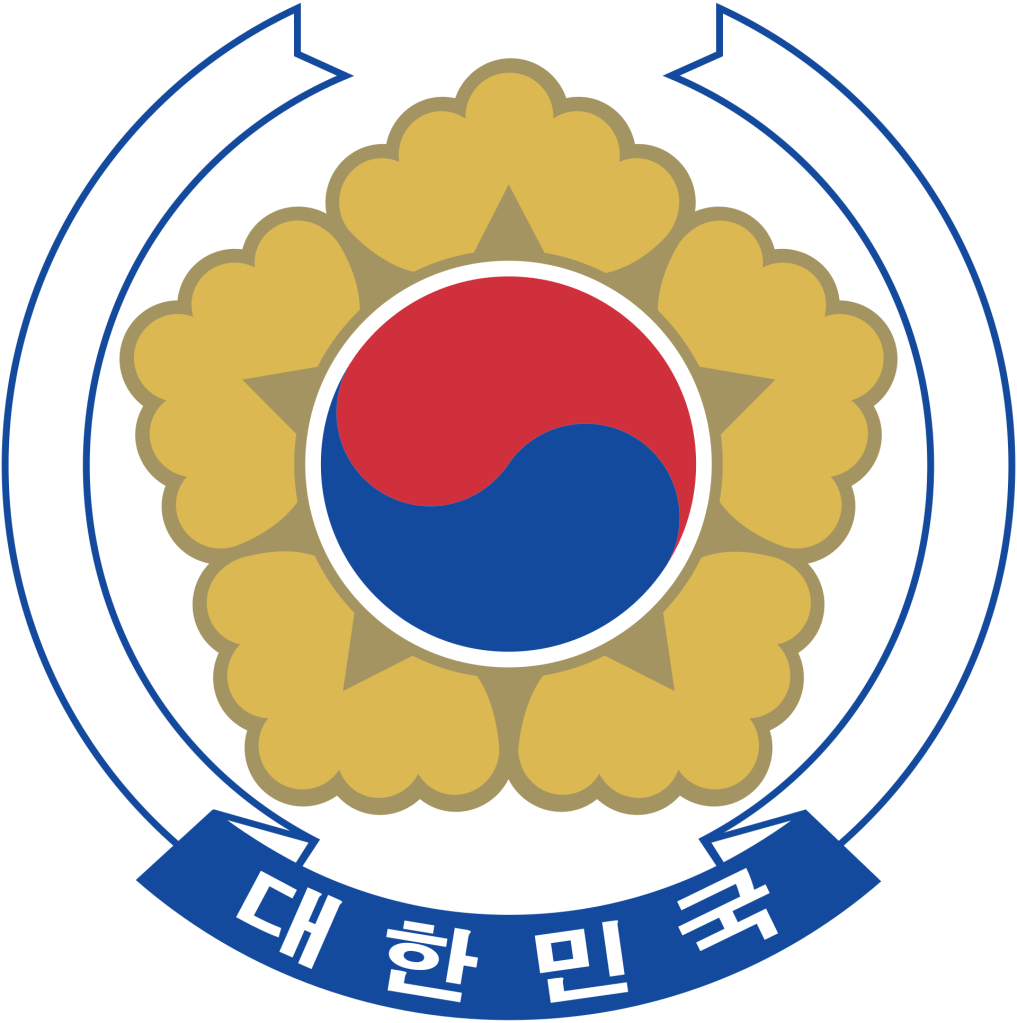
The National Emblem of South Korea, officially known as the Naramunjang, features a central Taegeuk symbol surrounded by five stylized petals. The Taegeuk, also found on the national flag, represents peace and harmony. The five petals symbolize the hibiscus, South Korea’s national flower, and their meanings are associated with the nation’s values.
The emblem was officially adopted on December 10, 1963, and includes a ribbon inscribed with the official Korean name of the country, “Daehan Minguk” (It means Republic of Korea).
This is the hibiscus flower that is their national flower, mugunghwa:


The mugunghwa, or the rose of Sharon, is an object of deep affection. Meaning “eternal blossom that never fades,” it has been an important symbol of Korean culture for centuries.
Ancient records show that even before the Gojoseon era (ancient Korean kingdom), the mugungwha was treasured as a “blossom from heaven”. As further testimony of its cultural value, the Silla Kingdom (57 BC – AD 935) called itself Geunhwahyang, meaning Country of the Mugunghwa. The ancient Chinese, too, referred to Korea as the “land of wise men where the mugunghwa blooms.”
Over time, the public affection grew stronger when a phrase extolling the flower’s beauty was included in the national anthem in the late 19th century. Those words are “Mugunghwa samcheonli hwaryeogangsan (Three thousand ri* (equivalent to 1,200 kilometers, the length of the Korean Peninsula) of splendid rivers and mountains covered with mugunghwa blossoms)”. Cr. Ministry of Interior and Safety, South Korea.
Sources
(1) Wikipedia
 My Virtual World Trip