
Jeju is South Korea’s largest island, covering an area of 707.8 square miles (1,833.2 km2). The island lies in the Korea Strait, south of the Korean Peninsula, and South Jeolla Province. It is located 82.8 km (51.4 mi) off the nearest point on the peninsula. Jeju is one of two special self-governing provinces in South Korea.
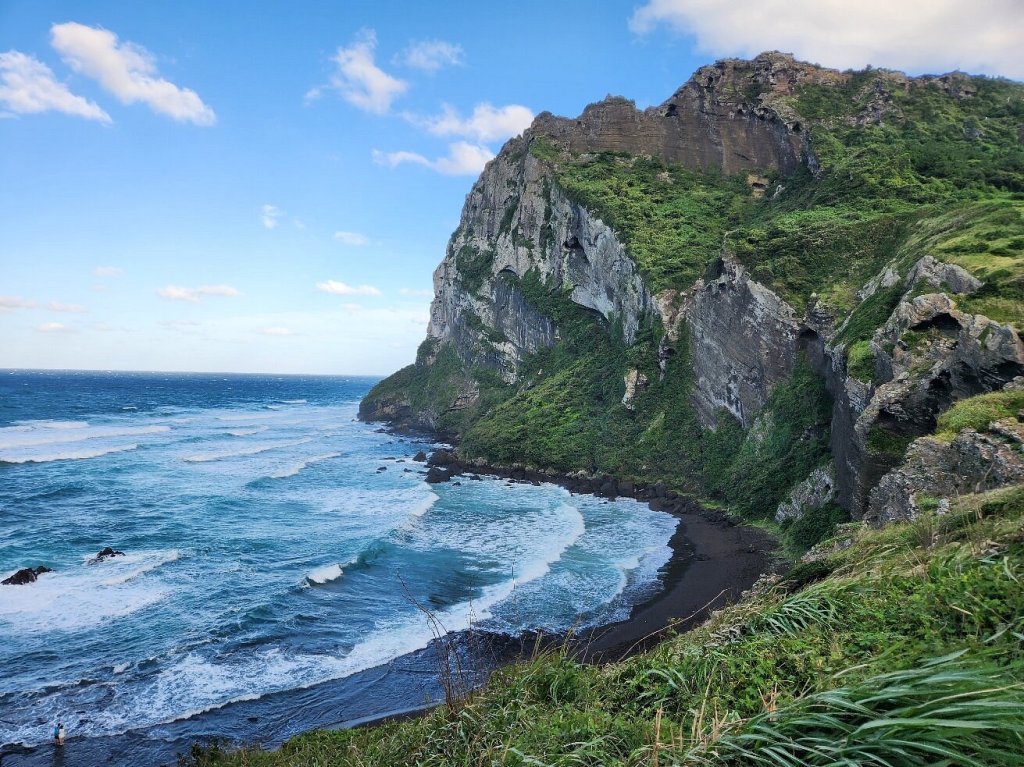
Jeju Island is a roughly oval-shaped island with a gentle slope around Hallasan Mountain at its center. Hallasan is the highest point in South Korea at 6,400 ft (1,950 m) The island measures approximately 45 miles (73 km) east-west and 19 miles (31 km) north-south. The main road stretches for 112 miles (181 km), and the coastline is 160 miles (258 km) long.
Jeju Island, a volcanic island, was formed approximately 2 million years ago by the eruption of an underwater volcano. Its unique geological features, including the Jeju Volcanic Island and Lava Tubes, earned it a UNESCO World Heritage Site designation. Enjoying a subtropical climate, Jeju Island experiences mild winters with temperatures rarely dropping below 32 degrees Fahrenheit ( 0 degrees Celsius ). Its land is made up of mostly basalt and lava.

History
Jeju Island has been inhabited by modern humans since the early Neolithic period, with evidence suggesting continuous settlement for thousands of years. Despite the lack of concrete historical records regarding the island’s founding or early history, local folklore provides intriguing insights.
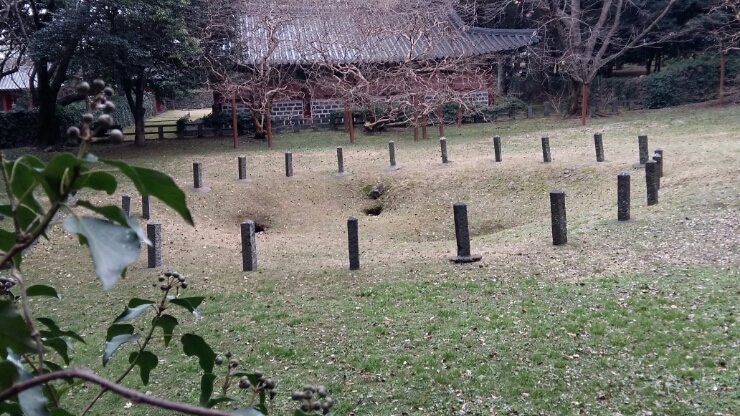
A legend describes that three gods, Yang Eul-na (양을나), Go Eul-na (고을나) and Bu Eul-na (부을나) emerged from three holes in the ground in the 24th century BC known as Samseonghyeol at the south foot of Tamna mountain (탄나산). They were ancestors of the people in Jeju island. One day, they were looking at Tamna mountain (탄나산) and discovered a box that flowed from the North Sea. As they opened it, there were three princesses, farm animals and five grains seeds in the box: rice, corn, grain, millet, and barley. The three gods greeted them as their wives and cultivated the five crops to make a village.
These sacred site, known as the Samseonghyeol, is still preserved in Jeju City and serve as a testament to the island’s rich cultural heritage.
Historical accounts suggest that descendants of Go Eulna eventually secured government positions within the Silla Kingdom, while on Jeju Island itself, a new kingdom emerged: Tamna. For centuries, Tamna maintained its independence but paid regular tribute to neighboring mainland kingdoms, from the era of the Three Kingdoms to Unified Silla and Goryeo. This tributary relationship continued until 1105, when Jeju Island was officially absorbed as a province of the Goryeo dynasty during the reign of King Sukjong.
These is one of the remaining paintings from the the Tamna Kingdom that is part of Sullyeokdos, meaning depictions of an inspection tour:

These paintings are invaluable as they illustrate what life was like in their time.
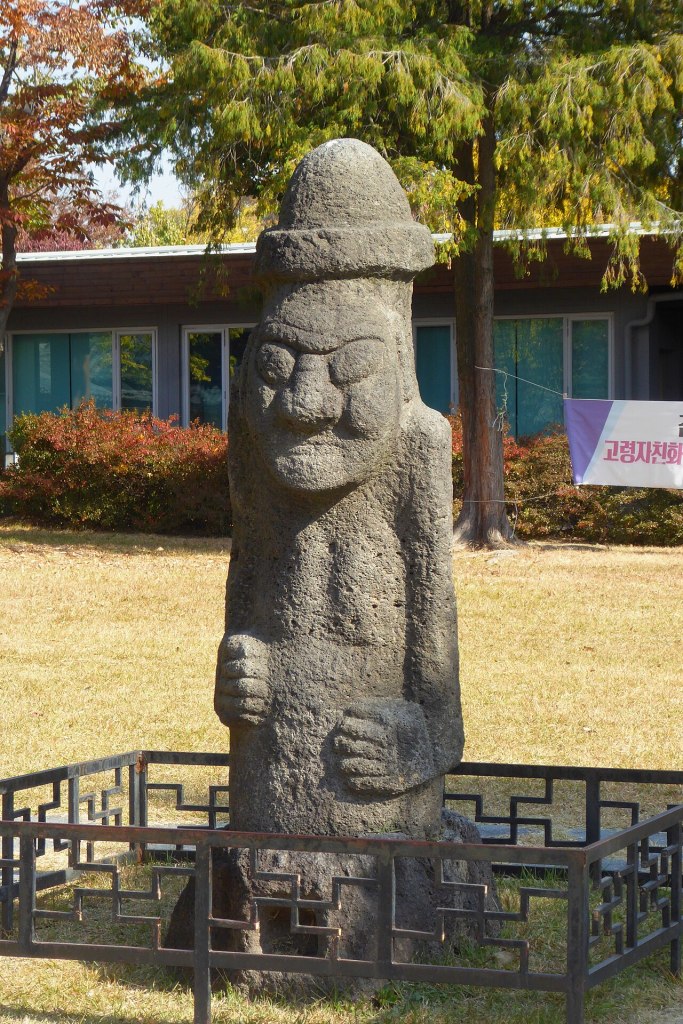
Even though Jeju island became more integrated with the larger kingdom, it continued to develop its own culture and customs, and preserved its unique volcanic topographical features. One such feature are volcanic rock statues that are all over Jeju island called dol hareubang (돌 하르방) that means literally stone grandfather.
dol hareubang (돌 하르방)
The precise origin of these statues, dol hareubang remains shrouded in mystery, with various theories circulating. One theory has it that a sea-faring people brought the statues to Jeju. A second theory argues that the statues developed from jangseung or beoksu (벅수) statues. (A statue that was placed at the entrance of villages to protect its people from evil spirits.) A third theory describes that the creation of the statues was reportedly motivated by a belief that, after several famines in the reigns of kings Sukjong and Yeongjo, vengeful spirits were roaming and tormenting the living. The head of Jeju-mok then ordered that the statues be built. It is not clear whether these were the earliest occurrences of the statues.
At least 47 of these dol hareubang date back to the early Joseon period, over 500 years ago. Traditionally, these statues were positioned in front of gates, serving as symbolic representations of power and as wardens against evil spirits. They were also revered as symbols and ritual objects associated with fertility.
Dol Hareubang: Regional Variations
While there are commonalities among dol hareubang statues across the three Joseon-era historical regions of Jeju Island, subtle differences can be observed within each region.
Jeju-seong and Jeongeuihyeon-seong
- Giseok Platforms: One notable feature of dol hareubang in these regions is their placement on stone platforms called giseok. These platforms elevate the statues, signifying their importance and authority.
- Traditional Design: The dol hareubang in these regions often adhere to a more traditional design, with rounded heads, broad faces, and clasped hands.
Daejeonghyeon-seong
- Lack of Giseok: Unlike their counterparts in Jeju-seong and Jeongeuihyeon-seong, dol hareubang in Daejeonghyeon-seong are typically not placed on giseok platforms. This might reflect local cultural preferences or variations in the terrain.
- Diverse Styles: The dol hareubang in this region exhibit more diverse styles, with some featuring more elongated bodies or expressive facial expressions. This could be attributed to the region’s unique historical or cultural influences.
These regional variations in dol hareubang design highlight the rich cultural tapestry of Jeju Island and the subtle nuances that distinguish the statues from one region to another.

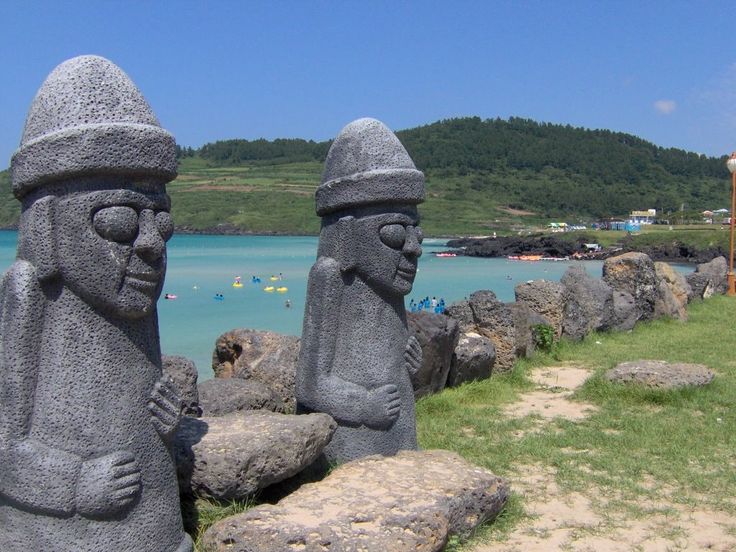
There is a park dedicated to these unique statues called Bukchon Dol Hareubang Park with over 40 of them.

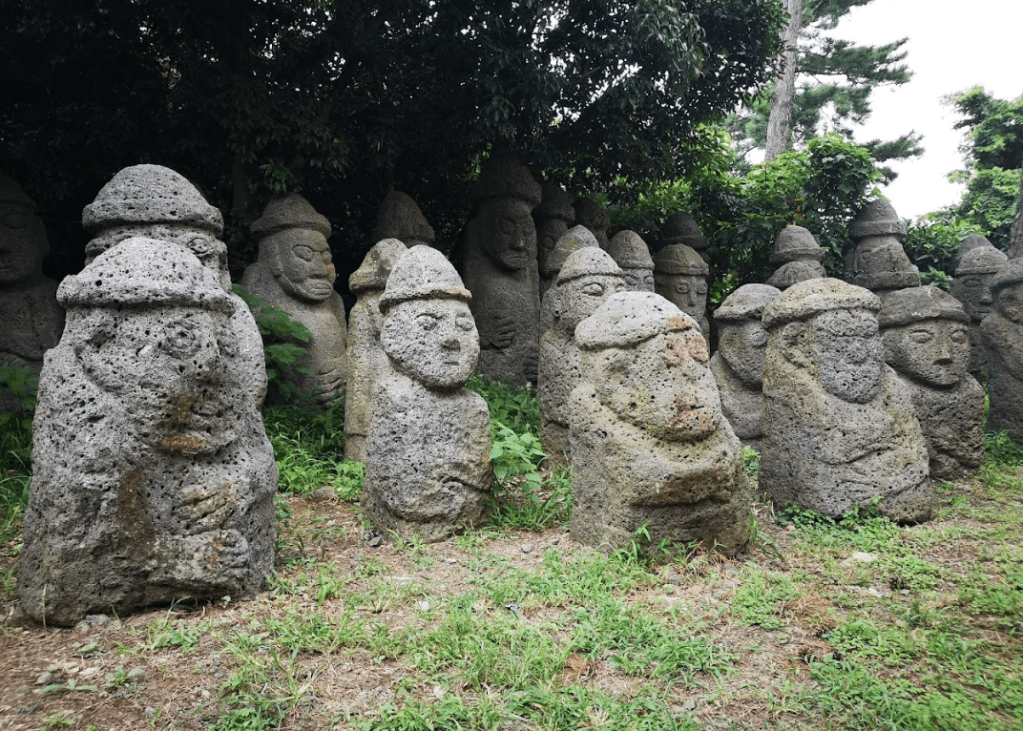
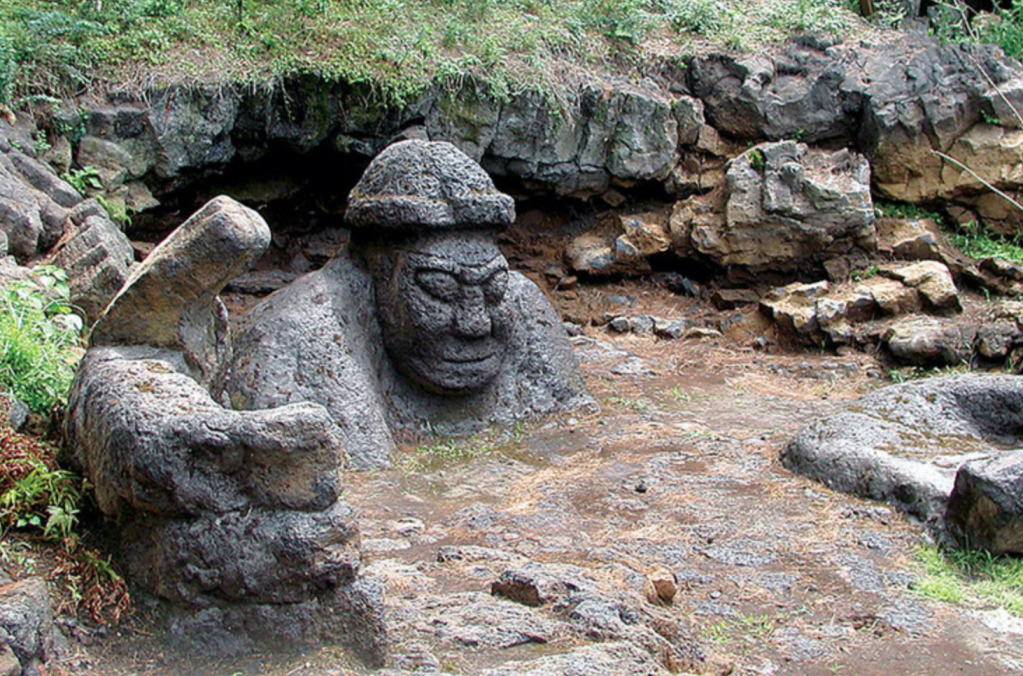
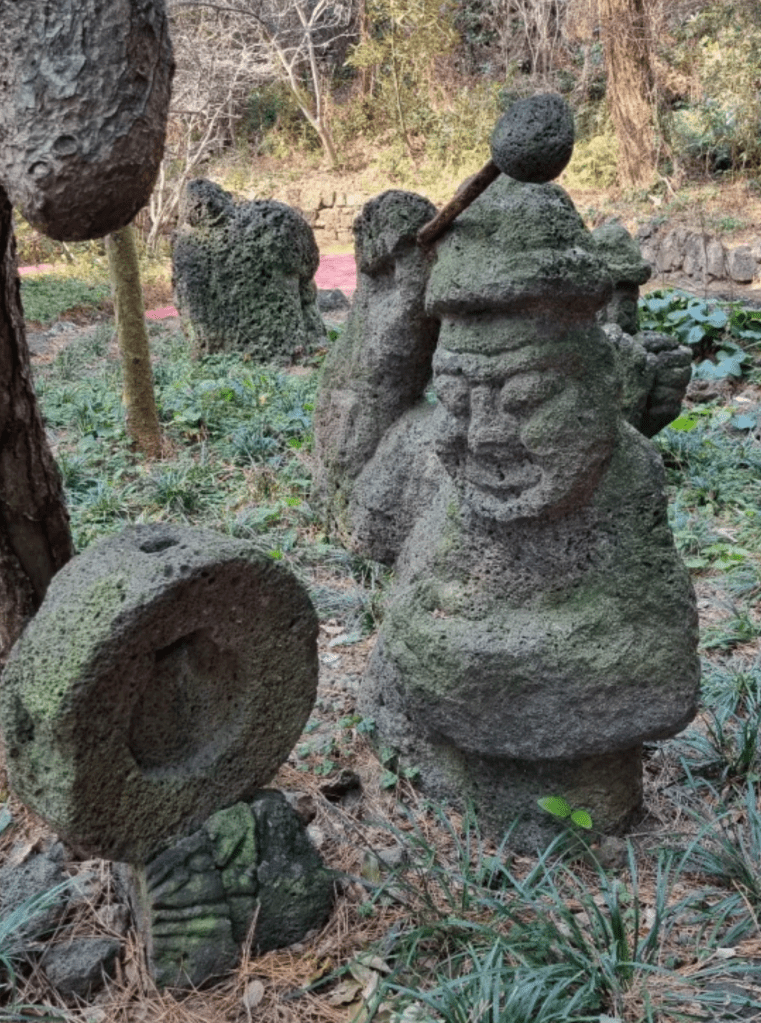

There is also a famous Stone Park where you can see dol hareubang, but I will write about it in my next post where I will focus on its places to visit.
In recent years, the dol hareubang statue has become an iconic symbol of Jeju Island. The first recorded creation of a dol hareubang souvenir dates back to 1963 when sculptor Song Jong-Won crafted a 25-centimeter replica of a statue located at the south gate of Jeju-mok. Today, dol hareubang statues are widely featured in tourist goods, ranging from miniature replicas to full-sized models.
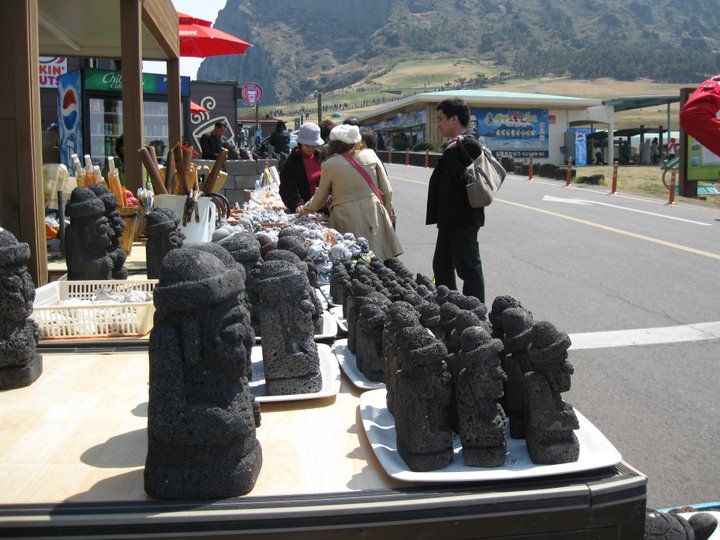

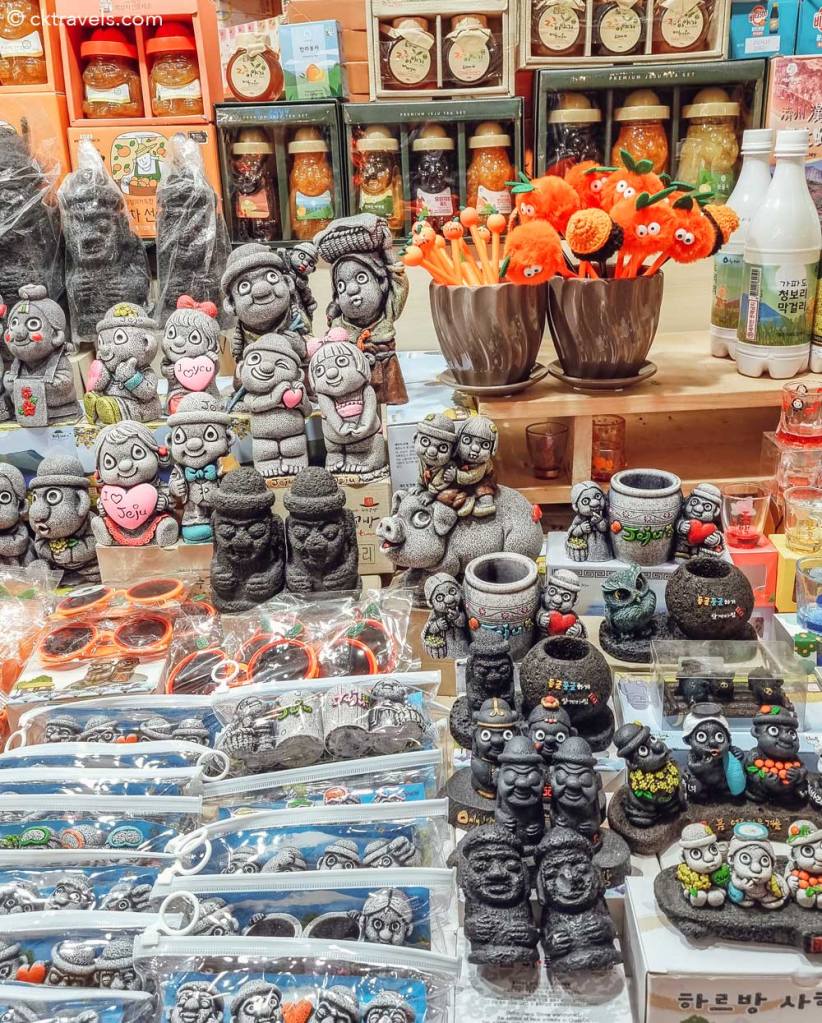
There is a legend which counts that if you rub their nose, you will give birth to a boy but if you rub their ears, the baby will be a girl.
Haenyeo (해녀), Women Divers
Another unique characteristic of Jeju island are its famous incredible women divers. Haenyeo were inscribed in UNESCO Intangible Cultural Heritage List from 2016. While there’s no definitive date for when they first began diving, evidence points to their existence during the Joseon dynasty (1392-1897).
These skilled divers, some in their 80s, venture up to 10 meters underwater without oxygen masks to harvest shellfish like abalone and sea urchins. Possessing an intimate knowledge of the sea and marine life, haenyeo can dive for up to seven hours a day, 90 days a year, holding their breath for approximately one minute per dive and emitting a distinctive vocal sound upon resurfacing. Their harvests consist of abalone, conch, octopus, sea urchins, sea squirt, brown alga, top shell, a variety of sargassum, oysters and sea slugs, etc.
Looking back in history, Jeju’s diving tradition dates back to 434 AD, originally a male-dominated profession. While women occasionally assisted their husbands, the first written mention of female divers appears in the 17th century.
By the 18th century, female divers significantly outnumbered male divers. Several factors might have contributed to this shift, including the loss of men at sea during wars or fishing accidents and women’s natural adaptability to cold waters due to their higher subcutaneous fat and shivering threshold. Historical records also indicate that taxes on dried abalone forced many women, even pregnant ones, to dive in frigid waters.
Wait. What?!!! Can you imagine being pregnant and having to do that?
Based on their experience levels, haenyeo are categorized into three groups: hagun, junggun, and sanggun. The sanggun, the most experienced divers, often provide guidance to their peers. Before each dive, haenyeo offer prayers to Jamsugut, the goddess of the sea, seeking safety and a bountiful catch. Knowledge and traditions are passed down through generations within families, schools, local fishery cooperatives, haenyeo associations, and dedicated institutions like the Haenyeo School and Haenyeo Museum.
Recognized by the provincial government as a symbol of Jeju’s character and spirit, the haenyeo culture has significantly contributed to the advancement of women’s status in the community. Moreover, their eco-friendly methods and active involvement in fisheries management have promoted environmental sustainability.
Enjoy a video and great photos from the UNESCO website:


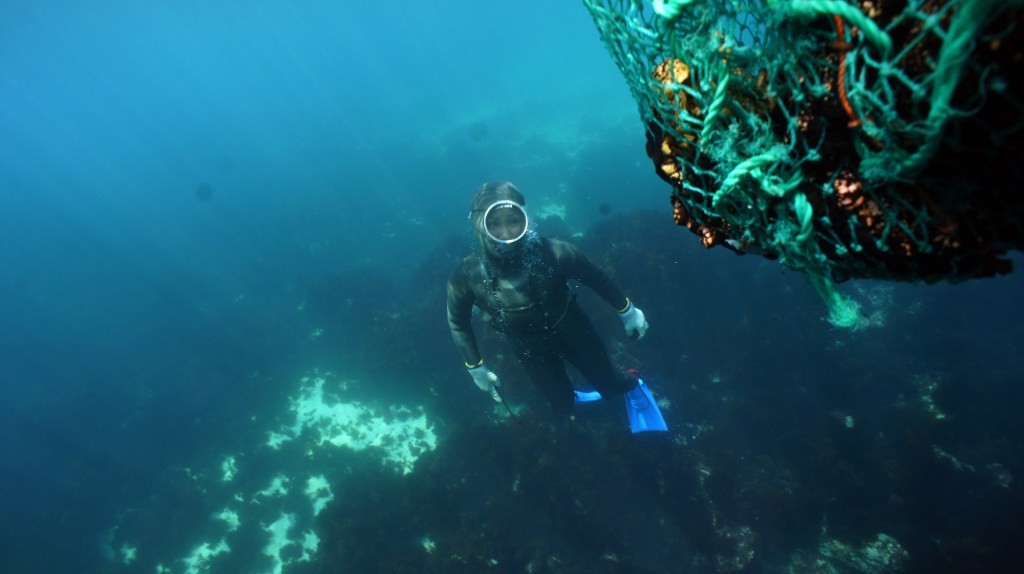

The haenyeo tradition has faced significant challenges due to industrialization and economic development. Beginning in the 1960s, the Korean government sought to revitalize the island’s economy by promoting mandarin orange cultivation. This shift led to a decline in the haenyeo population as many women opted for less physically demanding alternatives. Additionally, increased educational opportunities and attractive job prospects in emerging industries deterred younger generations from pursuing the diving profession.
Between 1965 and 1970, the number of haenyeo decreased dramatically from 23,081 to 14,143. In 1970, a significant portion of haenyeo were under the age of 30, but by 2014, over 98% of them were 50 or older. The decline in haenyeo numbers is a direct result of the changing economic landscape on Jeju Island.
There is a documentary in Apple TV that will premiere on October 11th. It is about how their way of life is endangered due to contamination of the water. this is the trailer:
All these precious beings endangered… it is heartbreaking. Hopefully this will help raise awareness around the world so they can be protected in the future.
I will write another post about Jeju’s places to visit soon. Thank you so much for coming along on this trip about its history and intangible cultural treasures.
 My Virtual World Trip