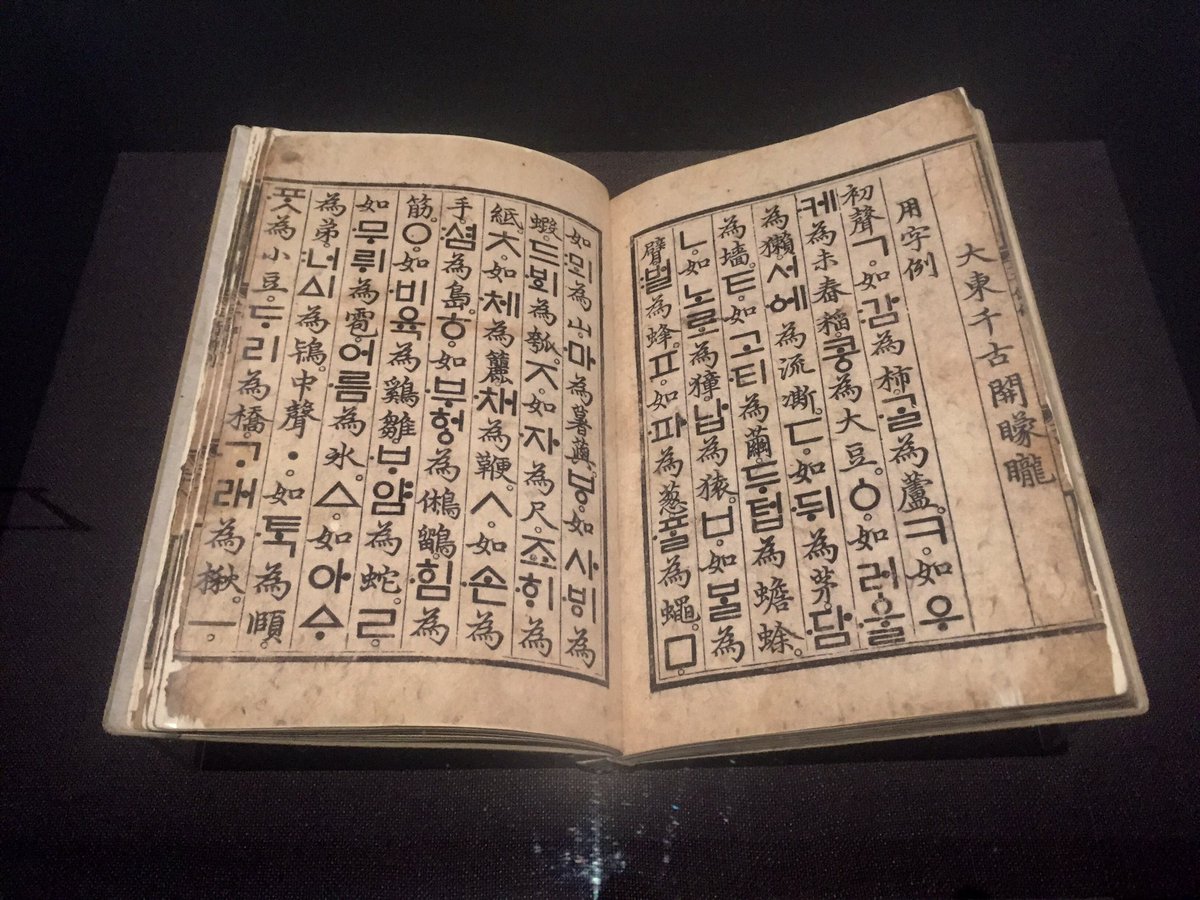
Earlier this month, on October 9th, South Korea celebrated one of its national holidays: Hangul Day. This is a day when Koreans celebrate the creation of the language of Korea.
You may be wondering why do they have a day to celebrate their language? Because in Korea’s case it meant that Koreans finally had a language that represented them and their culture as this was not always the case.
History of the creation of Hangul
I am so excited to write to learn more and write about Hangul. I absolutely love this language and tried to learn to be fluent in it. I have taken many lessons online and have bought many books… and now I can understand some common phrases especially in Kdrama, and can say many basic things like my name, what I’m doing, what I do for work, order food, ask for the price of something, etc. but I still have to check for some vocabulary words. I also learned how to write it. This was a lot of fun! ^ ^
Before I dive into its history, I should mention that in North Korea, Hangul is known as Chosongul (조선글). It is basicaly the same language with some variations.
Way back in time Koreans relied in Classical Chinese (Known to Koreans as Hanja) as their main language alongside native phonetic writing systems that predate Hangul by hundreds of years, including Idu script, Hyangchal, Gugyeol and Gakpil. Sadly, Chinese was so hard to learn for many Koreans as they just did not have the time to learn so many characters. I was astounded to find that to be fluent in Chinese (Mandarin) you have to know over 5,000 characters! (Japanese is like 2,000) So many Koreans were illiterate and this was not helping their country thrive.
The Fourth King of the Joseon Dynasty, King Sejong the Great decided to change this. Some accounts say that he invented Hangul by himself but for me it makes more sense that it was him and a group of men from the Joseon Research center called “The Hall of Worthies.” But contemporary records such as the Veritable Records of King Sejong and Jeong Inji’s preface to the Hunminjeongeum Haerye (the first book published about the language) emphasize that he invented it himself.
The language was completed in Hangul was completed in 1443 and published in 1446 along with a 33-page manual titled Hunminjeongeum Haerye, explaining what the letters are as well as the philosophical theories and motives behind them.

Not surprisingly the nobles hated the idea of having to share a common language with the lower classes. They rejected Hangul and mocked it calling it eonmun (“vulgar script”), amkeul (“women’s script”), and ahaekkeul (“children’s script”). It was commonly used in areas like casual writing, prose and bookkeeping, especially by the urban middle class like administrators and bureaucrats. It notably gained popularity among women and fiction writers, as the former usually often did not not have access to Hanja (Chinese) education.
Hangul was officially banned by King Yeonsangun in 1504. Hangul’s survival and eventual widespread adoption can be attributed to: Books written for women, its use by Buddhist monks, and the subsequent introduction of Christianity in Korea. A literary renaissance in the 16th century helped bring Hangul into mainstream culture, and its popularity continued to grow throughout the 17th century.
Thanks to growing Korean nationalism, the Gabo Reformists’ push, and Western missionaries’ promotion of the Korean alphabet in schools and literature, the Hangul Korean alphabet was adopted in official documents for the first time in 1849. Elementary school texts began using the Korean alphabet short after, and Tongnip Sinmun, established in 1896, was the first newspaper printed in both Korean and English.
However, Hangul faced another ban following the 1910 Treaty when Japan invaded Korea and annexed it to its country. Japan eventually banned the Korean language from schools and public offices in 1938 and excluded Korean courses from elementary education in 1941 as part of a policy of cultural assimilation and genocide and was not reinstated until Korea’s liberation in 1945.
The definitive modern Korean alphabet orthography was published in 1946, just after Korean independence from Japanese rule. In 1948, North Korea attempted to make the script perfectly morphophonemic through the addition of new letters, and, in 1953, Syngman Rhee in South Korea attempted to simplify the orthography by returning to the colonial orthography of 1921, but both reforms were abandoned after only a few years. (1)
Both North Korea and South Korea have used the Korean alphabet or mixed script as their official writing system, with ever-decreasing use of Hanja especially in the North.
Characteristics of Hangul
So remember the over 5,000 characters one has to learn for Chinese and 2,000 for Japanese… now let’s take a look at Korean:
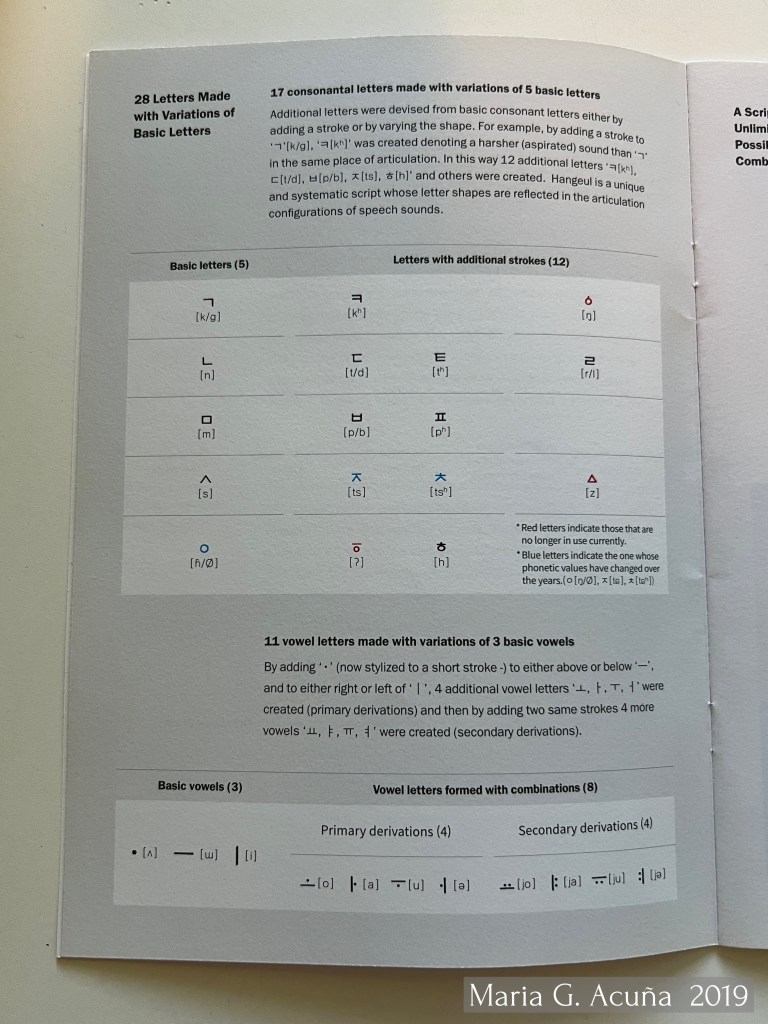
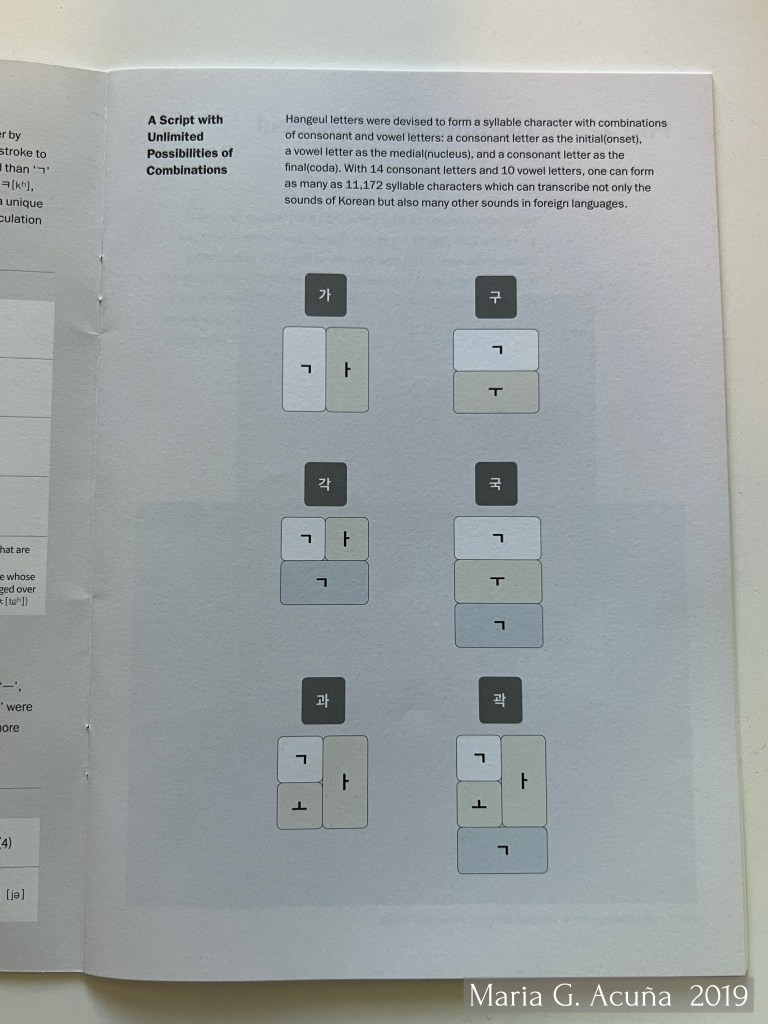
Letters in the Korean alphabet are called jamo (자모). There are 14 consonants (자음) and 10 vowels (모음) used in the modern alphabet. These form 40 characters that can combine to form more than 12,000 words! Here they are:
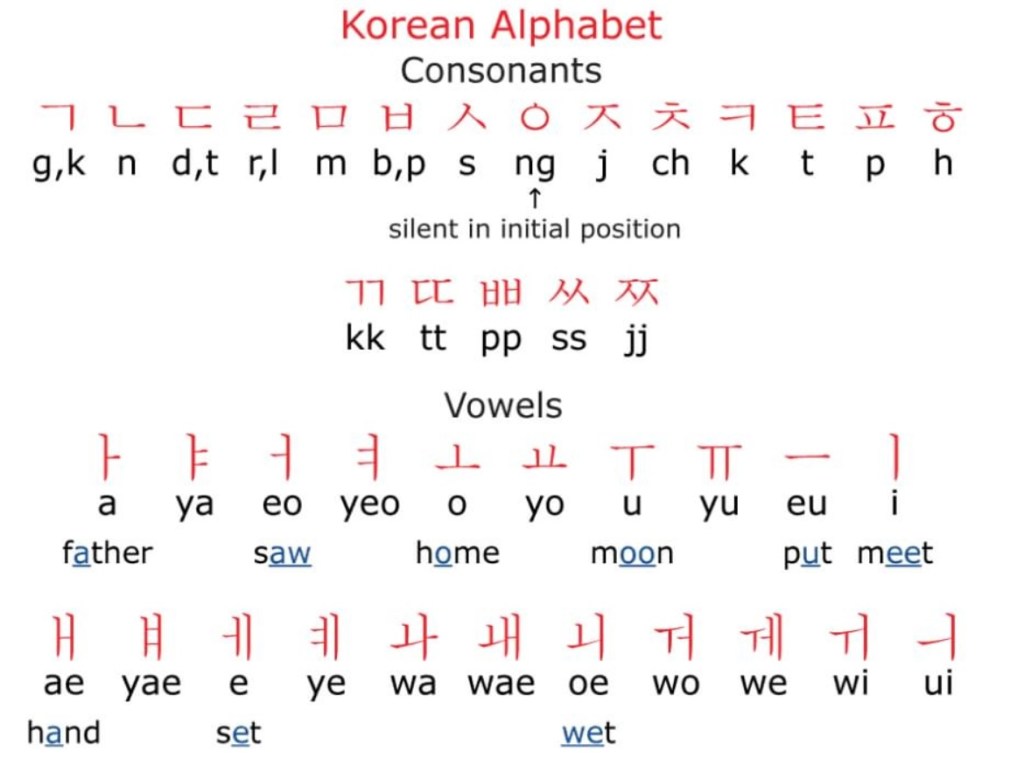
Consonants
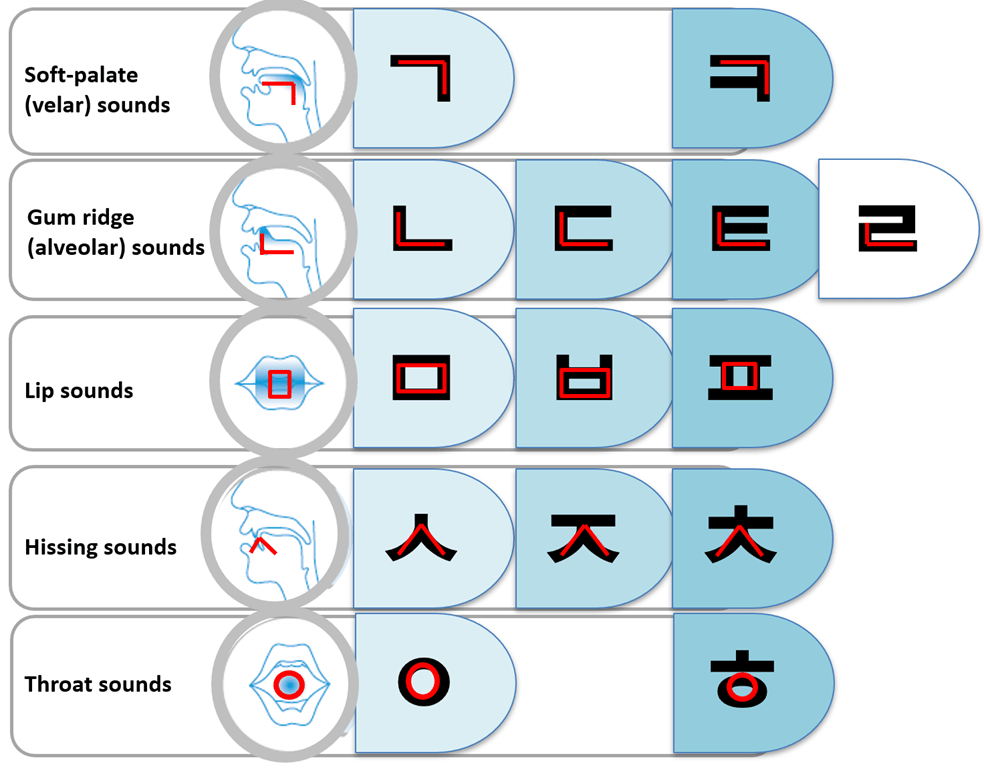
One of the things that makes this language great is that the consonants are based on the shape one’s mouth makes when saying the sounds. How genius is this?!
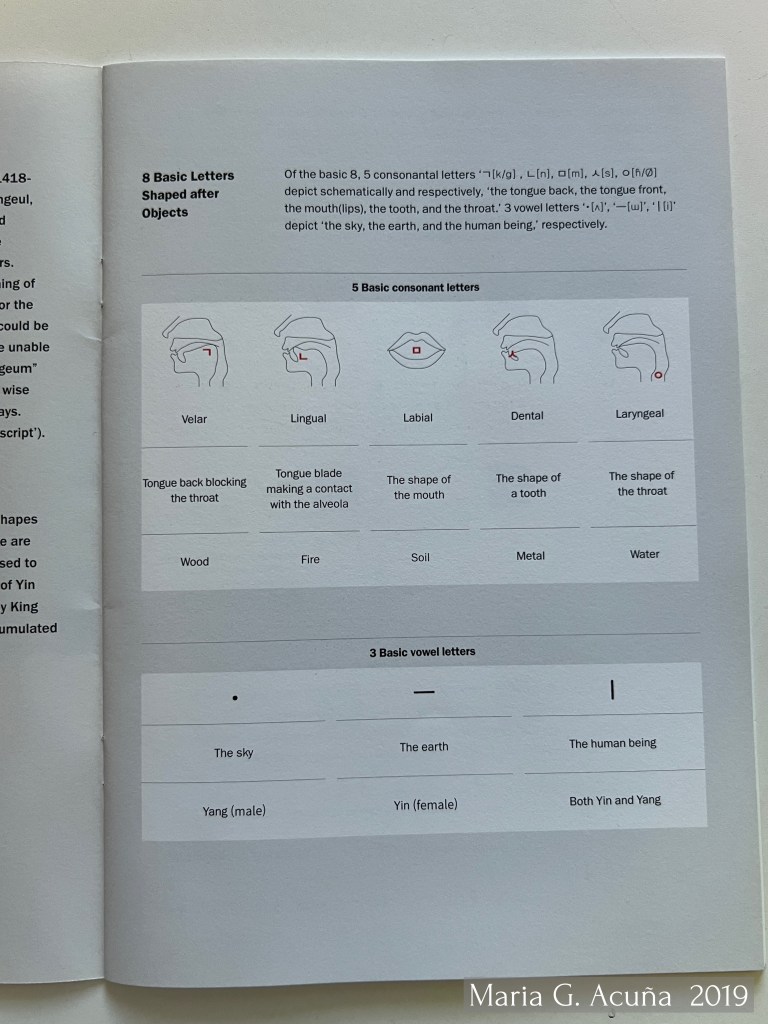
The following comes from a booklet that I got a the Hangul Museum, it explains the language too, but this was the way it was designed originally by King Sejong:
The Hangul Museum
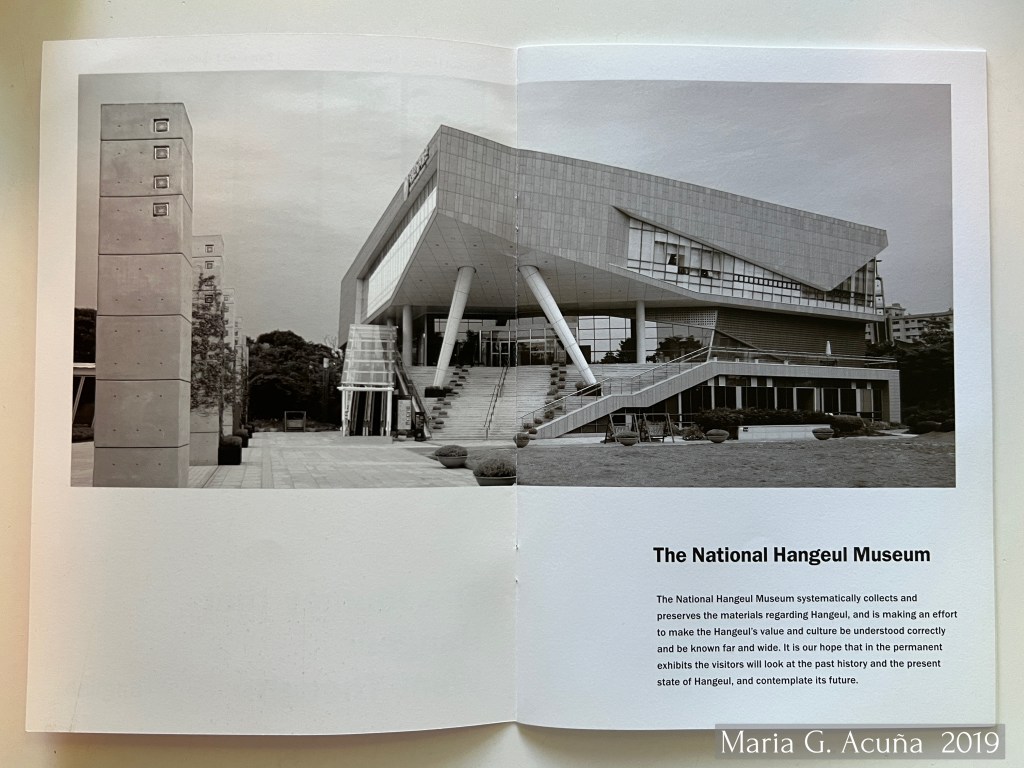
The love of Korea is so great that they even have a museum dedicated to it. This museum shares a beautiful garden and a short walk with the National Museum of Korea. These are two great museums to learn about the history of Korea.
Here is the Hangul museum thorugh my photographs:


When you walk in the first exhibit you’ll see is about the creation and history of Hangul. Sadly, when I visited it was all in Korean save a few descriptions. They try to help by giving one this booklet (which is where the images above came from.)
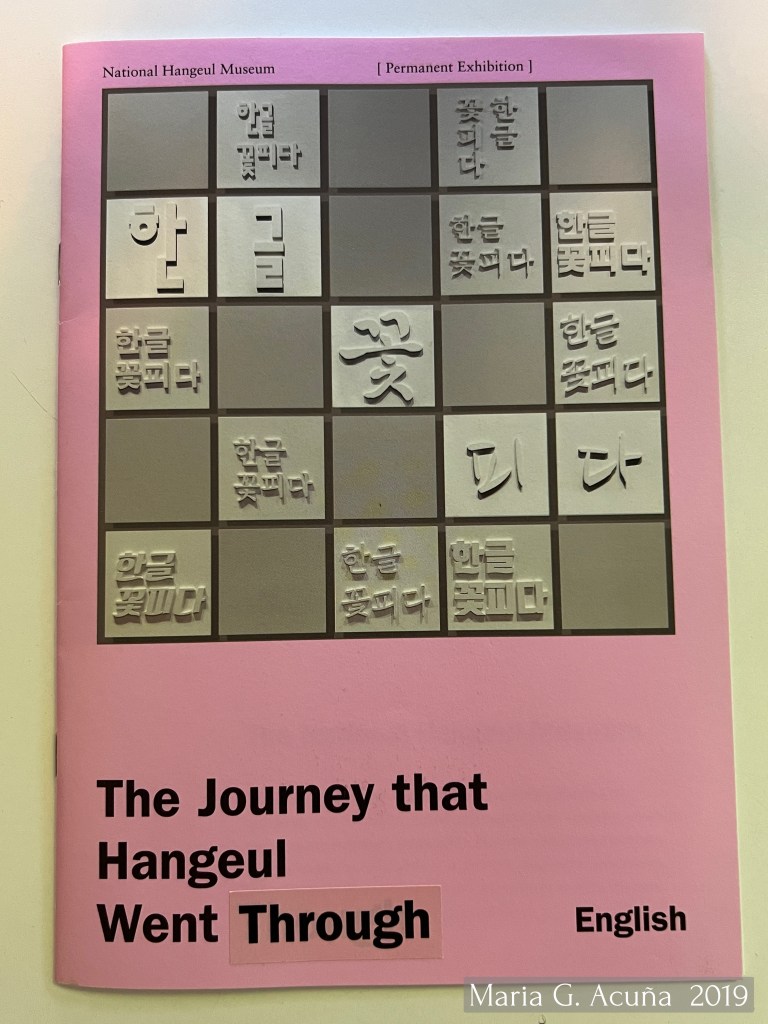
It did help a lot! These are some photos of this exhibit:
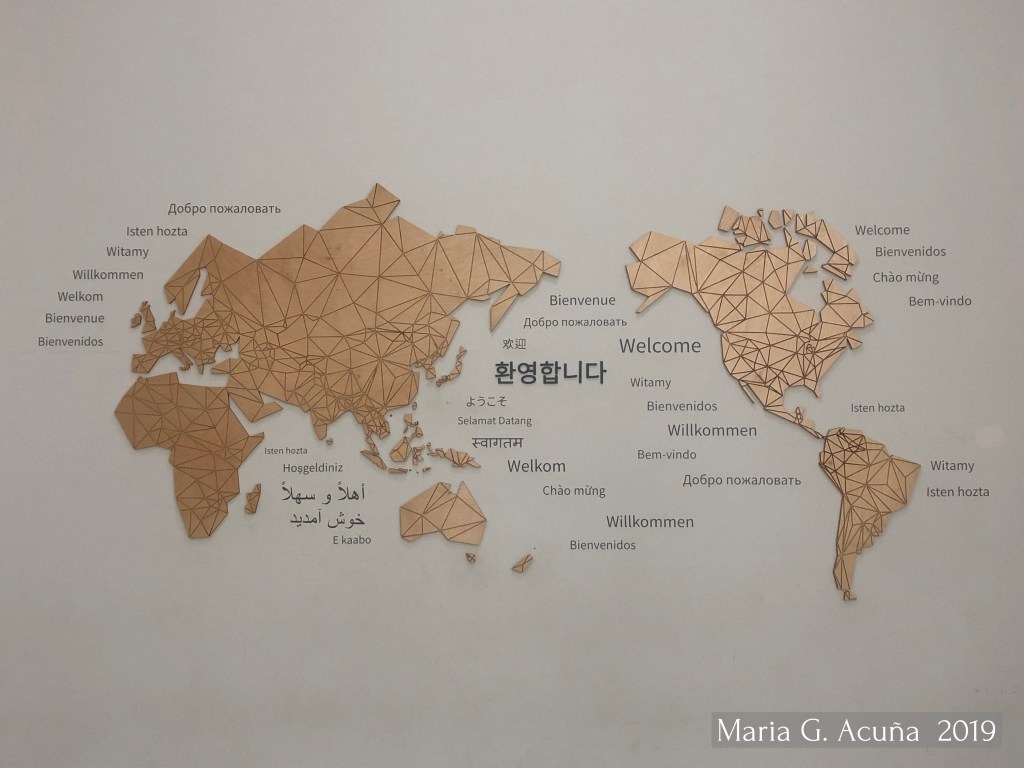
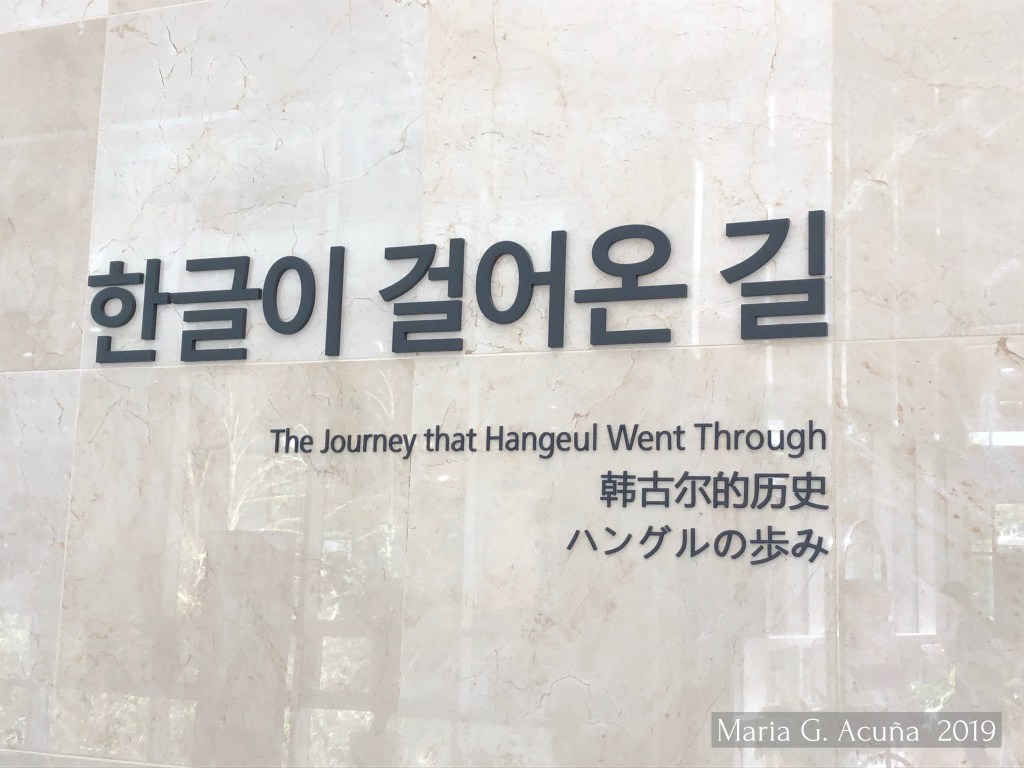

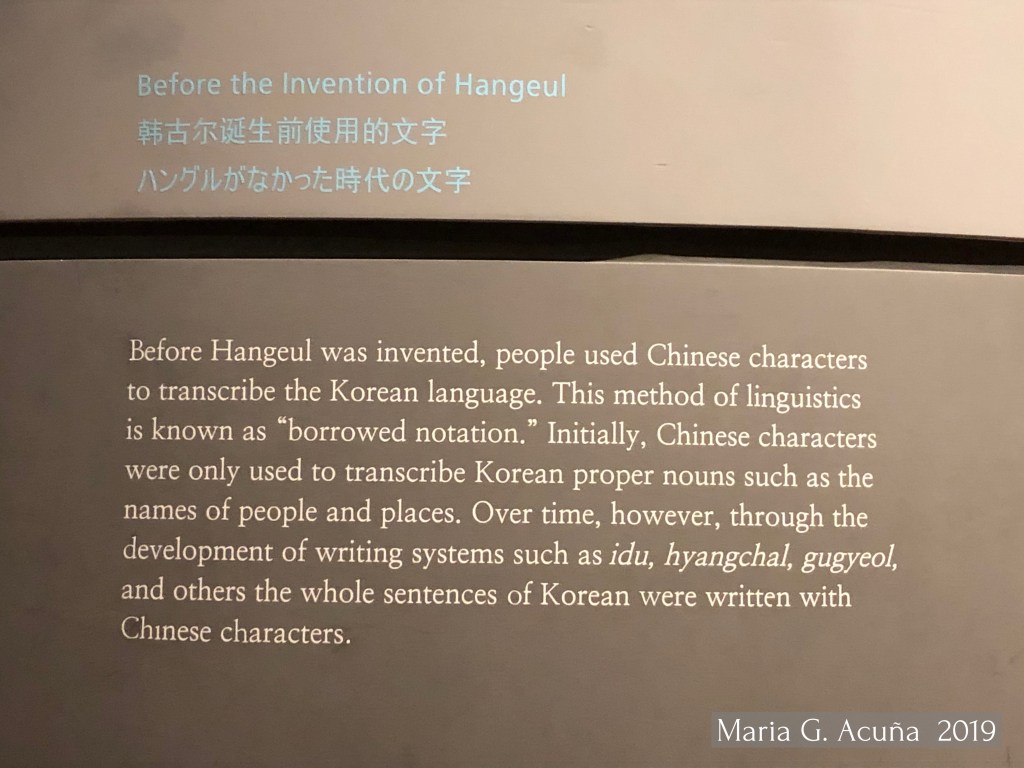

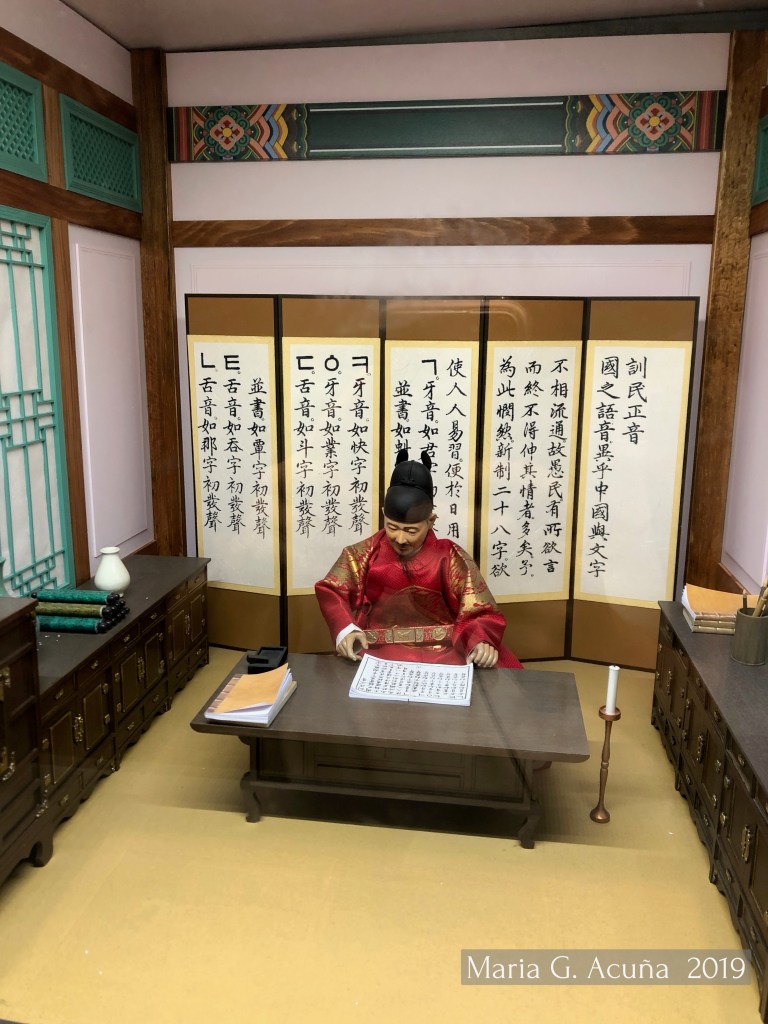
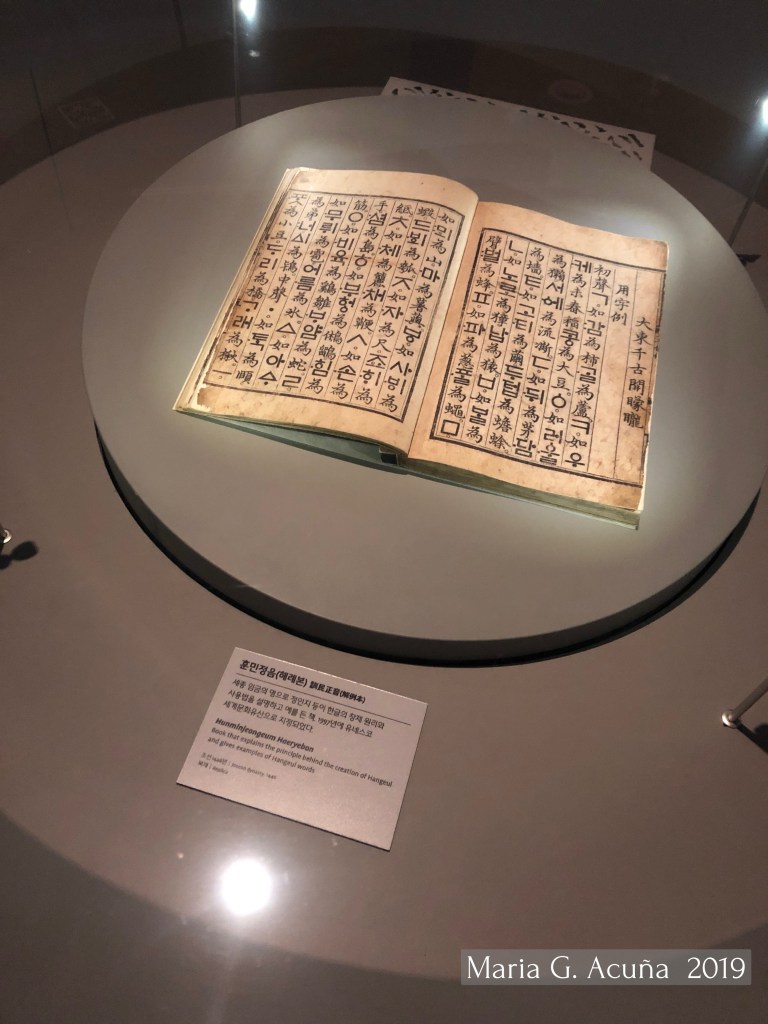
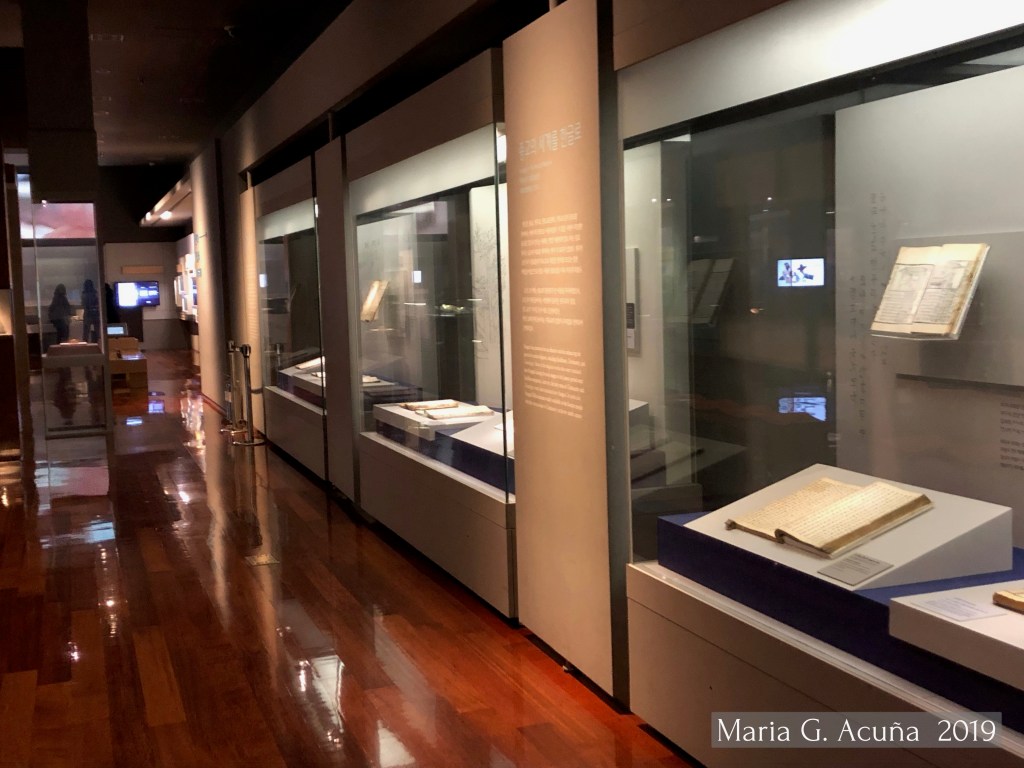

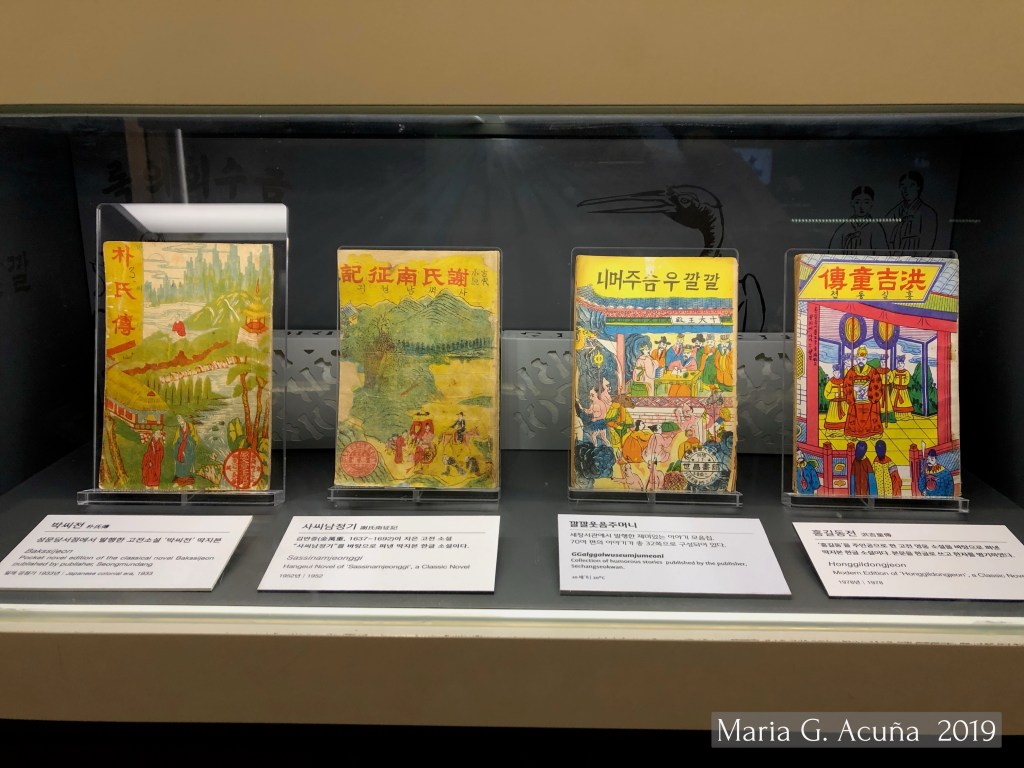
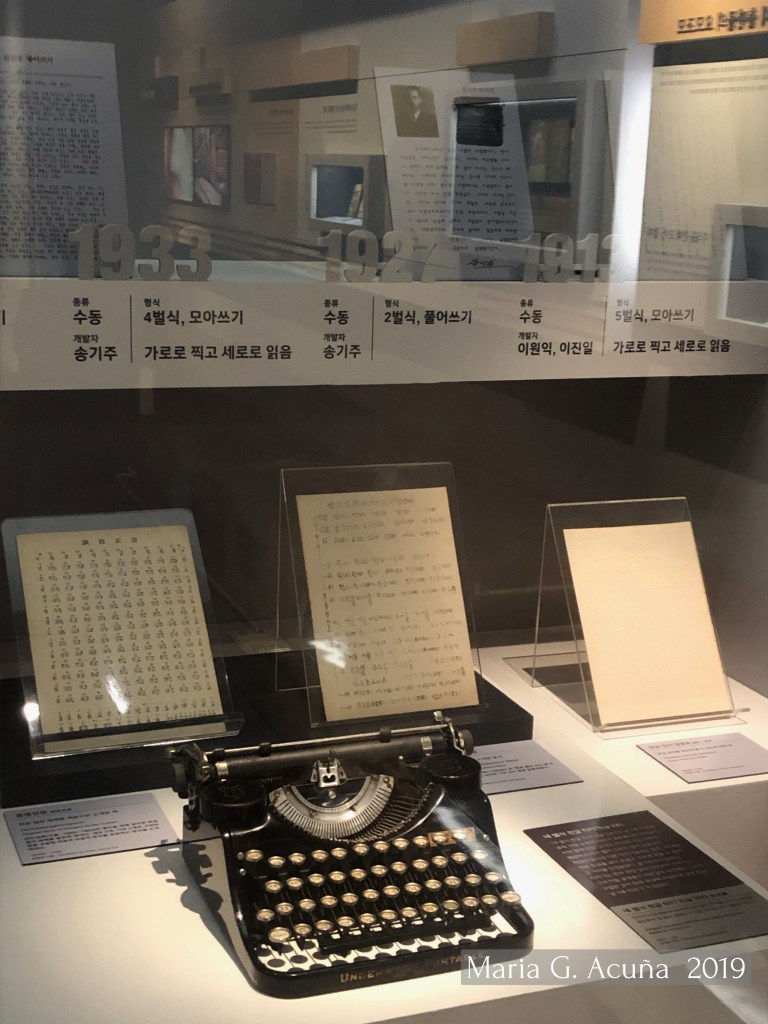
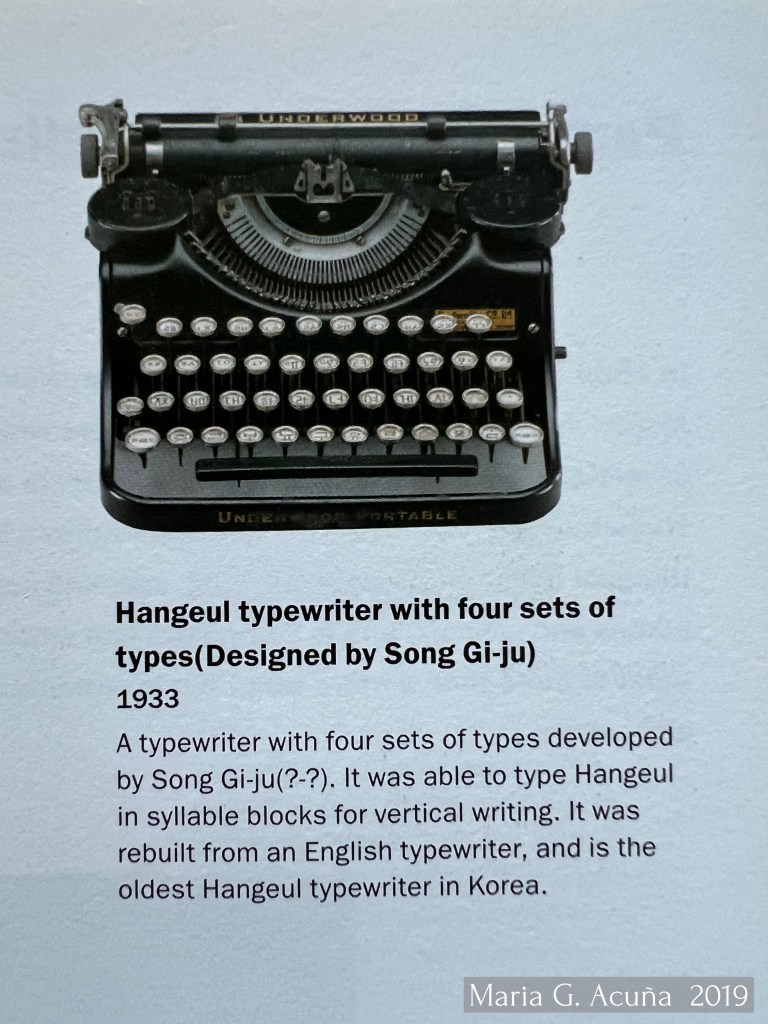
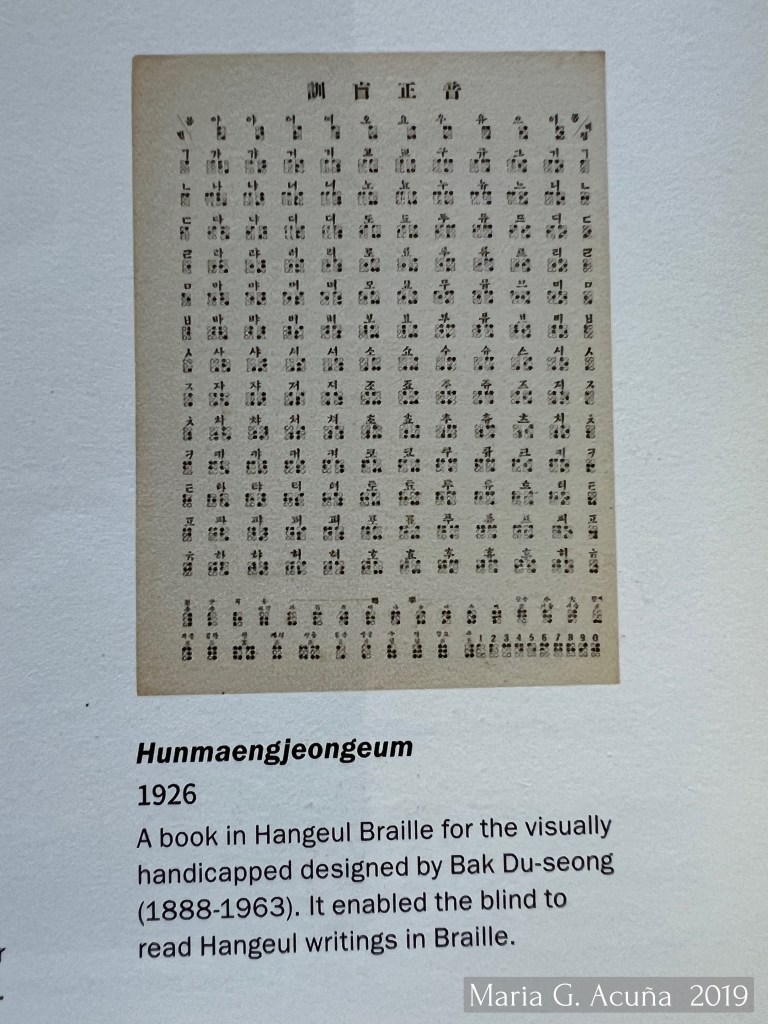
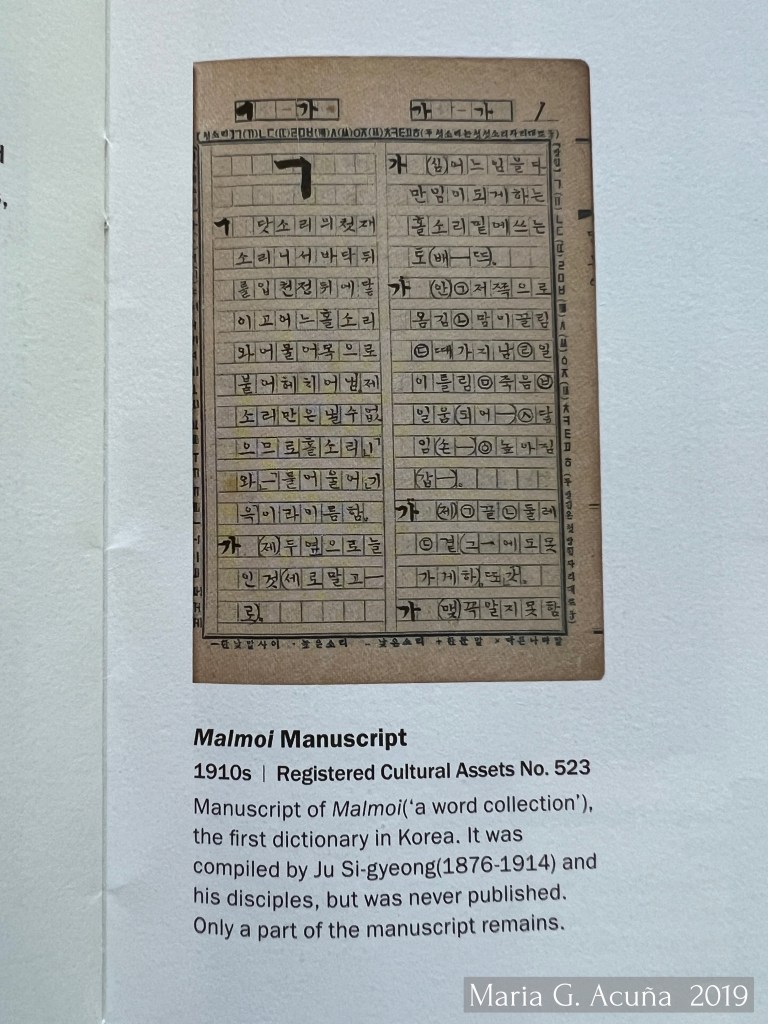

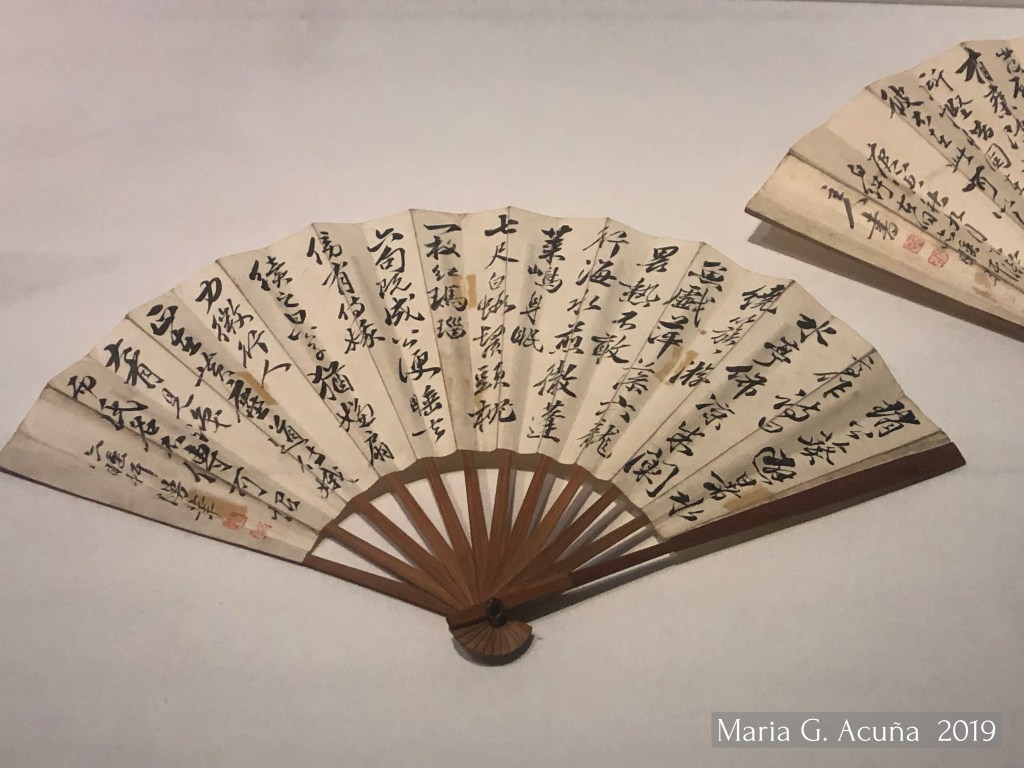
There was an exhibit celebrating the 5th Anniversary of the museum. It displayed letters and writings from three generations of the Royal family of Princess Deogon.


You can see how long it is in Korean and how short it is in English. !
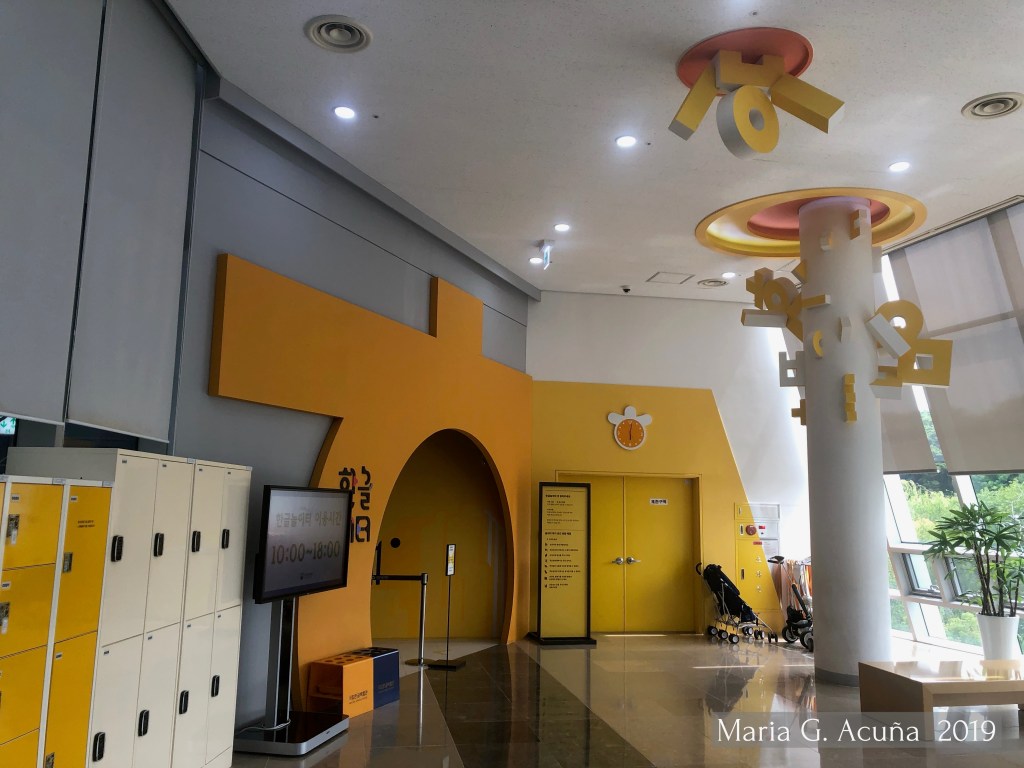
There was a very bright children’s area… I loved what they did with the characters on that column!

And then at the end there were fun interactive exhibits… like seeing your country in Hangul and writing one’s name…

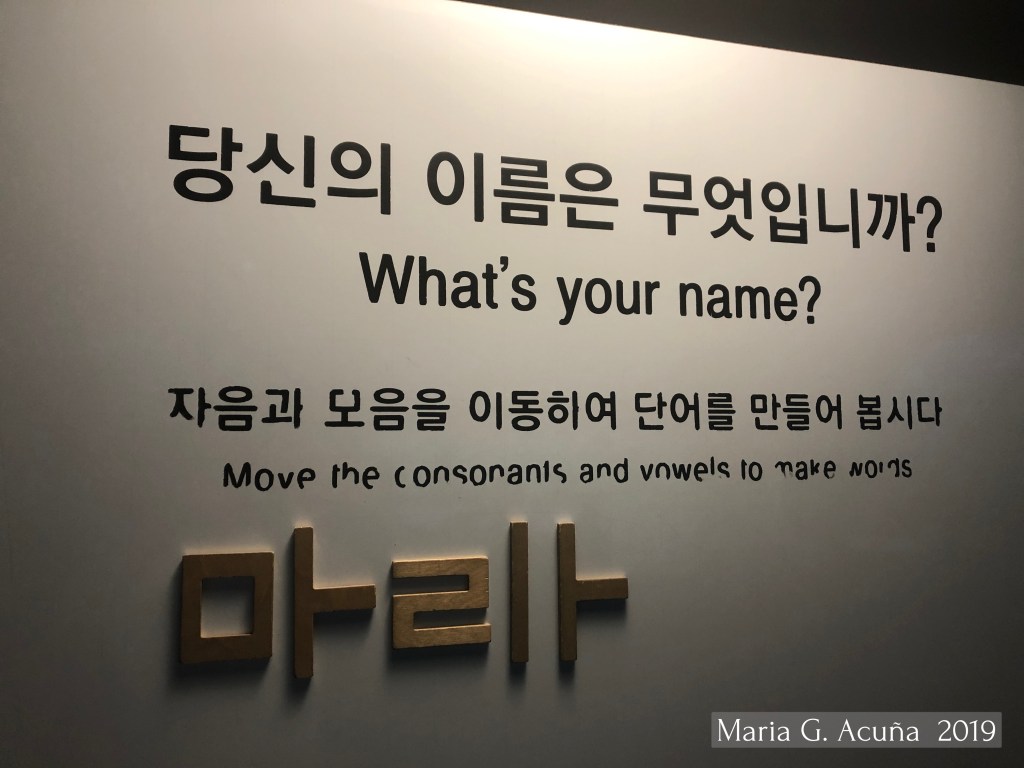
Yes! That is my name in the the wood pieces: Maria ^ ^
And they had a great store… I delighted in the designs of so many objects and I bought these:
Beautiful postcards with the characters! They portray the letter as a typical Korean culture activities or objects that start with that letter. The illustrations are very geometric and colorful!
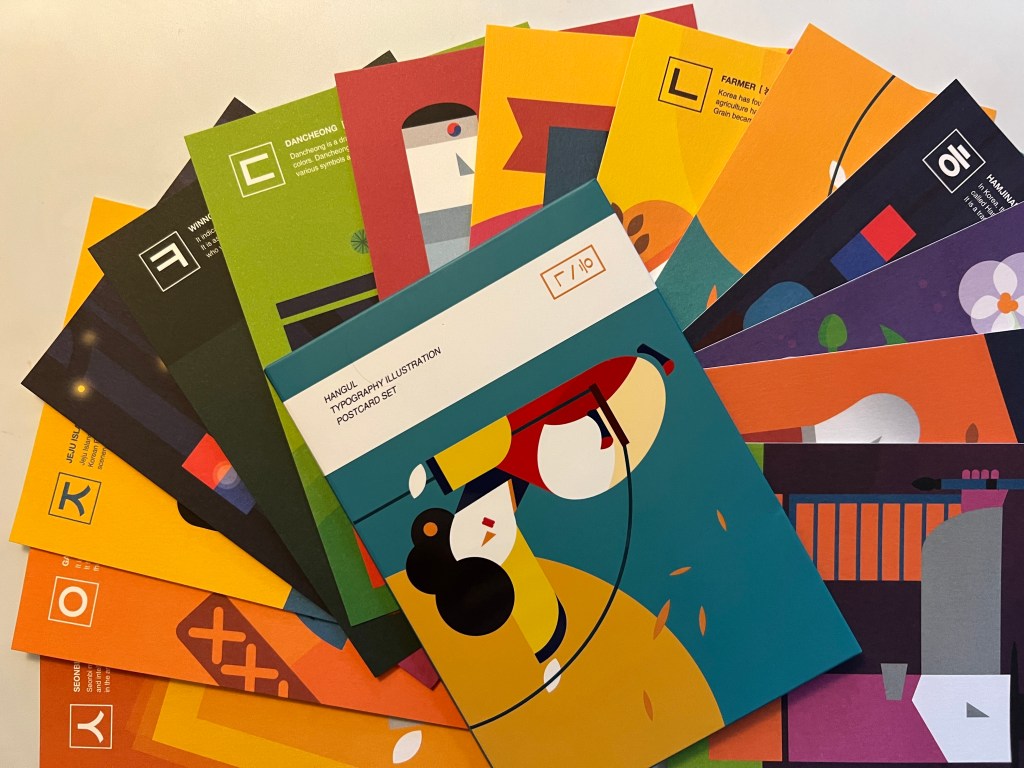

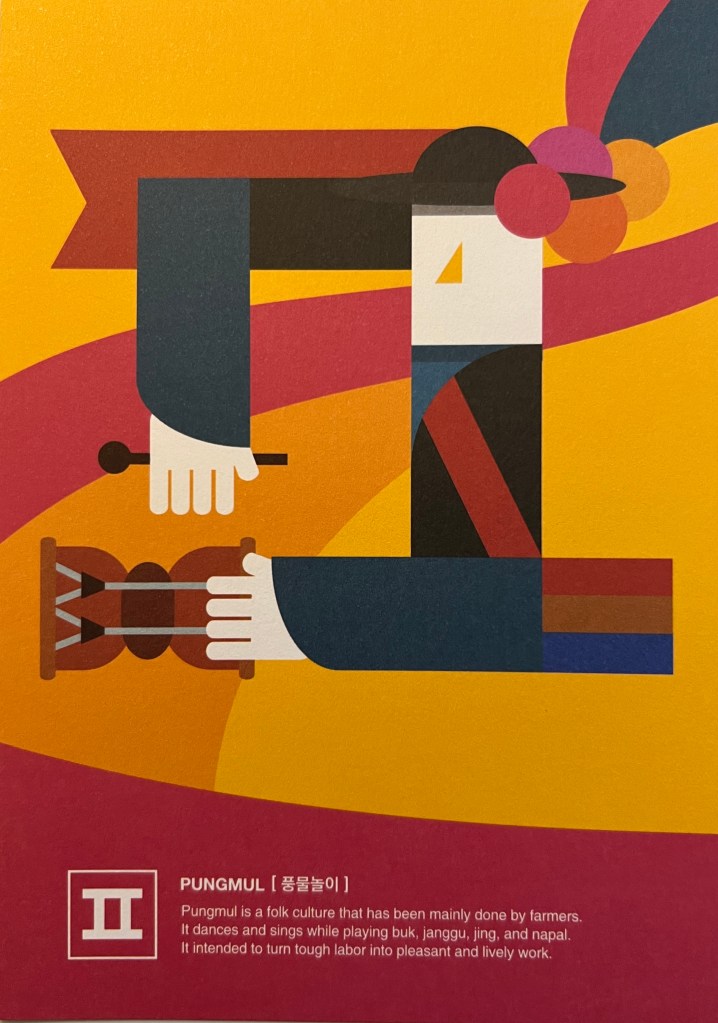

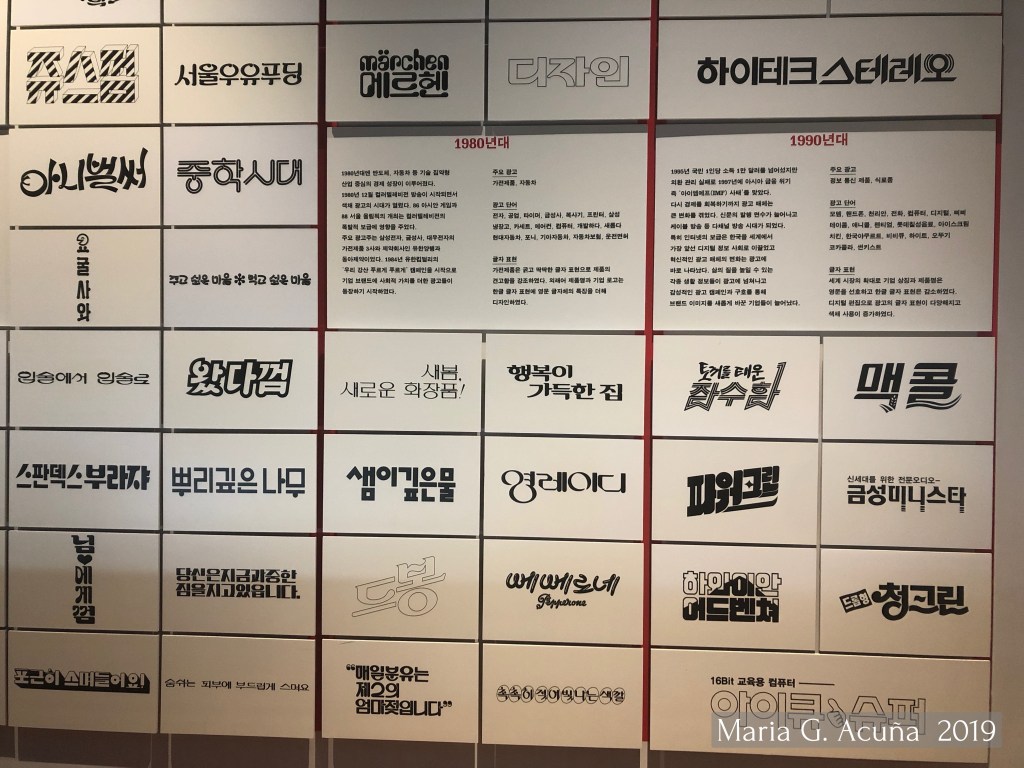
And this incredible of how advertising changed through the years. Absolute eye candy for a graphic designer!


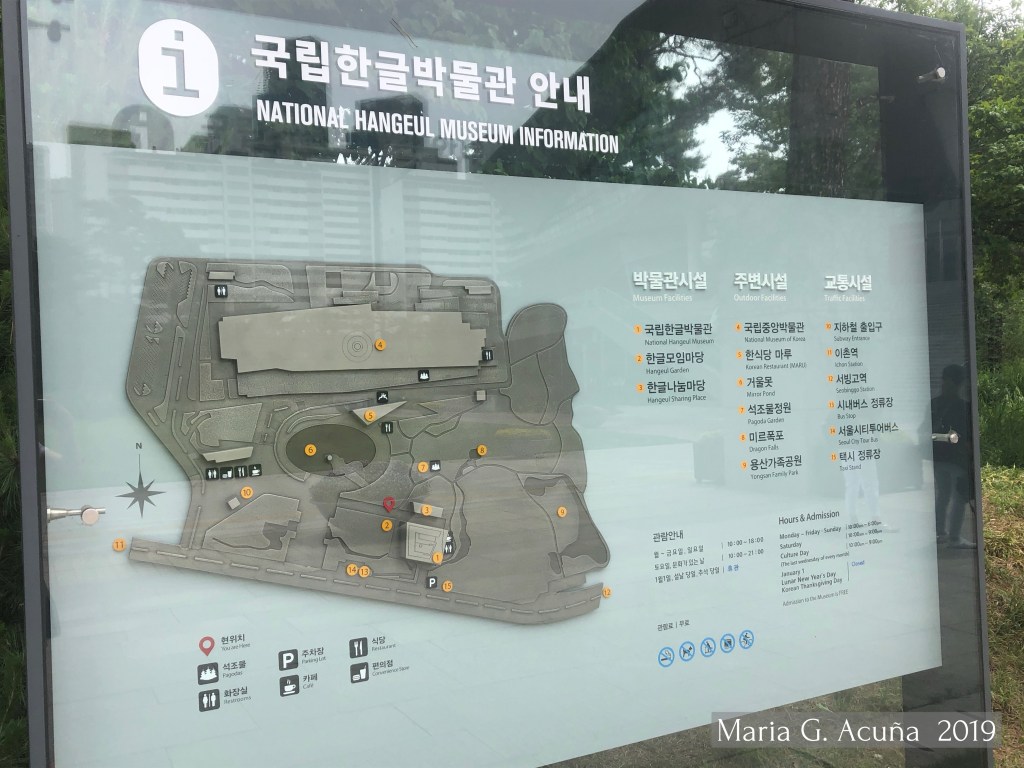
And finally here is information about the museum in case you are interested:
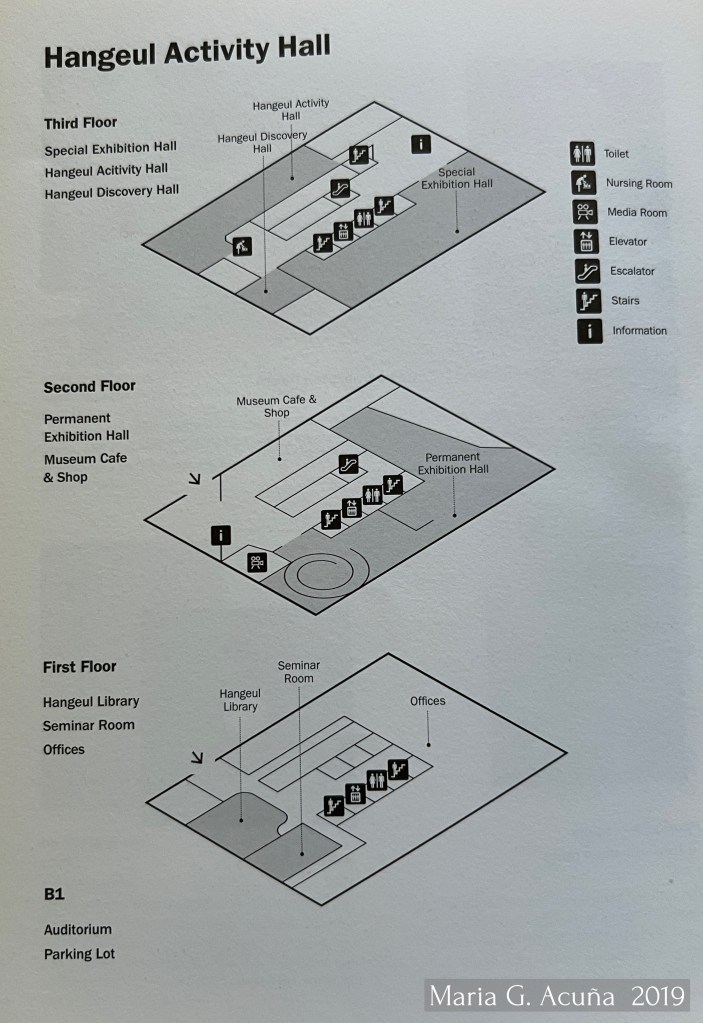
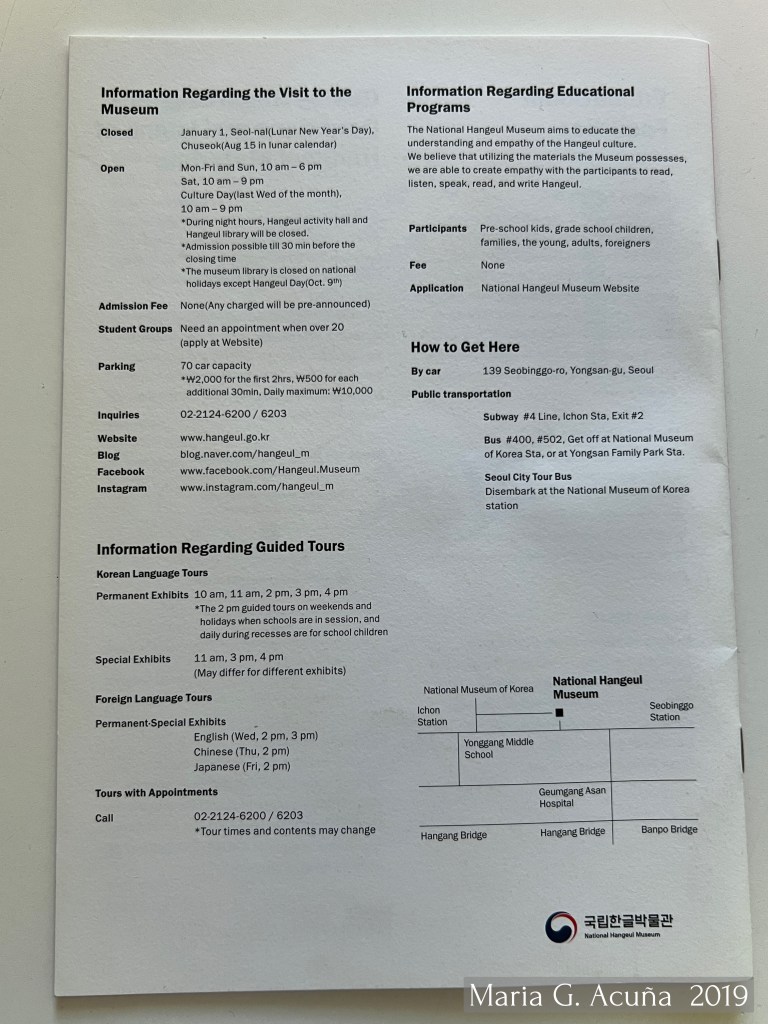
And this great museum video:
I hope you enjoyed this visit to the museum, and learning about the beautiful history and design of the Korean language, Hangul.
안녕히 계세요! (Goodbye!)
 My Virtual World Trip
Corea es en mi opinión un país interesante en diferentes aspectos… pero justamente el hecho de que hayan tenido que que independizarse de las culturas China y Japonesa tan antiguas y poderosas y crear hasta un nuevo alfabeto más sencillo y funcional… es increíble. Lo lograron y eso tiene un gran mérito pues lograron su objetivo… alfabetizar a toda la población en poco tiempo y tener su propia identidad.
Para nosotros occidentales y en especial, los europeos con no cuántas lenguas ( idiomas) esto les parecerá una pérdida de tiempo pues, mientras más ideó más difícil es comunicarnos… pero todos en este mundo globalizado tenemos una lengua en común que queramos o no debemos aprender… el inglés.
Haber qué otro aspecto de la cultura Coreana nos comentas en tu interesante blog.
LikeLike