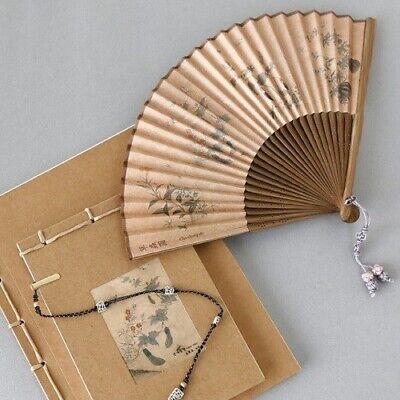
Korean traditional crafts are a beautiful reflection of their rich cultural heritage, showcasing the skill and artistry of generations of craftsmen. Though many of these crafts are also made in China and Japan, Korea manages to give it its very unique style and in some cases use other materials.
These are some of their traditional paper related crafts.
Hanji 한지 (Traditional Korean Paper)
Hanji is a strong, durable, and beautiful paper made from mulberry tree bark. It has been used for centuries in various applications, including books, paintings, and crafts. Hanji is known for its unique texture, color, and strength. It has a lot of resistance to decomposition – this is the reason why Korea has managed to preserve some of the oldest surviving printed materials in the world.
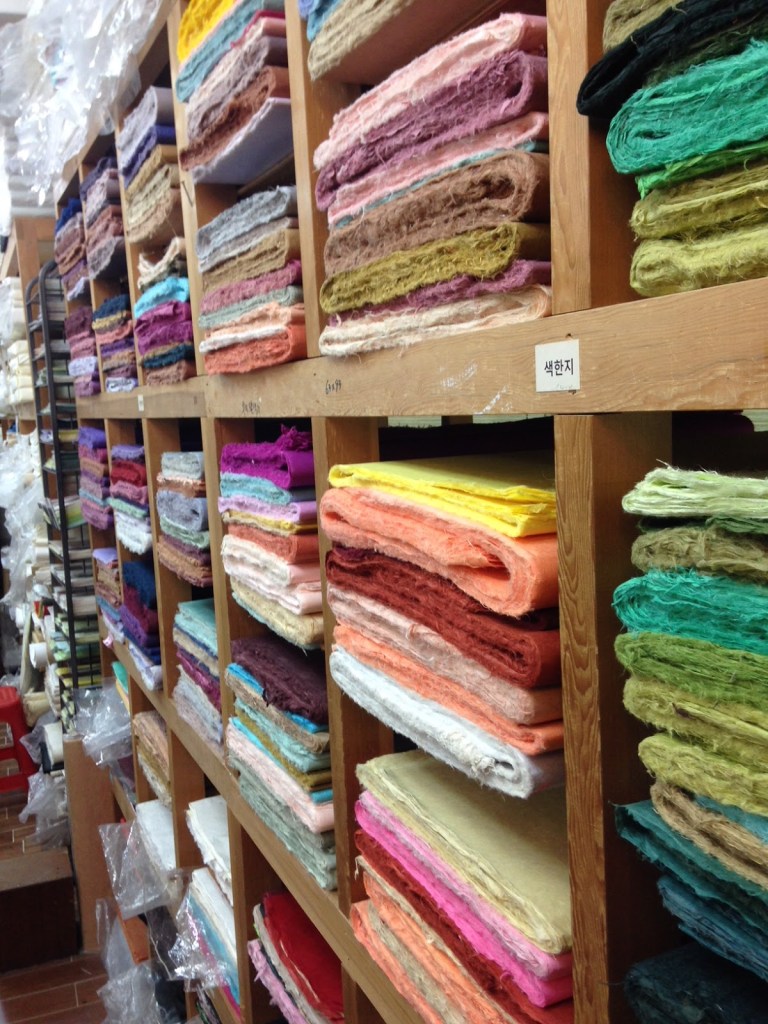
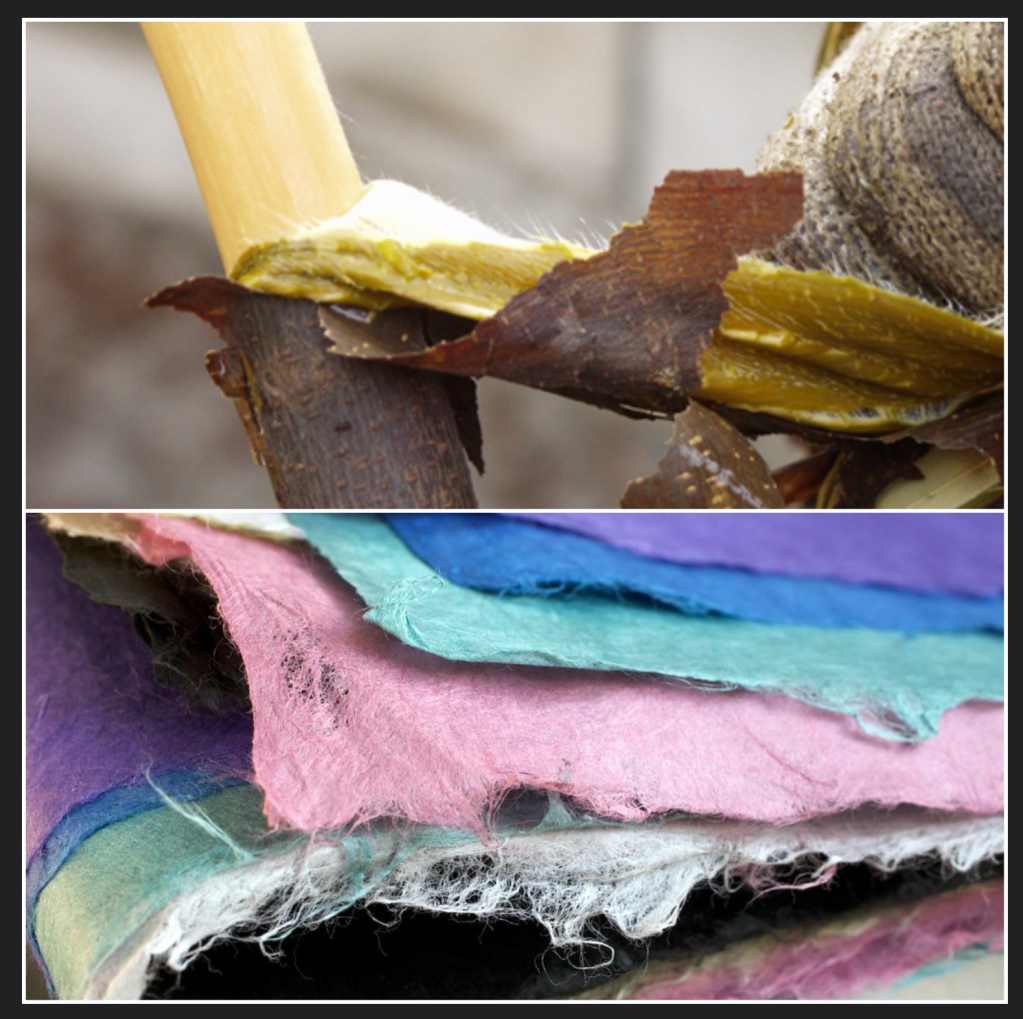
This excelent video showcases the complete process of making this paper:
I was in absolute awe what can be accomplished with this paper. From books, cut outs, boxes, lamps, and even furniture when layered on.
Hanji 2D Art
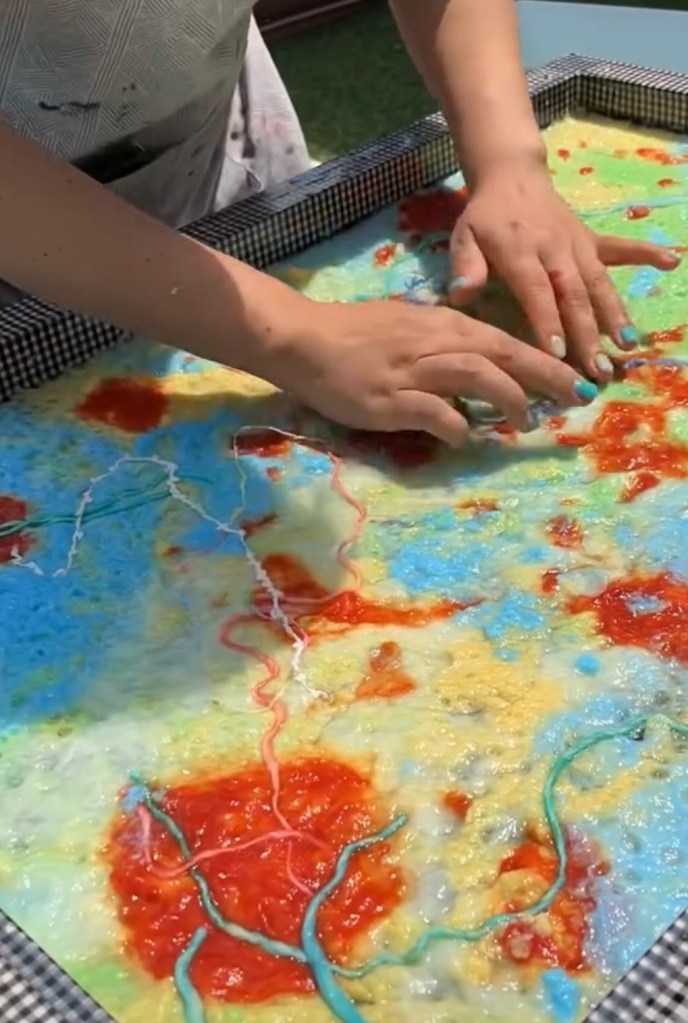
This contemporary artist creates Hanji artistic paper. Using dyes and pieces her results are very colorful.
These contemporary artists create collages:
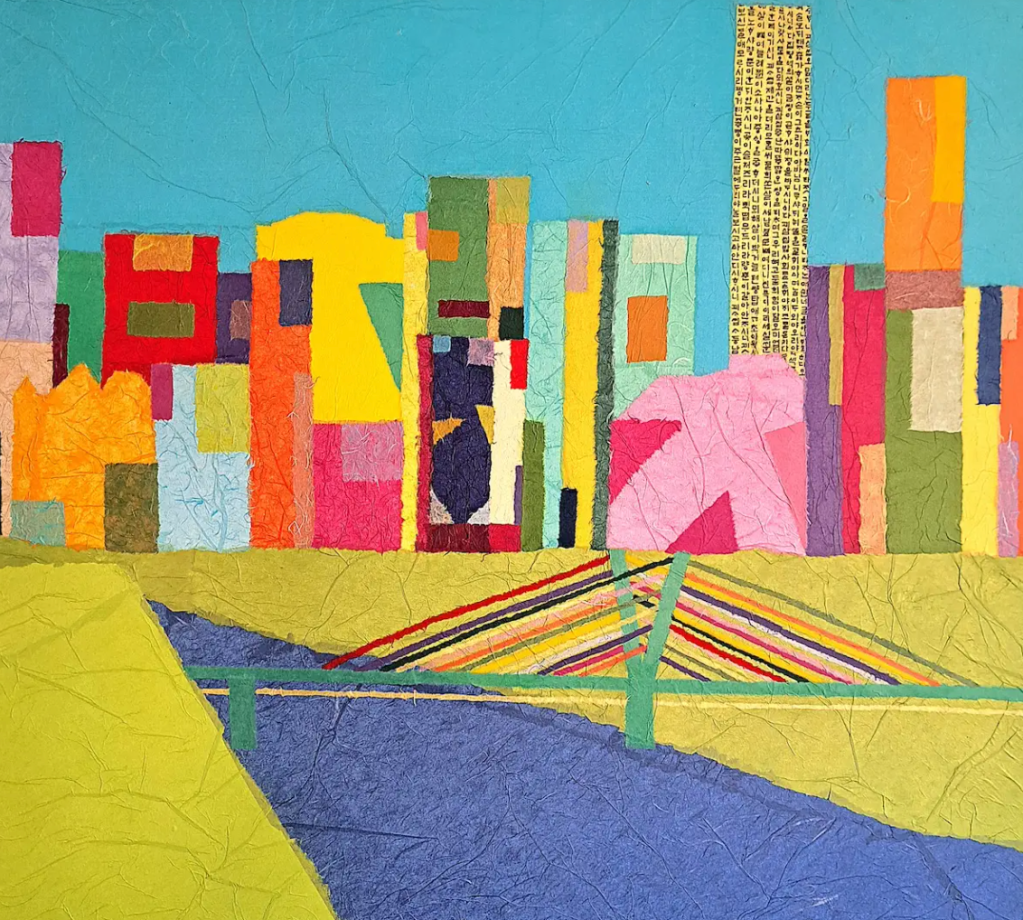
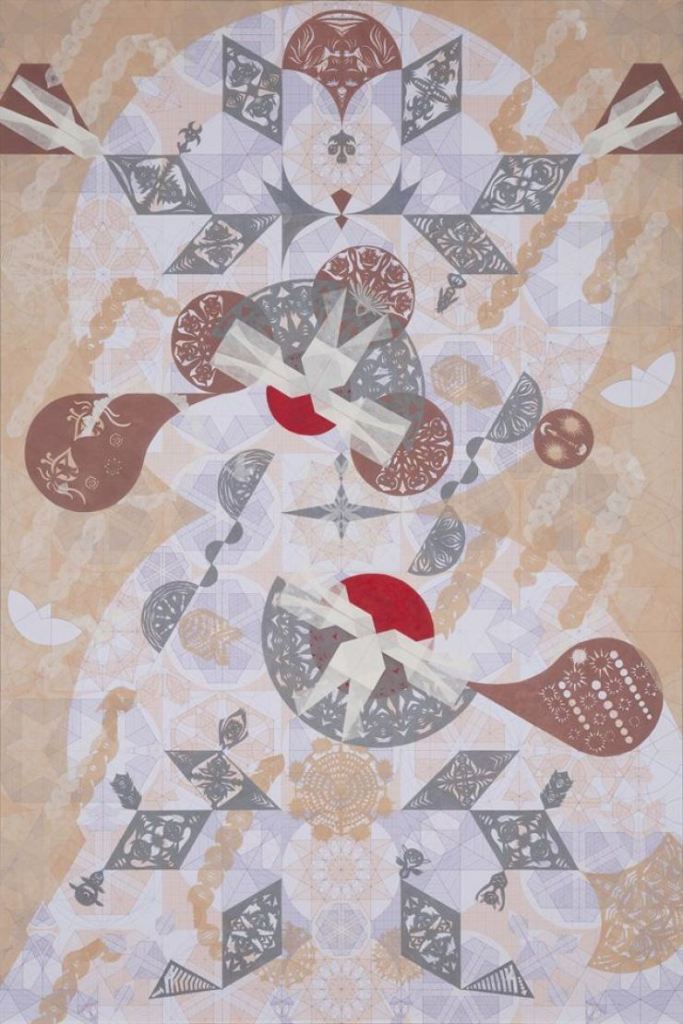
The following artist I couldn’t believe… she did not use a brush to make these, just torn and cut paper:
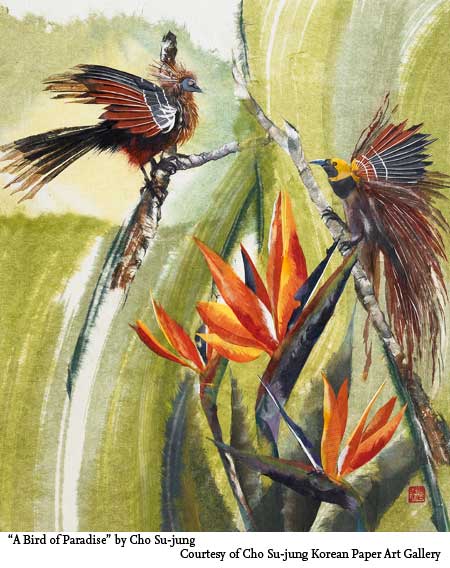
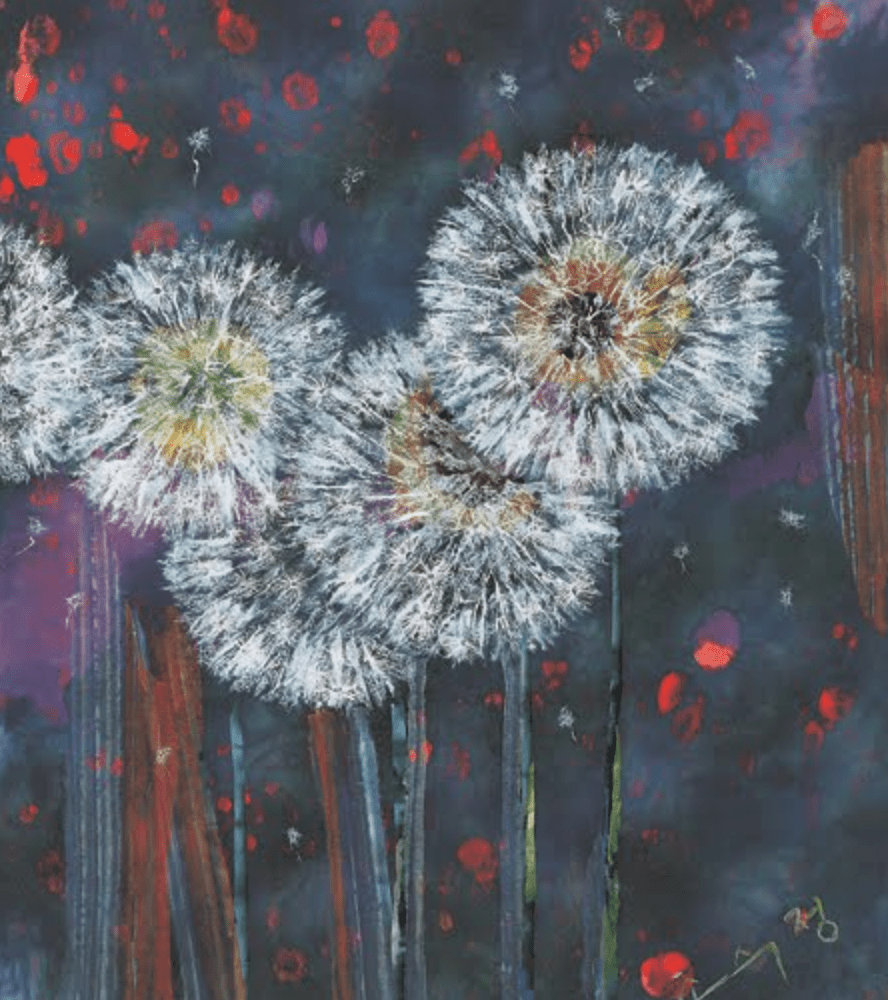
Hanji 3D Art
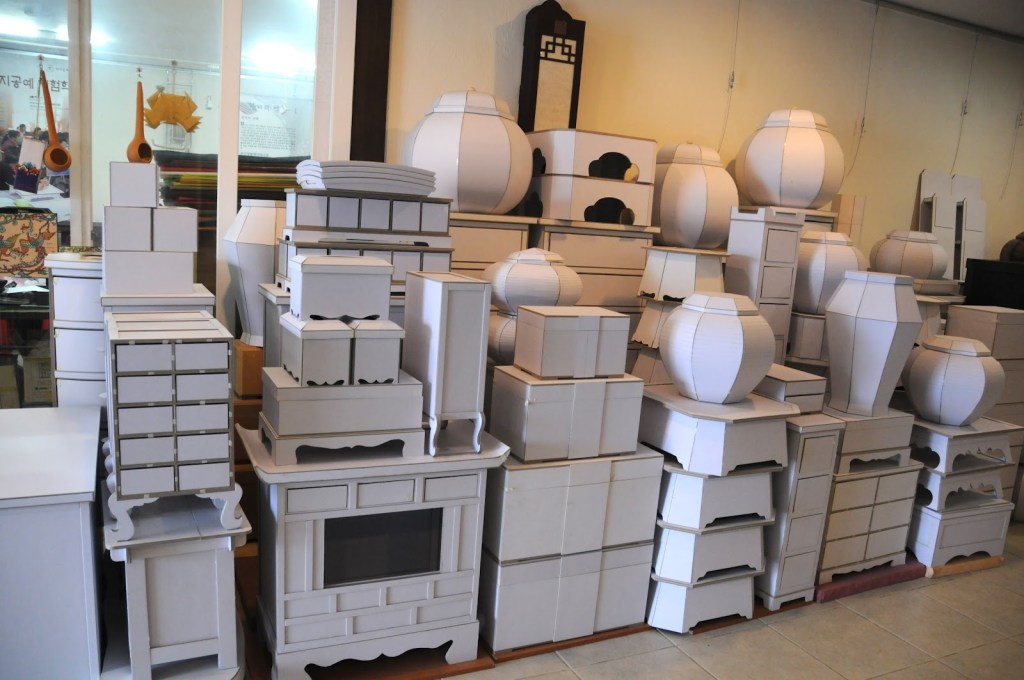
The paper is cut and layered in many ways:
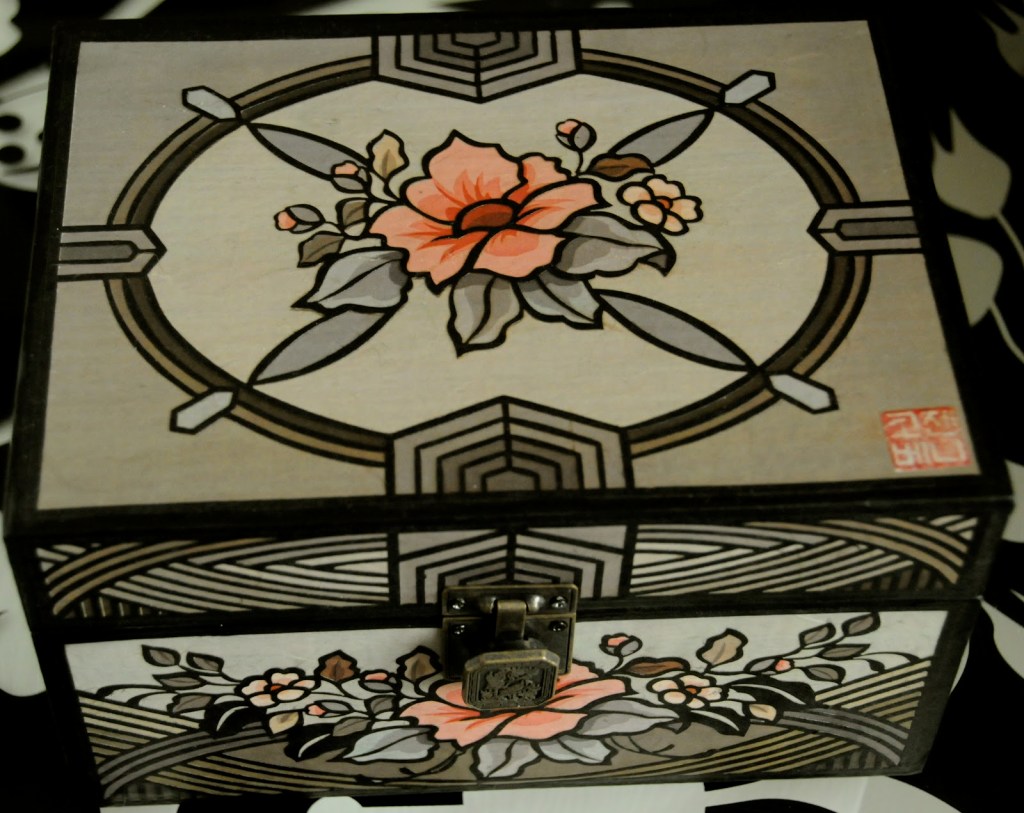
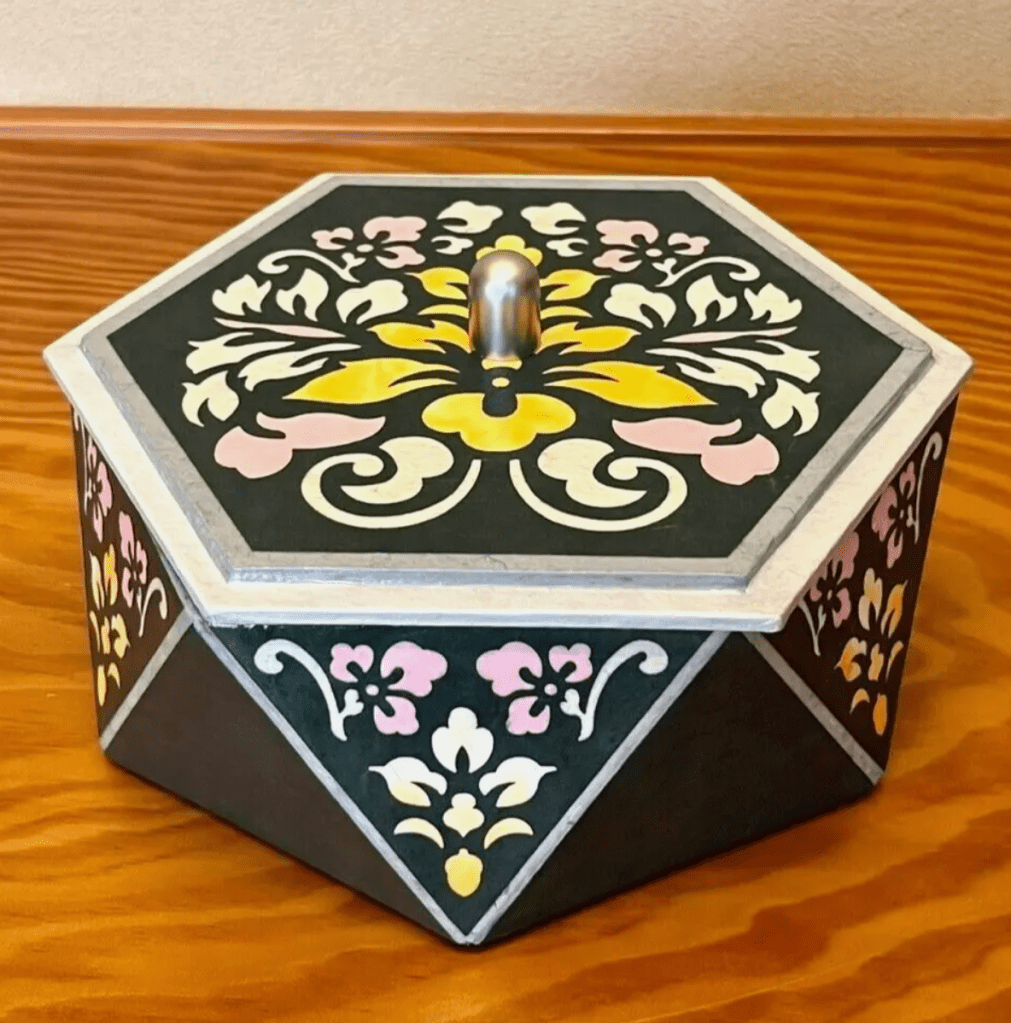
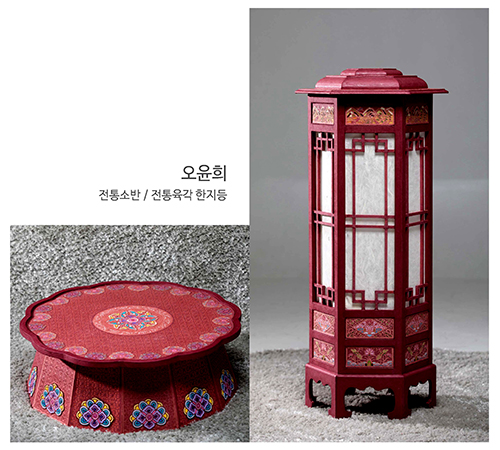
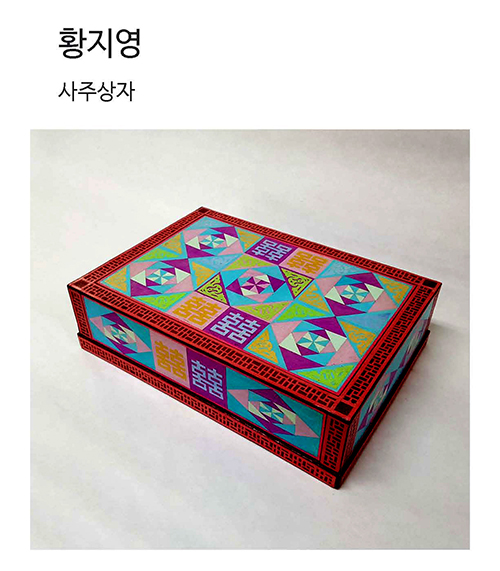
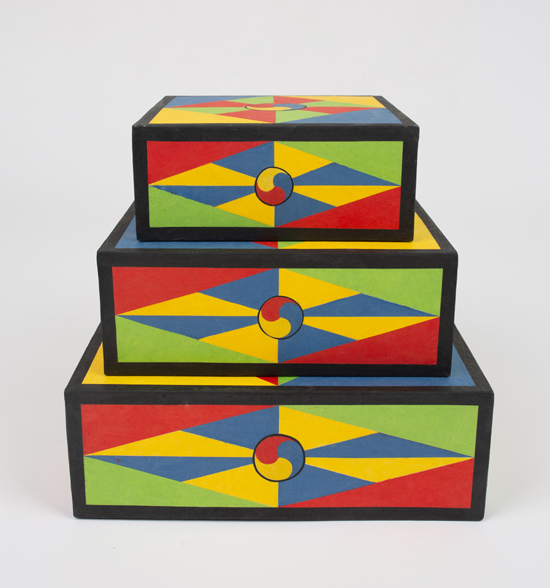
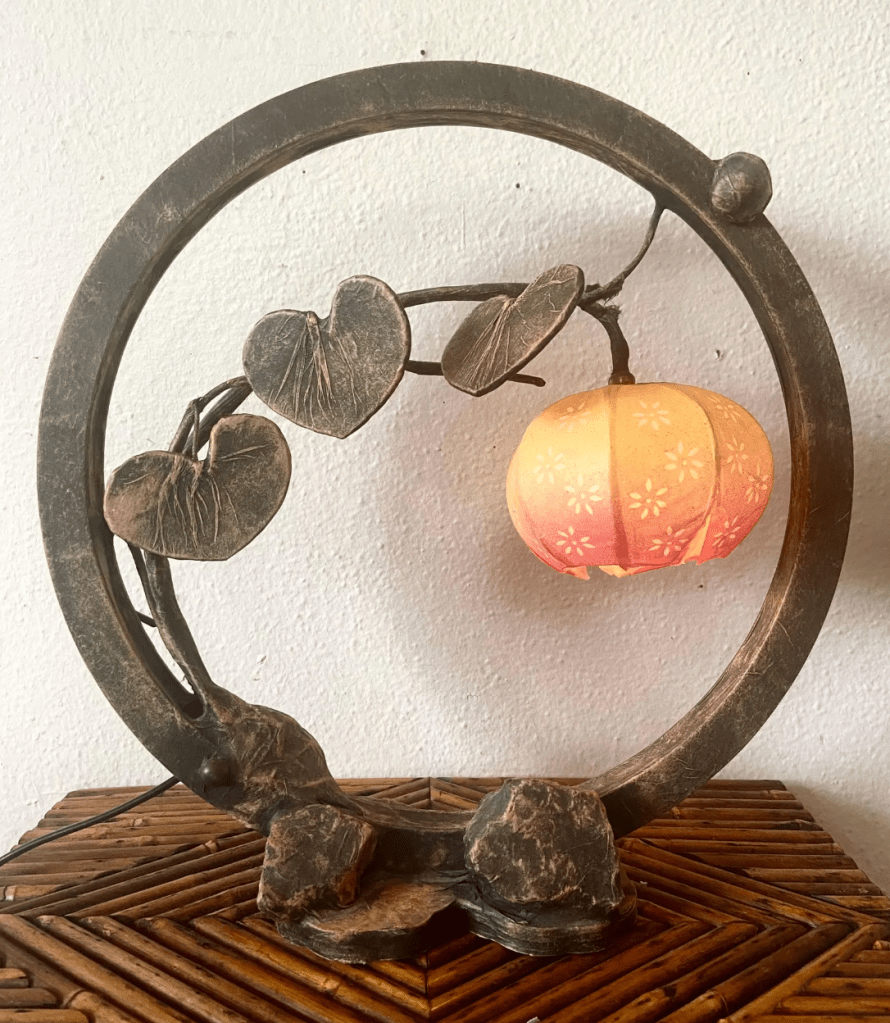
Looking for examples of Hanji objects, I discovered a blog that talked about an incredible museum that showcases Hanji exhibits. It is called the Museum SAN. SAN stands for Space, Art, Nature. It has the most incredible building and location… just look:
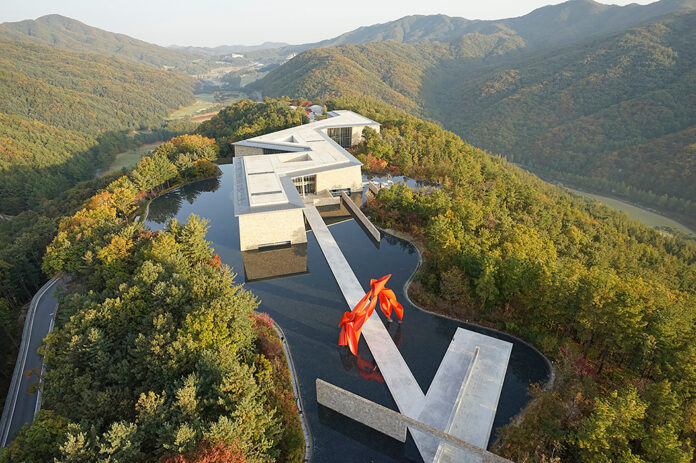
Incredible right?! This museum is built on a mountain range in Oak Valley, South Korea. It was designed by Tadao Ando to resemble the flight formations of wild geese.
You can see its website HERE and see its beautiful spaces. It even has meditation areas. Its concept is to disconnect… to connect. There was a great exhibit of HAnji here captured beautifully by this BLOG. I loved this piece:

It is a thread box!
Papercutting
Closely related to Hanji crafts, (one could say a branch of Hanji), papercutting is a traditional Korean folk art that involves cutting intricate designs into paper. Papercuts are often used to decorate homes, temples, and other buildings during festivals and special occasions.
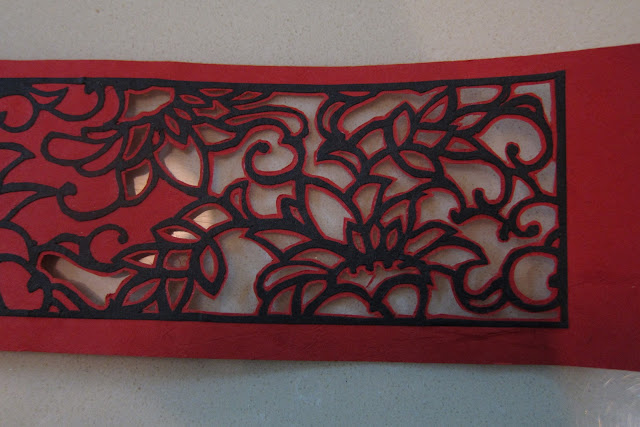
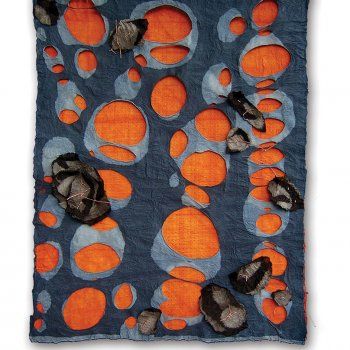
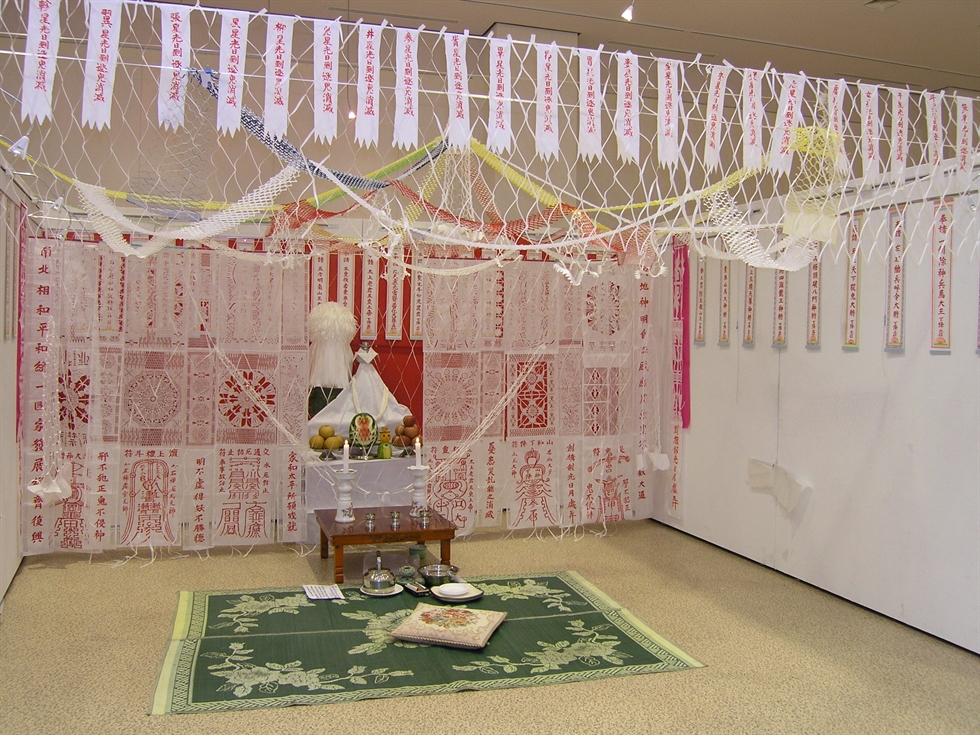
Sacred paper cutting, an integral part of Korean shamanistic rituals known as gut (굿), is a tradition deeply rooted in regions like Taean County and parts of Jeju Island. By folding paper multiple times and cutting specific patterns, practitioners create shamanistic objects used to purify ritual spaces and honor the departed.
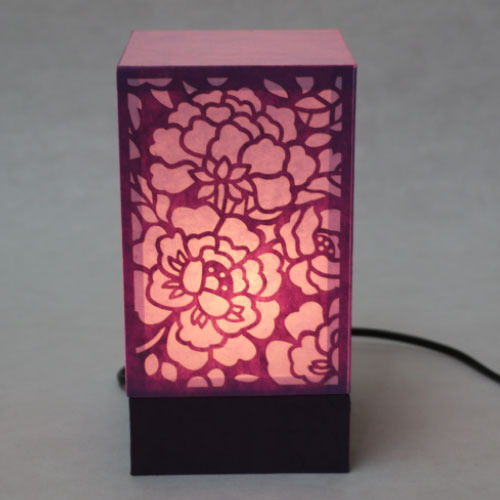
And of course lamps:

If you are interested in learning more about this incredible craft, visit this BLOG, where a woman named Natalie became enamored and learned this craft. She has great posts including where to buy Hanji paper in Seoul and her great sucesses in creating art with it.
Fan Art
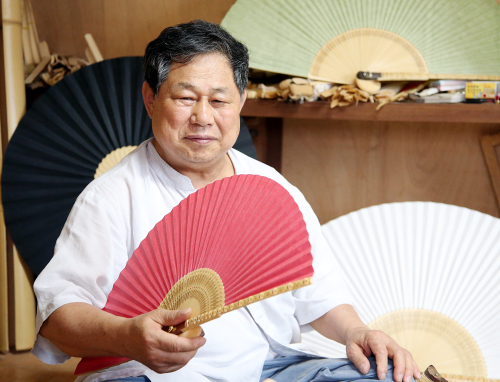
Hapjukseon are traditional Korean fans made from hanji and bamboo. Sometimes silk too. These fans are not only functional but also beautiful pieces of art, often adorned with intricate calligraphy, paintings, or traditional patterns.
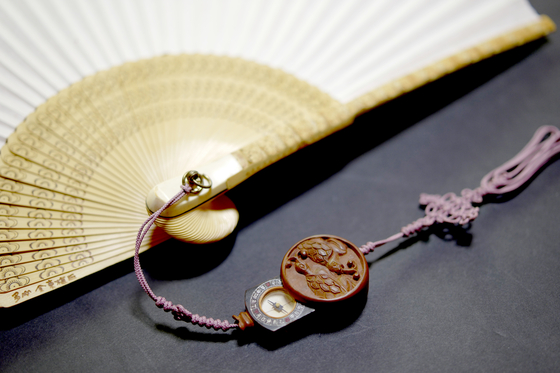
Please do not think of a machine made one… this is made by hand, including every single piece of wood…
The man in the bottom photo is Master craftsman Kim Dong-sik, 77, from Jeonju. In 1956, at the mere age of 14, he embarked on his journey to master hapjukseon in Jeonju, North Jeolla Province. His mentor was none other than his maternal grandfather, Rah Hak-cheon, a renowned fan maker whose family had been crafting fans for four generations. Interestingly, his grandfather had even created fans for King Gojong during the waning years of the Joseon Dynasty. where this tradition continues to live:
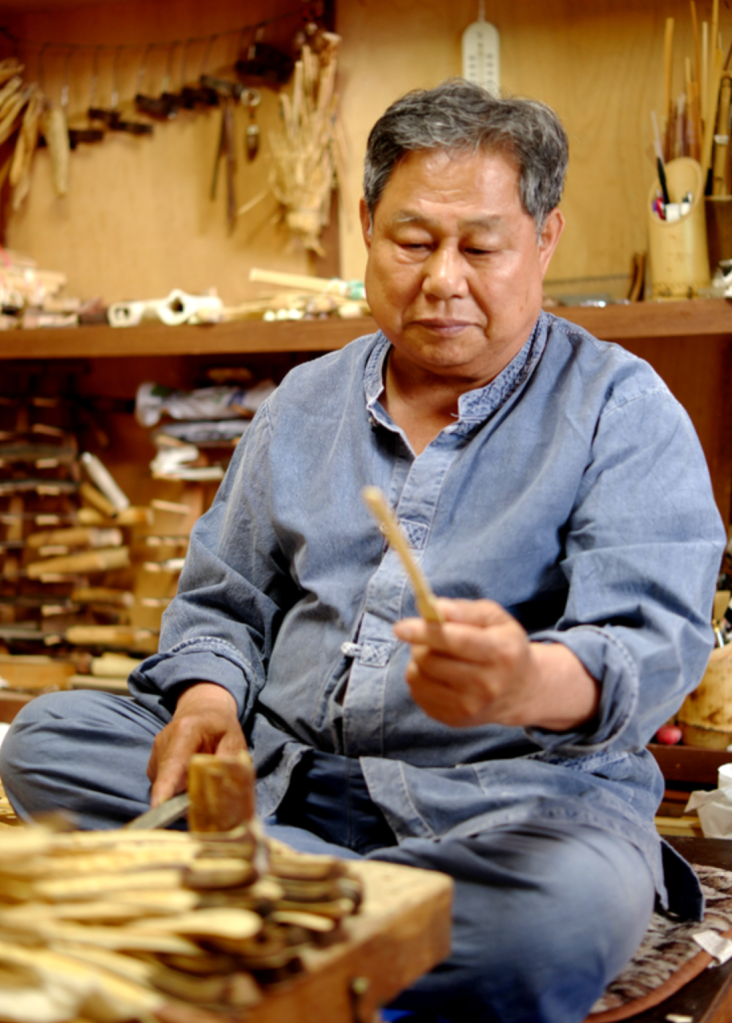
“It takes more than a week to make a single hapjukseon and it requires more than 150 manual touches,” said Kim.
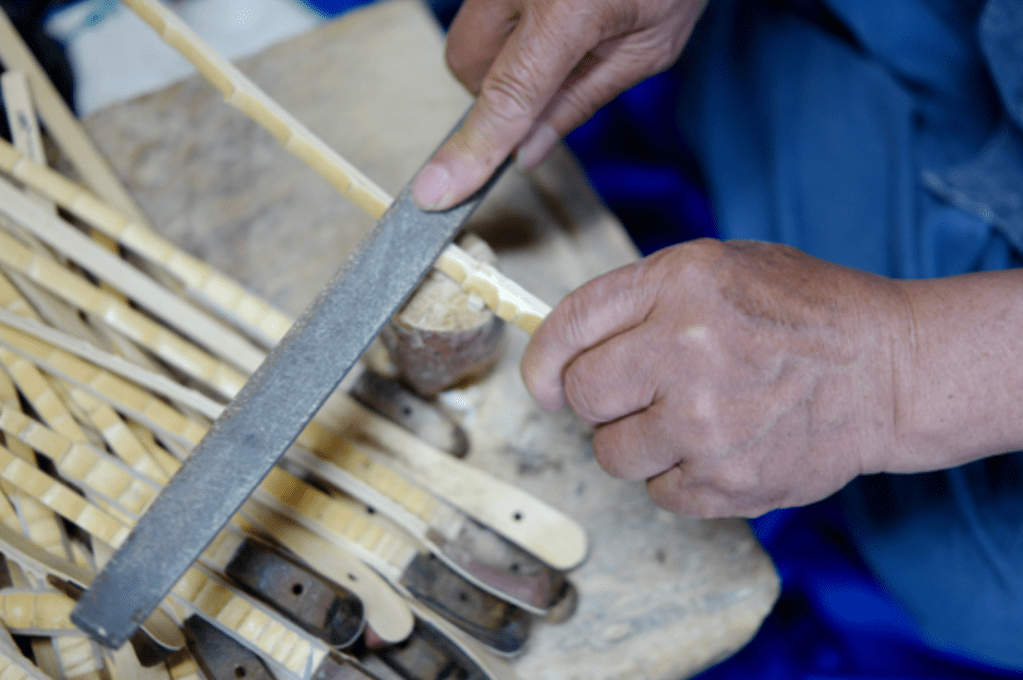
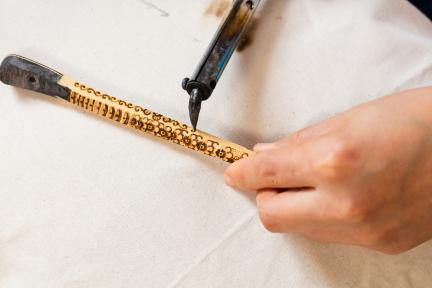

In ancient Korea, the number of bamboo strips in a fan was a clear indicator of social rank. Royal family members were entitled to fans with 50 strips, while noblemen were limited to 40. Those of lower social standing were restricted to fans with fewer than 40 strips.
Watch Master Kim in the following video. I almost cried. To think of someone that dedicated… he is a treasure. For real! Kim was designated as No. 128 intangible cultural property of Korea for a skill called seonjajang or traditional fan making.
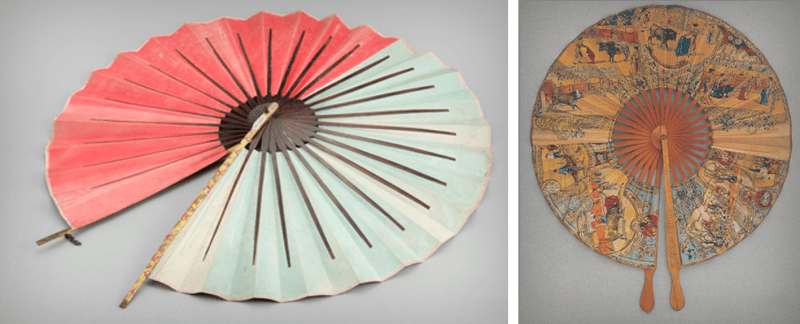
It is incredible how every single thing is a whole world… reading more I learned about the different kinds of fans from Korea… there are 4 kinds of fans:
1 – Hapjuk-seon is a fan with spokes, like the previous one and the one we Westerners are more familiar with.
2- Dan-seon is a quintessential Korean fan style, its name derived from its distinctive fish-tail shape, represented by the Chinese character “mi.” This elegant design has been a beloved choice for generations, showcasing the timeless appeal of Korean craftsmanship.

3- Yun-seon is a circular fan. Its primary function was less to cool and more to provide shade from the sun’s rays. This innovative approach to fan design highlights the creativity and adaptability of Korean artisans.
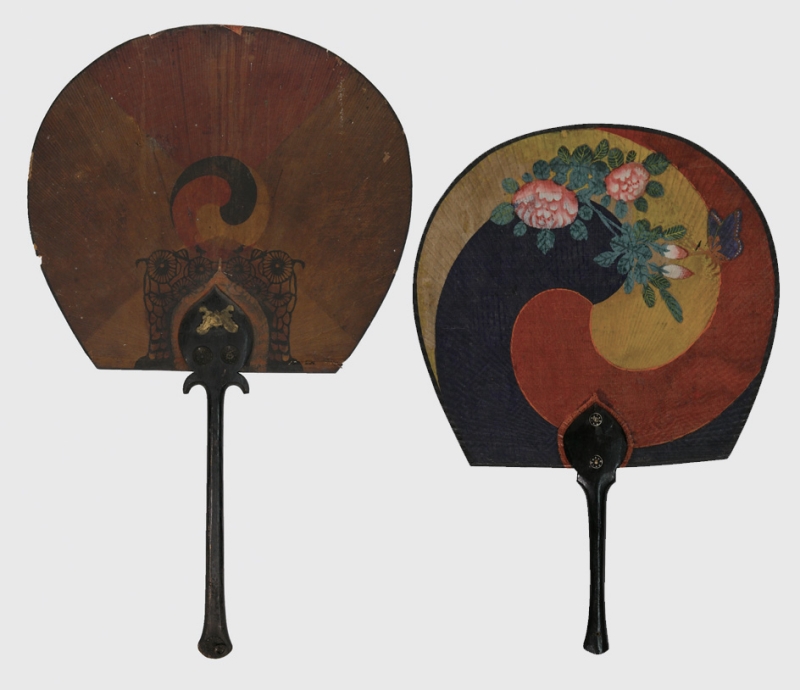
4- Taeguk-seon is a masterpiece of Korean craftsmanship, adorned with the iconic Taeguk symbol, representing the harmony of yin and yang. Crafted by the talented Eom Jae-su, son of the esteemed Intangible Cultural Property holder Eom Ju-won, this fan is a testament to the enduring legacy of Korean fan-making.
Lanterns
Just when I thought I was done covering the different arts related to paper, It occurred to me to check if the lanterns they make for their Lotus Latern Parade, made for Buddha’s Birthday Celebration, were made of Hanji. THEY ARE!!! I thought they were made with fabric because the thought of paper seemed too fragile… I guess not this kind of paper.
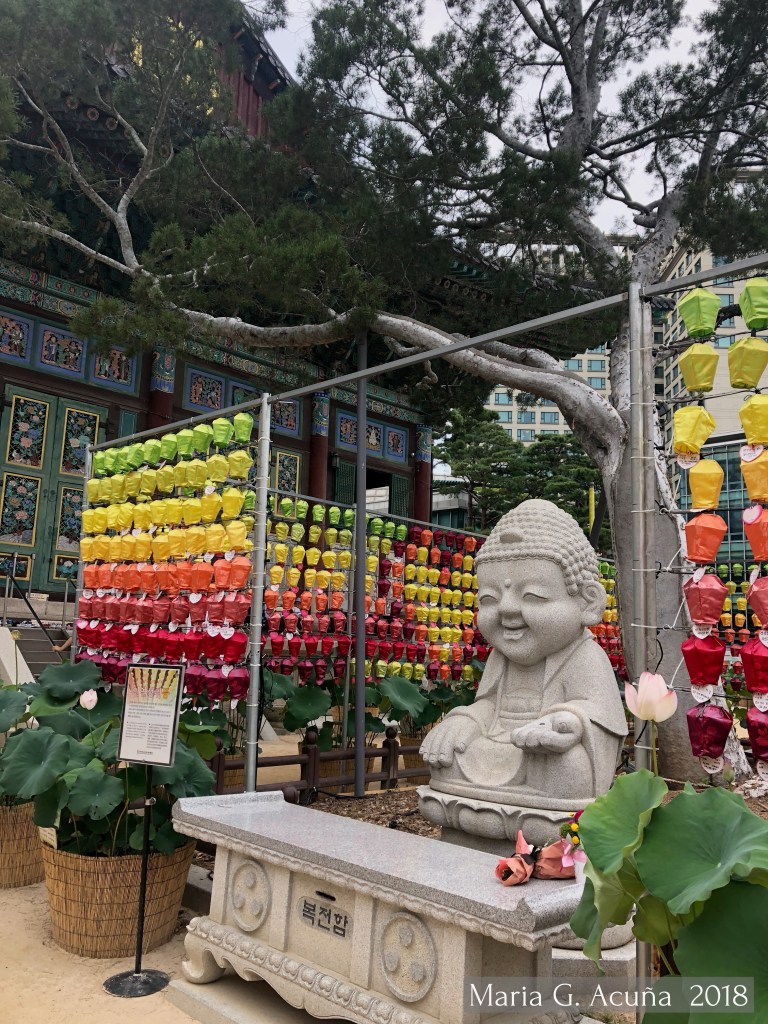
They create incredible lanterns. Let’s start with the traditional ones, you see them anytime in a Buddhist temple.
These are at Bongeunsa Temple:
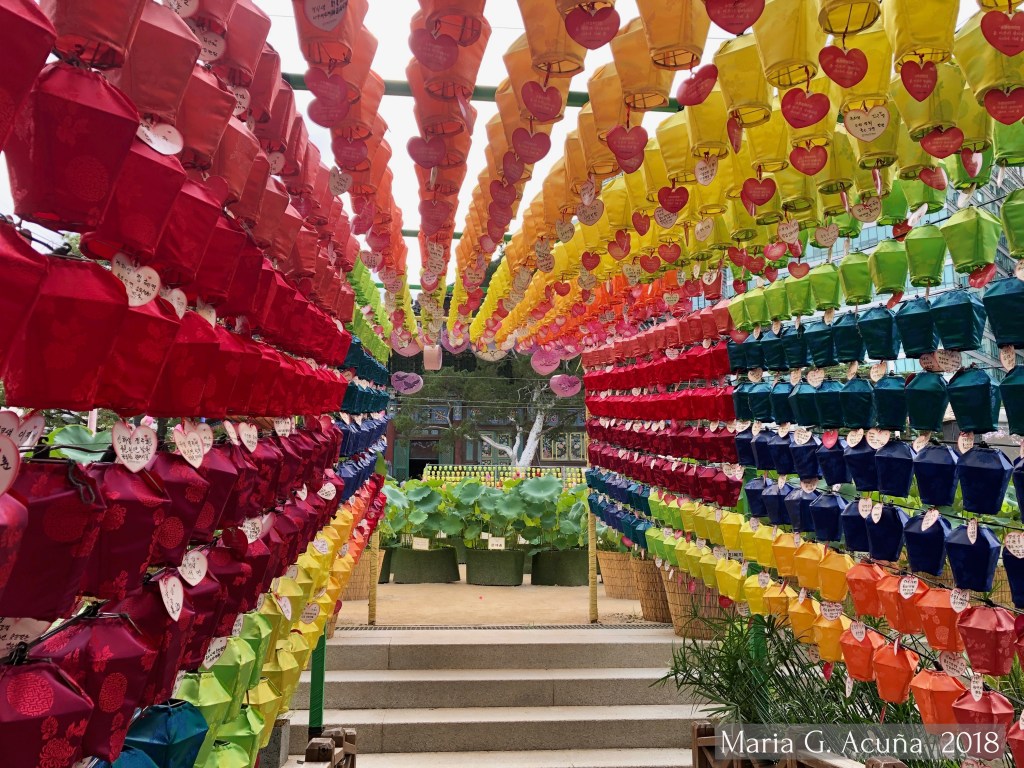
These are at Jogyesa in Gangnam:
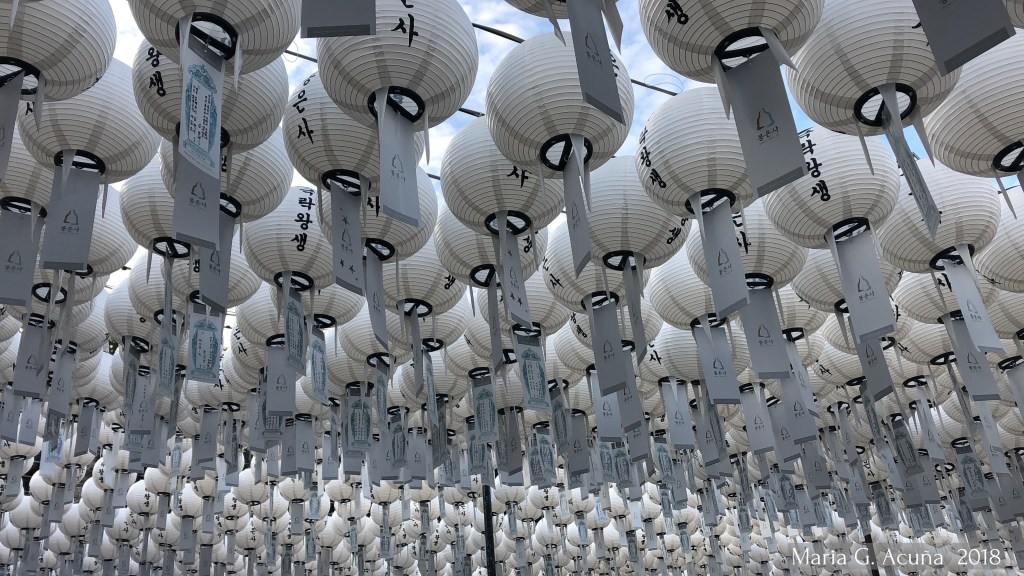
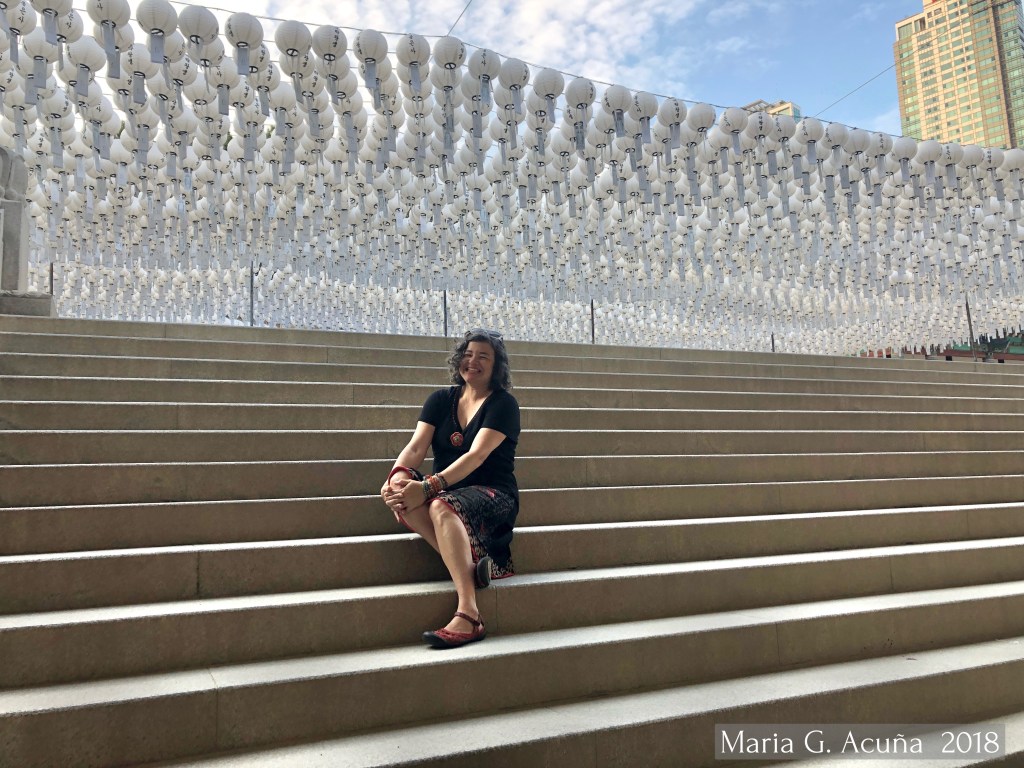
Yes… that’s me!
Now… when the Lotus Latern Festival, Yeon Deung Hoe arrives, these temples dress up in even more lanterns. One of the most famous is the Samgwangsa Temple. The photos are unreal. These come from Facebook:
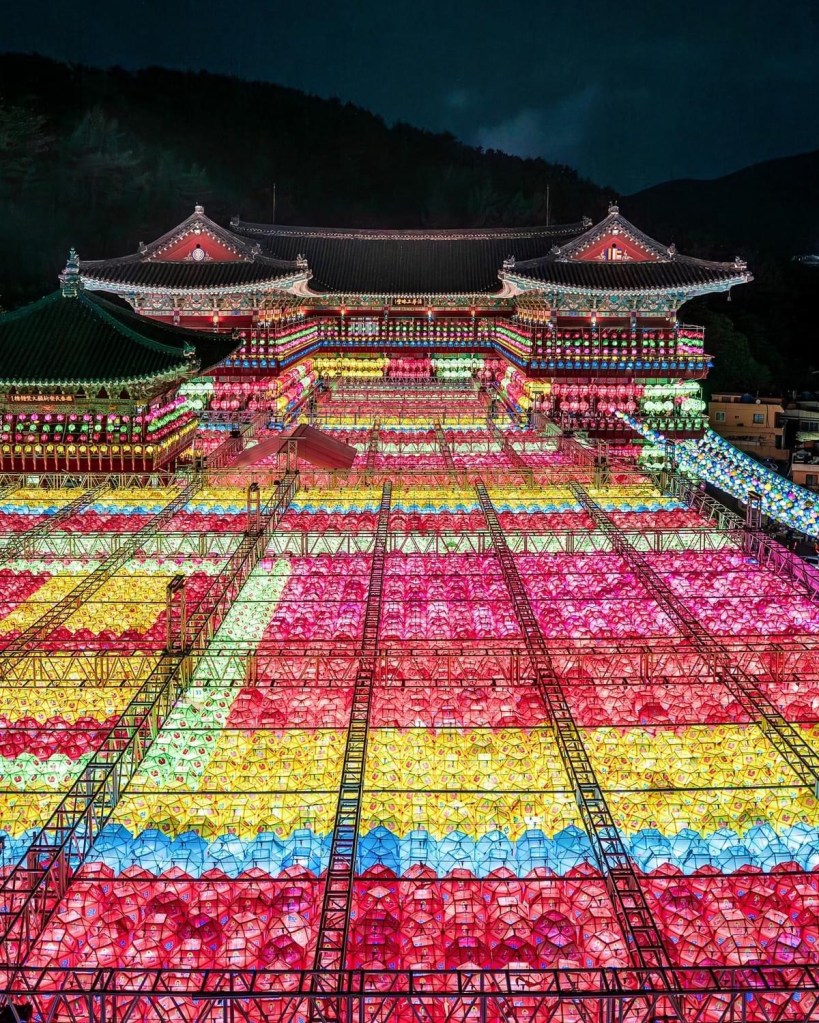
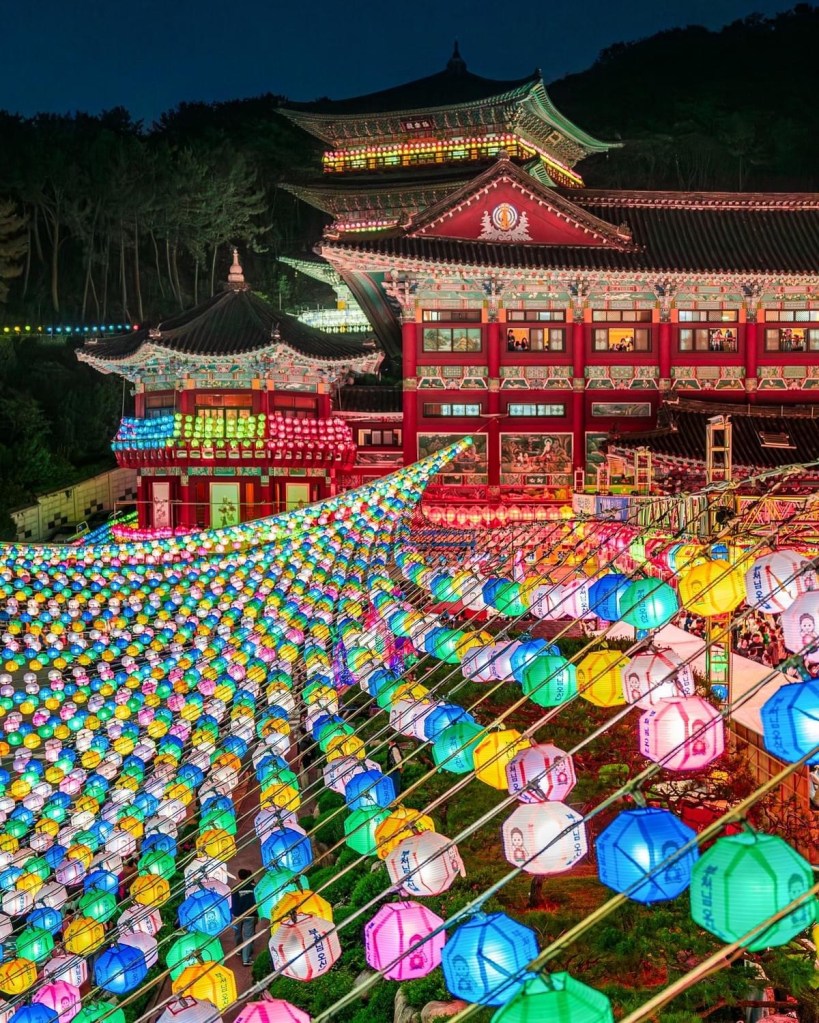
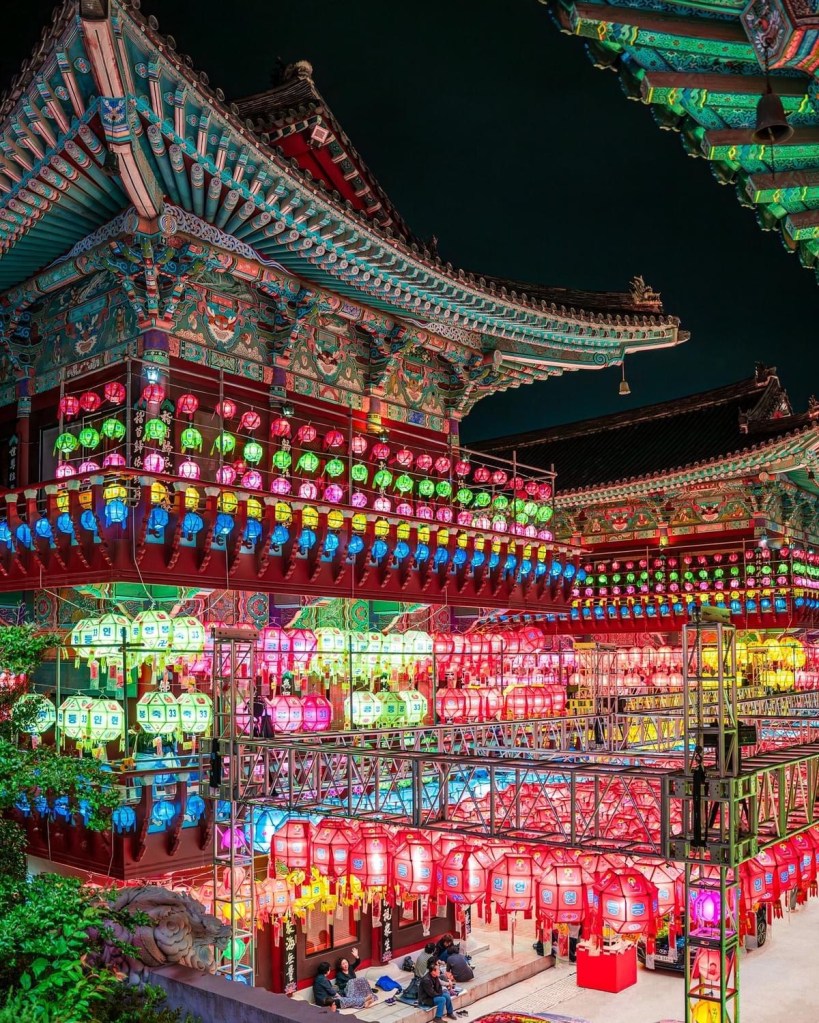
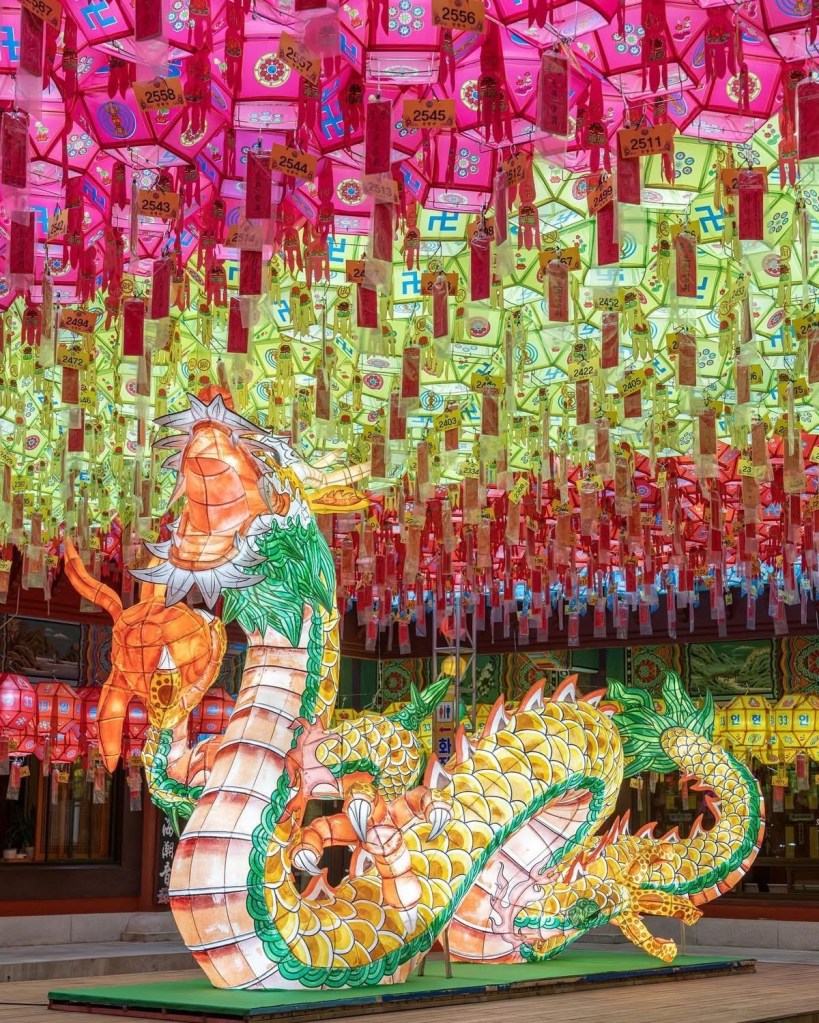
WOW! Doesn’t even begin to cover it!
But they don’t all look the same like that… there are so many variations. These are also from Yeon Deung Hoe, the Lotus Lantern Festival.
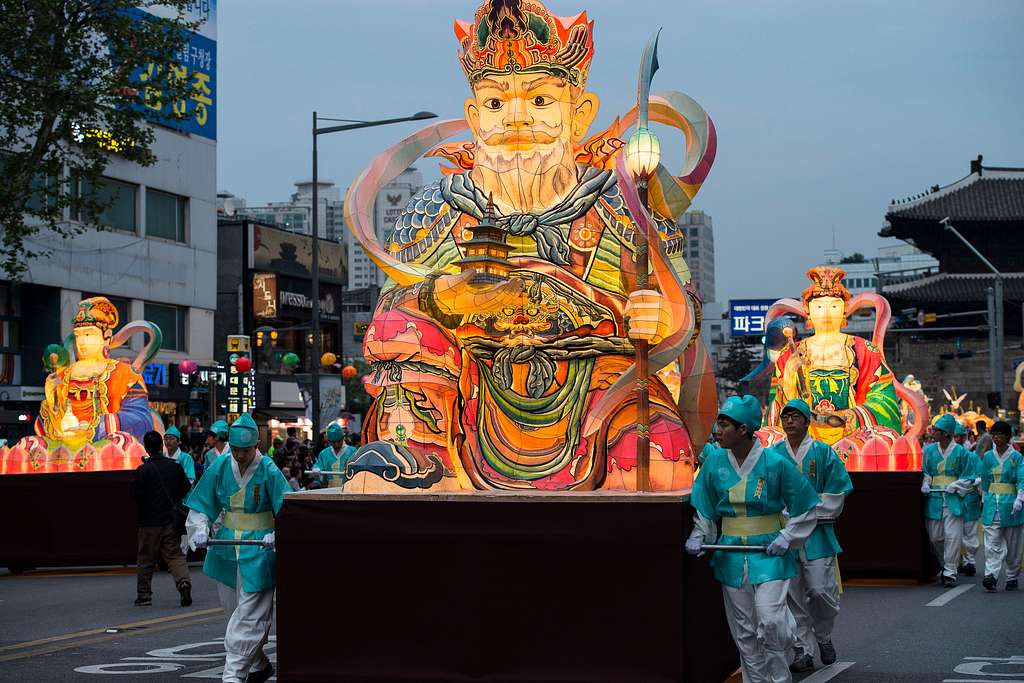
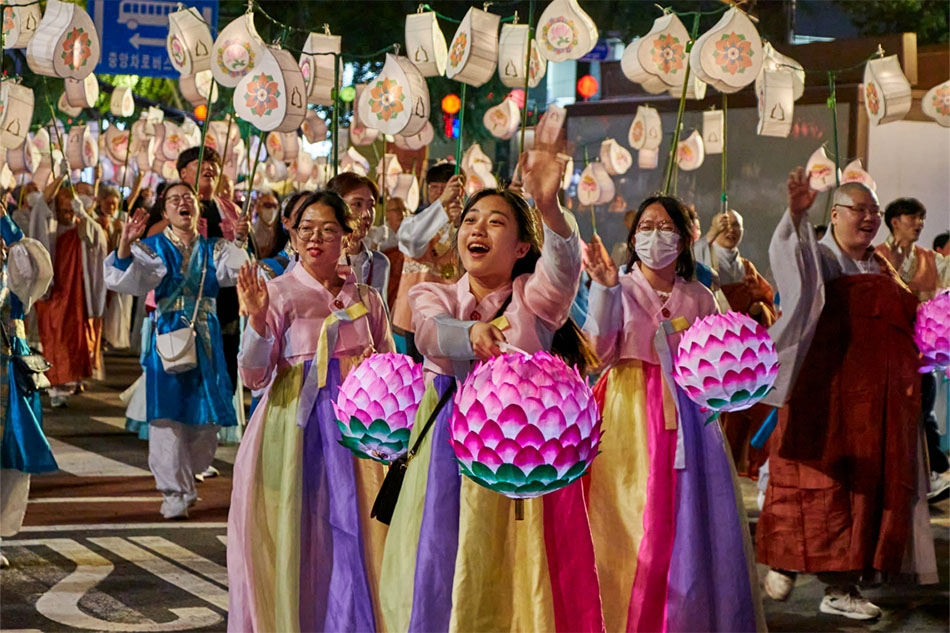
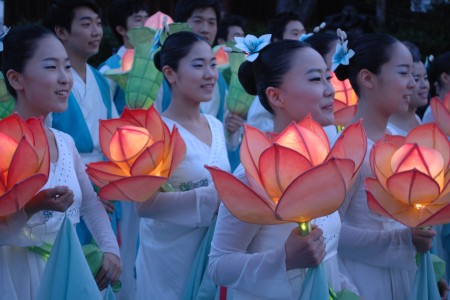
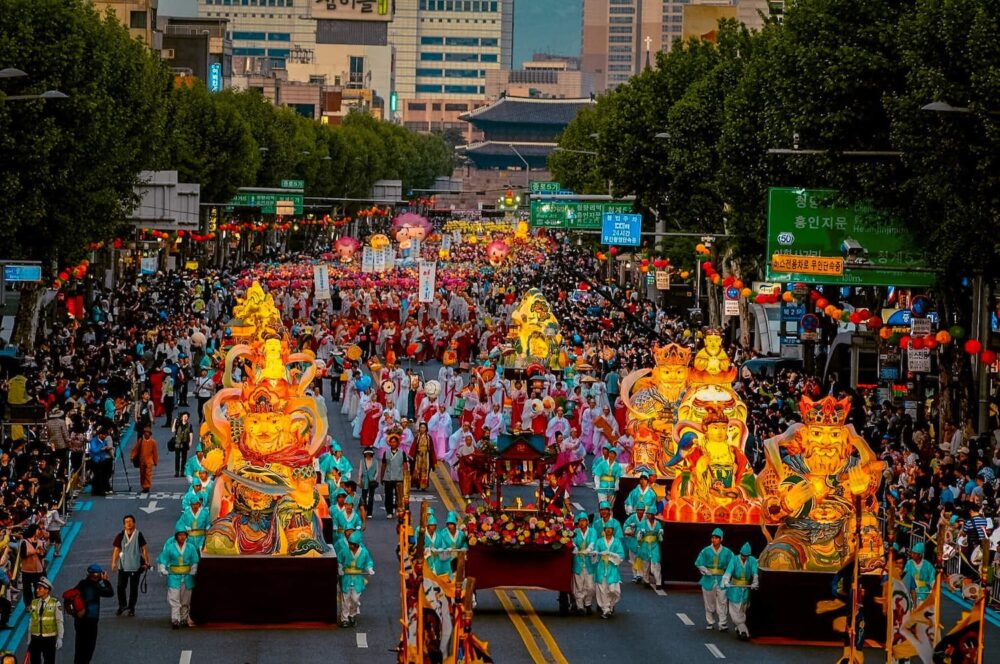
The Lotus Lantern Festival, or “Yeon Deung Hoe,” is a magical time to experience Seoul. With a history spanning over a millennium, this festival honors Buddha’s birthday and illuminates the city with a message of peace and enlightenment. As thousands of handcrafted lanterns illuminate the streets, the bustling metropolis transforms into a serene and captivating spectacle. Visitors can immerse themselves in the festivities, from crafting their own lanterns to witnessing breathtaking parades that wind through the city.
This festival lasts for about a week in April, every year it has a different day as it connected to the moon.
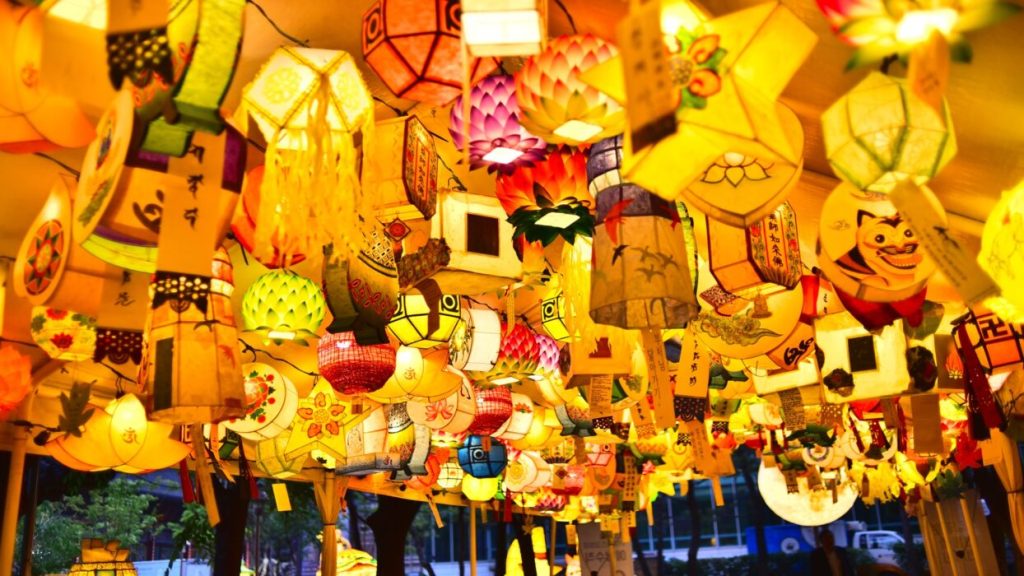

These are images of the parade:
Here is a video with highlights of the parade and the entire festival, including the temples.
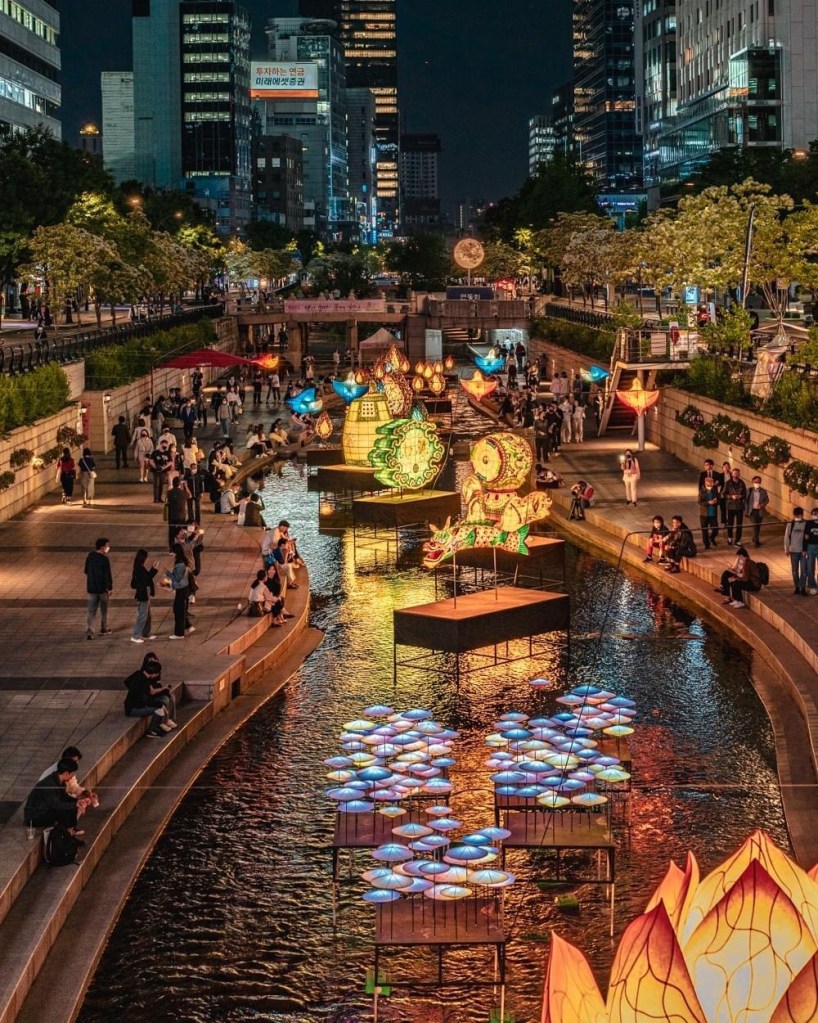
These photos are at the Cheonggyecheon Stream, a river that runs through Seoul and has a walkway on both sides.

This video is very relaxing to watch… you feel like you are there…
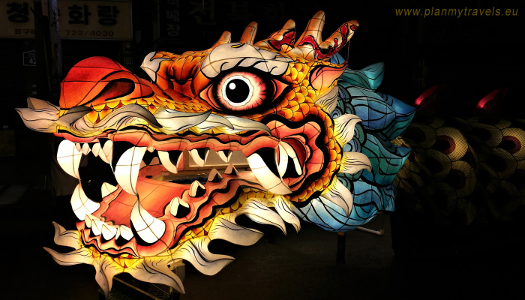
Thank you so much for coming along! I hope you enjoyed this post. I will leave you with this incredible photo of the dragon from the parade…
I pray I will experience this celebration in person someday… I am! I am! I am! ^ ^
 My Virtual World Trip