Hello! To continue our trip through the rich world of Minhwa, we will now look at …
MUNJADO / 문자도 (PAINTING OF CHINESE CHARACTERS)
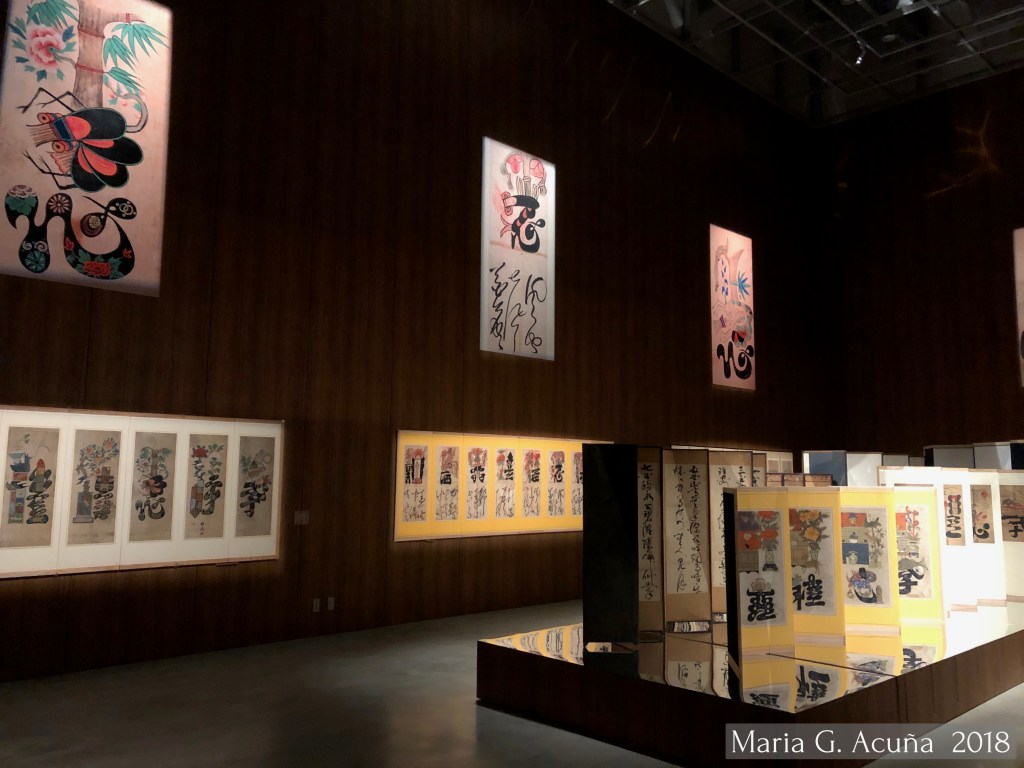
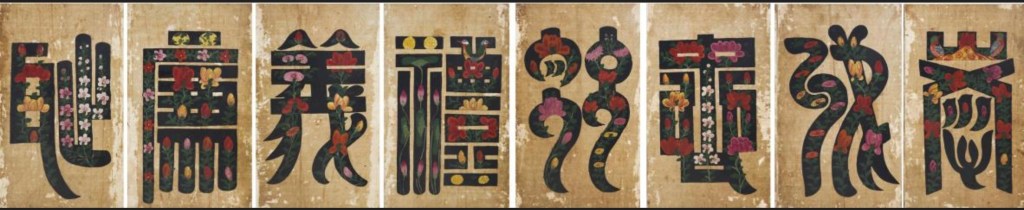
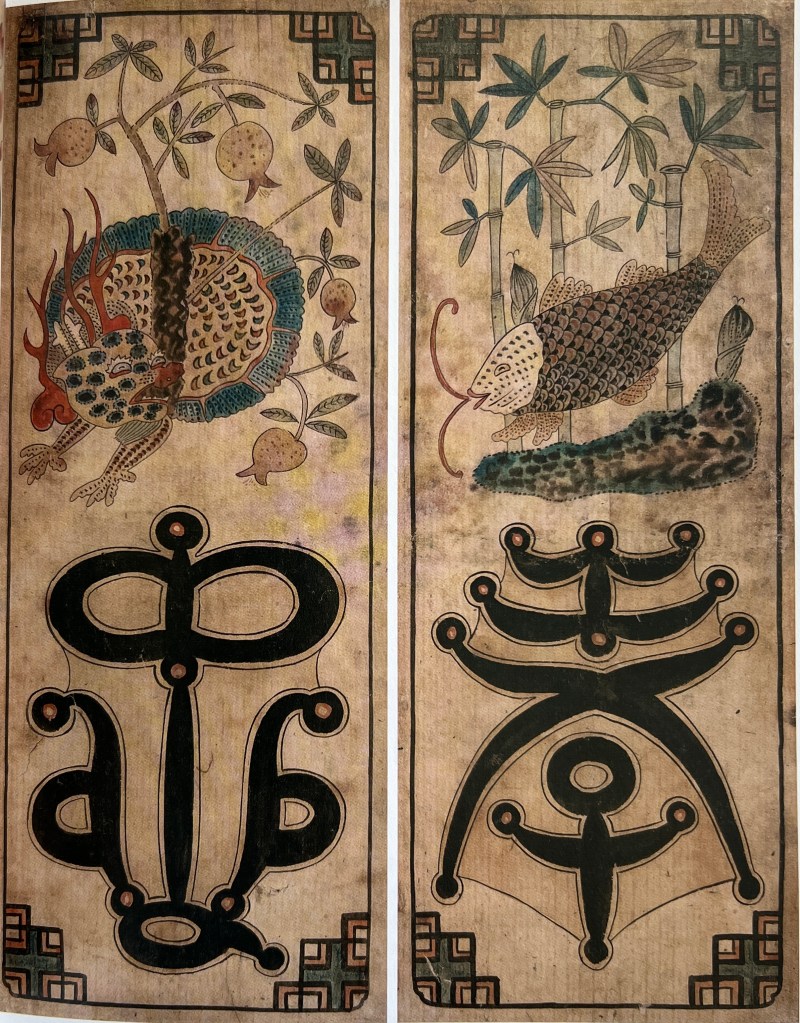
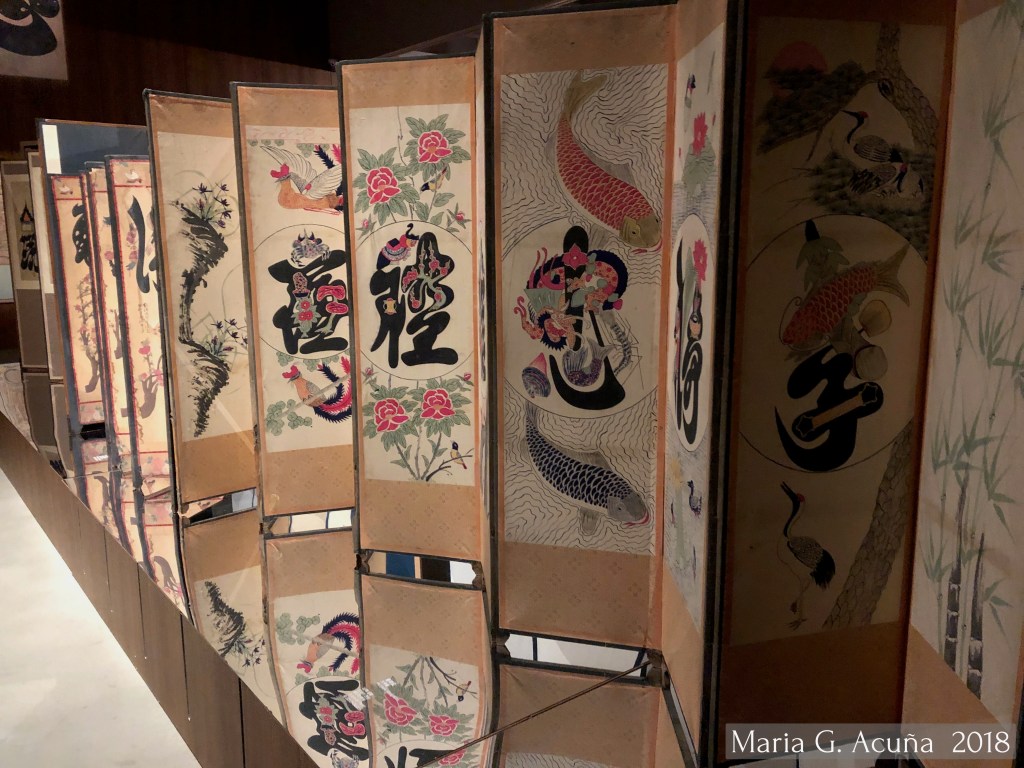
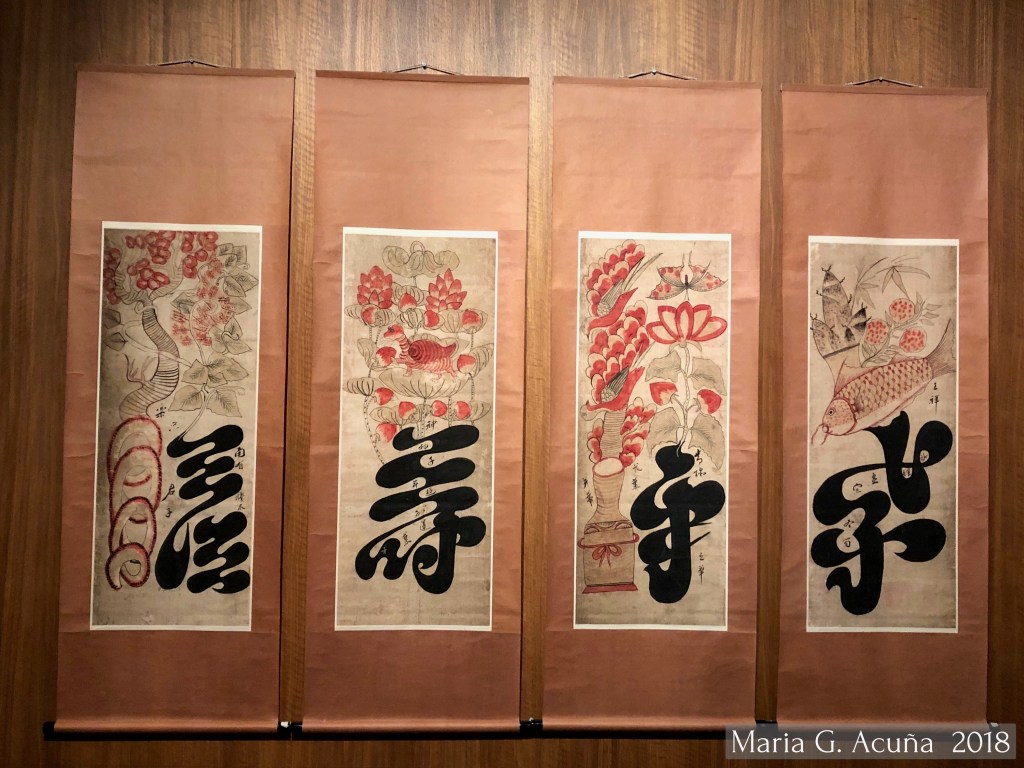
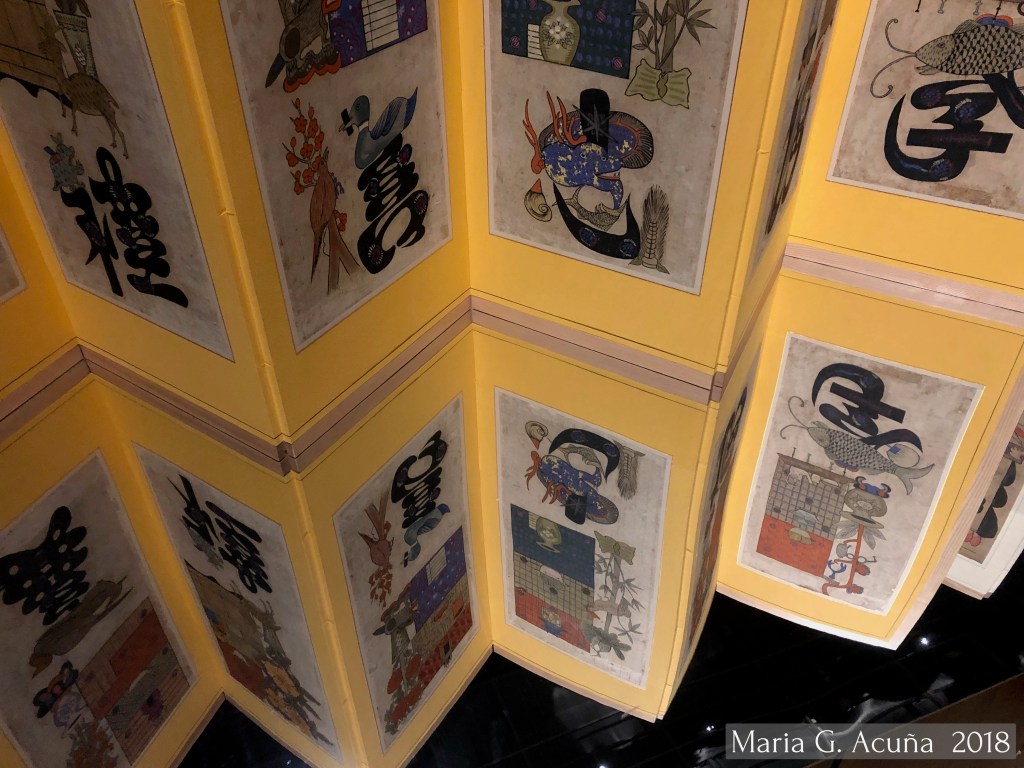
Munjado screens, a captivating form of Korean folk art, offer a unique visual representation of Confucian ethics. These screens distinguish themselves by ingeniously superimposing symbolic imagery—depicting animals, birds, fish, plants, and even lyrical scenes—onto classical Chinese ideographs. This fusion of visual and textual elements serves a didactic purpose, elegantly conveying the eight fundamental principles of Confucian morality. Each panel of a Munjado screen features a single Chinese ideograph paired with a corresponding symbolic design, creating a cohesive and easily understood visual narrative.
These eight virtues, central to Confucian philosophy and deeply ingrained in Joseon society, are: filial piety (Hyo: 孝), emphasizing respect and obedience towards one’s parents and ancestors; brotherly friendship (Jae:悌), highlighting the importance of harmonious relationships among siblings; loyalty (Choong:忠 ), stressing devotion to one’s ruler and country; trustworthiness (Shin: 信), underscoring the value of honesty and keeping promises; courtesy (Ye:禮), promoting proper etiquette and respectful behavior; righteousness (Ui:義), advocating for justice and moral conduct; integrity (Yom:廉), emphasizing uprightness and moral purity; and sensibility (Chi:廉), stressing the importance of discernment and understanding.
Rooted in the philosophical traditions of China, Munjado screens were primarily utilized within the households of the middle and upper classes in Korea. These screens served not only as decorative objects, adding aesthetic appeal to the home, but also as powerful reminders of the Confucian values that were considered essential for a well-ordered society and a virtuous life. They functioned as educational tools, subtly reinforcing these moral principles for family members of all ages, and contributing to the transmission of Confucian ideals across generations. The vibrant imagery and clear association with the corresponding ideographs made these complex philosophical concepts accessible and memorable, playing a significant role in shaping the moral landscape of Korean society.
These are my images from the Seoul Calligraphy Art Museum. They absolutely captivated me!





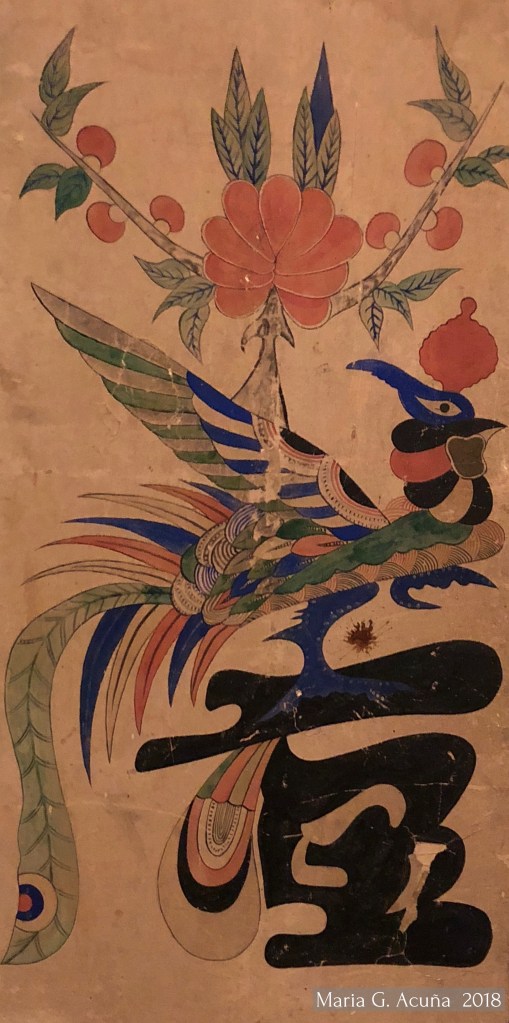

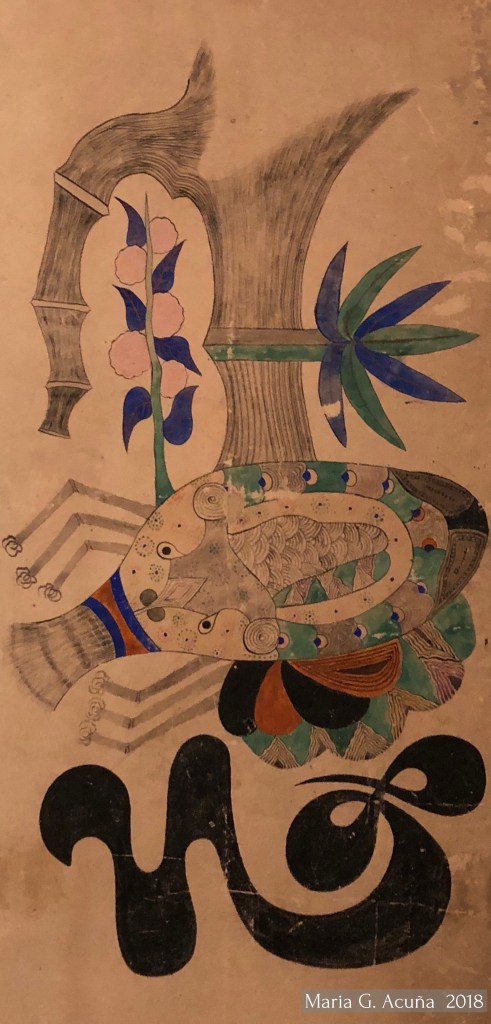
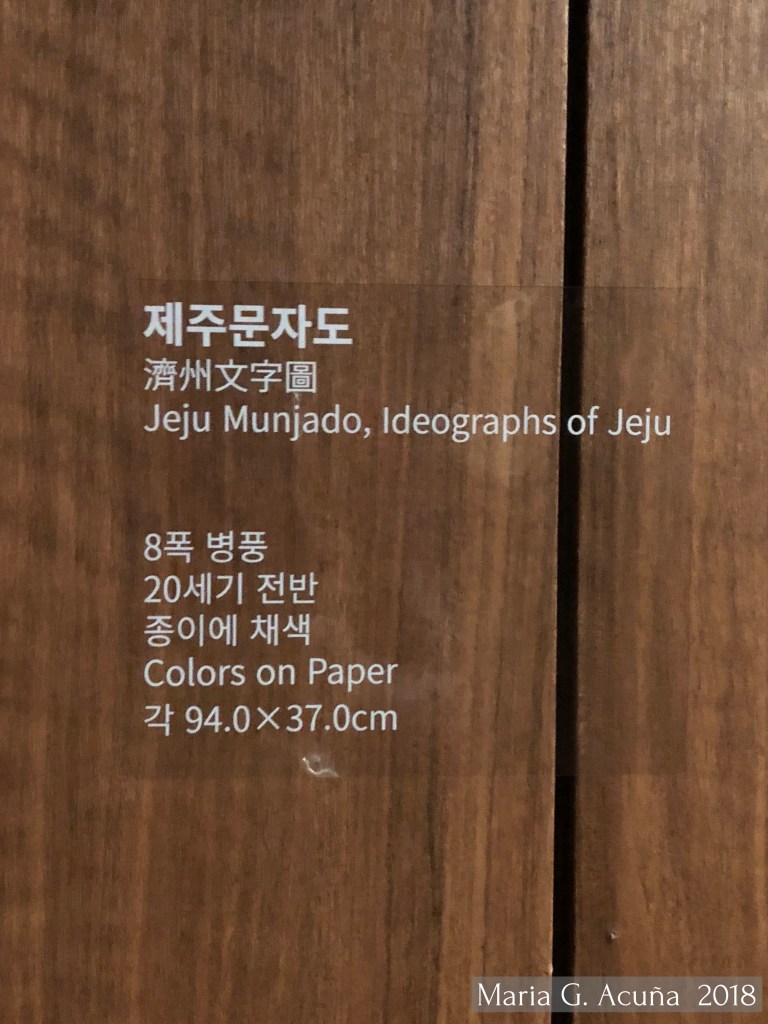
These ones come were from Jeju Island:



These coming up were in the style called rainbow painting…. using a leather brush…



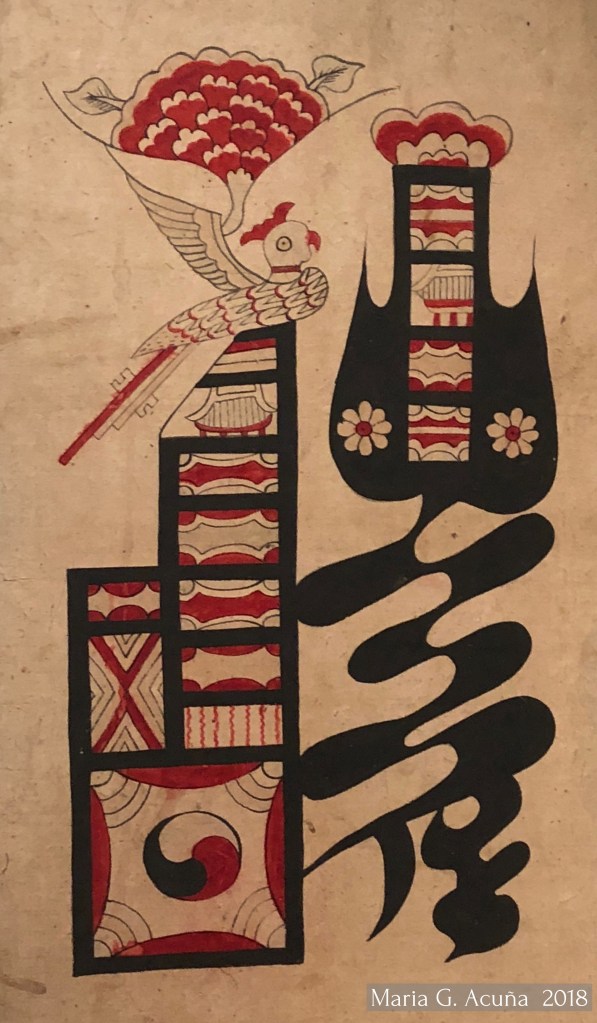
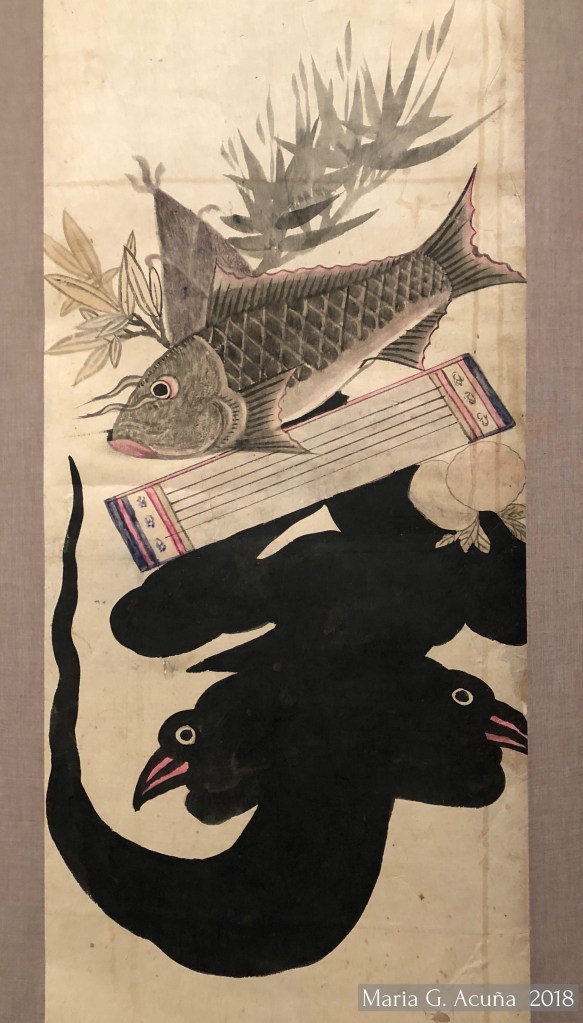
The following two images show the same character as interpreted by different artists. I was so impressed with the creativity of portraying the same characters in different ways…
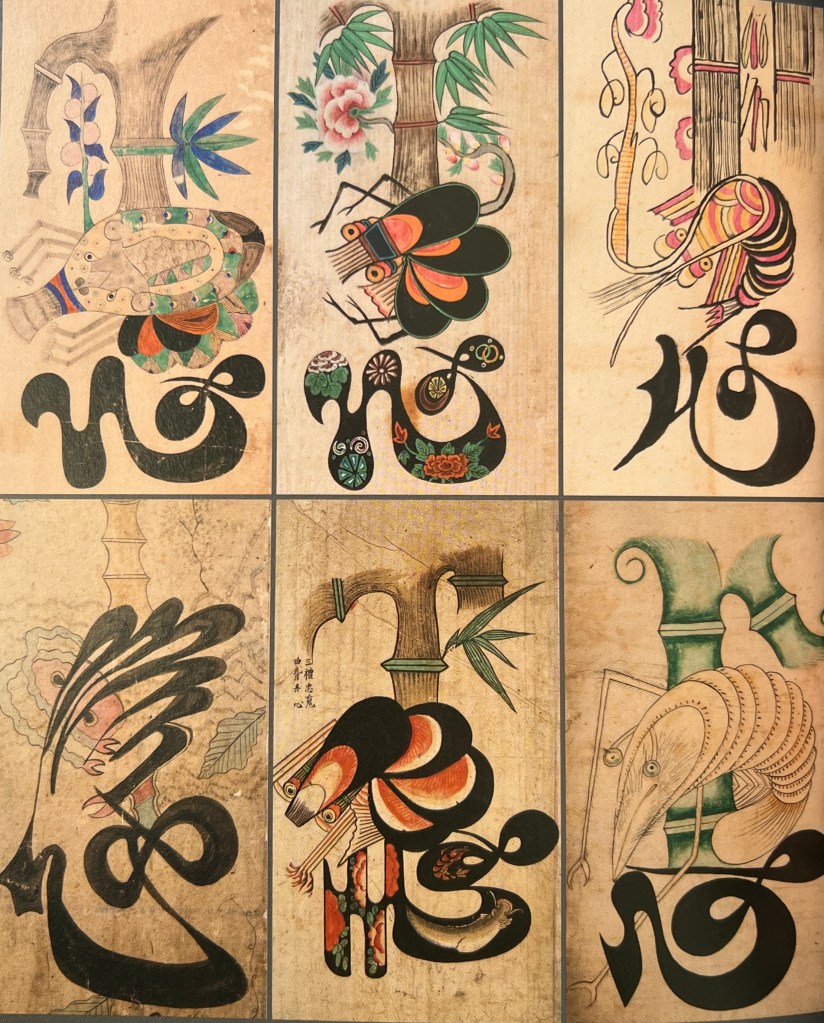
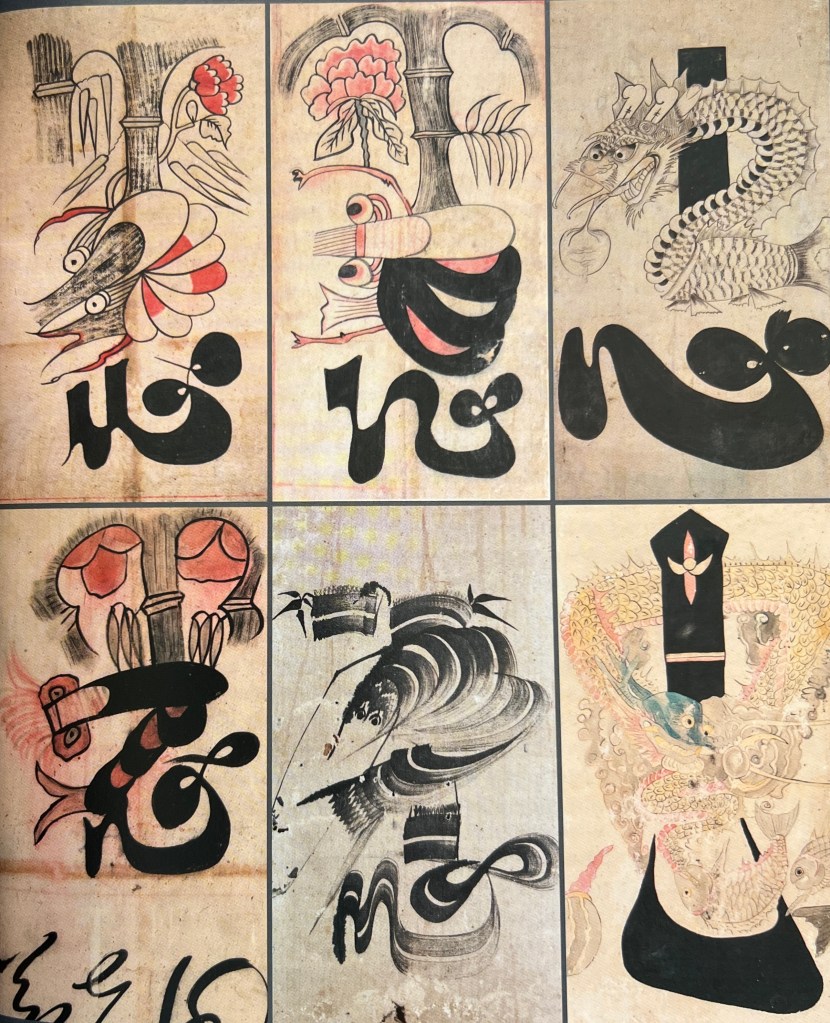
These are the combination of Chaekgeori and Munjado:


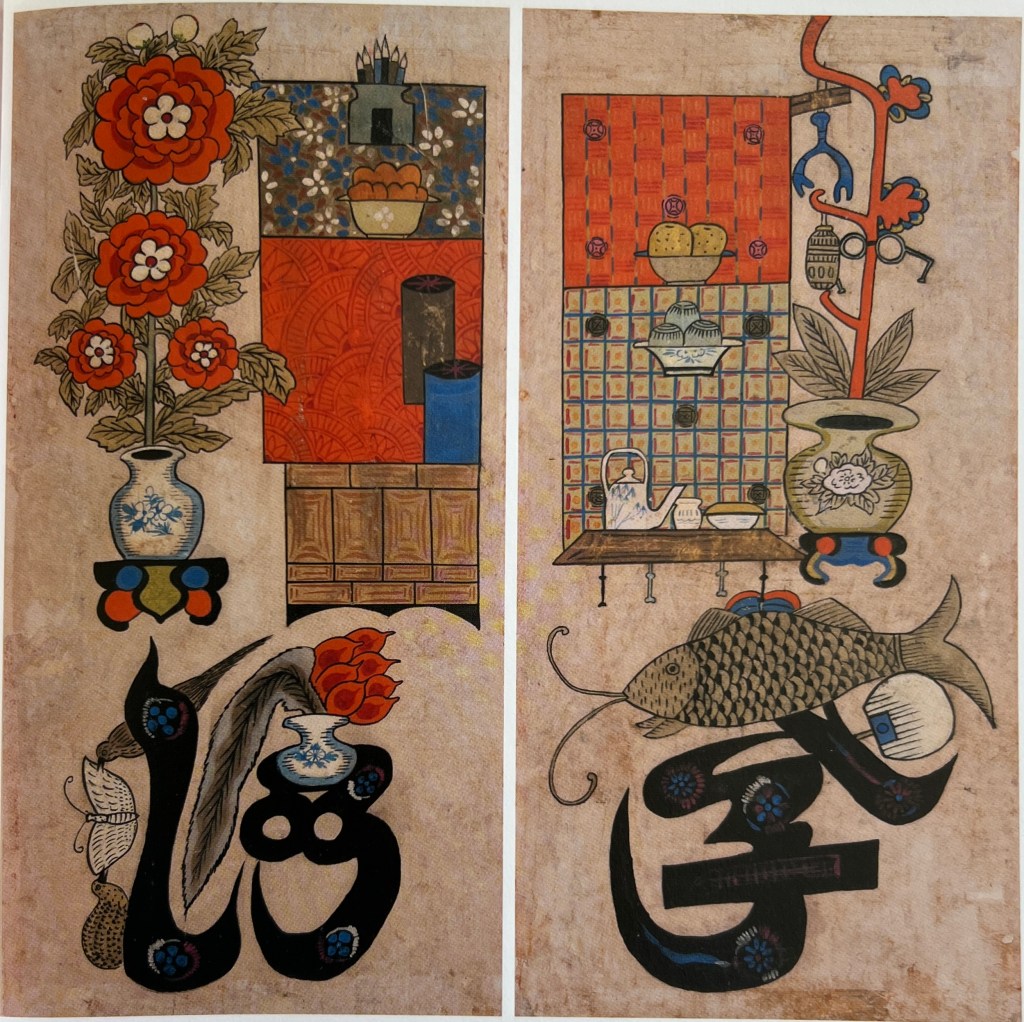
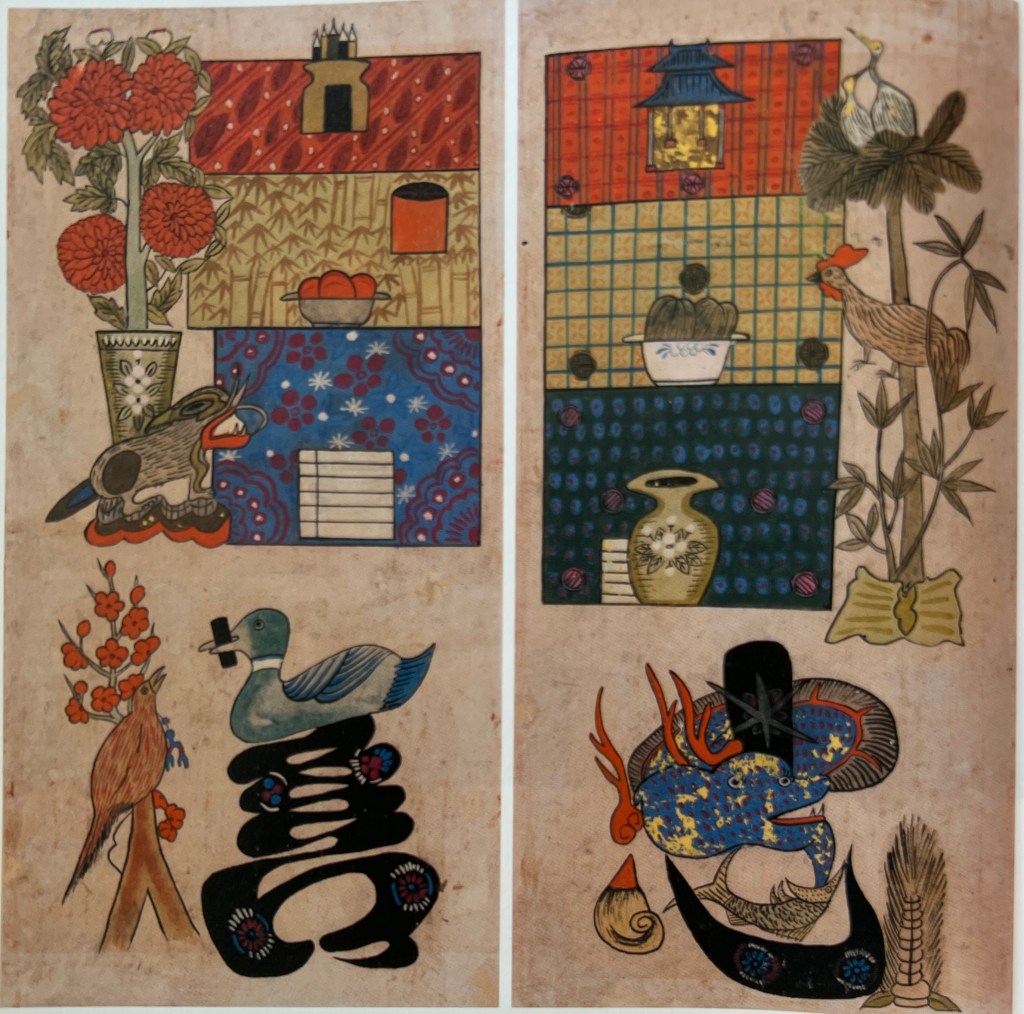
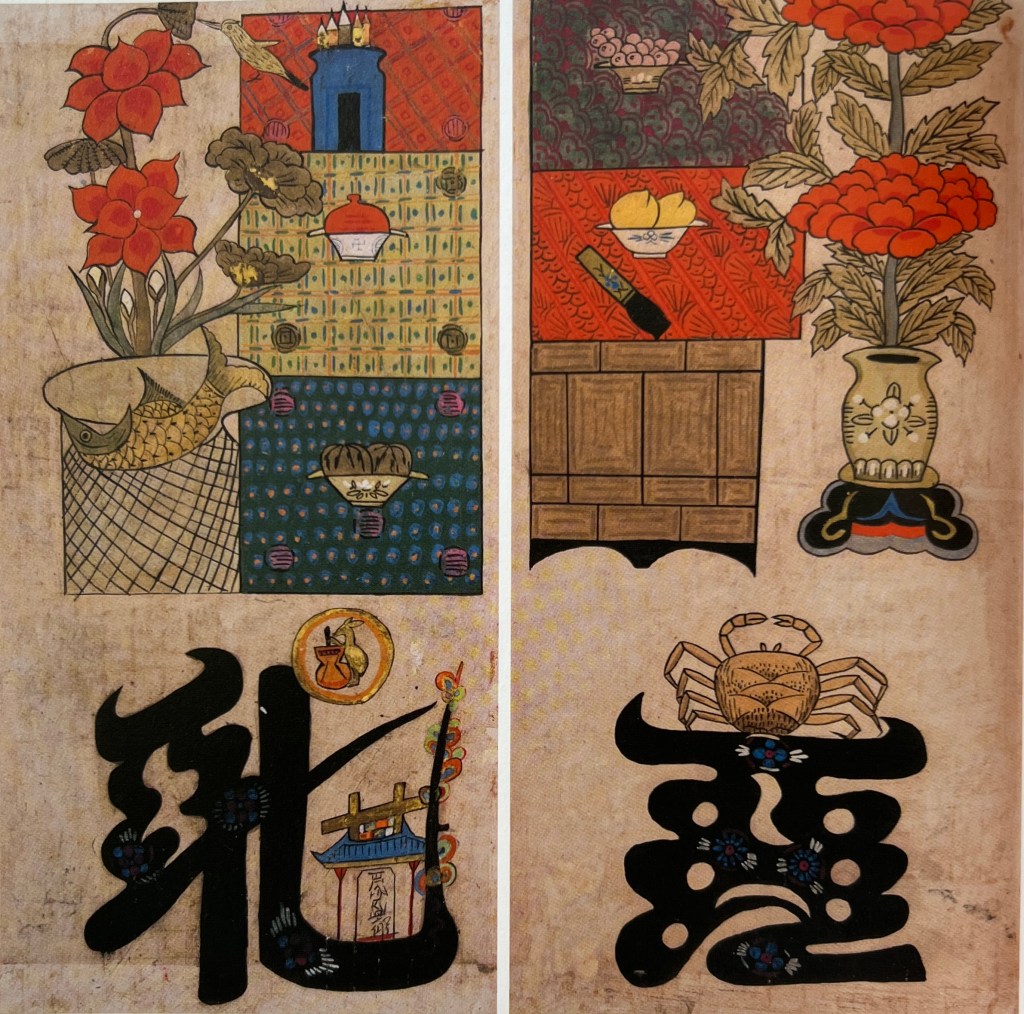

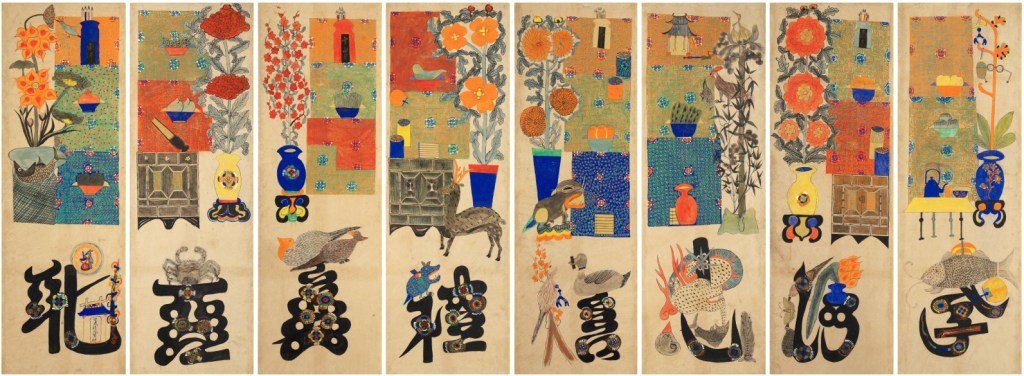
Cr. Wikimedia Commons
They had such mastery in the use of color! Boldness too! This is my favorite category of Minhwa… as you can probably tell by the amount of photos I took! ^ ^
HOJAKDO / 호작도 (PAINTING OF TIGER, MAGPIE, AND PINE TREE)
Hojakdo (호작도) are captivating Korean folk paintings that depict tigers and magpies, often in a humorous and symbolic way. The name itself breaks down as “ho” (tiger), “jak” (magpie), and “do” (painting). These paintings were popular during the Joseon Dynasty and continue to be appreciated for their unique charm and cultural significance.
The Tiger: Unlike the fierce and fearsome portrayal of tigers in other cultures, Korean tigers in Hojakdo are often depicted as rather comical and even friendly-looking. They might have a slightly goofy expression, a plump belly, or a playful stance. This reflects the Korean people’s desire to tame and even make fun of this powerful creature, which was both revered and feared.
The Magpie: Magpies, on the other hand, are usually portrayed as dignified and intelligent. They are often perched on a pine tree branch, looking down at the tiger or interacting with it in some way. Magpies are considered messengers of good news and are associated with good fortune in Korean culture.
The Pine Tree: Pine trees are a common element in Hojakdo, symbolizing longevity, strength, and resilience. They often provide a backdrop for the interaction between the tiger and the magpie.
Hojakdo paintings are rich in symbolism and convey various meanings:
Humor and Wit: The humorous depiction of the tiger is a distinctive characteristic of Hojakdo. It reflects the Korean people’s sense of humor and their ability to find joy even in the face of adversity.
Good Fortune and Happiness: The combination of the tiger and magpie is seen as auspicious, representing good luck and happiness. The magpie’s role as a messenger of good news complements the tiger’s protective power, creating a harmonious balance.
Protection from Evil Spirits: Tigers were believed to ward off evil spirits and bring good fortune. Hojakdo paintings were often hung on doors or walls, especially during New Year’s, to protect the household from bad luck.
Social Commentary: Some interpretations suggest that Hojakdo paintings also reflect social commentary. The seemingly foolish tiger might represent the ruling class or authority figures, while the clever magpie could symbolize the common people. The paintings might subtly express the people’s feelings towards authority and their desire for a more just and harmonious society.
These are a couple from the Fantasia Joseon Exhibit:

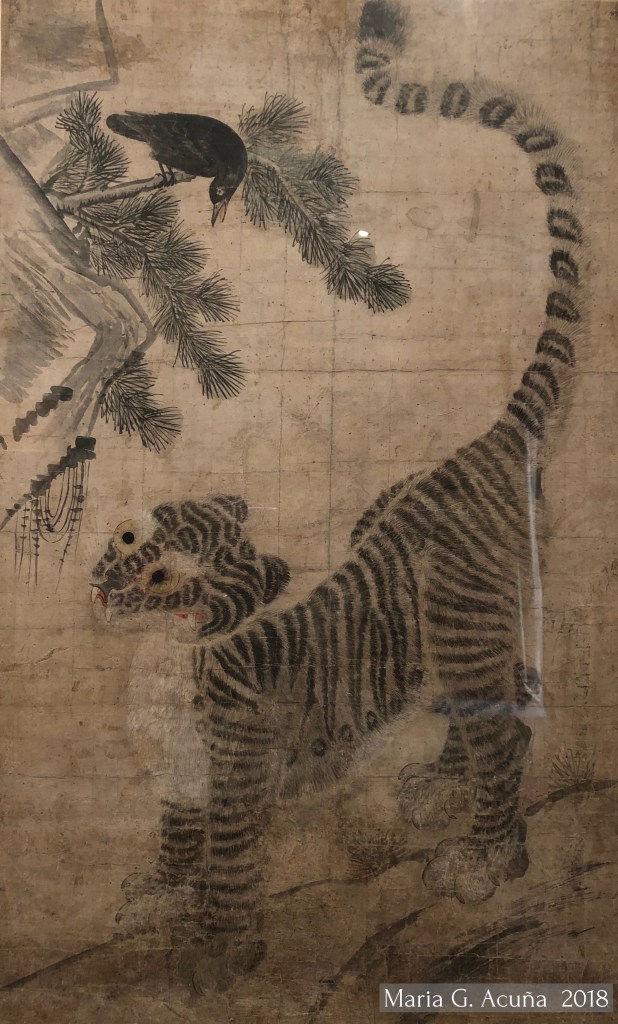
Some of them are hilarious… almost surreal!

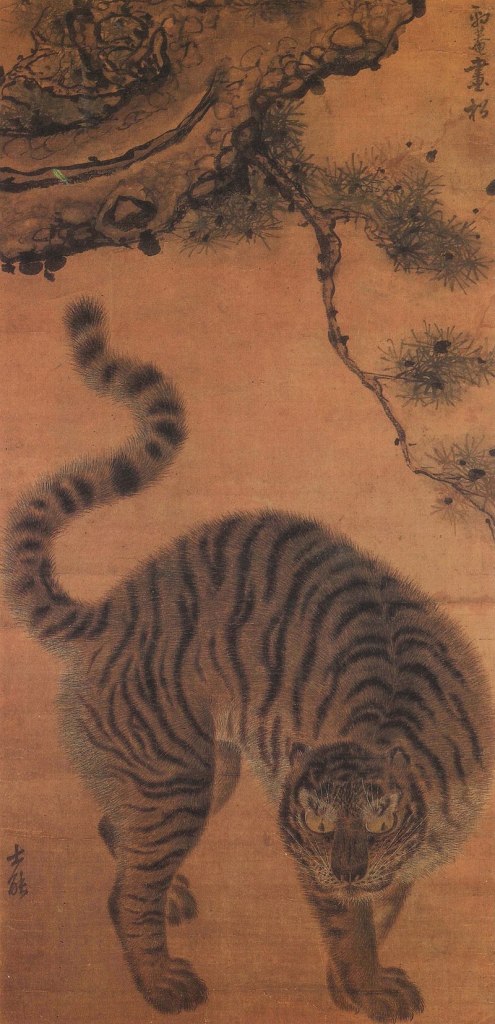
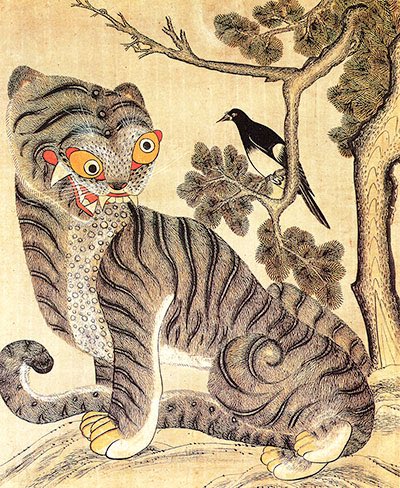
Wow! Almost a Picassso Tiger from Joseon times! ^ ^
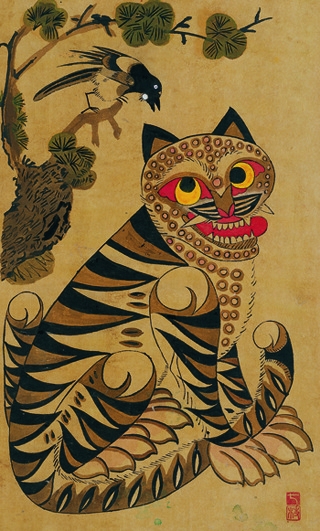

Isn’t it just extraordinary how each one has its own style!
This is a Hyungbae, an insignia that is attached to the chest and back on robes of the Royal Family and government officials to help distinguish their ranks and status. This is a tiger one worn by Higher Banking Military Officials:

If this post left you with a great desire to try Minhwa, I found a great option through the Korean Folk Art Institute in New York. You can go to their website and find online classes HERE. Check out their video:
You can download a coloring page of this tiger HERE. It looks like this:

How playful it looks! Adorable!
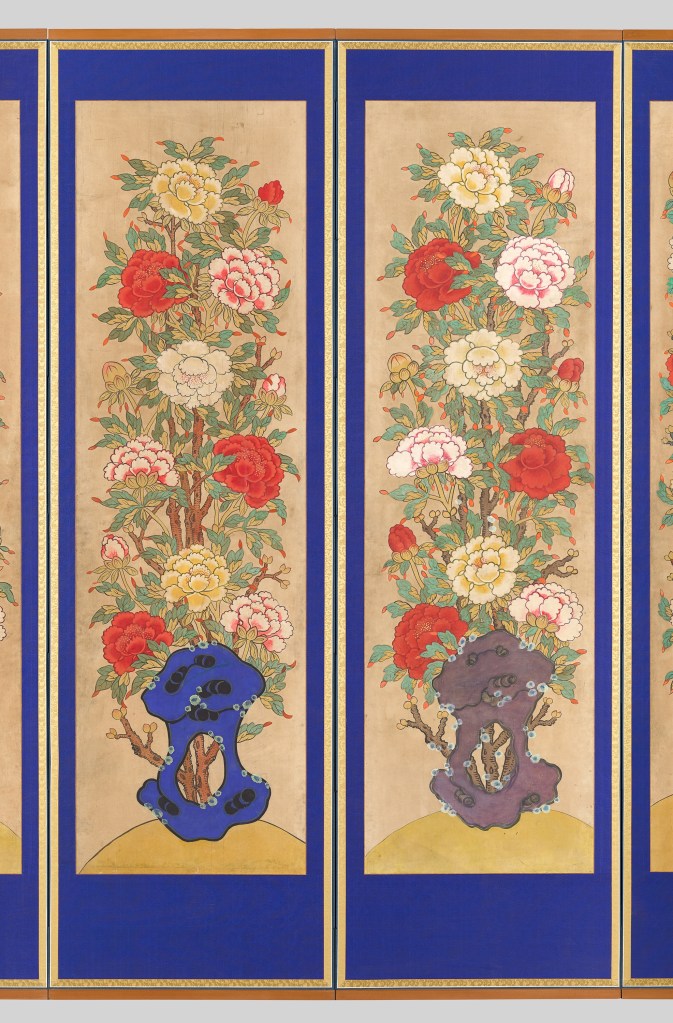
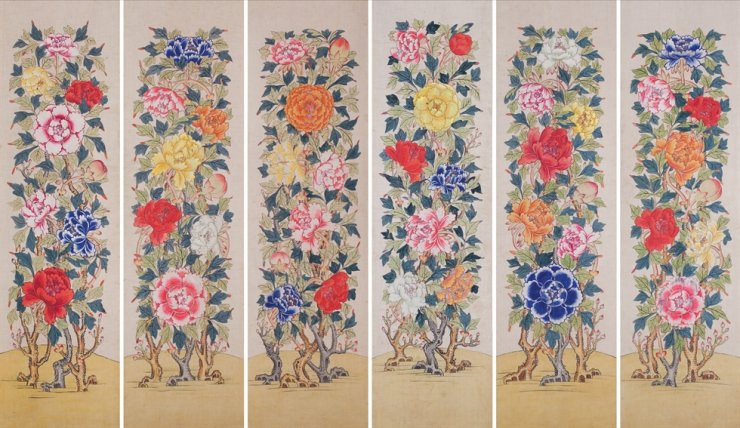
Morando/모란도(Painting of Peonies)
This is the most popular of all Minhwa paintings. I learned why all the categories names esnd in ‘do’ or ‘도’. It means painting! So Moran is Peony in this case and as you add ‘do’ at the end it makes it painting of peony. ^ ^
Peonies in Korean art symbolize wealth, prosperity, honor, nobility and longevity. Initially, Morando paintings were closely associated with the royal court. The peony’s symbolic association with wealth, honor, and prosperity made it a fitting motif for palace decoration.
During the later Joseon period, particularly in the 18th and 19th centuries, Minhwa, including Morando, became increasingly popular among the common people. Morando paintings decorated homes during celebratory occasions like weddings and birthdays. These paintings frequently feature peonies alongside rocks, where:
- Peonies represent “yin” (feminine principle).
- Rocks represent “yang” (masculine principle).
- Together they represent marital harmony, and longevity.
Another fascinating aspect of Morando is that it holds special numerical symbolism. In Korean thought, the peony, as depicted in Morando, is associated with the concept of ‘zero.’ This zero is not seen as emptiness, but rather as akin to infinity, a state that ‘evens’ or completes all numbers, particularly when placed at the end. This association makes zero, and therefore the peony, an auspicious symbol of boundless longevity and ever-increasing wealth.
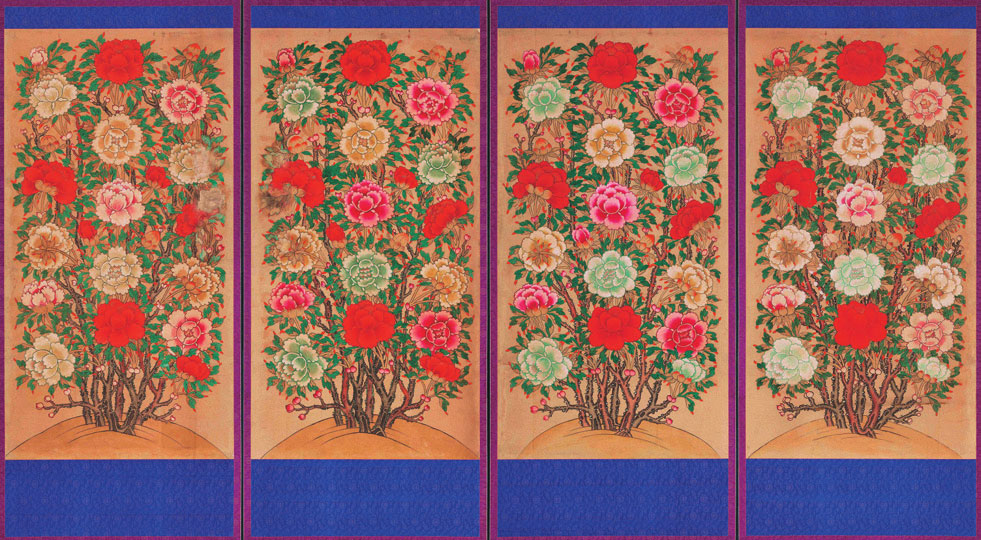

There is also an interesting tale about not using butterflies with peonies in a paintings of Morando. Butterflies represent the number 80, and so if you wish to have prosperity all your life, it is not a good idea to limit your prosperity to … 80! ^ ^
With the following video I conclude this virtual expedition to the world of Minhwa. Thank you for coming along!
 My Virtual World Trip