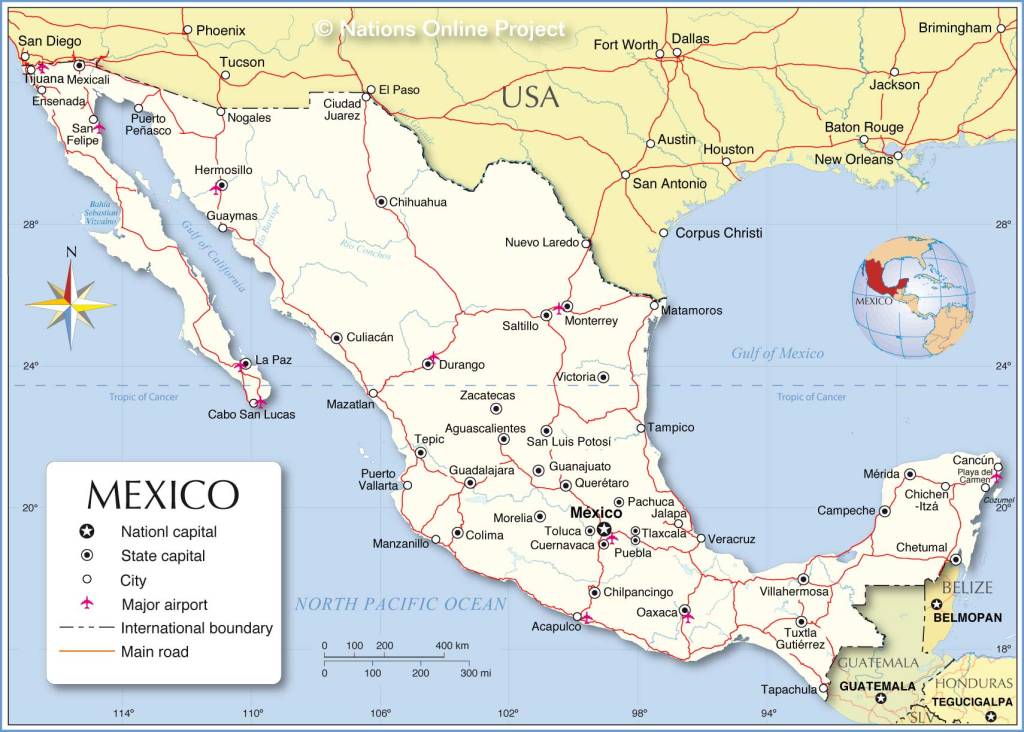
Mexico, officially the United Mexican States, is a North American country bordered by the United States to the north, Guatemala and Belize to the southeast, and with coastlines along the Pacific Ocean, Caribbean Sea, and Gulf of Mexico.
México is the thirteenth-largest country in the world by land area, covering 761,610 sq mi (1,972,550 km²). Mexico has population estimated at 130 million making it the 10th most populated country in the world.
The name ‘Mexico’ comes from Nahuatl: Mēxihco, the Aztec (Mexica) language, and translates to ‘the navel of the moon’ or ‘the place in the center of the moon.’ It stems from ‘metztli’ (moon), ‘xictli’ (navel), and ‘co’ (place), referencing Tenochtitlan’s location on Lake Texcoco, seen as the ‘Lake of the Moon.
Land
Mexico’s diverse geography encompasses distinct regions that include: Baja California, the Pacific Coastal Lowlands, the Mexican Plateau, the Sierra Madre mountain ranges, the Neo-Volcanic Cordillera, the Gulf Coastal Plain, the Southern Highlands, and the Yucatán Peninsula.
Mexico’s highest elevations are concentrated in the Trans-Mexican Volcanic Belt, featuring peaks like Pico de Orizaba (5,700 m), Popocatépetl (5,462 m), Iztaccihuatl (5,286 m), and Nevado de Toluca (4,577 m). The Sierra Madre Oriental and Occidental run north-south, while the Sierra Madre del Sur extends from Michoacán to Oaxaca.

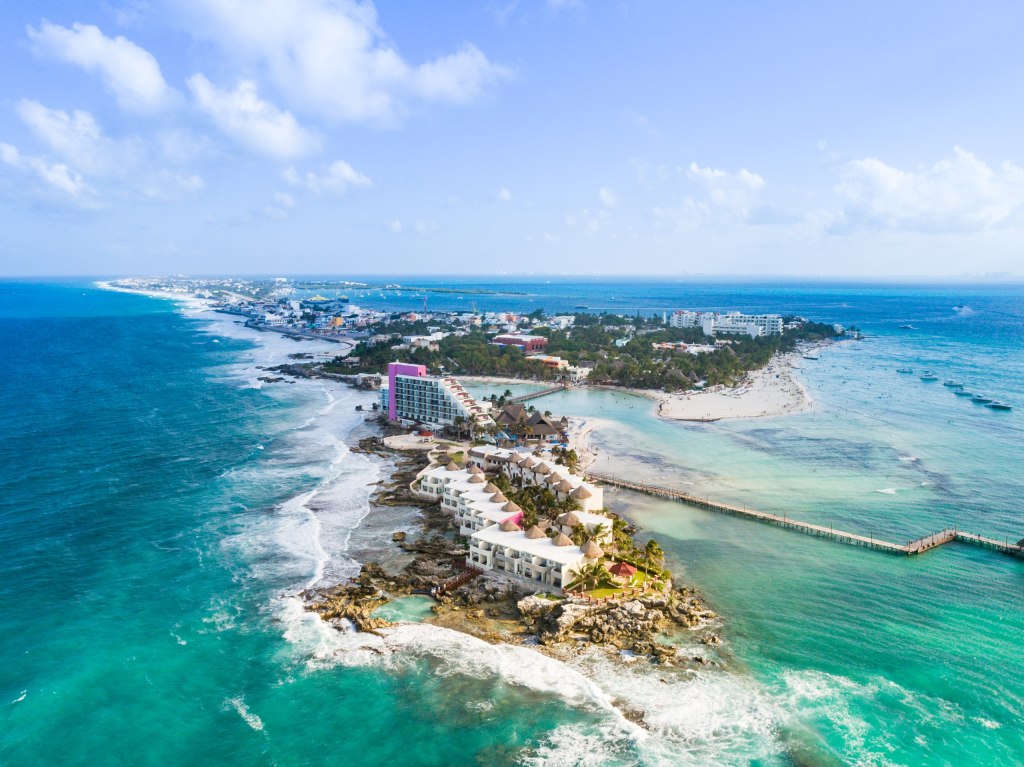
Mexico has a substantial number of islands, with estimates reaching nearly 4,000! This includes a wide range of sizes, from small islets to larger, inhabited islands. These islands are located along the Baja California Peninsula, both in the Pacific Ocean and the Gulf of California (Or Sea of Cortez) and, around the Yucatan Peninsula and in the Gulf of Mexico.
Despite its large size, much of Mexico’s terrain is unsuitable for agriculture, with only 54.9% of land used for agriculture in 2018. Mexico’s landscape is shaped by rivers, including the Rio Grande, forming its northern border with the United States, and the Usumacinta River, delineating its southern border with Guatemala.
Main Cities
Mexico City (Ciudad de México) is the biggest city in Mexico, its capital and one of the biggest cities in the world. Currently, in 2025, the estimated population for the metropolitan area of Mexico City is projected to be around 22,752,000 placing it around the 7th most populated city in the world. This city is rich in culture and history originating in the Aztec city of Tenochtitlán.

Monterrey: The capital of the state of Nuevo León and a major industrial and commercial hub in northeastern Mexico. It is surrounded by mountains, including the iconic Cerro de la Silla. The 2020 population was approximately 1.1 million within the city proper and over 5.3 million in the metropolitan area. Monterrey is considered a modern and progressive city with a strong business culture.

Guadalajara: The capital of the state of Jalisco and the second-largest metropolitan area in Mexico. It is known for being the birthplace of mariachi music and tequila. The 2020 population was around 1.4 million within the city proper and over 5.3 million in the metropolitan area. Guadalajara has a rich cultural heritage, colonial architecture, and a thriving arts scene. It is the crib of Mariachis!

Isacdaavid
Other major cities in order of most populated are:
Puebla-Tlaxcala
Toluca
Tijuana
León
Querétaro
Ciudad Juárez
A Megadiverse Country
Mexico is one of the top ten megadiverse contries in the world!
Mexico is estimated to be home to around 200,000 different species, representing 10-12% of the world’s biodiversity!!! Specific groups include over 2,650 fish species (10% of the world’s total), almost 600 mammal species (9% of the world’s total), and over 1,100 bird species (12% of the world’s total). Mexico also holds the first position in reptile diversity with 707 species. I know my jaw just hit the floor!
Flag
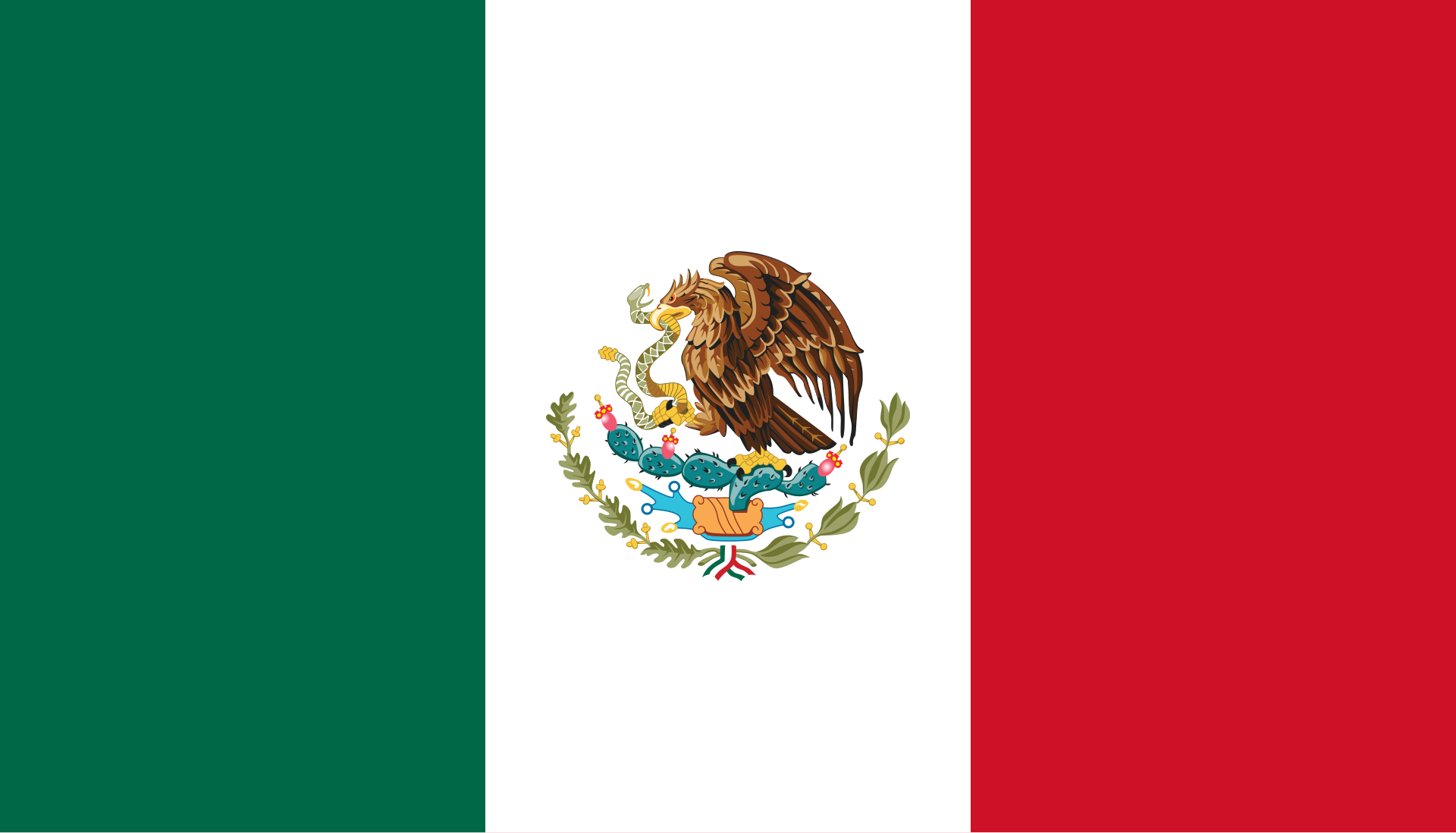
The flag of Mexico is a triband, composed of green, white and red verti- cal stripes of the same size. The current flag dates from September 16, 1968.
As Mexico fought for its independence from Spain, it had several flags. February 24th, Mexican Flag Day, commemorates the Plan of Iguala of 1821, which advocated “Religion, Independence, and Union.” It was a cru- cial political document in the Mexican War of Independence. José Mag- daleno Ocampo inspired by the Plan de Iguala, created the first tricolor “Pendón Trigarante” on this date, with green symbolizing independence, white the Catholic religion, and red the union of the Three Guarantees of Iguala.
Currently, green symbolizes hope, white unity, and red the blood shed for its independence.
In the middle of the flag there is an emblem that consists of an eagle perched on a cactus with a sneak on its beak.

National Emblem
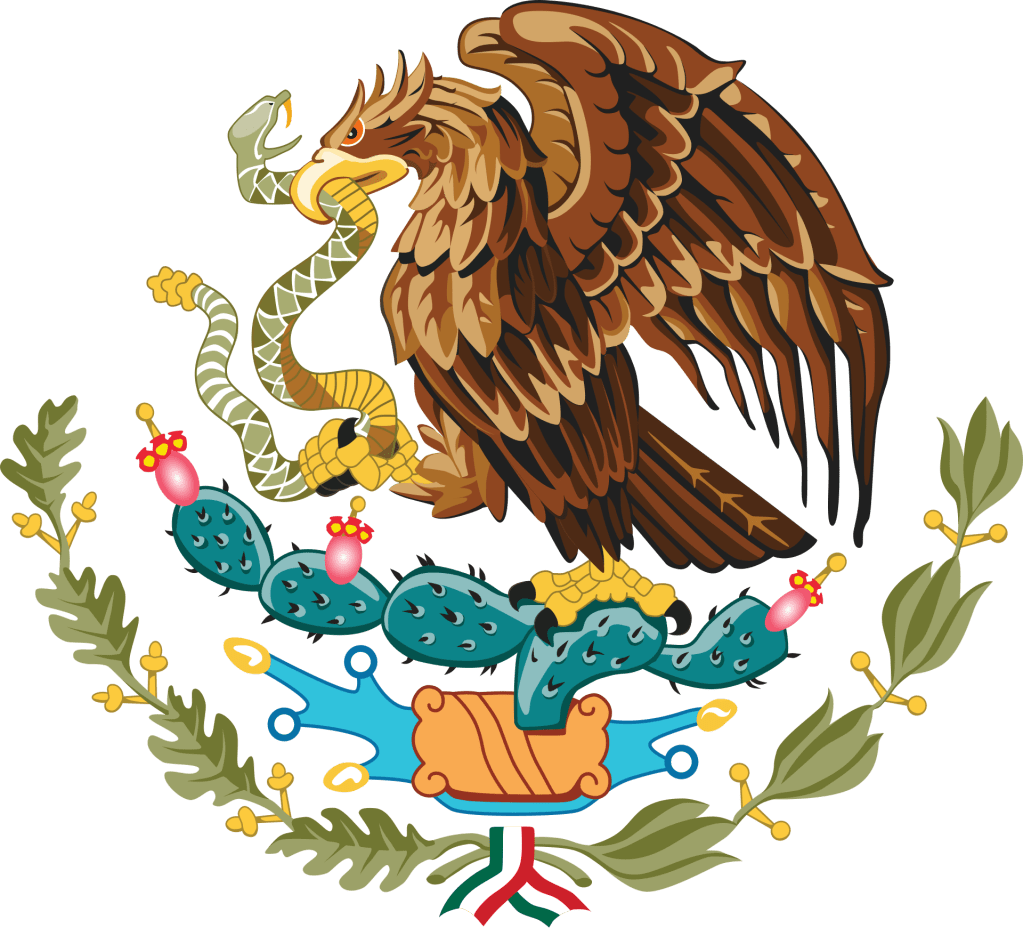
The Emblem of Mexico, officially called the Coat of Arms of Mexico (Spanish: Escudo Nacional de México), is a powerful and historically significant national symbol. Here’s a breakdown of its key elements and their meaning:
The Central Image: The most prominent feature is a Mexican golden eagle perched on a prickly pear cactus devouring a rattlesnake.
The Eagle: Symbolizes strength, courage, and the spirit of the Mexican people. It is also linked to the Aztec sun god, Huitzilopochtli.
While the golden eagle holds the title of Mexico’s official bird, a 1960 identification by Mexican ornithologist Rafael Martín del Campo revealed that the “eagle” illustrated in pre-Hispanic codices is likely the crested caracara (Caracara cheriway), also known as the “quebrantahuesos.” This species, though common in Mexico, is a member of the falcon family, not the eagle family.
The Snake: Traditionally represented the enemies of the Aztec and, by extension, Mexico. Its defeat by the eagle signifies the triumph of good over evil. Some interpretations also link it to wisdom and creation in pre-Hispanic cultures.
Initially depicted as an aquatic serpent by Father Durán, the snake in the Mexican coat of arms was changed to a rattlesnake in 1917. This alteration was made because rattlesnakes were more prevalent in pre-Hispanic illustrations. Consequently, the modern coat of arms features a snake whose design and coloration don’t match any specific species, drawing inspiration instead from representations of Quetzalcoatl, a feathered rattlesnake adorned with quetzal feathers.
The Prickly Pear Cactus (Nopal): Represents the island of Tenochtitlan, the ancient Aztec capital (now Mexico City). According to legend, the Aztecs were told by their god to settle where they found an eagle eating a snake on a nopal growing from a rock. This is the defining event in the founding of their great city.
The Rock/Islet: The cactus is shown growing from a rock or islet, symbolizing the foundation of Tenochtitlan in the middle of Lake Texcoco. It is illustrated in the style of Aztec writing.
Surrounding Elements:
Oak and Laurel Branches: Encircling the central image are branches of oak and laurel, tied together with a ribbon in the national colors (green, white, and red). The oak traditionally symbolizes strength and the laurel represents victory and honor.
The Ribbon: The ribbon binding the branches together signifies the unity of the Mexican nation.
This current design was made by the painter Francisco Eppens Helguera in 1968.
 My Virtual World Trip