
Just like their dancing, the crafts of Mexico are historic, alive today and so varied! Of all the countries I have visited in my life, Mexico was by far the one that I felt in awe of how intertwined crafts are to their daily lives as many people still make a living this way. I saw from children to grandparents, so many people creating beautiful things. Where do I even begin?!
After much thought, I will dedicate this post to some of the crafts that I had the opportunity to see in person in Mexico and I will also showcase some of the crafts I just saw at the National Museum of Mexican Art in Pilsen, Chicago barely a week ago. I was so in awe yet again! So you could say I’m revisiting these virtually! ^ ^
Paper, Wood
Alebrijes
My favorite craft from Mexico is the Alebrije. Alebrijes are colorful, whimsical creatures that were originally made of paper and now wood.
Alebrijes were first made in Mexico City by an artist named Pedro Linares, who worked with cardboard and paper paste. In 1943, Linares got very sick. While he was unconscious in bed, he had a strange dream. In the dream, he saw trees, rocks, and clouds turn into amazing animals, like a donkey with butterfly wings and a rooster with bull horns. These animals all shouted the word ‘Alebrijes!’ When Linares got better, he started making these imaginary creatures using pieces of cardboard, and a paste of paper with a special glue he made himself.
People absolutely loved them and even artists like Frida helped to spread the love for them during his time. Here he is painting one:

And this is him later in life…

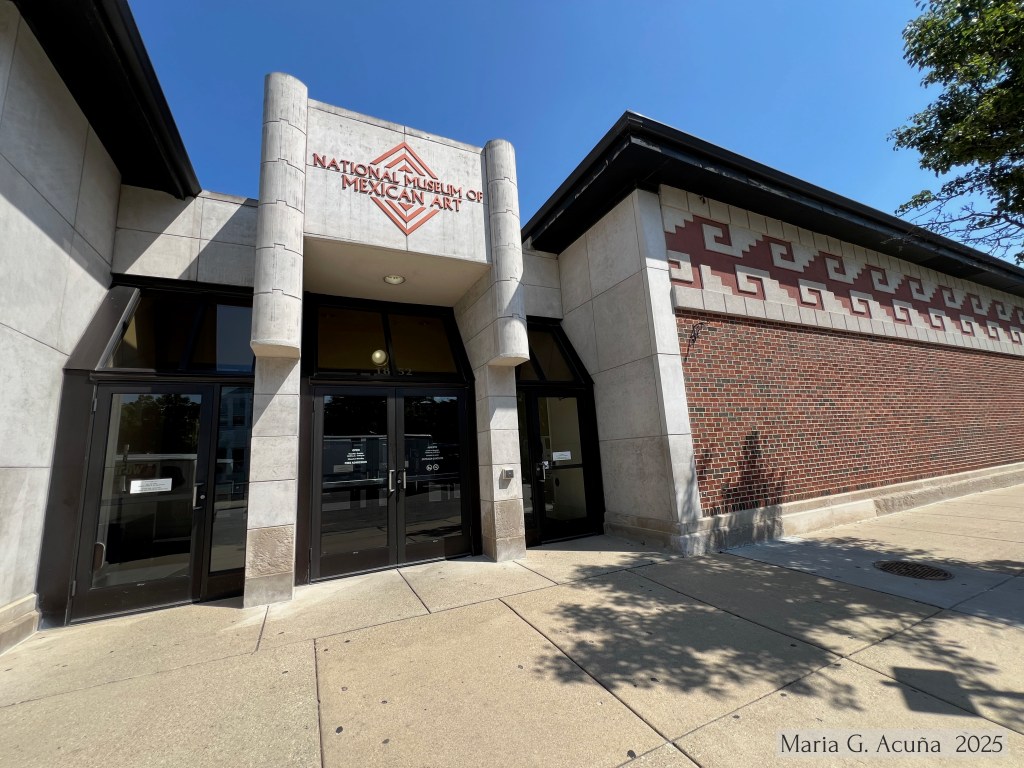
This is the facade of the Mexican Museum of Art in Pilsen, Chicago:
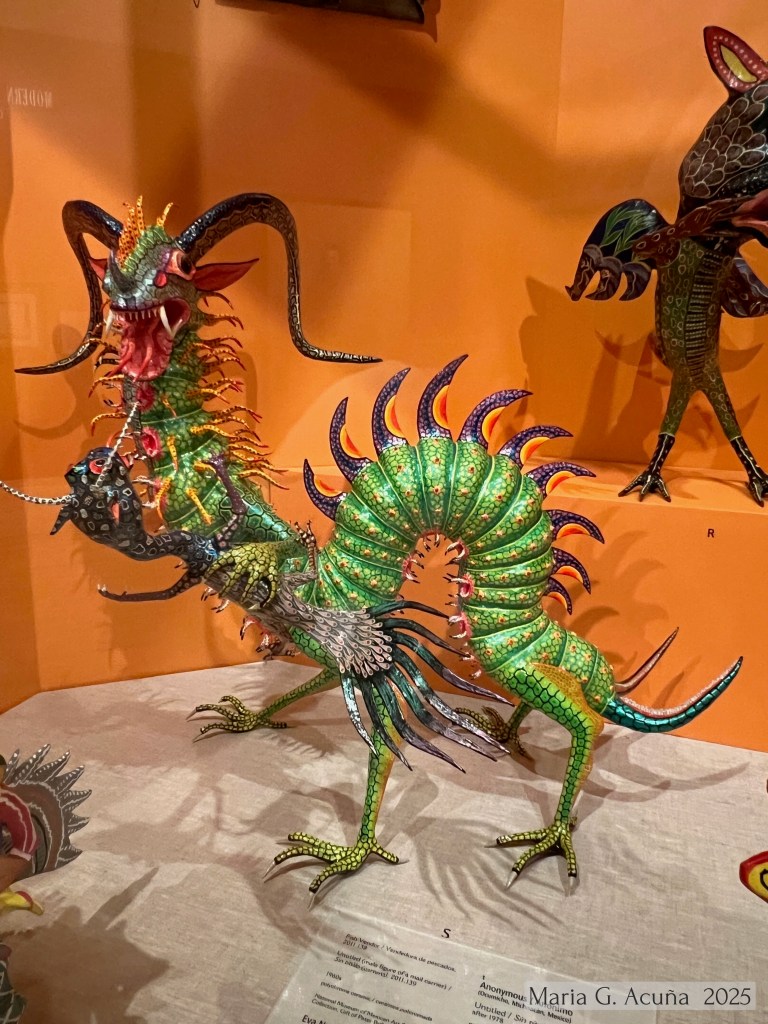
And in there I almost cried when I got to see an original alebrije by its creator from 1986:

These are others I found online:


The descendants of Pedro Linares, such as his son Miguel Linares, his granddaughters Blanca y Elsa Linares, and his grandson Ricardo Linares, live in Mexico City near the Sonora Market and carry on the tradition of making alebrijes and other figures from cardboard and papier-mâché.
I saw this alebrije by his son at the museum as well:

It was called the worm. Here are others from Miguel:


Incredible huh?!
The tradition of Alebrijes travels south and evolves…
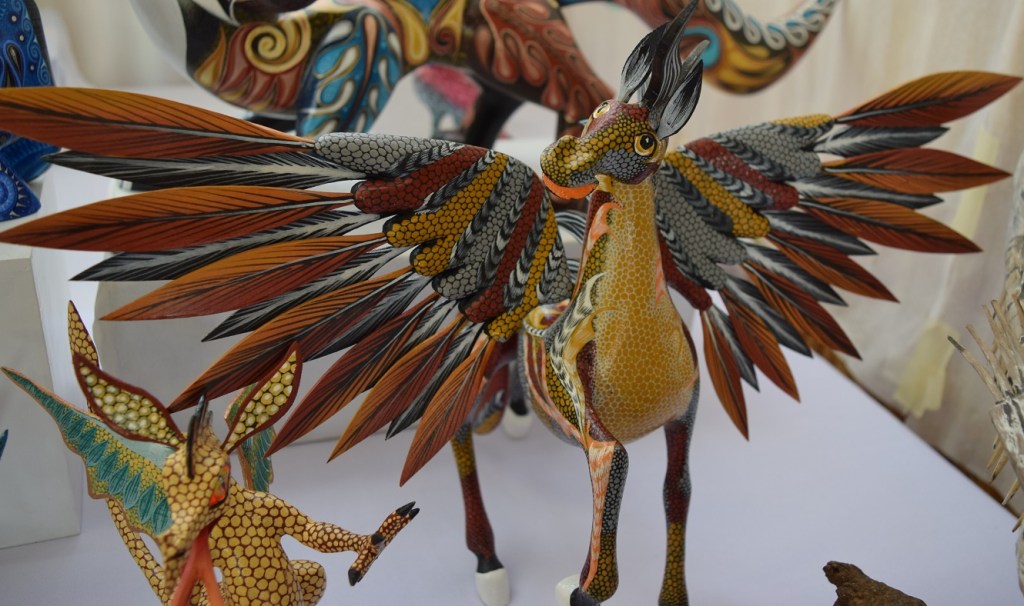
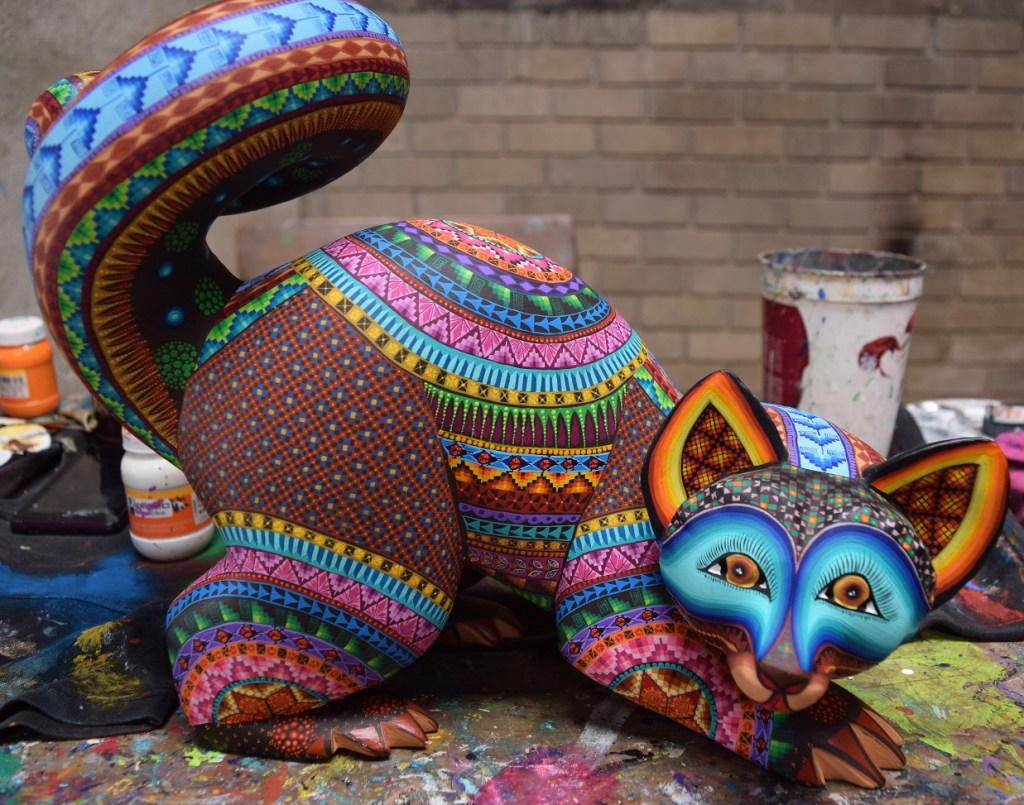
Artisans in Oaxaca first encountered alebrijes through the work of Pedro Linares. During family visits, Linares demonstrated his paper-mâché sculptures. Inspired by these fantastical creatures, some Oaxacan artisans who worked with wood began adapting the concept to their own craft. They started carving alebrijes from copal wood, a local wood believed to possess magical qualities. By the 1990s, the term “alebrije” had been adopted to describe these unique wooden sculptures. The success of the craft, however, has led to the depletion of the native copal trees. Attempts to remedy this with reforestation efforts and management of wild copal trees have had limited success.
These are some Alebrijes from Oaxaca by Brian and Sue on the Road


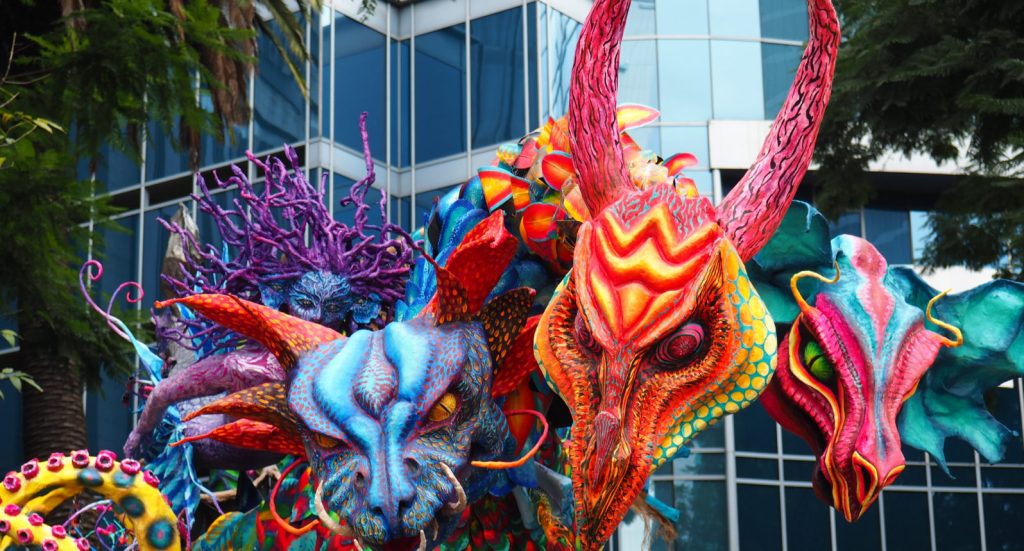
There is also a great Alebrije Parade in Mexico City around the 20th of October.


For more check out this BLOG. It has this incredible photo and more:
Piñatas
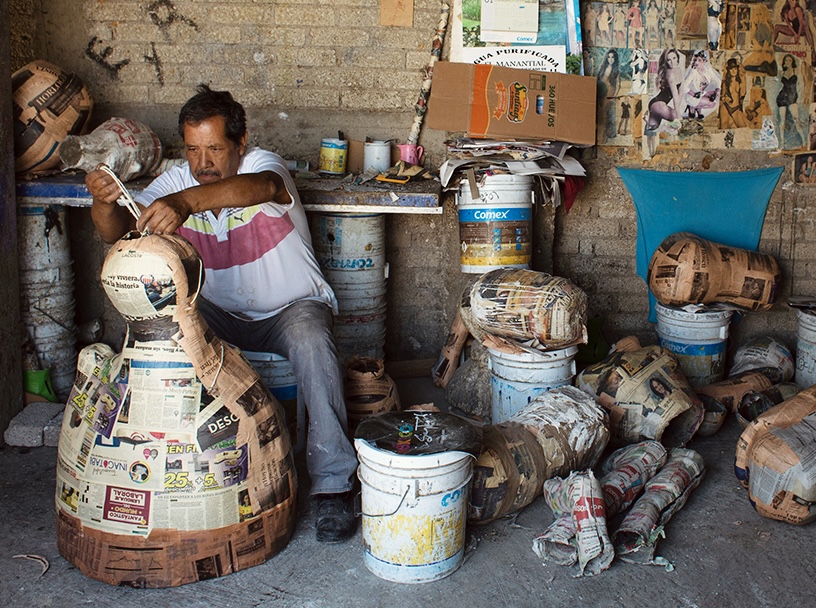
A piñata is an object filled with candy or toys. It’s very popular at children’s parties. They’re made of cardboard and paper and come in a variety of shapes. They can be large, medium, or small.
There are two theories about the origin of piñatas:
One theory relates to the Aztecs (Mexica). They had the custom of making offerings to their gods. One of their traditions to honor their god Huitzilopochtli was to fill bowls (containers) with the fruits of the harvest and then break them as part of the offering.

The other theory relates to China. In China, it was customary to fill clay animals with seeds like lentils for good fortune during their New Year celebrations. Marco Polo is believed to have documented this tradition, calling it “pignatta” (small bowl or container in Italian). The tradition was then shared between Italians and Spaniards when they used it as part of Lent. Eventually, the Spaniards brought the idea of the piñata to Mexico.
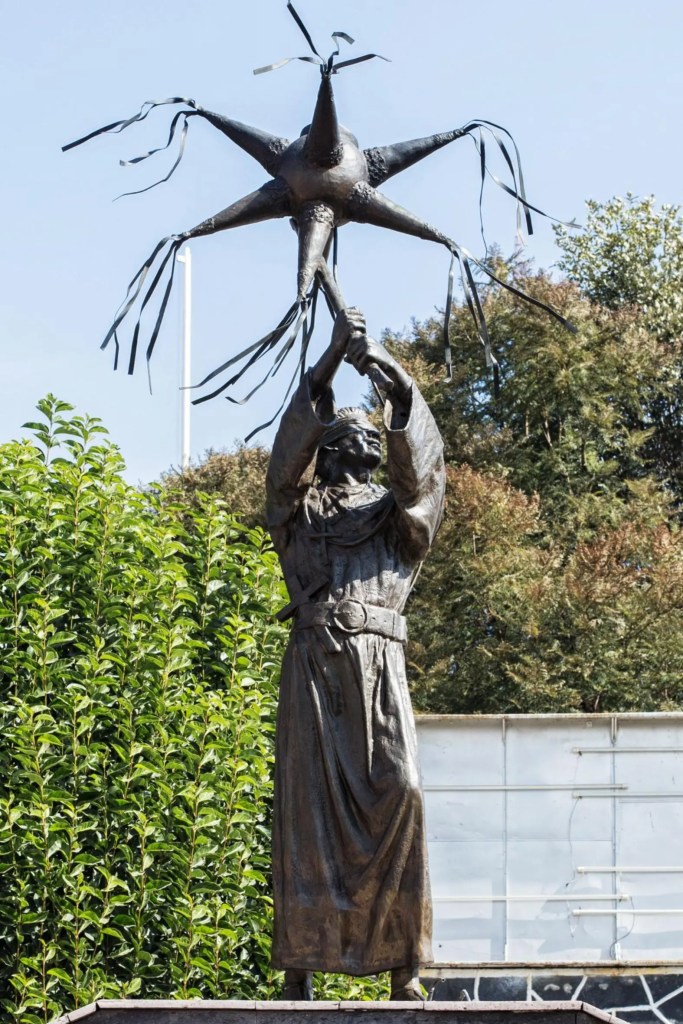
Spanish monks in Mexico, in Acolman in the 16th century, adapted the piñata as a tool for religious instruction and evangelism. For example: The seven points on a star piñata represented the seven deadly sins. They incorporated elements from existing European and indigenous traditions (like the Aztec celebration for Huitzilopochtli, which involved breaking a decorated pot).
This made religious lessons more engaging and helped draw indigenous people to Christian ceremonies, especially during the Christmas “Las Posadas” celebrations.
This is the statue of Friar Diego de Soria at the entrance of the town of Acolman:
Although we’re not totally sure of the piñata’s origin, we do know that it was developed in Mexico, going from a ceramic container to a cardboard object decorated with colorful paper. We also know how fun it is to break a piñata at a party and collect lots of candy and toys.
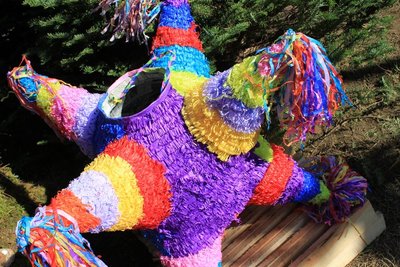
This is a typical star piñata made from a clay pot:


Now piñatas are made of paper and they come in any form you can imagine!
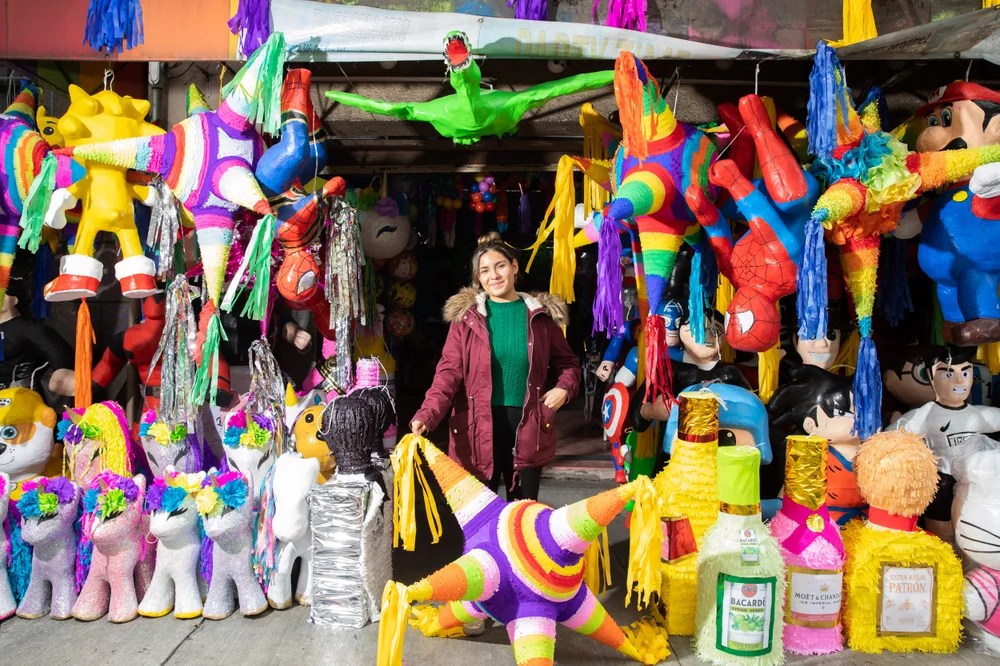

Every year in December, a contest of Piñatas is held at the Museo de Arte Popular in Mexico City. The entries are incredible! A link to a great video about them is in the description. Here are some from the 16th annual contest:


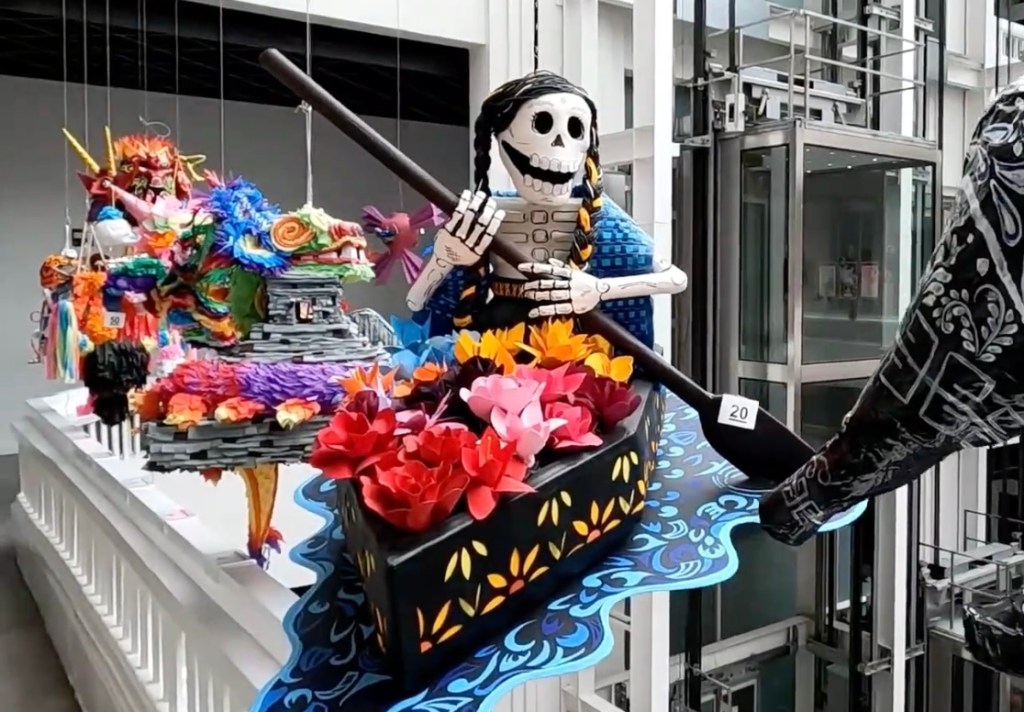
This is a video:
Ceramics
Here I will highlight their famous “Arboles de la vida” (Trees of life) and some figurines I saw at the National Museum of Mexican Art.
Arboles de la vida
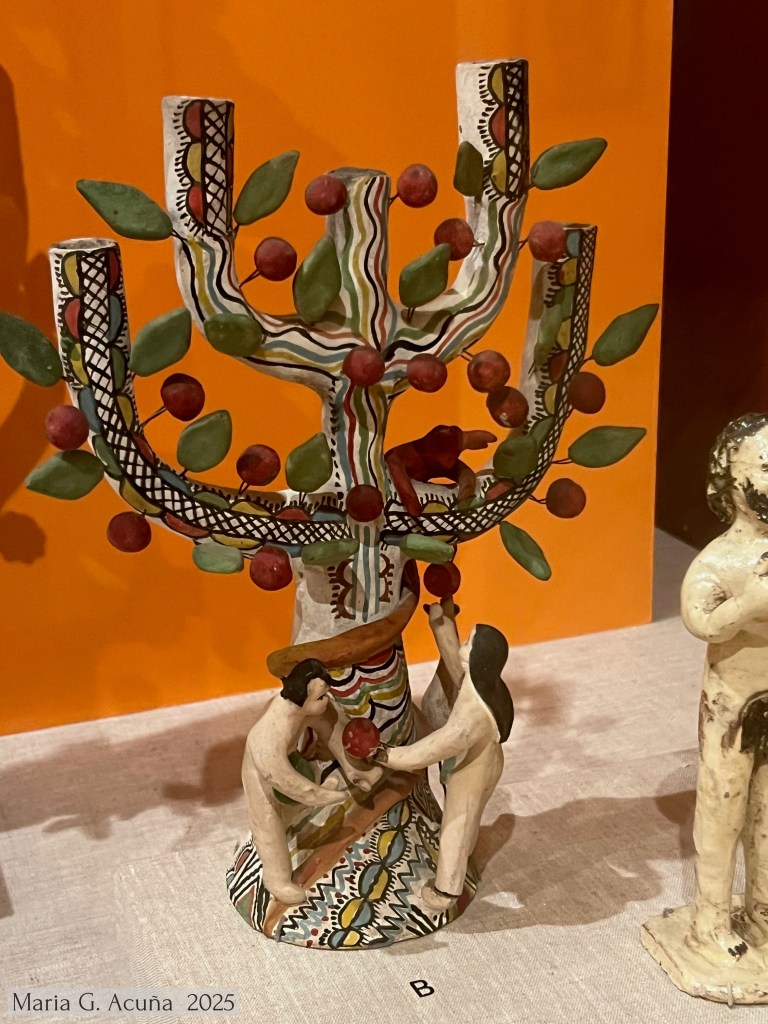
The creation of Trees of Life is rooted in the long-standing pottery and ceramic traditions of Mexico’s central highlands. Pottery in this region dates back to between 1800 and 1300 BC, including the creation of clay figures. These figures began to be painted later, after the influence of the Olmec civilization reached the area. Around 800 AD, the influence of Teotihuacan brought religious symbolism to many ceramic pieces.
Subsequently, Matlatzinca pottery in what is now the State of Mexico continued to evolve, incorporating diverse influences due to its strategic location between the Valley of Mexico and the present-day states of Morelos and Guerrero.


The making of “El árbol de la vida” or Tree of Life began in the early colonial period in Mexico, when Mexico became a colony of Spain. Spanish friars, seeking to convert the indigenous population to Christianity, commissioned local artisans to create clay sculptures depicting the Tree of Life from the Garden of Eden to tell the stories of the bible.
They were originally crafted in the central highlands of Mexico, particularly in Metepec, Izúcar de Matamoros, and Acatlán.

Over time, the Tree of Life evolved beyond its initial religious purpose. While biblical themes remained prevalent, artisans began incorporating elements from their own culture, mythology, and daily life. The sculptures became a canvas for expressing a wide range of themes, including the duality of life and death, the relationship between humans and nature, and celebrations of local traditions like the Day of the Dead.
Artisans experimented with different colors, textures, and forms, resulting in a rich variety of styles that reflect the unique character of each region and artist.


These I saw at the National Museum of Mexican Art:


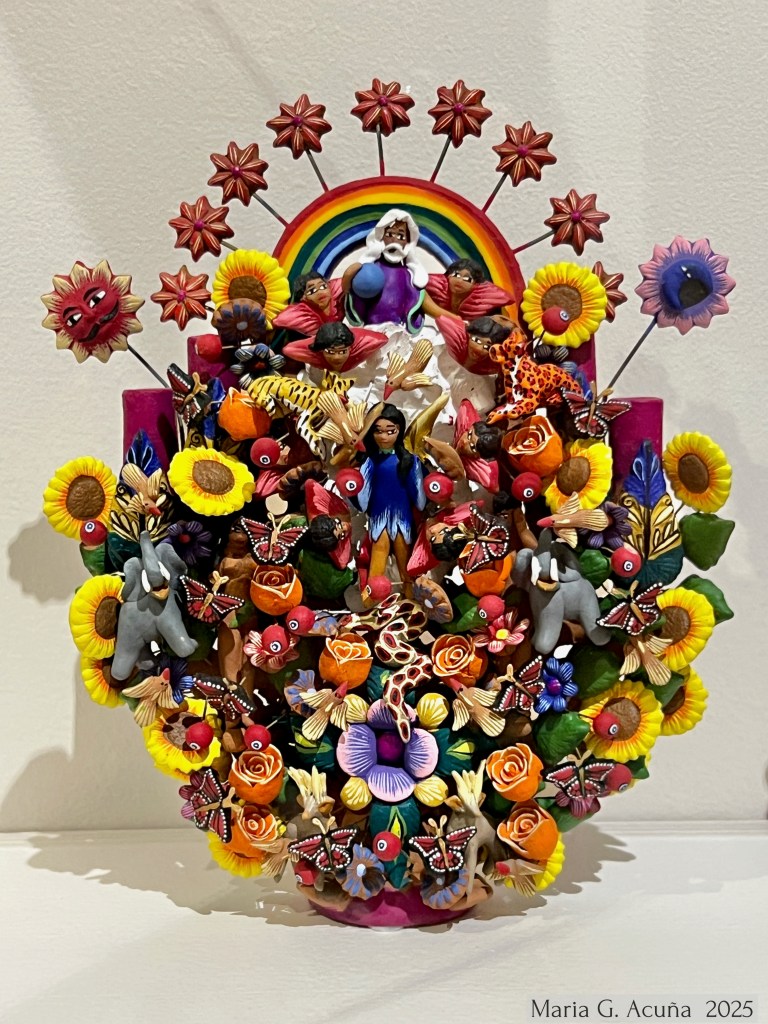
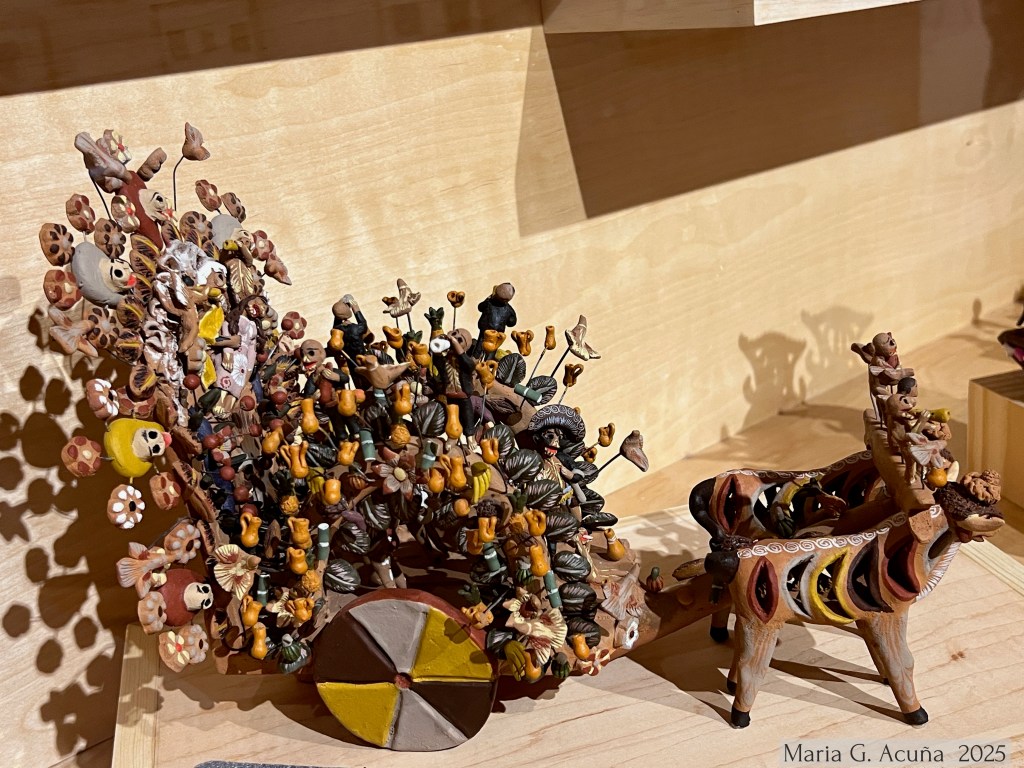
I also swathes incredible carriage / tree of life… it was also themed around The Day of the Dead and SO detailed!

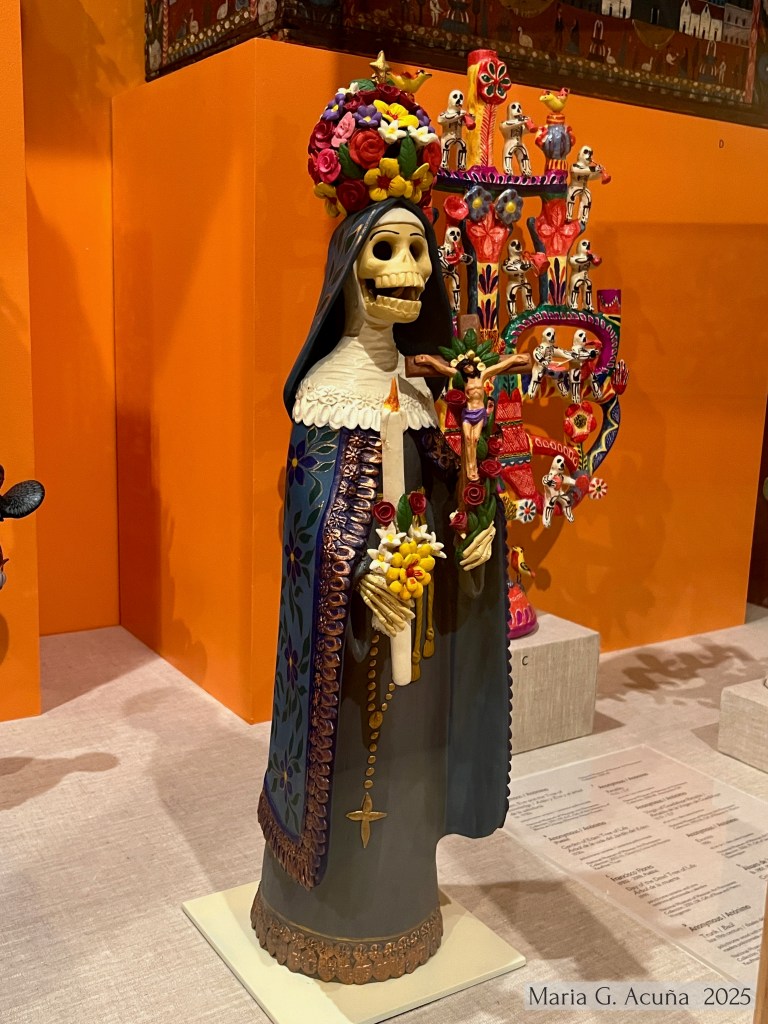
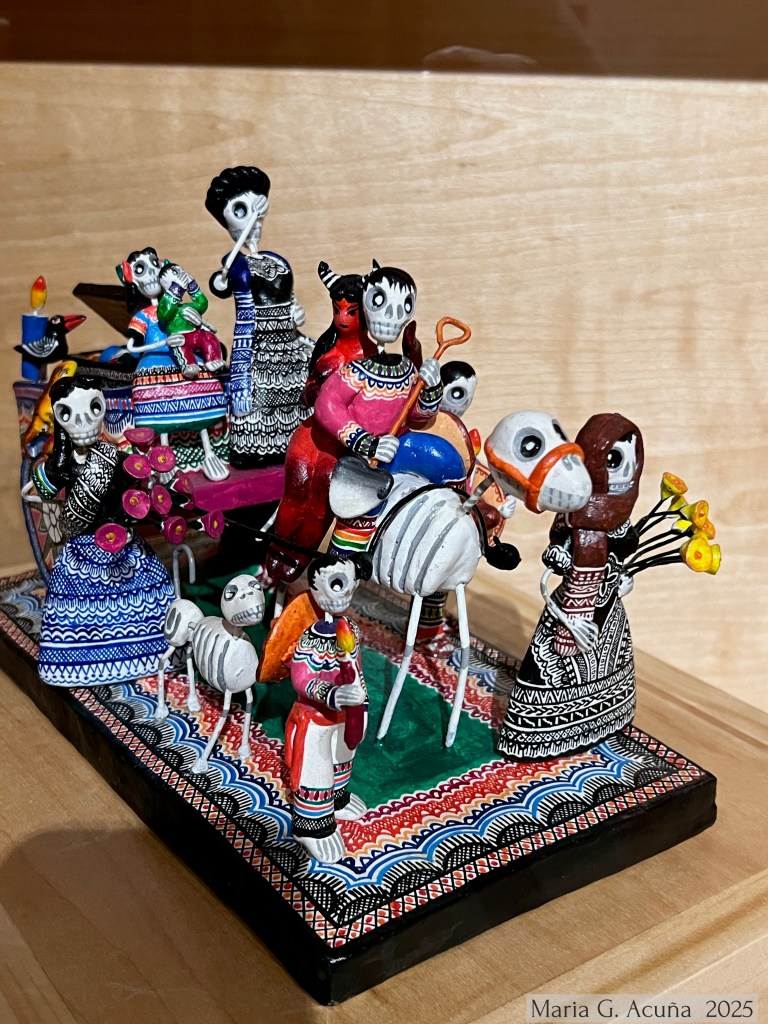
There were also other figurines. Some dedicated to the Day of the Dead.


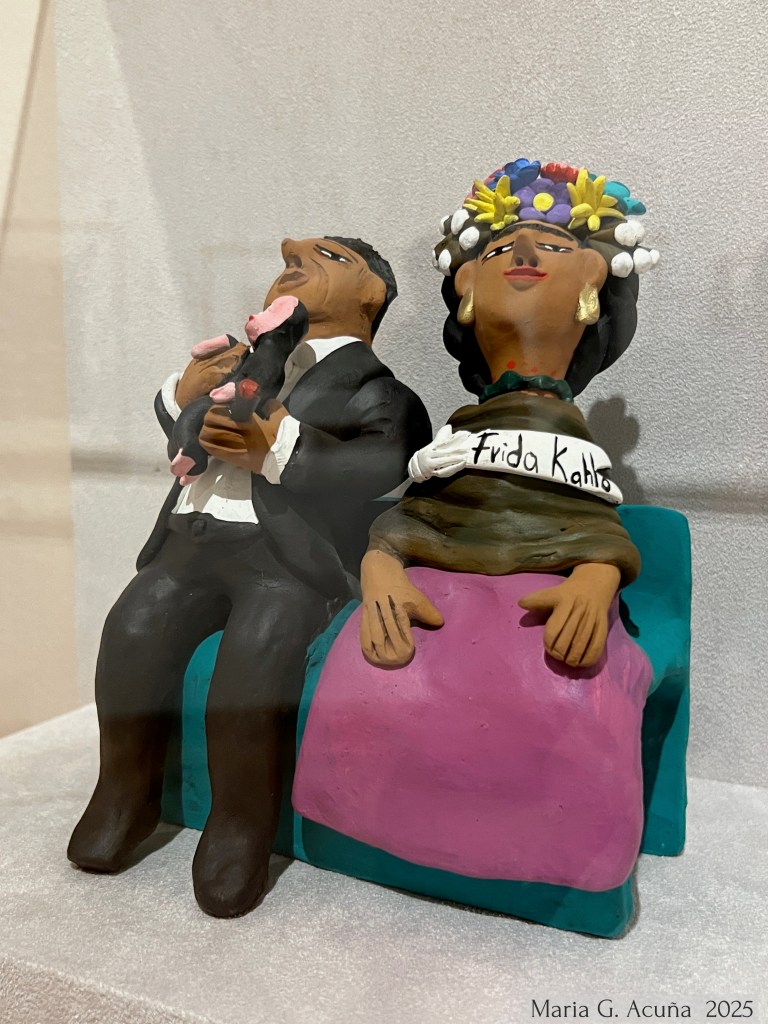

and this one was hilarious:

How creative is that?! ^ ^
This is only a glimpse of the vast universe of ceramics that Mexicans create. Almost every state has its own kind! Too many to post and I think this post is long enough!
Thank you for coming along!
 My Virtual World Trip
Excelentes los tres temas: Alejibres, Piñatas y Cerámica.
LikeLike