
I decided to write the post to share the murals I saw when I visited Pilsen in Chicago, U.S. Here immigrants from Mexico started to settle after World War I as there was a lot of demand for industrial labor. By the late 1960’s, the Mexican population had grown to become the majority of Pilsen’s residents and the city started to by transformed by them through murals.
I decided to look into some of the muralists who’s work I saw so I will share information about some of the artists and their work.
Mario Castillo
Mario Castillo was born in Mexico in 1945, Mario Castillo immigrated to the U.S. as a child and grew up in Pilsen, Chicago. His artistic journey began early, and he was already painting murals as a teenager. He later went on to study at the School of the Art Institute of Chicago and the California Institute of the Arts. This blend of street-level community art and formal academic training gave his work a unique and experimental quality. He was a central figure in the Chicago public art scene in the 1960s and 70s and was a member of key organizations like the Movimiento Artistico Chicano (MARCH).
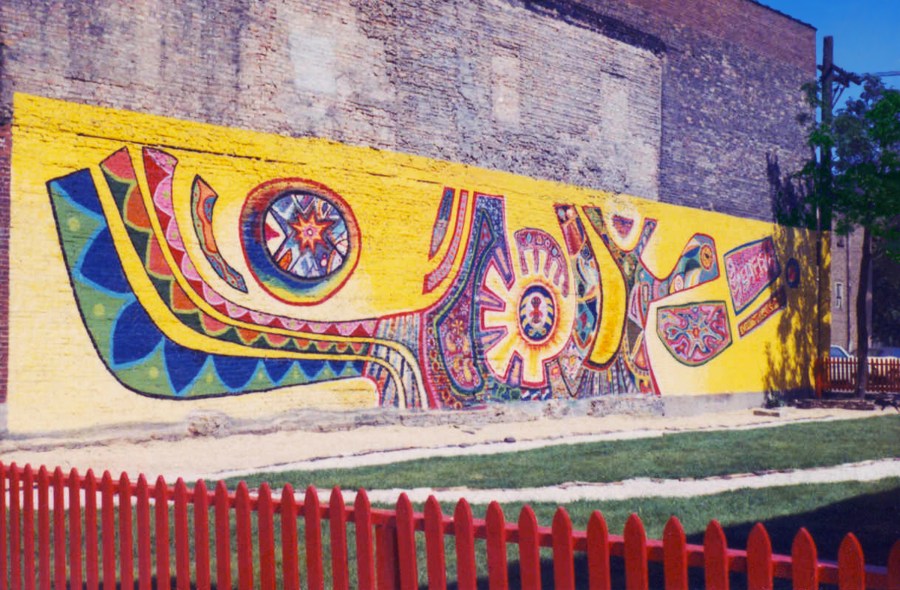
Castillo’s most significant and influential work in Pilsen is his 1968 mural, Metafísica: La Paz (in English known as “Peace”) Painted on the side of the Halsted Urban Progress Center, this mural is widely recognized as the first outdoor Chicano mural of the modern public art movement in the U.S. The mural’s theme was a protest against the Vietnam War and a powerful affirmation of Mexican-American identity, which Castillo felt had been erased. The work launched a public art movement in Pilsen that transformed the neighborhood into an open-air gallery and inspired a generation of artists.
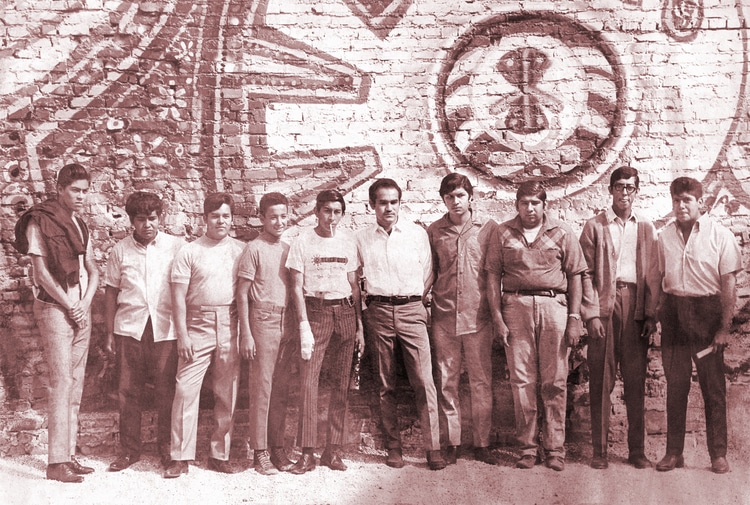
Sadly, this mural was whitewashed only a year later but not erased from history or its incredible influence in Pilsen. Shortly after murals started decorating wall after wall in Pilsen and even doors. This is what the Peace Mural looked like in its time:

And one of this men is Castillo at the time, my guess is the man in the middle with the white shirt, he looks like he owns the mural! ^ ^
When I visited the National Museum of Mexican Art, a huge painting by him absolutely captured my admiration. There was so much to see!

The painting is called: The Ancient Memories of Mayahuel’s People Still Breathe, 1996. Fortunately, I decided to take close ups to be able to capture more of it… I’m so glad I did!
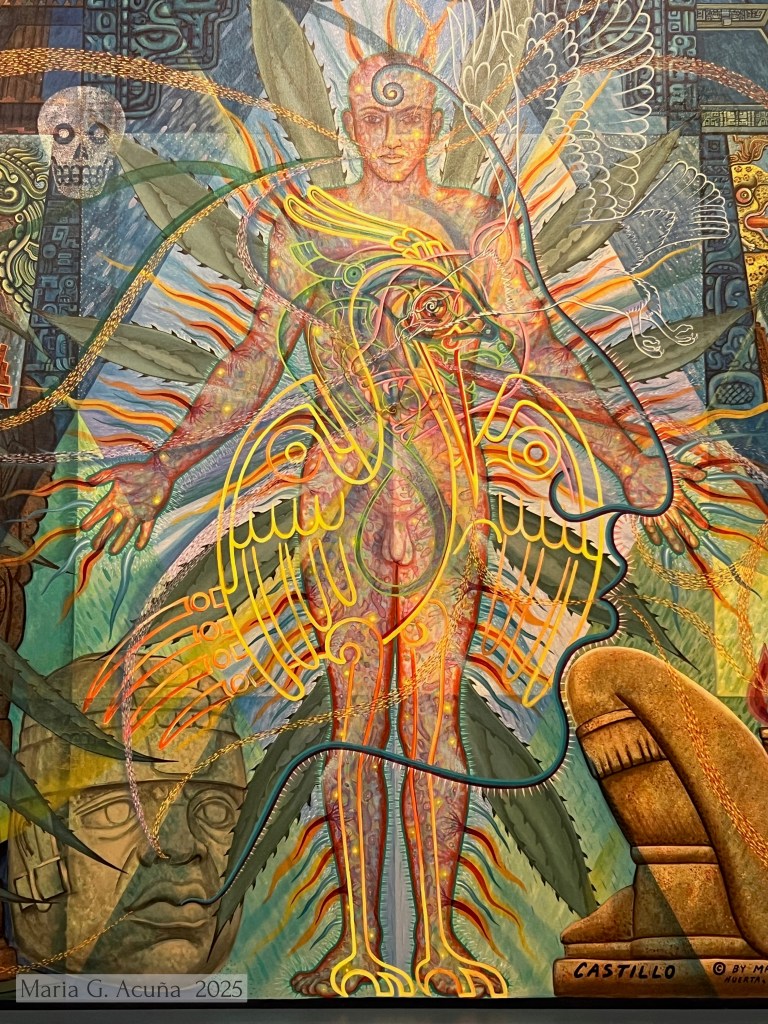


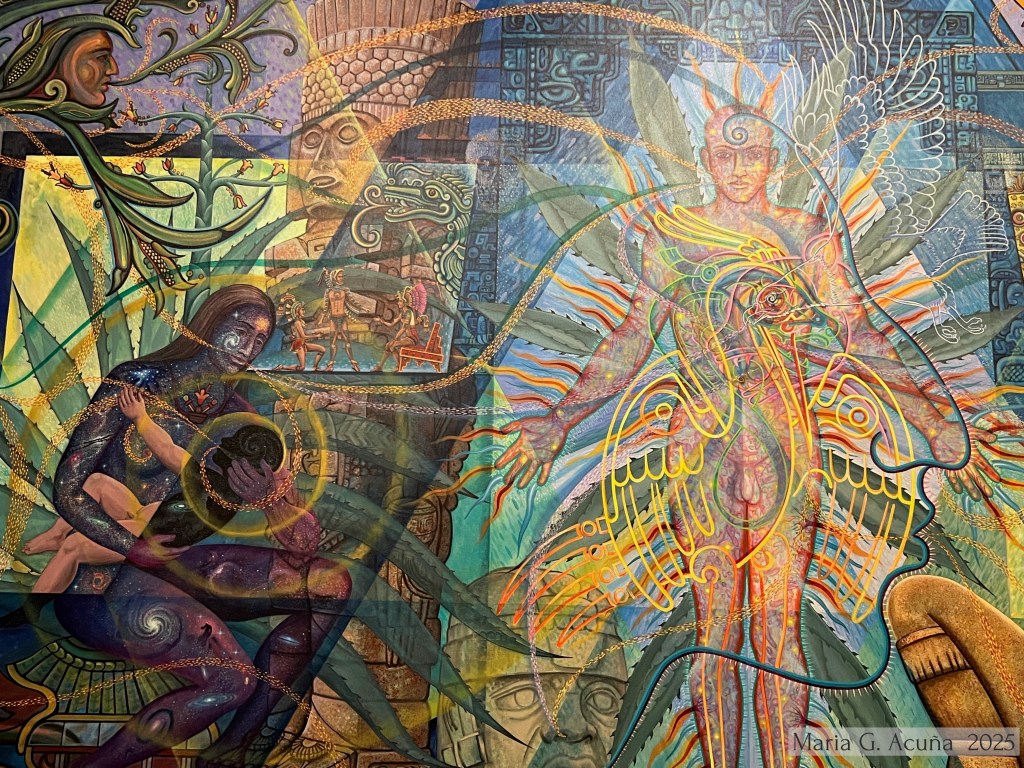

Isn’t it incredible? Notice how he superimposes images… it is his intention:

I absolutely love his “perceptualism”… with features of Surrealism and Optical Art!
Here is a video about him:
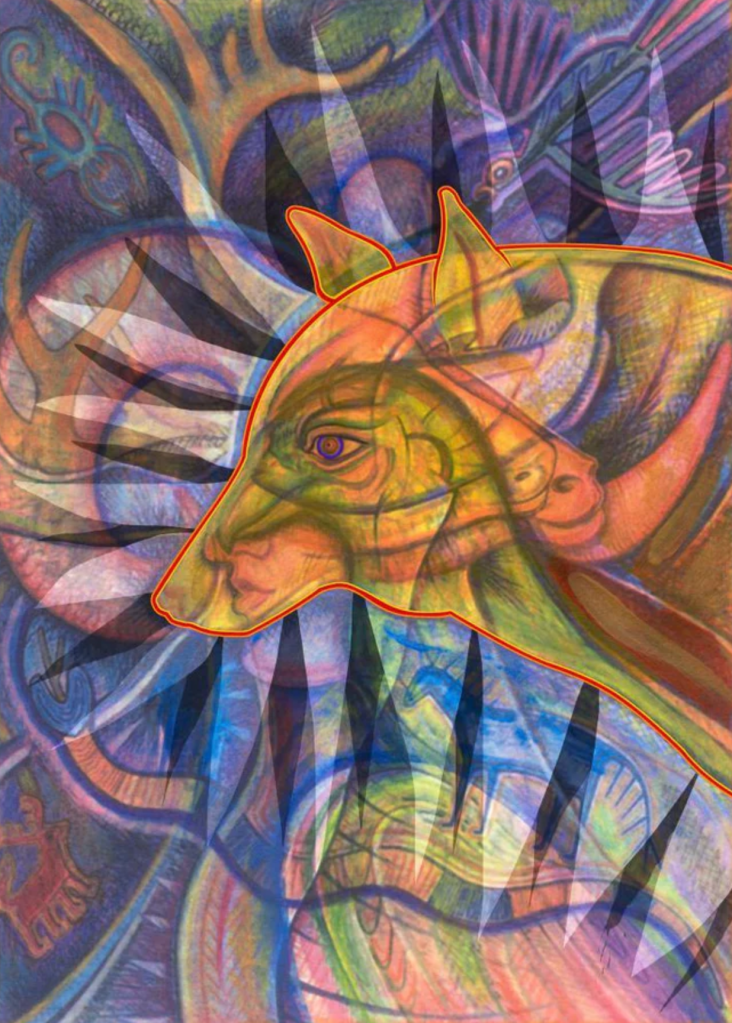
HERE one can read information about all his work and below are other paintings by him ( I was not able to find any other mural):

Cr. Mildred Baldwin



There is another younger muralist that is known in Pilsen, Chicago and I got to fully enjoy two of his murals in my visit there:
Hector Duarte
Hector Duarte was born in 1952 in Caurio de Guadalupe, Michoacán, Mexico. In 1977, he studied mural painting at the workshop of David Alfaro Siqueiros in Cuernavaca, learning from the master’s direct collaborators. This experience cemented his conviction that art must be public, free, and educational, accessible to everyone regardless of their economic status. Héctor Duarte’s artistic journey is deeply rooted in the legacy of Mexican Muralism, yet his practice has been entirely dedicated to telling the story of the Latino community in Chicago.
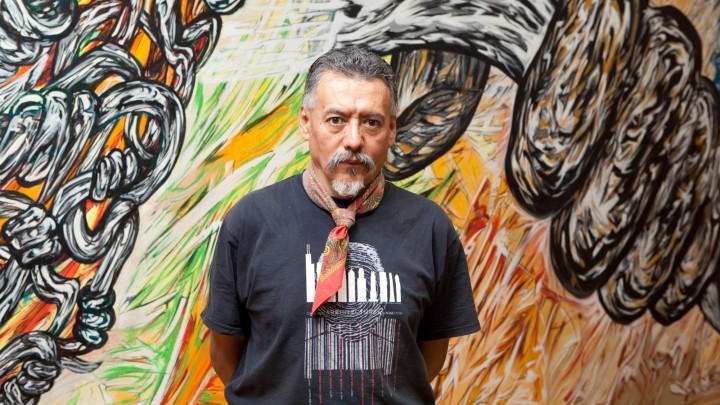
Since permanently moving to Chicago in 1985, Duarte has created over 50 murals across the Chicagoland area. His style is characterized by:
Social Realism: His themes are centered on current and historical human struggle, frequently tackling difficult issues like borders, the immigrant experience, and cultural identity.
Poly-angular Perspectives: Duarte is skilled at using the unique architecture of a wall to his advantage, creating dynamic compositions that appear three-dimensional and can be appreciated from multiple viewpoints.
Symbolism: He often incorporates the Monarch butterfly as a powerful symbol of human migration, visualizing a cultural corridor that stretches between his homes in Mexico and the United States.
Now let’s take a look at his work:
Ice Cream Dream (2004)
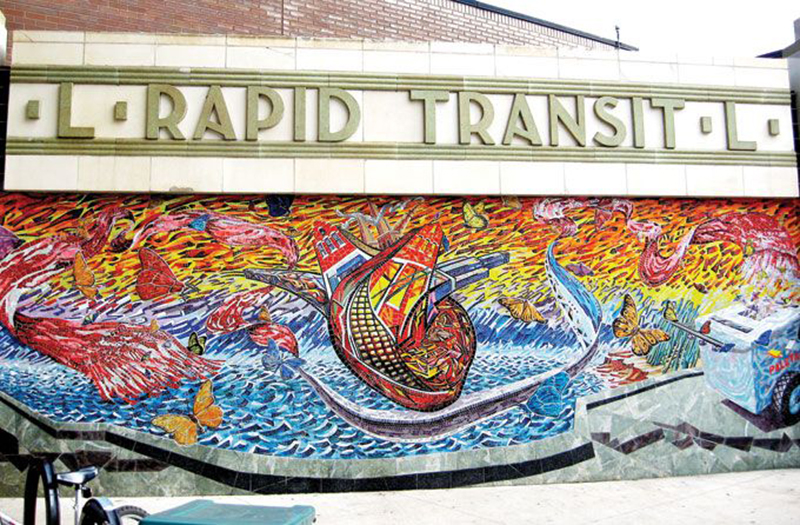
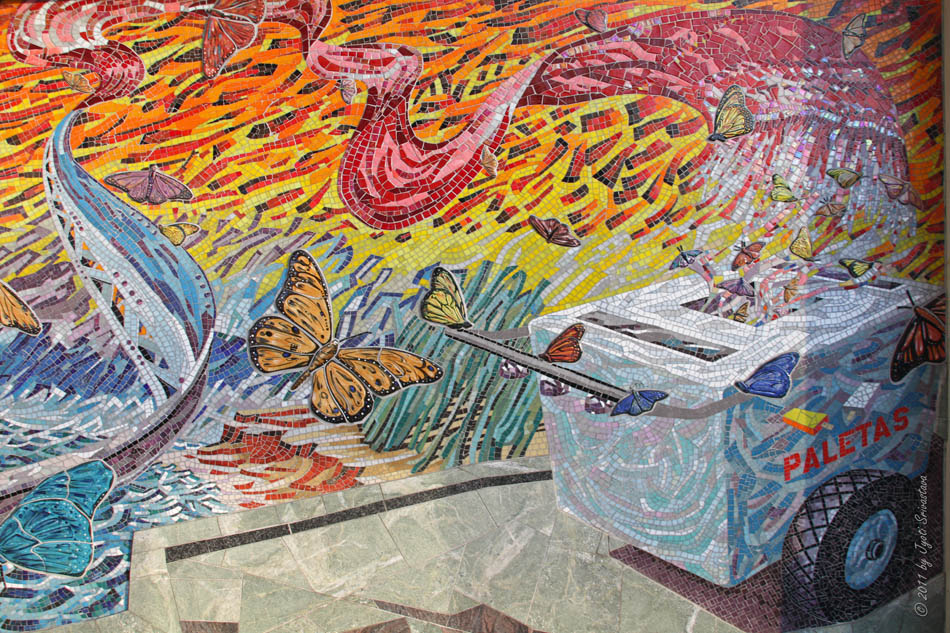
This mural represents the dreams of a Paletero (Popsicle vendor) symbolizing the working-class immigrant who often starts with humble, small-scale entrepreneurship as the first step towards a better life and economic opportunity achieved through hard work.
And talking about a Paletero… I saw one:

Gulliver in Wonderland (2005)
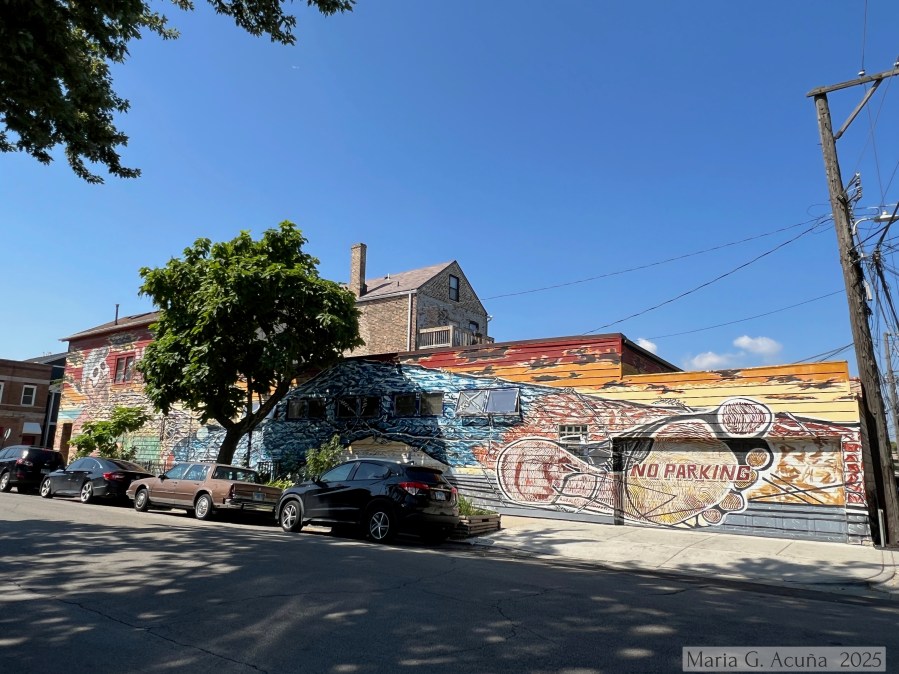


Héctor Duarte’s monumental mural, Gulliver in Wonderland, is painted on the exterior of his Pilsen home and studio, is a profound and complex statement on the immigrant experience in the U.S. Begun in 1999 and finished in 2005, the artwork is nearly 3,500 square feet of acrylic paint on aluminum siding, utilizing the bright colors and powerful symbolism characteristic of Duarte’s style.
The mural is primarily a depiction of the immigrant’s difficult assimilation process and the struggle to integrate into U.S. culture. The main focus is a giant migrant worker who appears to be floating in a symbolic red space, which Duarte describes as representing the physical and metaphorical borderlands experienced by Mexican immigrants and Chicanos. The migrant is explicitly compared to Gulliver, suggesting the immigrant is an isolated outsider in a foreign land. The inclusion of “Wonderland” in the title is a sardonic allusion to the American Dream and its often-false promise of easy prosperity.
The central figure is restrained by several key symbols of oppression:
Barbed Wire: Tying the worker down, the barbed wire represents the literal physical division of the border and the cultural division between immigrant and non-immigrant society.
The Barcode: Prominent lines on the immigrant’s foot resemble a barcode, which critiques the reduction of the immigrant’s identity upon arrival to a mere source of labor and a commodity.
The Baseball Cap: The worker’s cap is meant to evoke the Bracero Program, implying that Latinx immigrants remain under the strict control of American employers with little personal freedom.
The Día de Los Muertos Mask: A white mask covers the immigrant’s face, symbolizing the anonymity and pressure on immigrants to remain silent. Yet, it simultaneously highlights the immigrant’s enduring ties to their Mexican culture.
The mural’s sheer size has a powerful physical and psychological effect on the viewer, effectively dwarfing passersbyand making them feel small or trivial. Duarte uses this scale to implicitly challenge the audience, stating that by simply walking past the mural without acting, they are contributing to the immigrant’s problem of isolation and struggle. The mural directly asks, “How can we help immigrants assimilate?”
Artistically, Duarte utilizes Siqueiros’s “polyangular perspective,” a technique designed for a moving audience. This ensures that as a viewer changes position, different elements of the mural become more visible and prominent, actively engaging the audience and making the work a dynamic piece of public discourse.
This mural made me feel a lot…
Fight to Stay (2021)
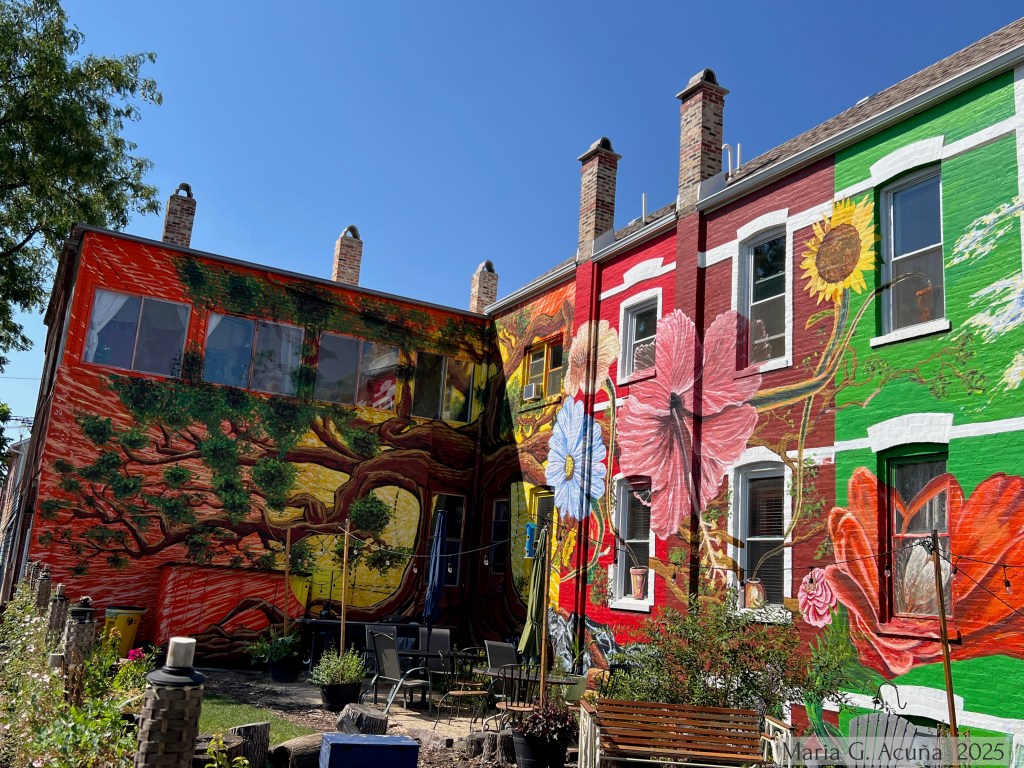
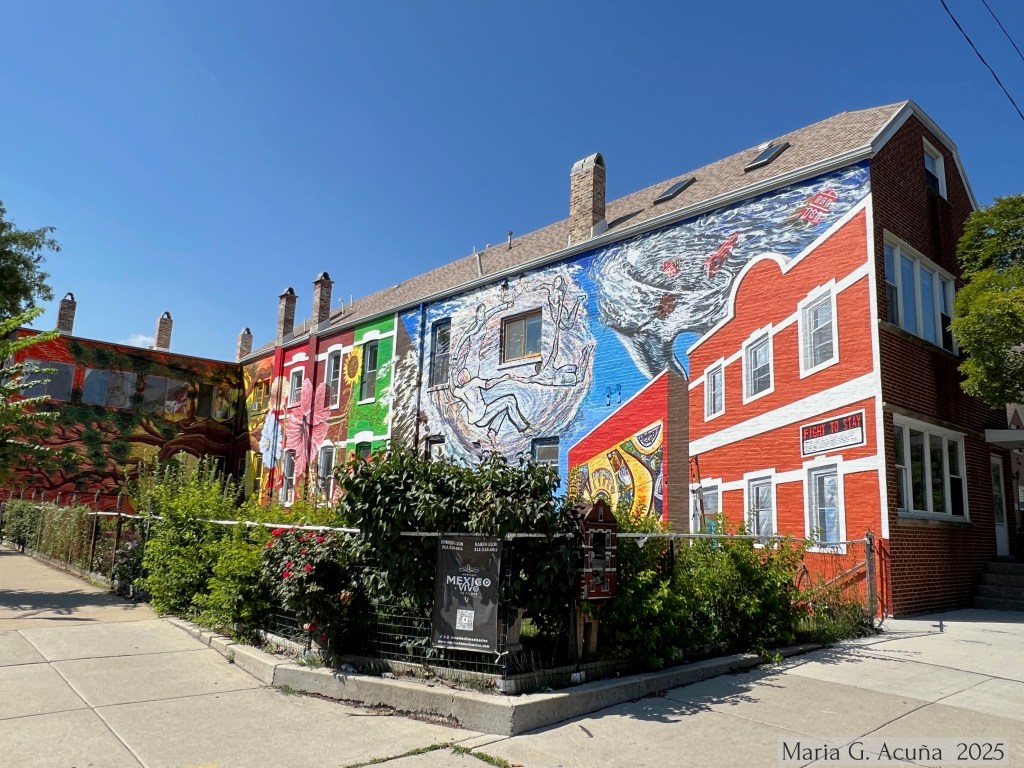

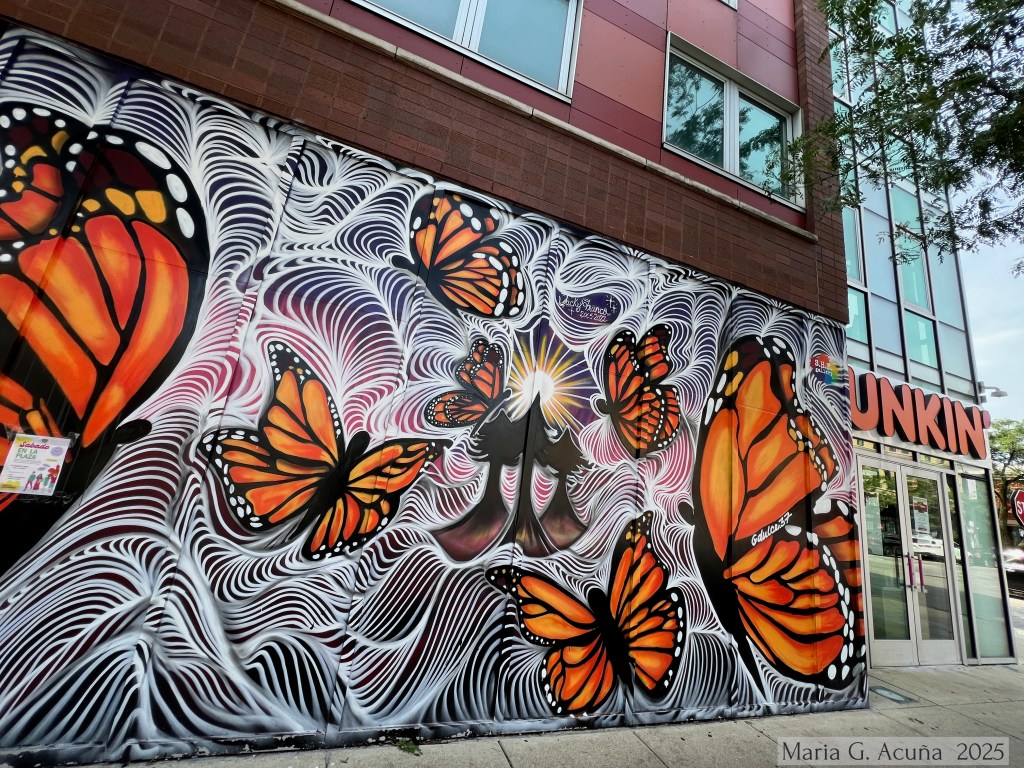
The mural Fight to Stay is a powerful, large-scale collaborative work completed in 2021 on the exterior walls of the Pilsen Housing Cooperative in Chicago. It stands as a profound visual act of resistance against the rapid gentrification and displacement affecting the historic Pilsen neighborhood. It was created by Hector Duarte, Gabriel Villa and Nicole Marroquín.
The mural uses striking, large-scale imagery across two walls to articulate the conflict between community resilience and the forces of change:
Tornadoes of Displacement: Prominently featured are two juxtaposing tornadoes. These symbolize the violent, turbulent force of gentrification sweeping up people, homes, and cultural objects like lowrider cars and guitars. The darker tornado represents the arbitrary and destructive nature of displacement.
The Tree of Life and Roots: In contrast to the chaos, a tremendous Tree of Life is central to the composition. Its deep, strong roots are depicted breaking through rock, which powerfully symbolizes the community’s deep resistance and entrenchment in the neighborhood. It is a visual declaration that the residents will not be uprooted.
Monarch Butterflies: A hallmark symbol in Duarte’s work, the Monarch butterfly represents human migration and the resilience of the community. They symbolize the cyclical nature of life and movement, asserting the residents’ right to remain and thrive.
Incorporated Architecture: The artists cleverly incorporated the actual windows of the building into the mural, painting them as windows of the homes within the artwork, further blending the art with the community it depicts.
Dis you notice that inside that mural Hector Duarte and collaborators honored Mario Castillo’s Peace mural? Look again:

Other murals and paintings by Hector Duarte:
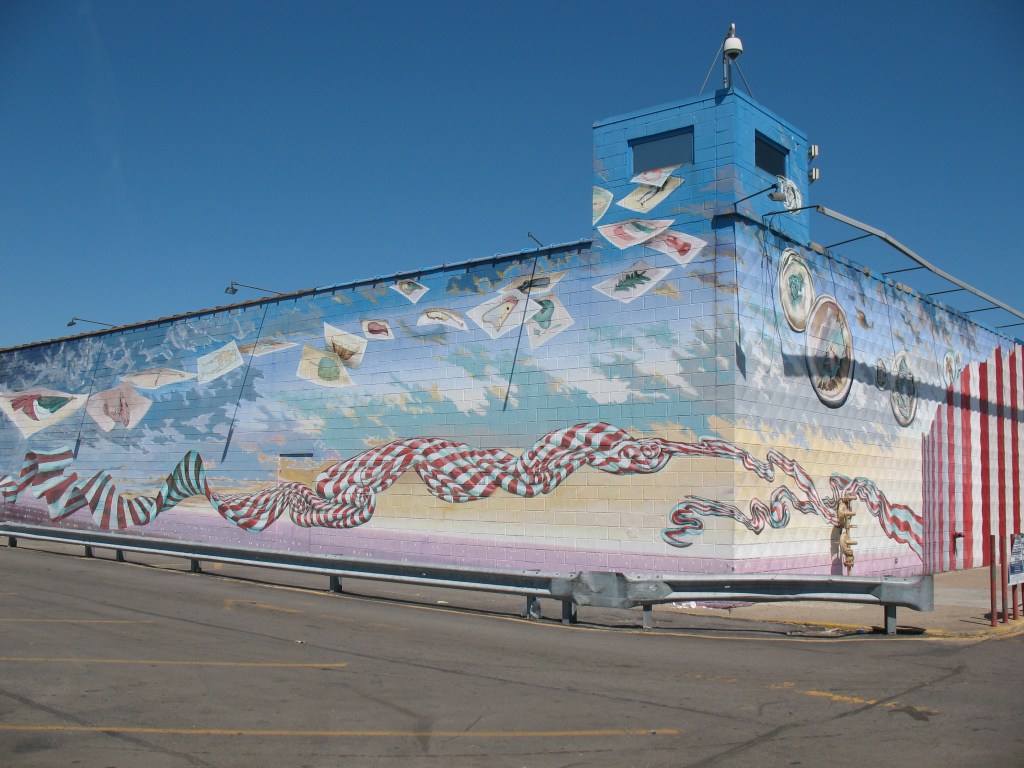



Como te ven te tratan (How they see you, they treat you)
2007
Other Murals in Pilsen
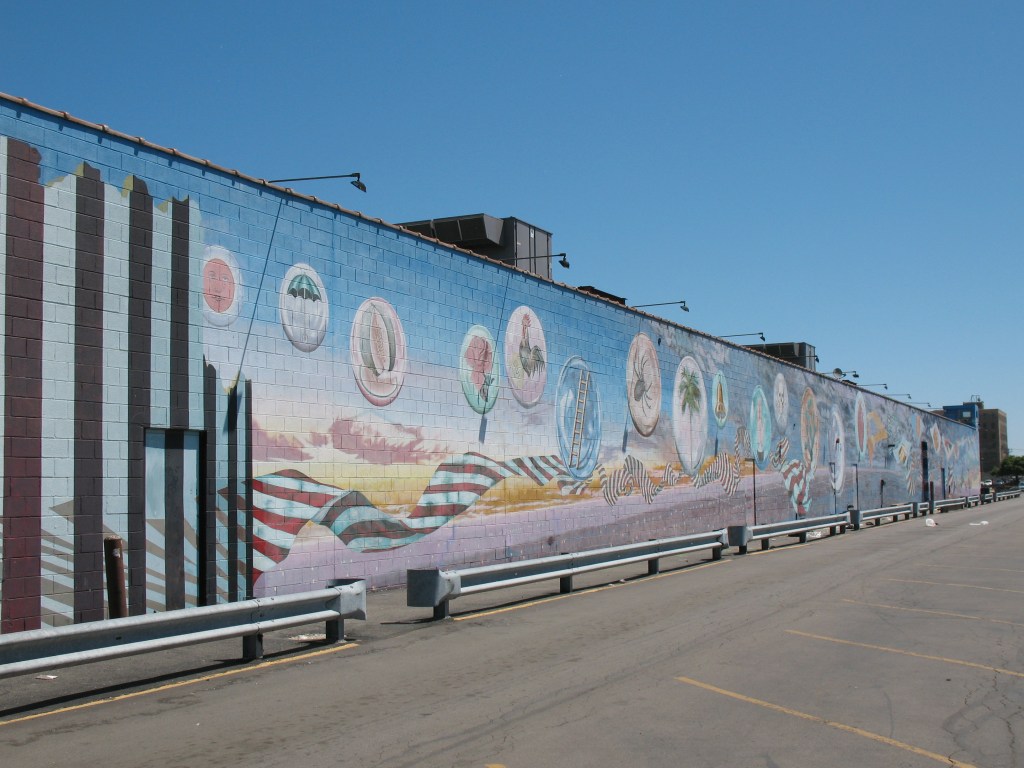
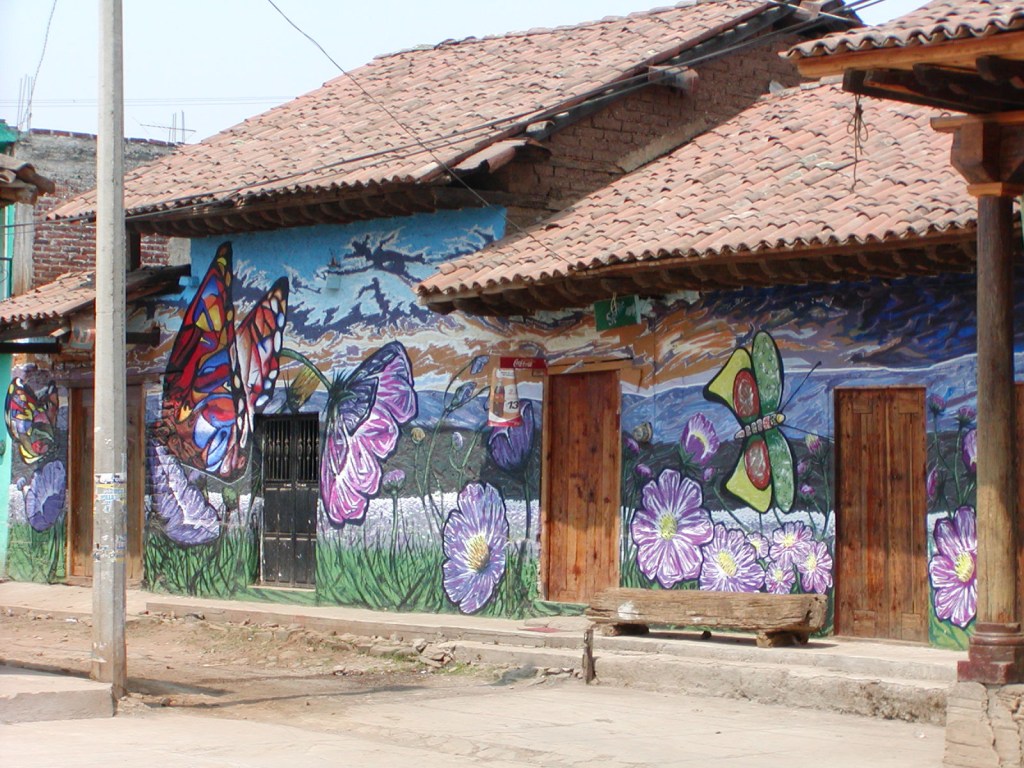
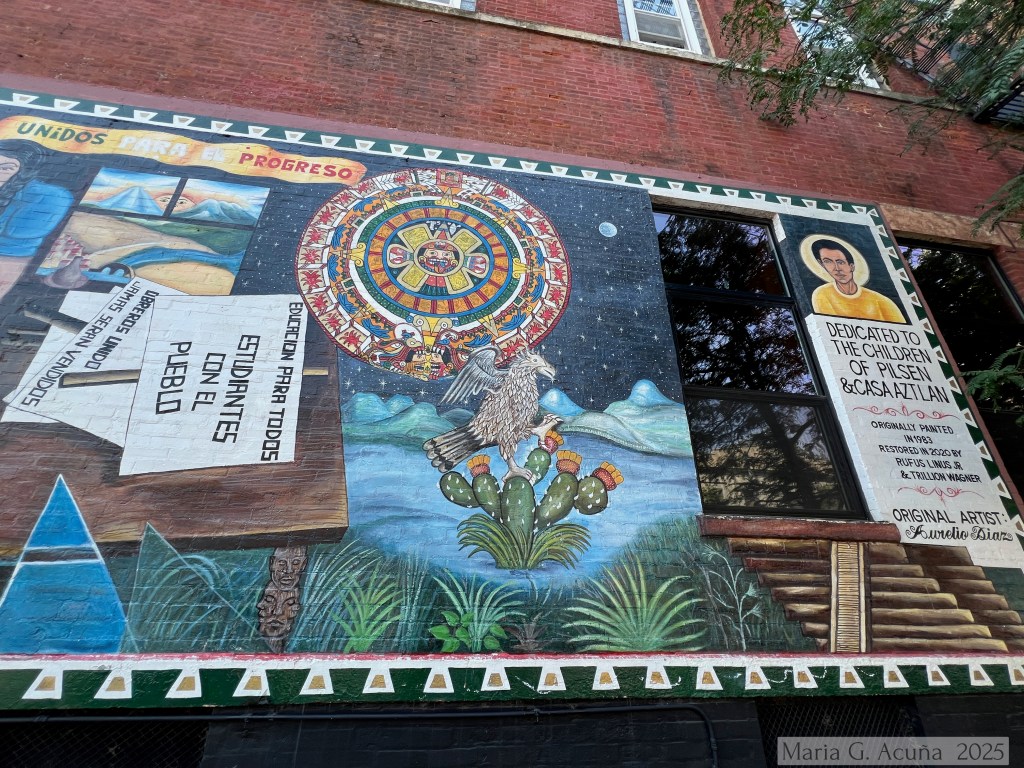
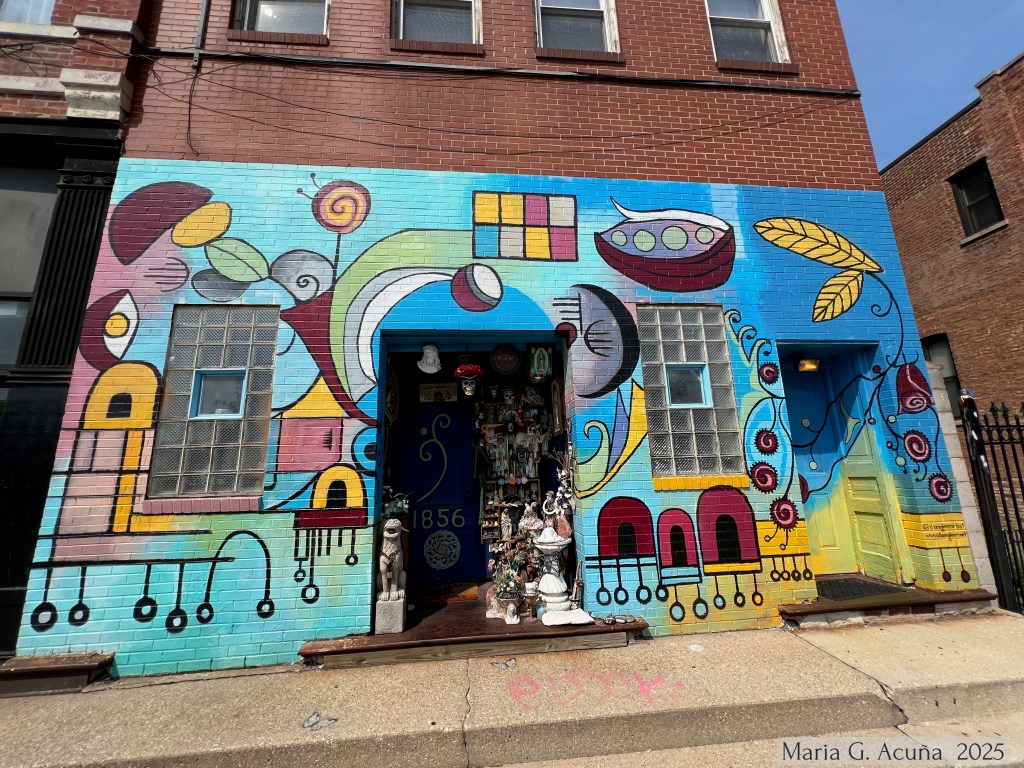
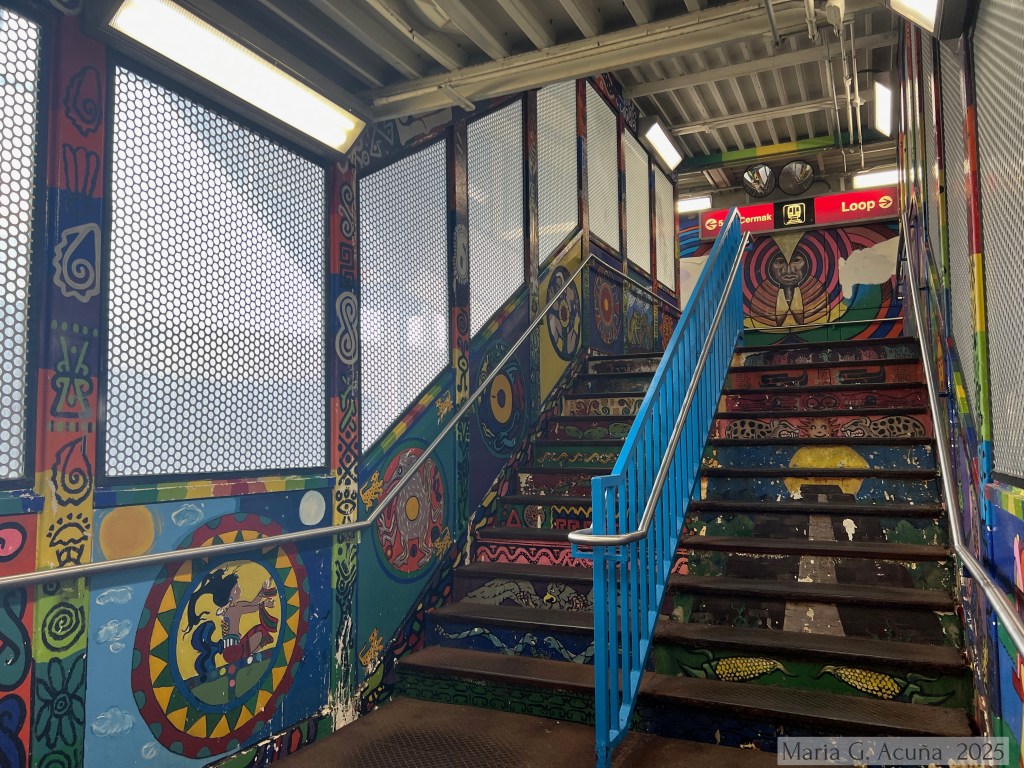
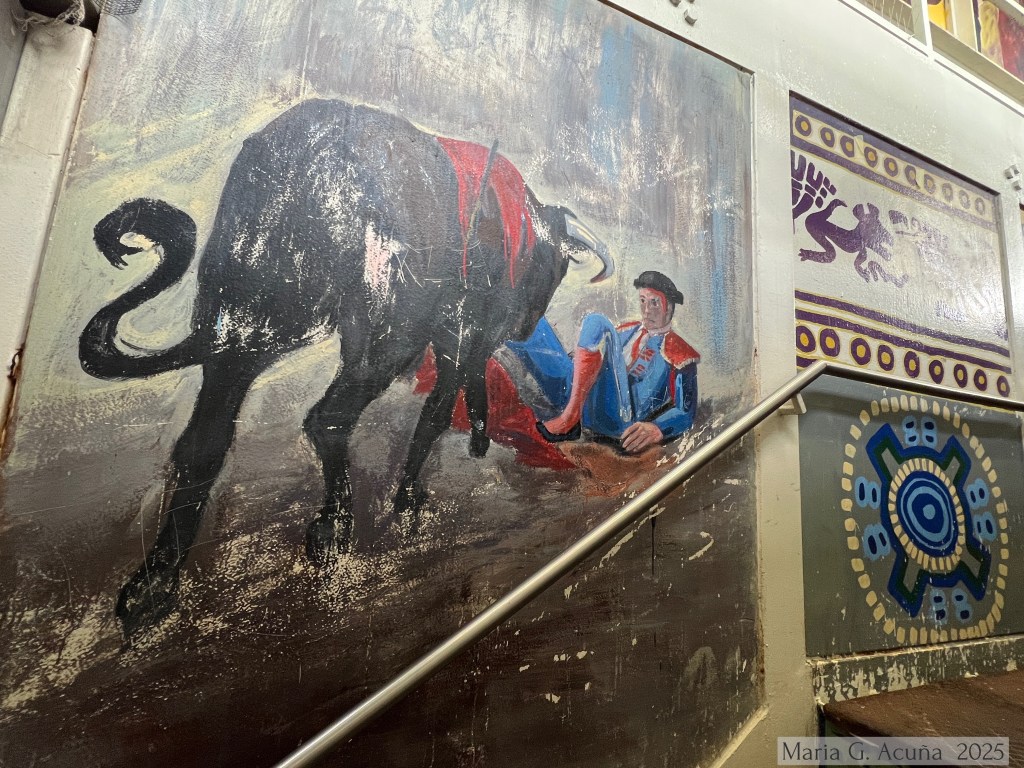
Here are some of the rest of the murals I saw in Pilsen. I think I visited at a point where one could still see the splendor of some of the murals (August 2025), but sadly many are being vandalized with words and other images. Notice the Frida Kahlo mural for example with those letters that have nothing to do with the mural and the decay in the subway ones.


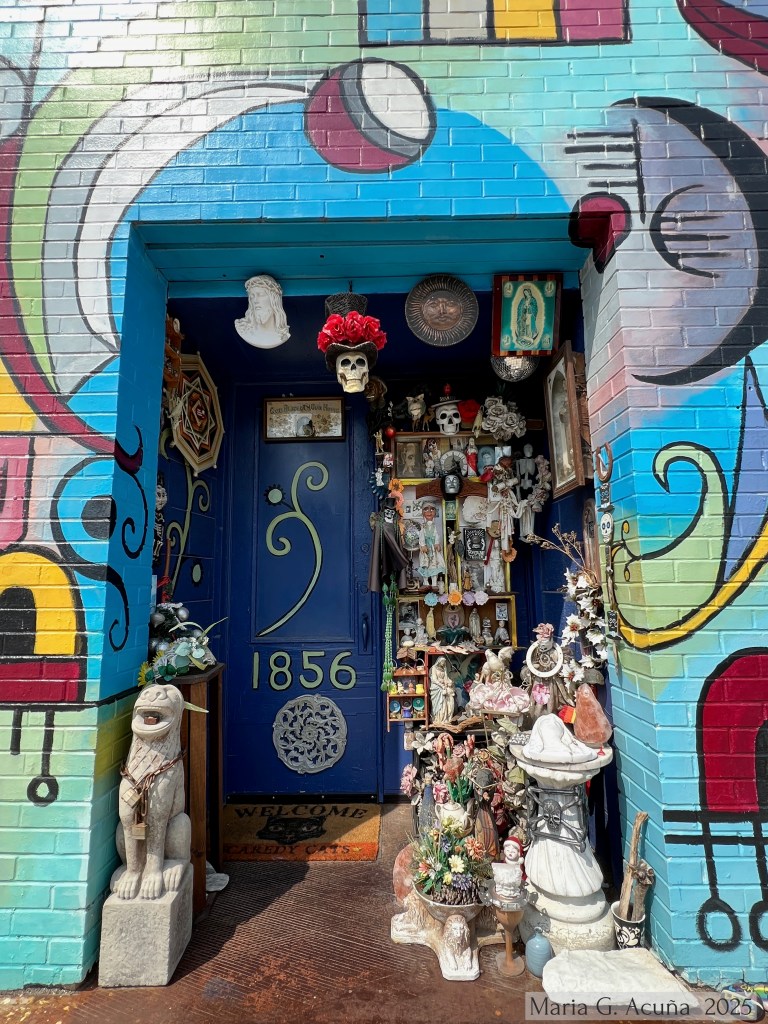
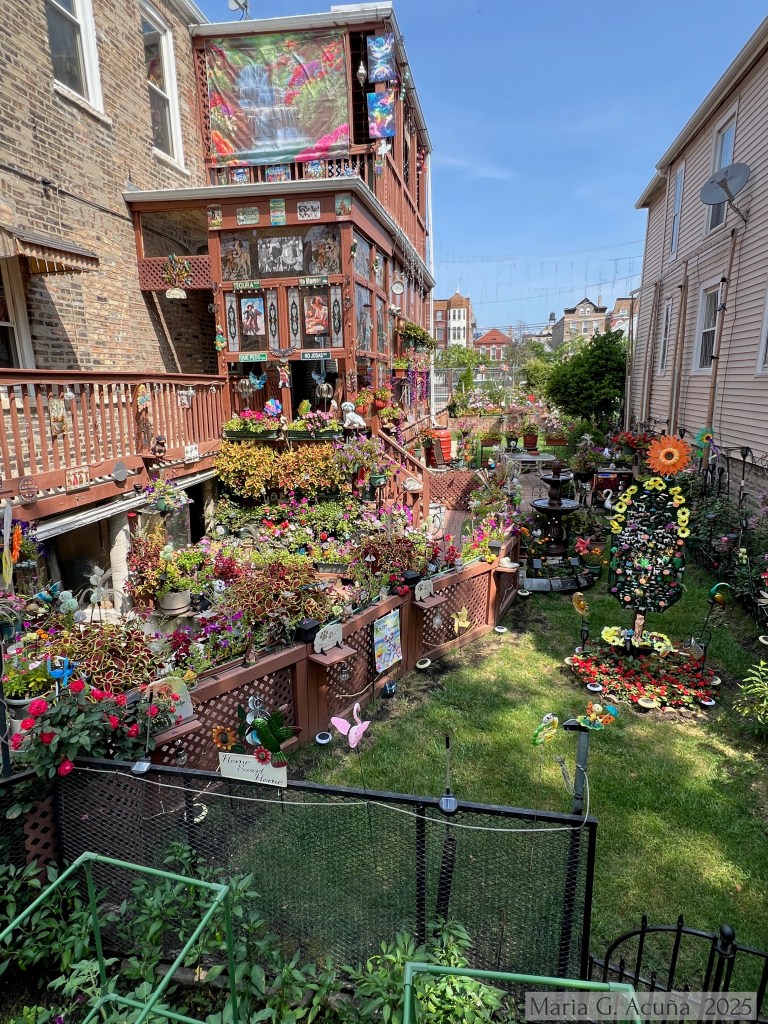


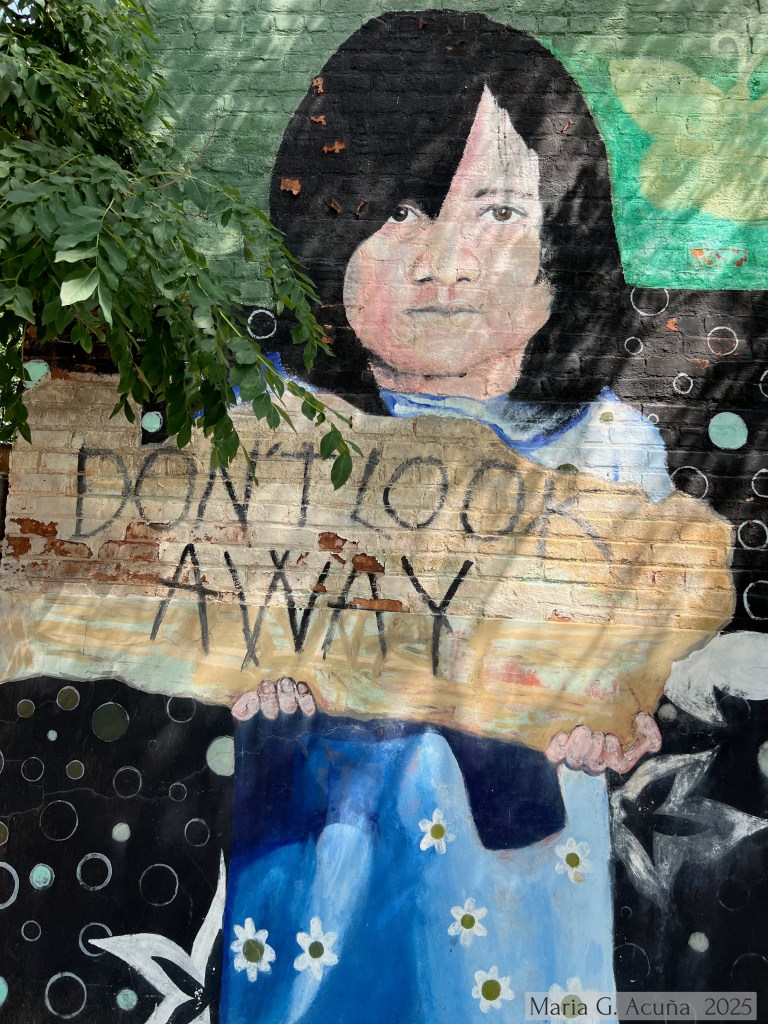


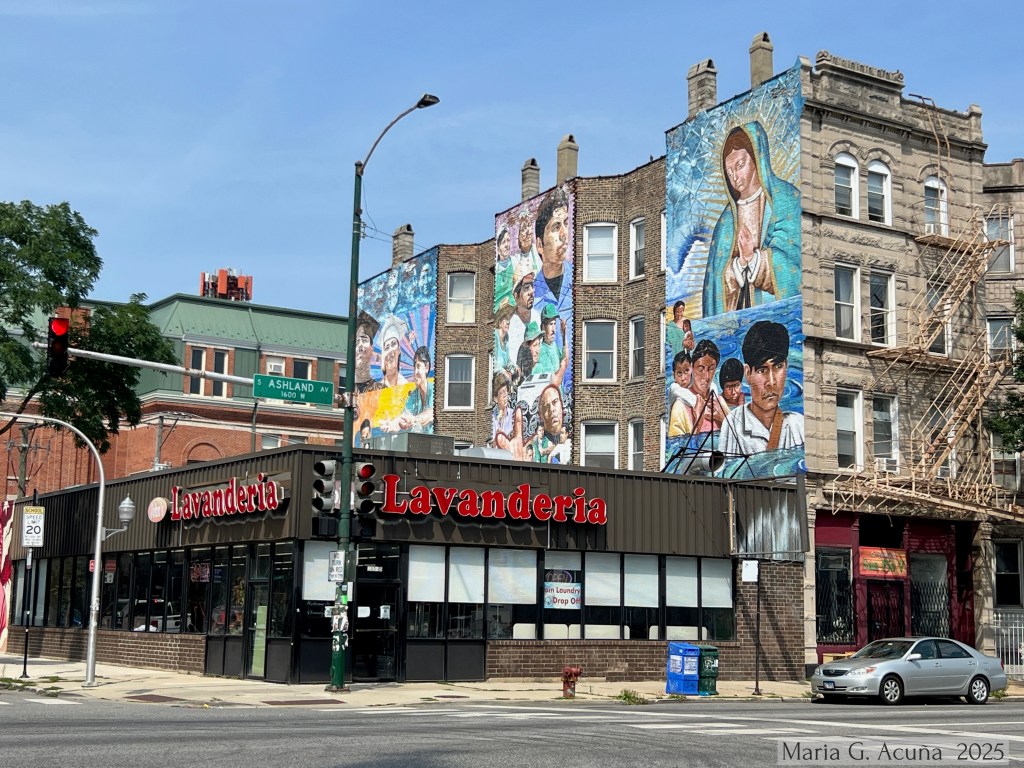
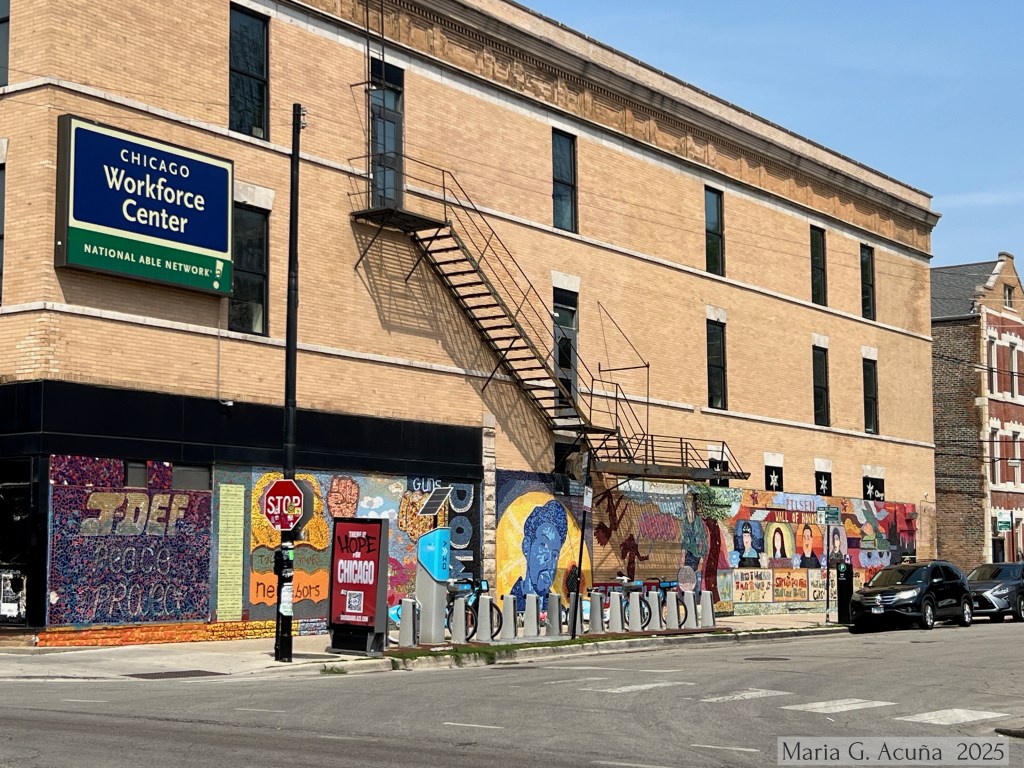
The following mural is a tribute to Jeff Maldonado Jr. (known as “J-Def”), an aspiring hip-hop artist who was tragically killed in a case of mistaken identity in 2009. His parents founded the J=Def Peace Project, an initiative that according to their website looks to empower youth across several Chicago neighborhoods including Pilsen, Brighton Park, Back of the Yards, East Side, North Lawndale, and Franklin Park. Though art they create a safe and creative environment allows our teens to develop 21st century skills that will prepare them for life after high school. Their work and dedication have a positive impact on their lives and their communities.
You can read about J-Def and his father Jeff Maldonado HERE. There is a video too if you scroll down and you can see Jeff Maldonado Sr. in an art class with youth. Together they have painted various murals around Pilsen and worked on this incredible mosaic mural:

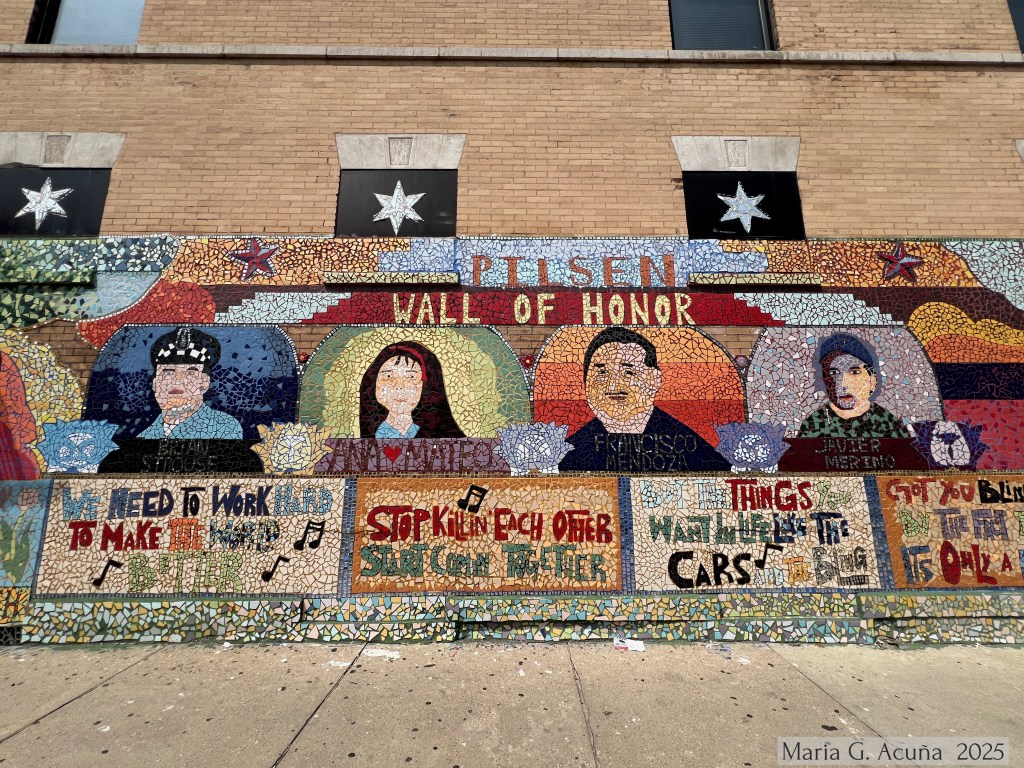
The words under the four portraits say:
“We need to work hard to make the world better
Stop killin’ each other, start comin’ together
But the things you want in life like the cars and the bling
Got you blinded by the fact that its only a dream.”
The end of the mural, “make smart choices”.
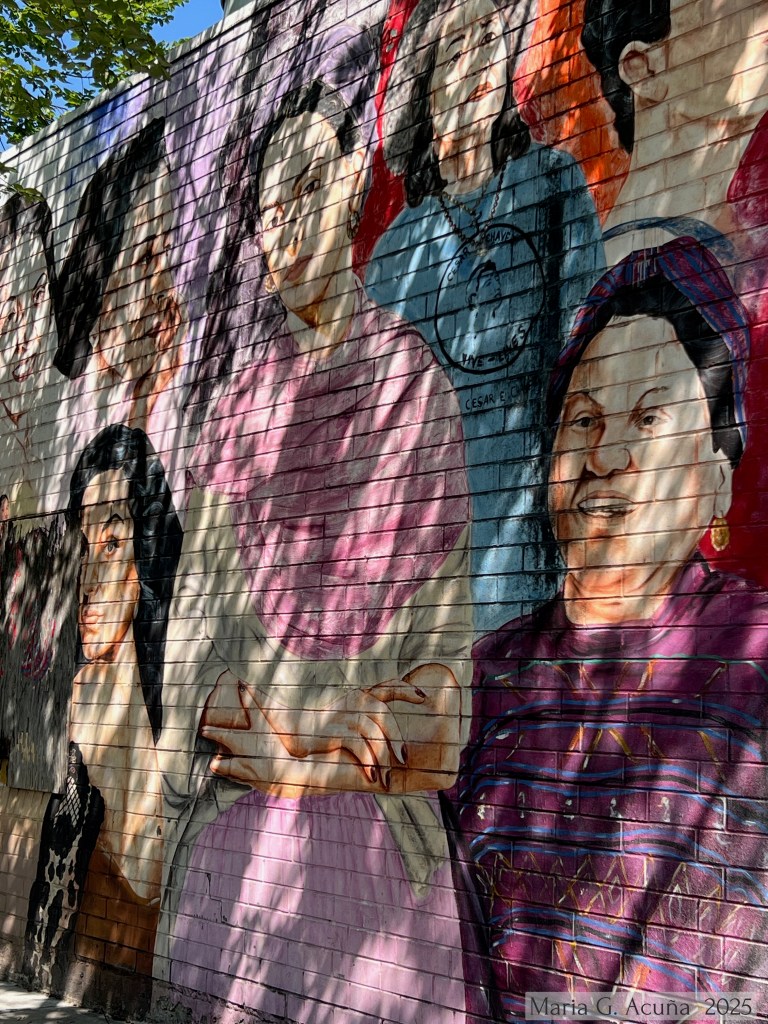

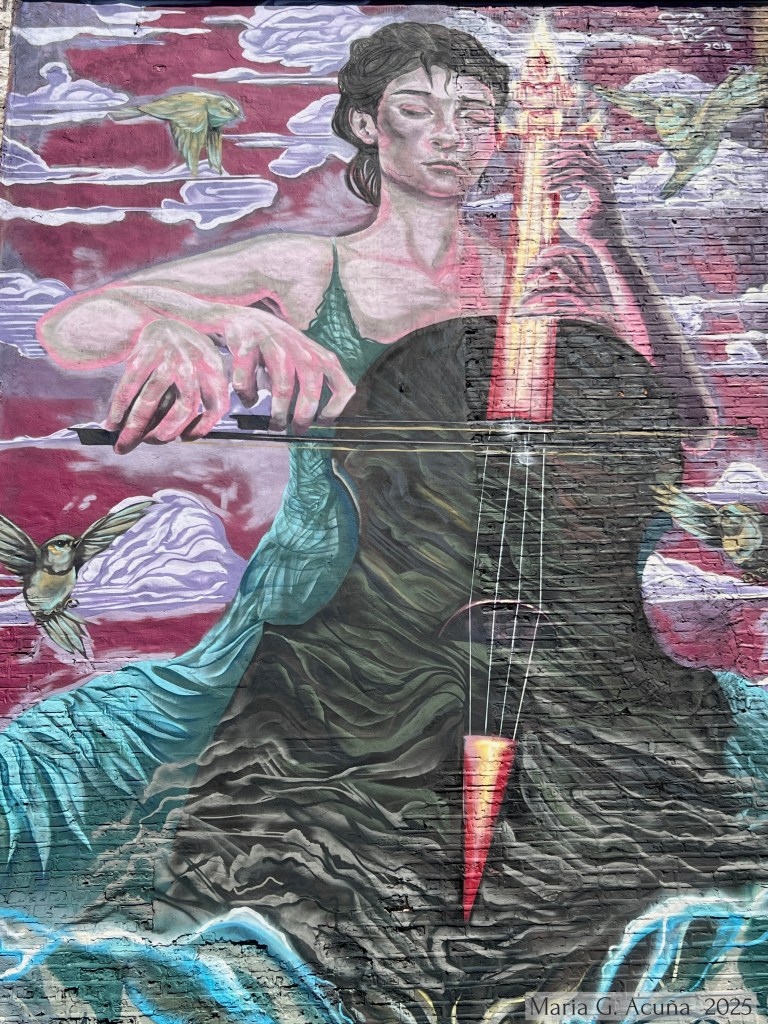

These were at the CTA (Subway station in Pilsen). You can see the deterioration. It is so sad to let this waste away… it is so beautiful!


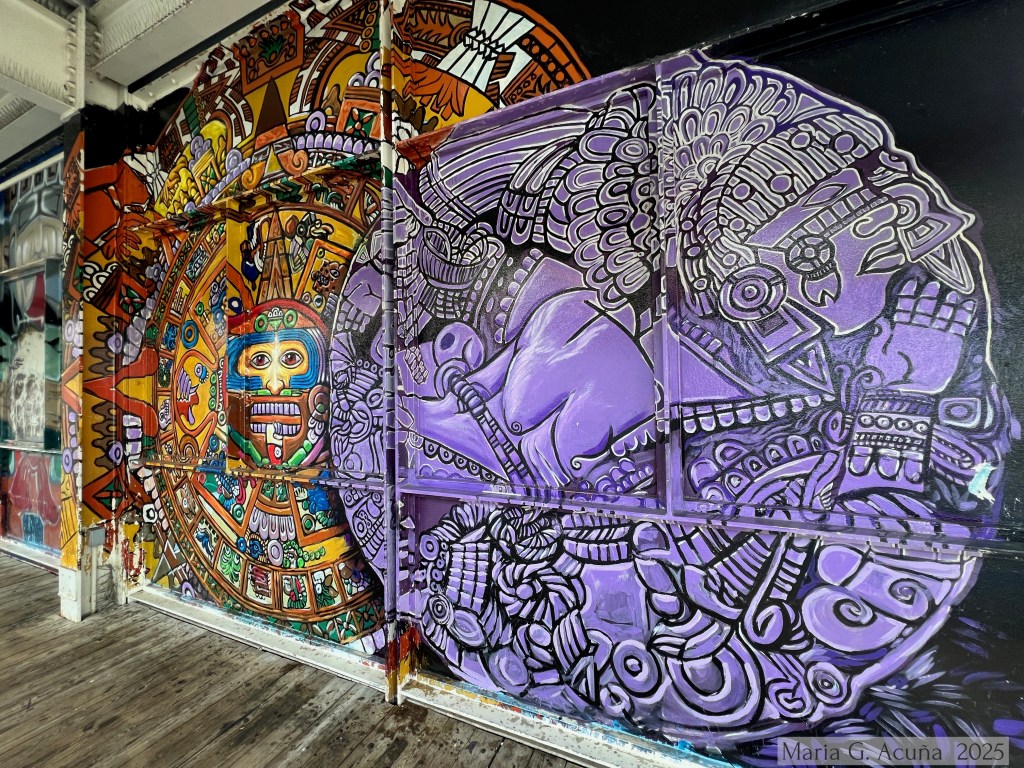




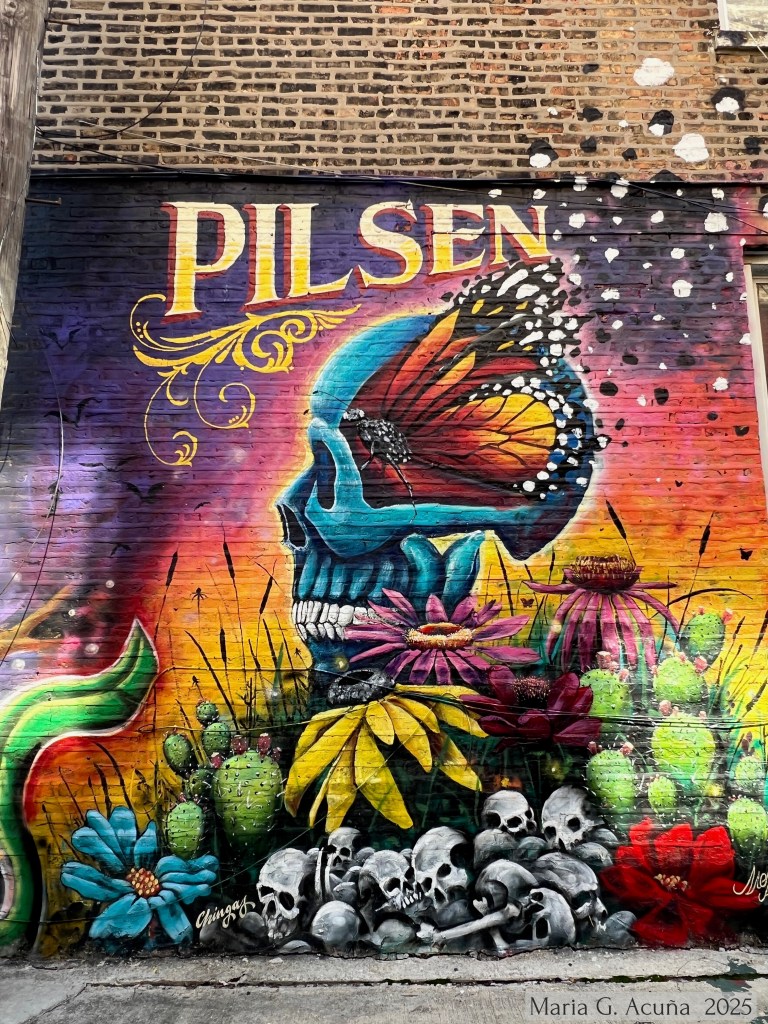
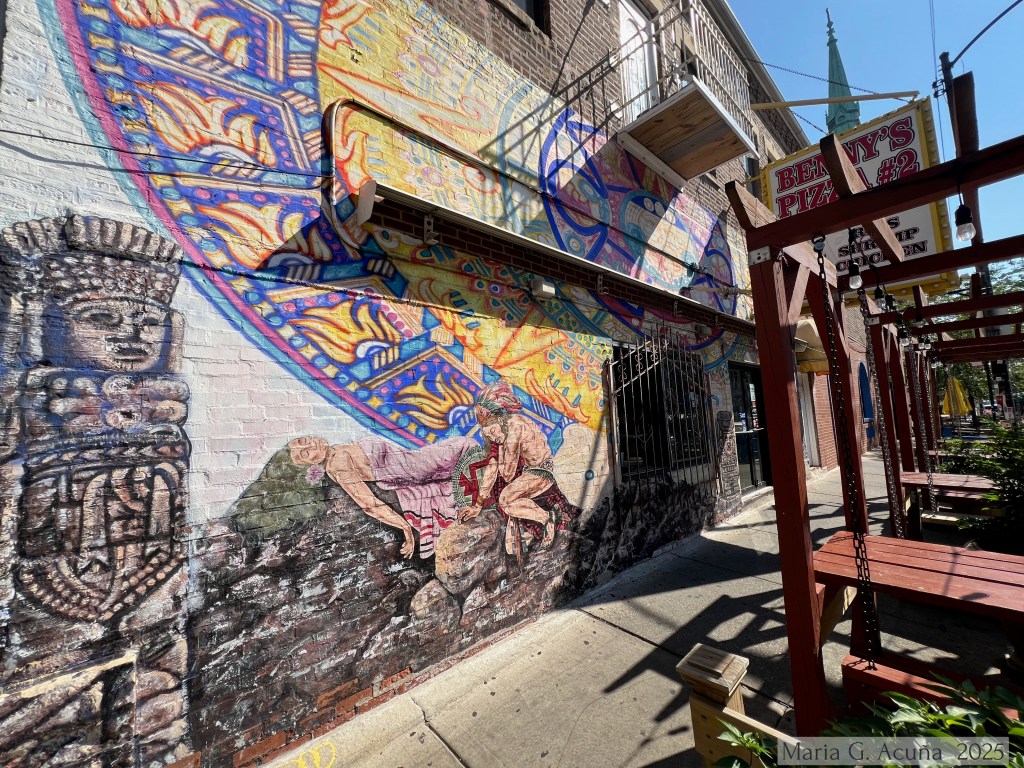
The following murals tell the story about how tow volcanic mountains near Mexico City came to be through the an Aztec legend:
The Legend of Popocatépetl and Iztaccíhuatl
The story begins with the great warrior Popocatépetl falling deeply in love with the beautiful princess Iztaccíhuatl, the daughter of the reigning Tlatoani (emperor). The emperor approved of their union but sent Popocatépetl off to a distant war, promising him his daughter’s hand upon his victorious return.
However, a jealous rival warrior falsely reported that Popocatépetl had died in battle. Devastated by the news, Iztaccíhuatl died of a broken heart before her true love could return.
Popocatépetl soon returned victorious, only to find his beloved dead. Grief-stricken, he carried her body to a high mountain peak. He laid her gently down, and the snow covered her body, transforming her into the dormant volcano, which is named Iztaccíhuatl—meaning “White Woman” or “Sleeping Woman” in Nahuatl—due to its shape resembling a sleeping female figure.
Popocatépetl then climbed an adjacent peak, where he knelt beside her, holding a smoking torch to mourn his loss. The gods, moved by his devotion, turned him into the volcano Popocatépetl—meaning “Smoking Mountain”—which eternally watches over Iztaccíhuatl and occasionally lets out smoke, symbolizing the fire in his torch and his enduring, passionate lament.


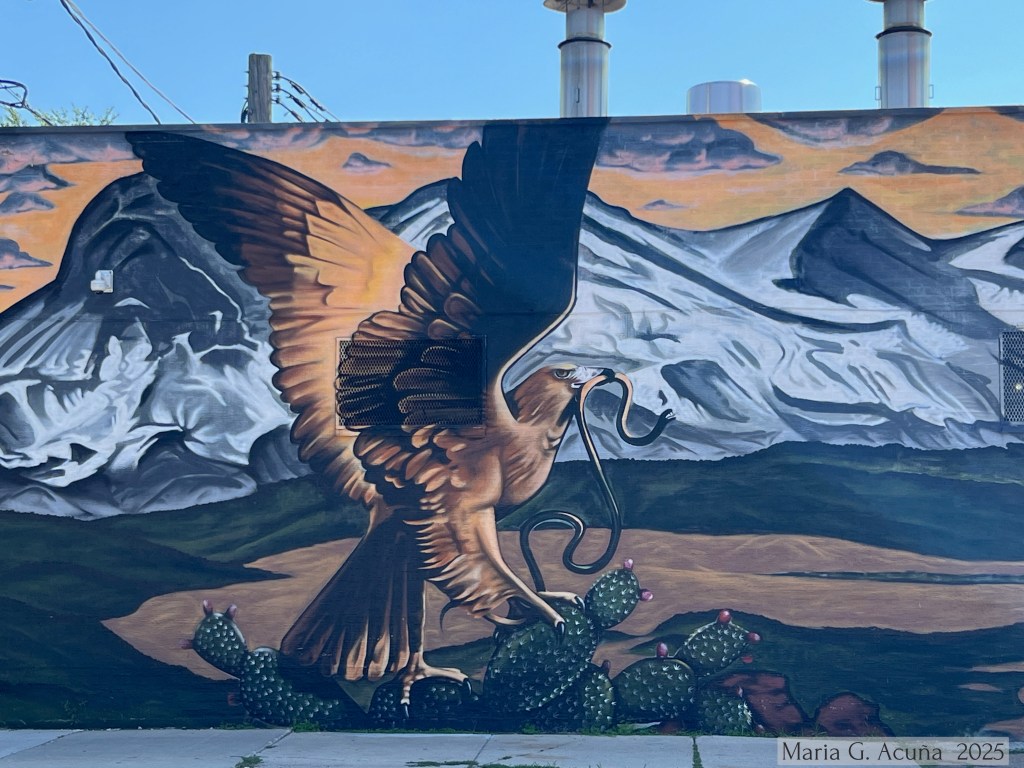


And I totally related to this one as a mother… it reads: Your mother can’t sleep because you are out:


You can read about the previous mural HERE.

Aside from these murals, Pilsen has a lot of murals that are part of restaurants and store fronts. Last, I will share images of a restaurant I ate at called “Rabanitos” (Little radish). The food was the homemade delicious kind! And had grated radish on top…


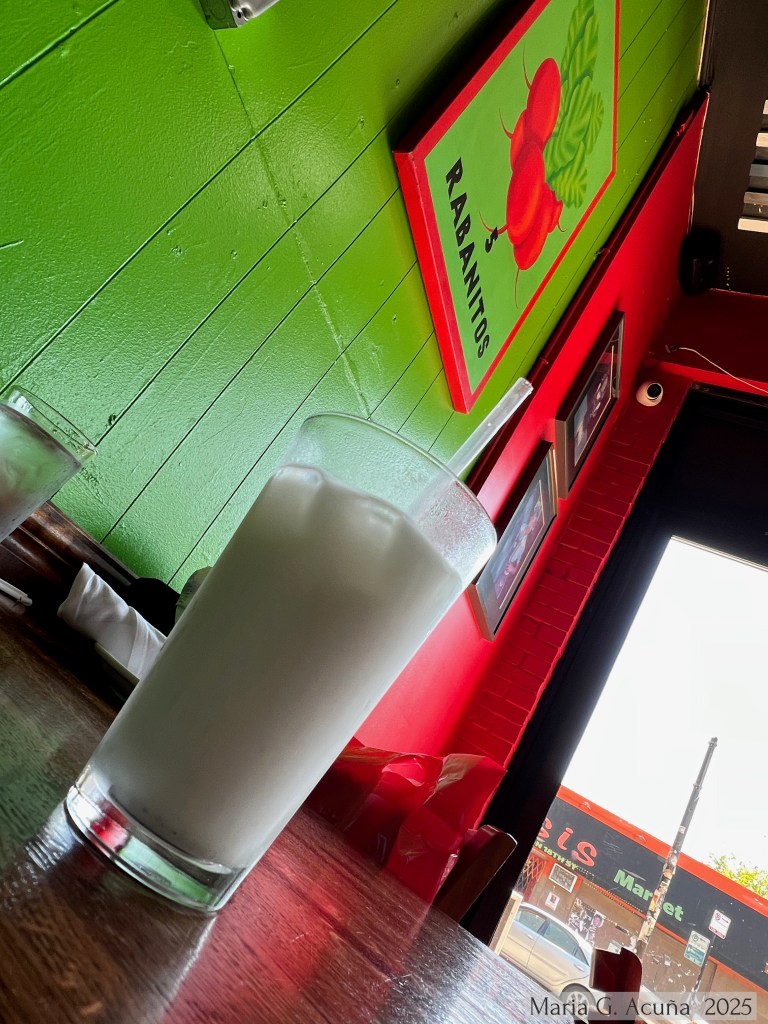


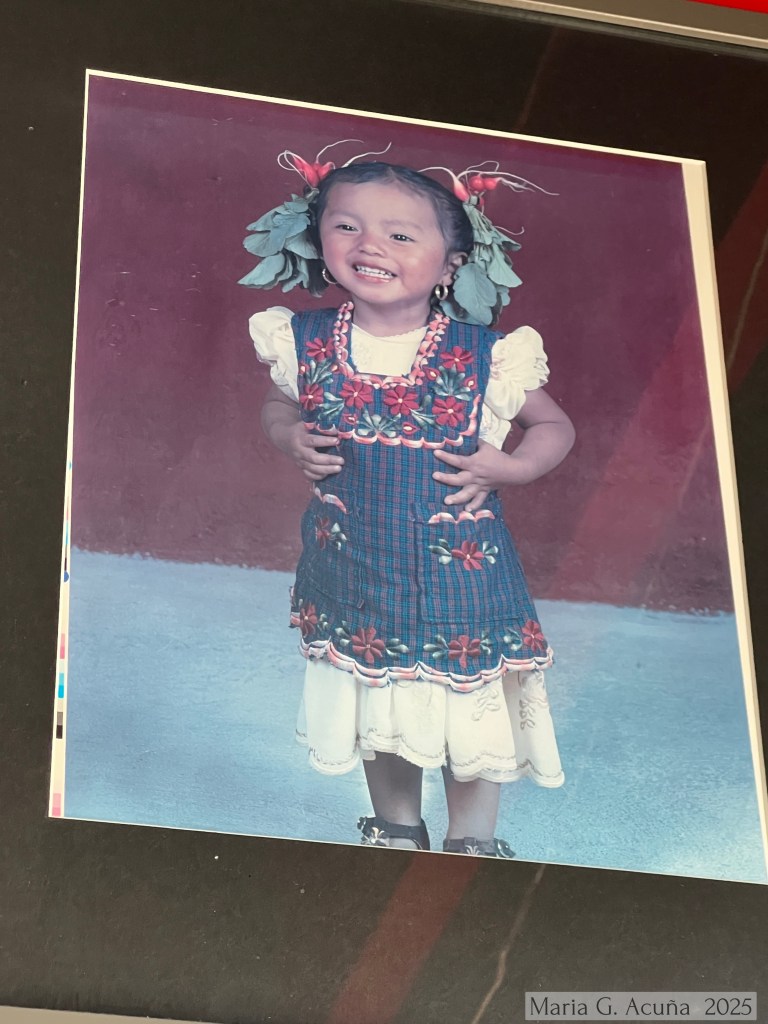
And with this cute radish I take my leave. I wish Pilsen many more years of Mexican families… that leave on their walls the colors and designs of their incredible artists and culture, and most of all the respect and appreciation they deserve for who they are and their countless contributions to the United States and the world. ¡Pilsen es tu casa porque el mundo entero es tu casa!
And I want to quietly share that there is another more personal reason why I wrote this post. My son who is an aspiring artist moved here when he was almost 21 years old. Something made it home for him… and still does. May the angels protect him… and may all that art around him inspire him!
 My Virtual World Trip