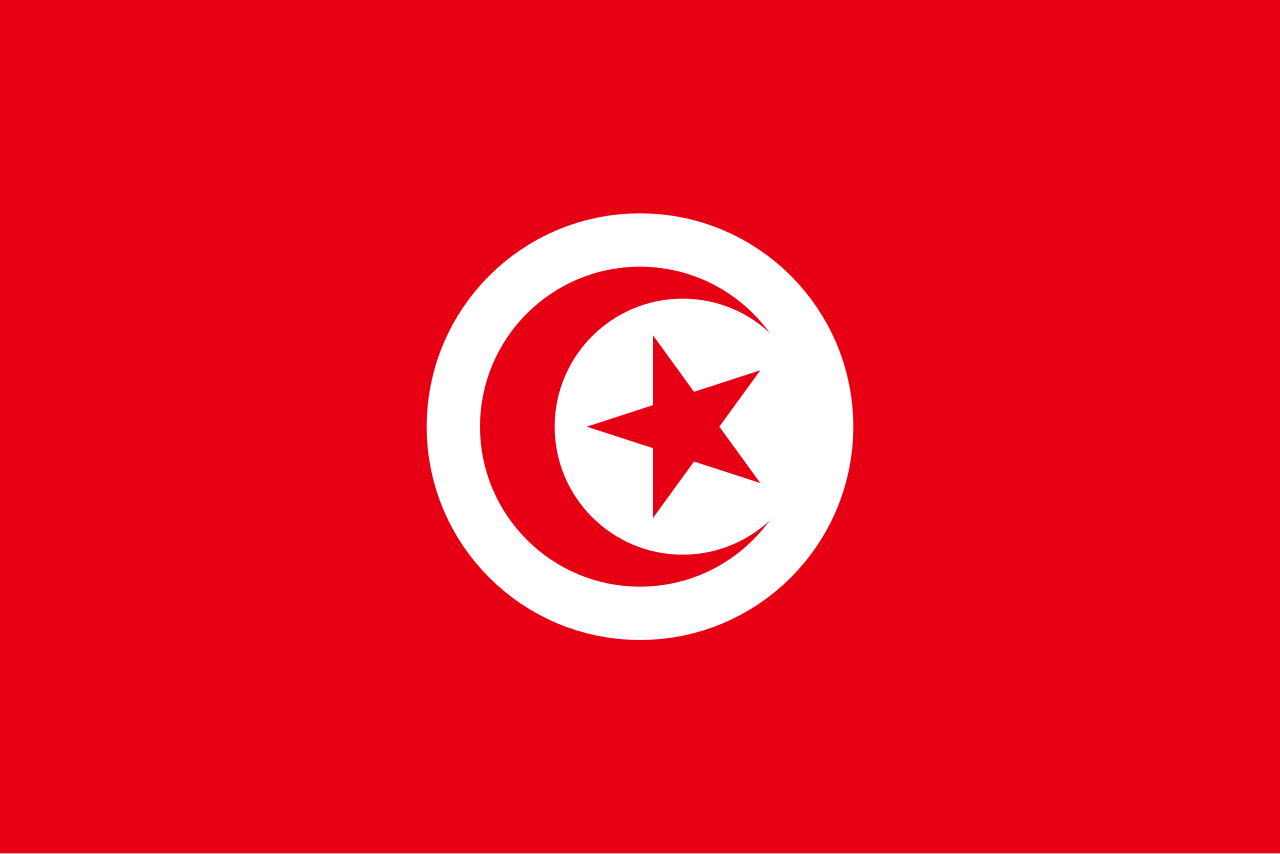
Tunisia, officially known as the Republic of Tunisia, is a nation situated in the Maghreb region of North Africa. This country is bordered by Algeria to the west and southwest and Libya to the southeast. Its extensive northern and eastern coastlines meet the Mediterranean Sea. Furthermore, Tunisia shares significant maritime boundaries in the Mediterranean, primarily with Italy via the islands of Sicily and Sardinia to the north, and with the island nation of Malta to the east.
The Maghreb meaning “The place where the sun sets” refers to the Western part of the Arab world. It includes: Algeria, Libya, Mauritania, Morocco, and Tunisia. The Maghreb also includes the disputed territory of Western Sahara.
This ratio it covers 63,170 square miles (163,610 km2) and has a population of 12.1 million.

The official language of Tunisia is Arabic. The vast majority of Tunisia’s population is Arab and Muslim. Vernacular Tunisian Arabic is the most spoken language, and French serves as an administrative and educational language in some contexts, but has no official status.
For clarification: Arab is about culture, language, and geography; Muslim is about religion. Not all Arabs are Muslims and vice versa.
The name Tunisia is derived from Tunis, a central urban hub and the capital of modern-day Tunisia. The present form of the name, with its Latinate suffix -ia, evolved from French Tunisie, in turn generally associated with the Berber root ⵜⵏⵙ, transcribed tns, which means “to lay down” or “encampment”.
Land
Though it is relatively small in size, Tunisia has great environmental diversity due to its north–south extent. Tunisia is home to five terrestrial ecoregions: Mediterranean conifer and mixed forests, Saharan halophytics, Mediterranean dry woodlands and steppe, Mediterranean woodlands and forests, and North Saharan steppe and woodlands. We will venture deeper into its geography soon covering the meaning of words like steppe and halophytics!
The terrain of Tunisia exhibits a dramatic range in elevation, stretching from the eastern extension of the Atlas Mountains down to significant desert depressions. The nation’s highest geographical point is Jebel ech Chambi, which reaches an elevation of 5,066 feet (1,544 meters) above sea level in the western-central region near Kasserine. In contrast, Tunisia’s lowest point is Chott el Djerid, a large salt lake or chott depression situated in the south, which lies approximately 56 feet (17 meters) below sea level.

Tunisia has a coastline 713 mi ( 1,148 km) long. In maritime terms, the country claims a contiguous zone of 24 nautical miles (44 kilometres), and a territorial sea of 12 nautical miles (22 kilometres).
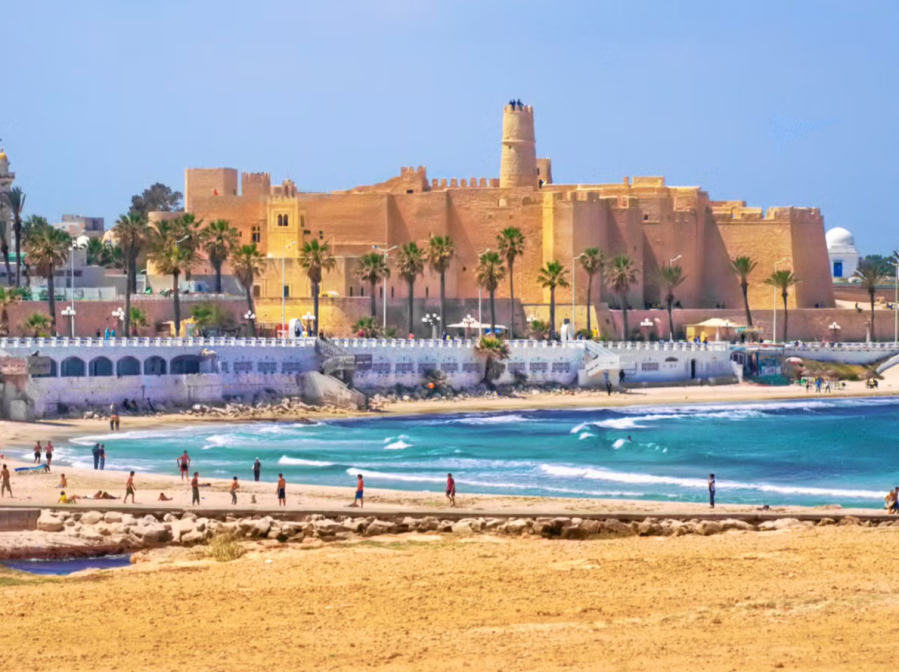
Main Cities
Tunis
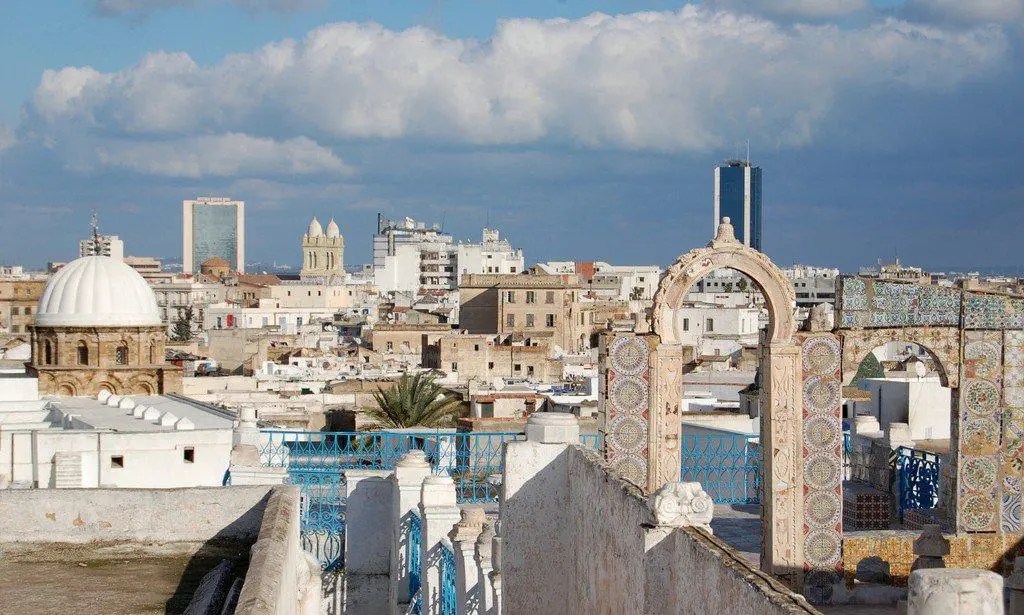
Tunis is the capital and largest city, serving as the political, administrative, and economic heart of Tunisia. It is a modern metropolis built around a vibrant historic center, the Medina of Tunis, which is a UNESCO World Heritage site known for its winding souks (markets) and Ottoman-era architecture. The city’s suburbs also contain the ancient ruins of Carthage and the picturesque blue-and-white village of Sidi Bou Said, reflecting its deep history that stretches back to antiquity alongside its modern function as the nation’s primary gateway.
Sfax
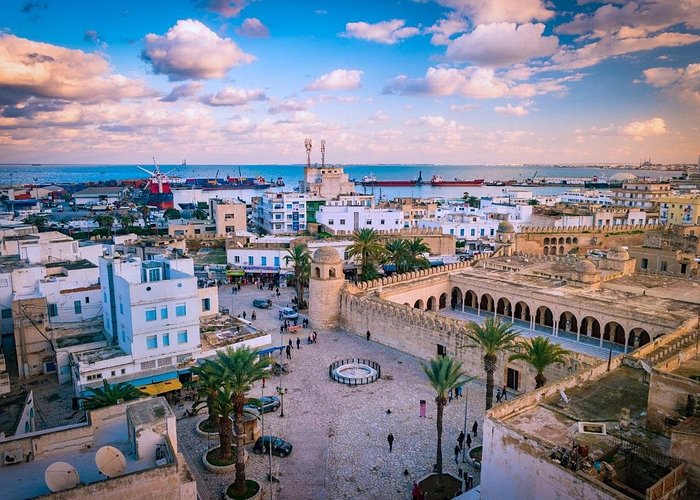
It is the second-largest city in Tunisia, serves as the country’s most important commercial and industrial center. Strategically located on the east coast, the city features a major commercial port essential for exporting key Tunisian resources, notably olive oil and phosphates. Sfax offers a distinctive, less tourist-focused, and more authentic atmosphere. Its resilient Medina is enclosed by well-preserved medieval walls, creating a vibrant space that buzzes with the unfiltered, daily life of commerce and local trade.

Sousse
Often affectionately referred to as the “Pearl of the Sahel,” is the nation’s third major urban center, distinguished by its vibrant tourism industry and prime coastal position on the Gulf of Hammamet. Its historic Medina is recognized as a UNESCO World Heritage site, noted for iconic structures like the well-preserved Ribat (fortress-monastery) and the Great Mosque. With its fine sandy beaches backed by extensive hotel complexes, Sousse beautifully merges its millennia-old Phoenician and Arab history with its current function as one of Tunisia’s most popular resort destinations and a notable center for textile and manufacturing.
After Sousee, these are Tunisia’s biggest cities:
Ettadhamen (sometimes listed as Ettadhamen-Mnihla): This is a densely populatedsuburban area located in the Ariana Governorate, essentially part of the Greater Tunis metropolitan area.
Kairouan: Located in the interior of the country, Kairouan is one of the most historically and culturally significant cities in Tunisia, renowned as a UNESCO World Heritage site and a major Islamic center.
Bizerte: Situated on the northern coast, Bizerte is a significant port city known for its historic strategic location and being the northernmost city in Africa.
Gabès: An oasis city on the coast of the Gulf of Gabès in the south, it is a key regional center known for its industry and trade.
Aryanah (or Ariana): Similar to Ettadhamen, this is another major administrative and residential suburb that is part of the extensive Greater Tunis area.
Flag
The national flag of Tunisia is a rectangular red panel with an aspect ratio of 2:3. Centered on the cloth is a white disk containing a red crescent, which partially surrounds a red five-pointed star.
This design, closely resembling the modern flag, was originally conceived by the Tunisian Bey Hussein II following the Battle of Navarino in October 1827 and was officially approved in 1831. The flag maintained this form throughout the French protectorate. It was then proclaimed the state flag of the Republic of Tunisia on June 1, 1959, following the adoption of the Tunisian Constitution. Although a special law clarified the flag’s exact proportions and design on June 30, 1999, its general appearance has remained virtually unchanged since the 19th century.
Symbolism of its colors and elements:
Red: The dominant red background has multiple interpretations. Most commonly, it represents the blood shed by martyrs who fought for the nation’s independence and sovereignty. It is also a traditional color associated with the Ottoman dynasty and Islam.
White: The central white disk symbolizes peace and the purity of the nation. It is sometimes interpreted as representing the sun and the nation’s radiance.
Symbols of Islam and Unity: The red crescent and the five-pointed star are traditional and widely recognized symbols of the Islamic religion, representing Tunisia’s predominantly Muslim identity and its ancient religious heritage.
Five Pillars of Islam: The five points of the star specifically symbolize the Five Pillars of Islam (Faith, Prayer, Charity, Fasting, and Pilgrimage to Mecca), which are the core tenets of the faith.

National Emblem
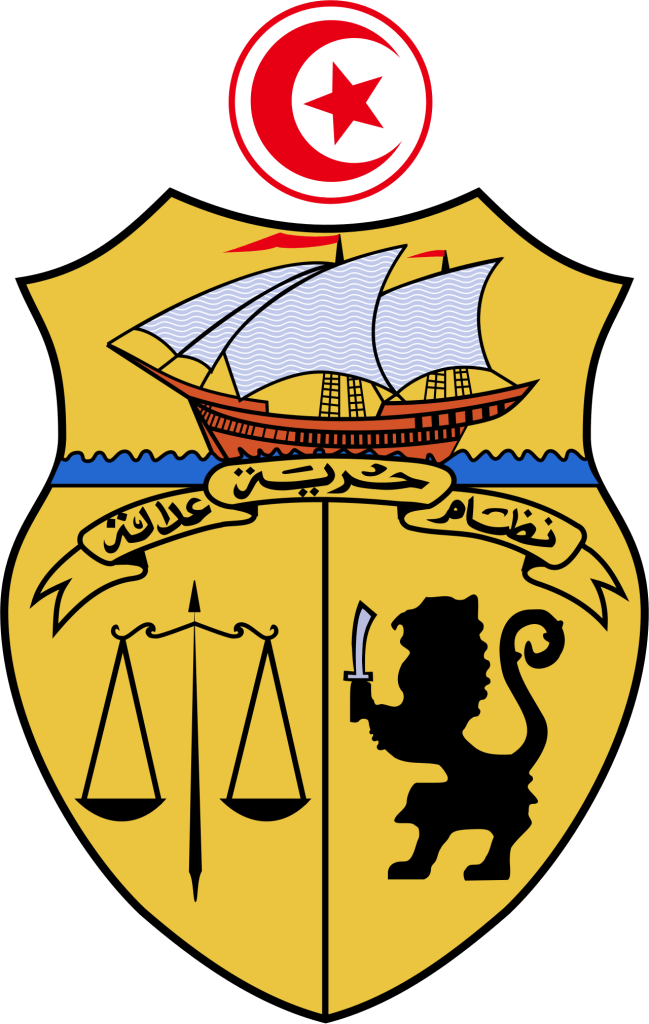
The national emblem or coat of arms of Tunisia has been in use since it was adopted in its modern form shortly after the country gained independence, initially via a decree on June 21, 1956, though the current iteration was clarified by law in 1989. The design, which replaced the Beylical coat of arms, is divided into three sections, each representing a core value of the nation. The central feature is a banner bearing the national motto: “Freedom, Order, Justice” (حرية، نظام، عدالة).
The three symbolic elements are:
Upper Section: A Carthaginian galley sailing on the sea, which symbolizes Freedom and represents Tunisia’s ancient maritime history and aspiration for self-determination.
Lower Left Section: A black scale, which symbolizes Justice.
Lower Right Section: A black lion grasping a silver scimitar, which symbolizes Order and the protection of the state. (A scimitar is a short, curved sword with a single-edged blade, historically used in the Middle East and Western Asia.)
The entire shield is topped by the national emblem—the circle with the red crescent and five-pointed star (as seen on the national flag). While early versions featured different colors (azure, gold, and gules), the current design generally uses a uniform gold background for the shield sections. The earliest modern adoption (1956) was under the Beylical government, and no single designer is publicly credited in the foundational documents; rather, it was established by decree.
 My Virtual World Trip