
Prehistory
The history of Latvia began around 9,000 BCE with the end of the last glacial period in northern Europe. Ancient Baltic peoples arrived in the area during the second millennium BCE.
During the Middle Neolithic (4100–2900 BC) the Narva culture developed in the region. The inhabitants at this time were Finnic, forefathers of Livonians, who were closely related to Estonians and Finns and belonged to Pit–Comb Ware culture.
At the beginning of the Late Neolithic (2900–1800 BC), present-day Latvia was settled by Balts belonging to the Corded Ware culture. They were forefathers of the Latvians, and these have inhabited most of Latvian territory since the third millennium BCE. They are also known as the Kurgans and Battle Axe Culture. (1)

They had a mobile pastoral economy relying mostly on cattle and occasional cereal cultivation. They used horses and oxe-drawn wagons. Copper and bronze artefacts as well as stone battle-axes have been found in sites.
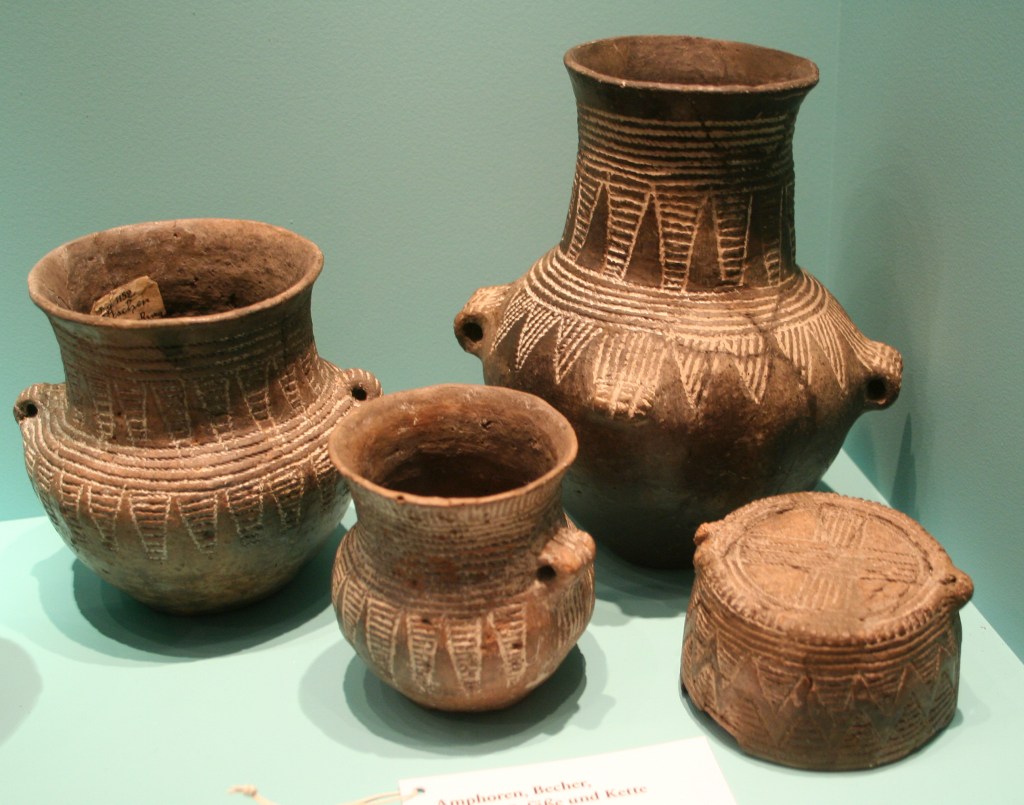
The reason they are called corded ware is precisely as it names states becasue they created ceramic ware that was decorated with twisted cord impressions and rope like markings.
The Amber Road
During the Iron Age, 500 BCE – 1200CME, Latvia became famous as a trading crossroads. The renowned trade route from the Varangians to the Greeks mentioned in ancient chronicles stretched from Scandinavia through Latvian territory via Daugava to the ancient Kievan Rus’ and Byzantine Empire.
The ancient Balts, Proto-Balts, actively participated in this trading network. Across Europe, Latvia’s coast was known as a place for obtaining amber and Latvia sometimes is still called Dzintarzeme (Amberland). Up to and into the Middle Ages, amber was more valuable than gold in many places. Latvian amber was known in places as far away as Ancient Greece and the Roman Empire, and the Amber Road was intensively used for the transport of amber to the south of Europe.
Latvian Amber is the only one in the world with a high content of succinic acid which has helped archeologists identify the northern European trading routes.
A Baltic Golden Age
In the first half of 1000BCE, Baltic peoples enjoyed advantageous trading connections that linked amber and fur producing regions of the north with the west, East and the Roman Empire. This gave early Latvian and Lithuanian tribes a period of great stability with continuous occupation and increased prosperity. (2)
They organized their peoples in small groups of about 5 to 10 houses and with a hill top fortification. They were within the sight of at least one or other two forts which suggests that maybe they formed larger tribal units and supported each other. (2)

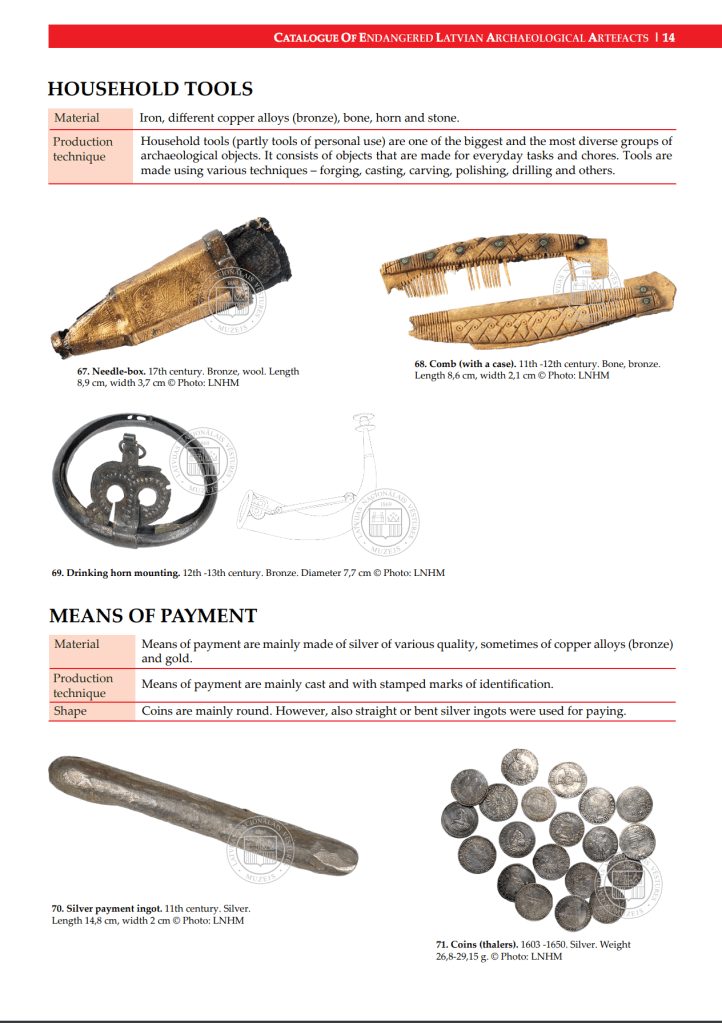
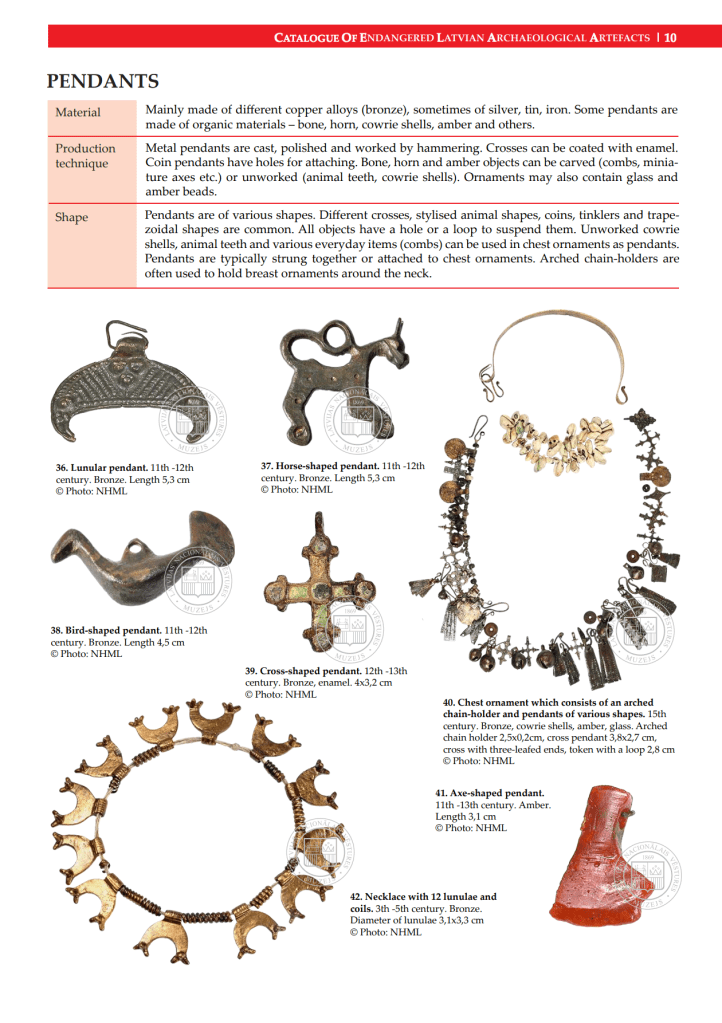
I read that there have been much looting old ancient graves and archeological sites all over Latvia, and HERE is an Interpol catalog of some of their treasures. If you click on the image, you will get a downloaded version of an entire catalog. Here are some images from there:

German period, 1184–1561
By the end of the 12th century, Latvia was increasingly often visited by traders from Western Europe who set out on trading journeys along Latvia’s longest river, the Daugava, to Kievan Rus’. Among them were German traders who came with Christian preachers who attempted to convert the pagan Baltic and Finnic nations to the Christian faith.
In early 1180s Saint Meinhard began his mission among Daugava Livonians. They did not willingly convert to the new beliefs and practices, they particularly opposed the ritual of baptism. News of this reached Pope Celestine III in Rome, and it was decided in 1195 that Livonian Crusade would be undertaken to convert pagans by force. Meinhard was followed by Berthold of Hanover, who was killed in 1198 near the present-day Riga by Livonians.
1201 CE Teutonic Knights under Albert of Bremen, Bishop of Livonia, invade and build Riga (founded next to an earlier settlement. (2) He was later called Bishop Albert of Riga and he established the German hegemony which lasted until 20th century independence. Riga gradually became the largest city in the southern part of the Baltic Sea. (1)

1207 CE
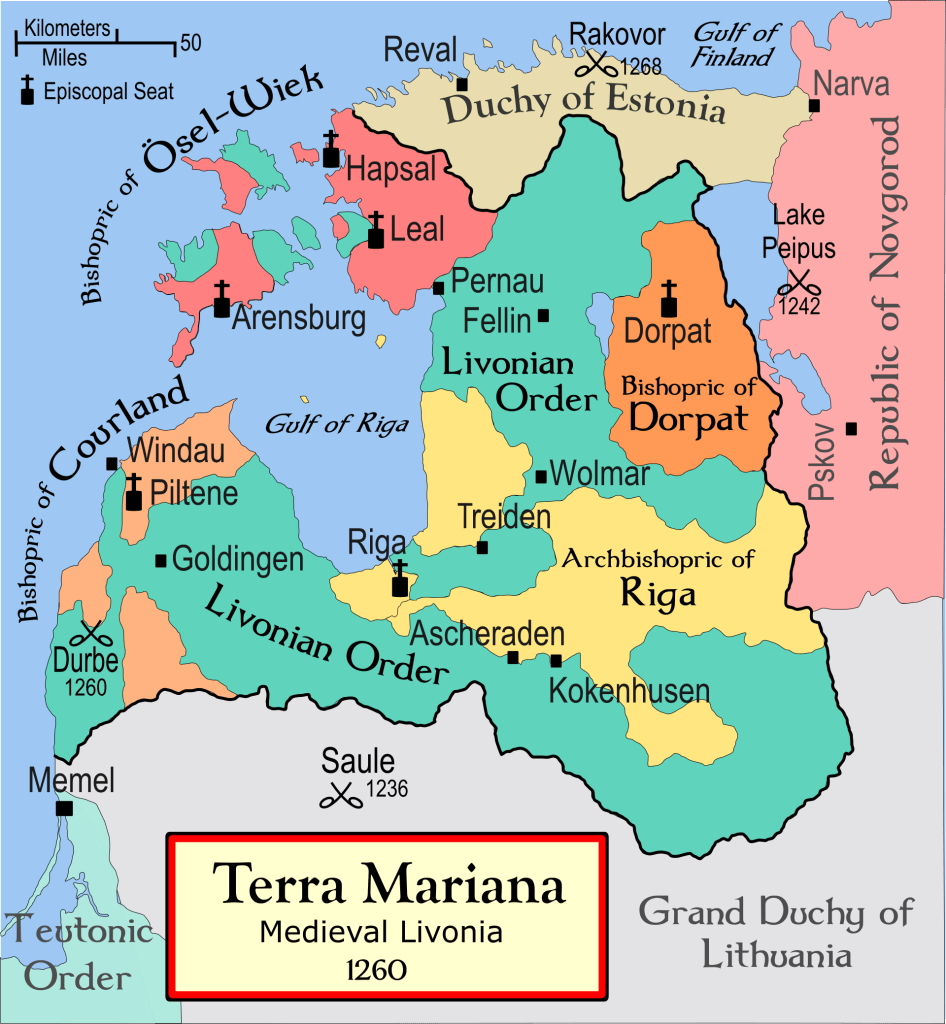
A state known as Terra Mariana, later Livonian Confederation, was established in 1207. It consisted of various territories that belonged to the Church and Order in what is now Latvia and Estonia and was under the direct authority of the Pope of Rome. In 1228 the Livonian Confederation was established.
During this time the Livonians built many fortifications and castles including the Cēsis Castle. It is to this day one of the best preserved Medieval Castles in the world.

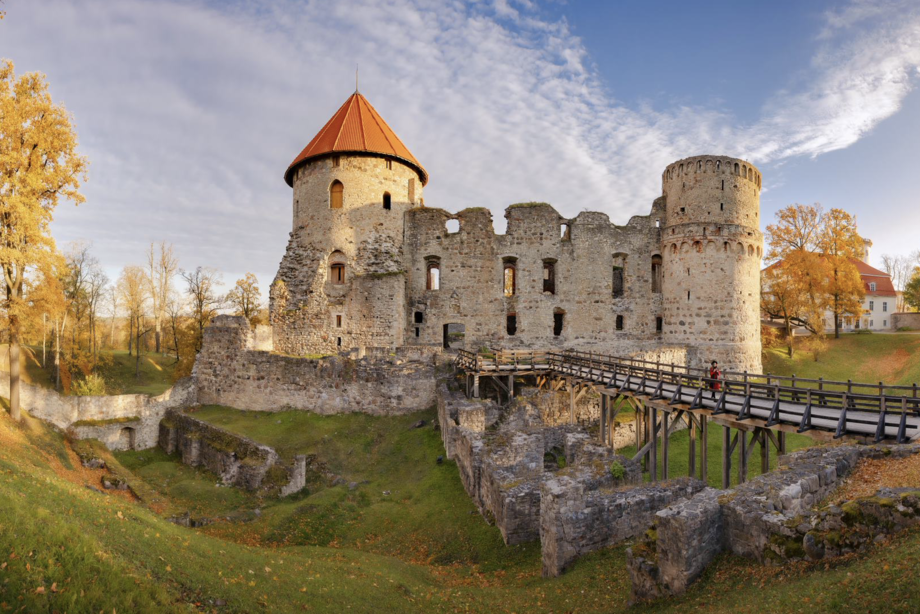
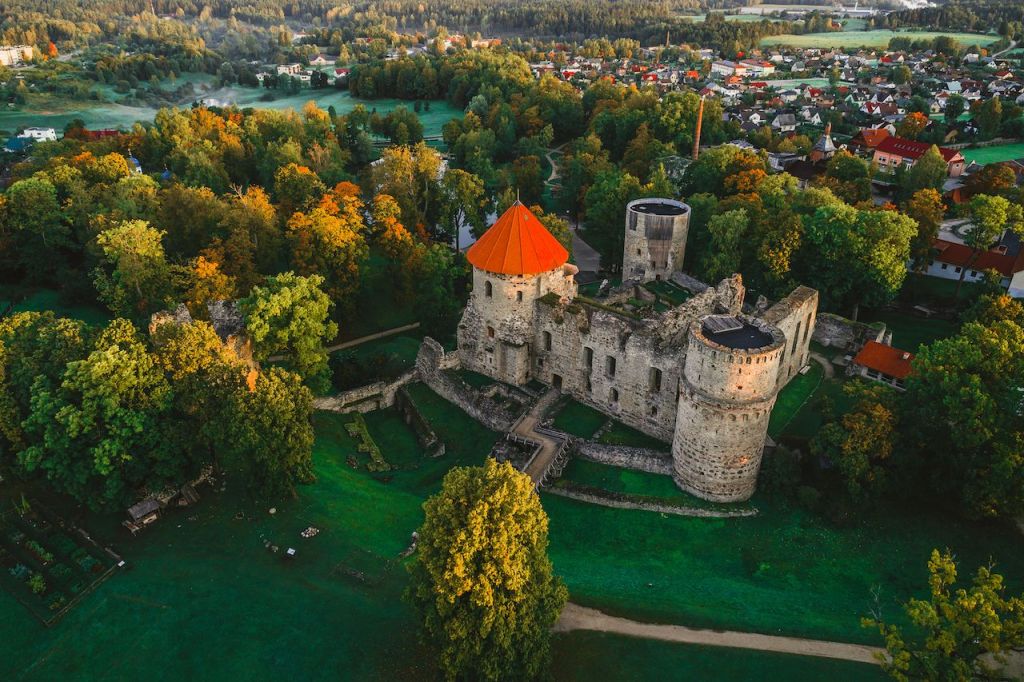
Do you want to take a tour? Let’s go!!!
1282 CE
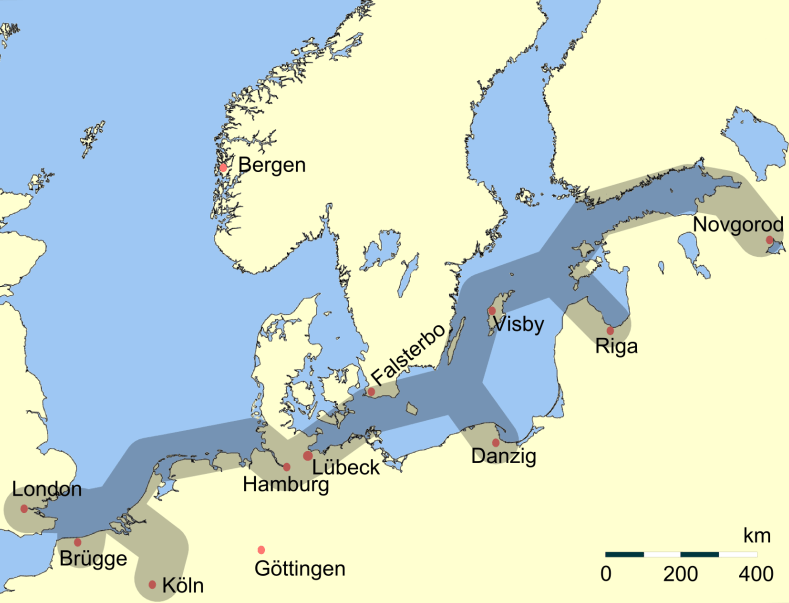
Riga (and later Cēsis, Limbaži, Koknese and Valmiera) were included in the Northern German Trading Organisation, better known as the Hanseatic League (Hansa). From this time, Riga became an important point in west-east trading, and it formed closer cultural contacts with Western Europe.
Native people initially retained much of their personal freedoms as the number of Germans was too small to implement a total control beyond the requirements to follow Christian rites, pay the required taxes and participate as soldier in wars. In case of Curonian Kings the former tribal nobility retained a privileged status until the proclamation of independent Latvia. During the 14th century peasants had to pay 10% to the Church and work 4 days of socage per year. (1)
By 16th century sockage had increased to 4 – 6 days per week and various taxes to 25%. Peasants increasingly tried to escape to freedom, either by moving to Riga (they could gain freedom if they lived there for one year and one day) or another manor. In 1494 a law was passed which forbade peasants to leave their land, virtually enslaving them. (1)
1521
The Reformation reached Livonia in 1521 with Luther’s follower Andreas Knöpken. During the Protestant riot of 1524 Catholic churches were attacked and in 1525 freedom of religion was allowed. First Latvian parishes were established and services were held in Latvian. Protestants gained support in the cities, and by the middle of the 16th century, the majority of the population had converted to Lutheranism.
I found this incredible illustration of the way noble women dressed back then. This is a painting by Alfred Durer from 1521:

They are quite wrapped! SO fascinating to see this… alright time to get back to HIStory…
1558-1583 Livonian War
The local German nobility, who were landowners, asked Poland for protection. Ivan the Terrible of Russia considered this a provocation and invated Latvia during the Livonian War.
1560
The forces of Ivan the Terrible destroyed the last few hundred soldiers of the Livonian Order and kill the Archbishop of Riga at the Battle of Ērģeme. But the Muscovites (Russians) were not able to conquer Latvia completely. Poland incorporated most of Latvia into its Kingdom and the western part of Latvia became the autonomous Duchy Of Courland protected by Poland. The Duchy of Courland remained a independent naval and commercial power in northern Europe and until 1795 with its own currency.

1600 Swedish Livonia
Sweden takes over Riga and the region of Vidzeme during the Polishe-Swedish war from 1600-1629. During the Swedish rule, this region was known as the “Swedish Bread Basket” because it supplied the larger part of the Swedish Kingdom with wheat. Gustavus Adolphus, the Swedish king made many reforms to stregthen Lutheranism and foster education. Taxation was based o the amount of property a person owned. Serfdom was abolished in the estates owned by the Swedish crown, peasants were offered education and military, administrative or ecclesiastical careers, and nobles had to transfer domains to the king.

1694
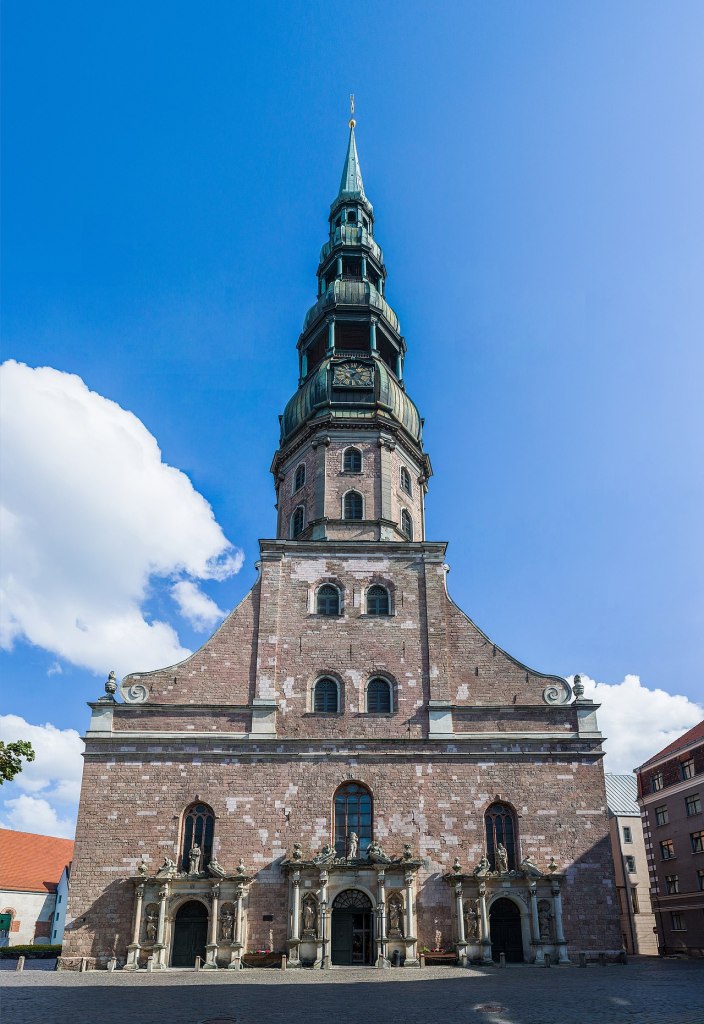
St. Peter’s steeple in Riga completed and becomes the tallest in the world at this time.

1712
1721-1795 Russian Period
In 1700 the Great Northern War between Sweden and Russia started largely because Peter the Great wanted to secure and enlarge Russian access to the Baltic ports. In 1710 Russians conquered Riga and Estonia and Livonia capitulated. Losses from the military actions were multiplied by the Great Northern War plague outbreak which killed up to 75% of people in some areas. (1)
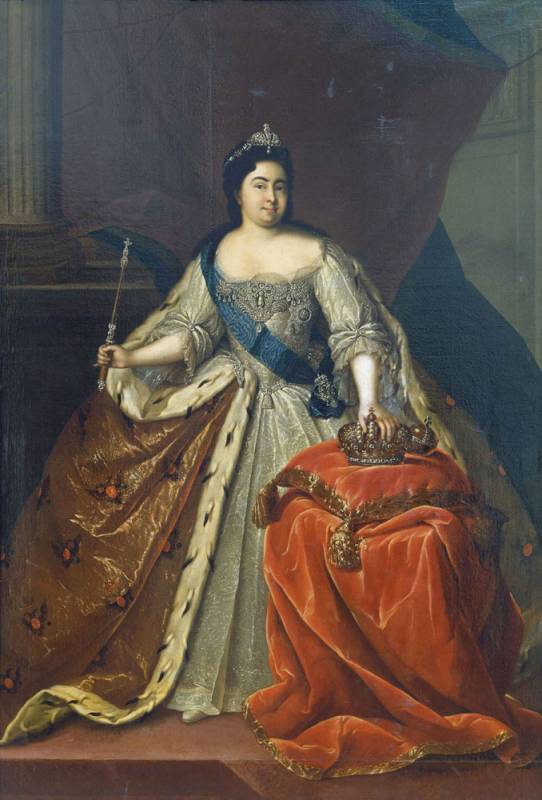
Martha Skavronska, a Livonian peasant girl, marries Peter the Great and in 1724 is crowned Catherine, Empress of Russia. Catherine was the first woman to rule Imperial Russia, opening the legal path for a century almost entirely dominated by women, including her daughter Elizabeth and granddaughter-in-law Catherine the Great, all of whom continued Peter the Great’s policies in modernizing Russia.
Between 1778 and 1795, Russia annexed easter Poland and brought Latgale, Zemgale and Kurzeme under Russian control. The Swedish judicial reforms were thrown out and the conditions of the peasants deteriorated once more. Their compulsory laber was increased to six days a week, while the landed gentries were exempt from taxation. (2)
1812
Napoleon’s troops invaded Russia and the Prussian units under the leadership of the field marshal Yorck occupied Courland and approached Riga and the Battle of Mesoten was fought. Napoleon proclaimed restoration of Duchy of Courland and Semigallia under French and Polish protectorate. The Russian governor-general of Riga Ivan Essen was expecting attack, and set the wooden houses of Riga suburbs on fire to deflect the invaders leaving thousands of city residents homeless. However, Yorck did not attack Riga and in December Napoleon’s army retreated.
1818-1820
Baltic German nobility abolish serfdom in Courland and Livonia but without granting land to peasants. (3)
Some peasants had family names in the 17th century, but majority had only first name until the emancipation. Most people were identified by the name of their house or manor. Emancipation created the need for identity papers and with this, for family names. Livonian peasants had to choose family names by 1826, in Courland majority names were selected in the campaign that lasted from October 1834 until July 1835. Peasants were prohibited from choosing family names of German nobility and majority chose names related to animals, plants and trees, especially popular were diminutive forms – Bērzs (birch), Bērziņš (small birch), Kalns (hill), Kalniņš (small hill). (1)
1860-1865 National Awakening Movement
Life of Krišjānis Barons, folklorist and nationalist whose collection of Latvian “Dainas” strongly influenced the National Awakening movement. (3) This movement from 1860-1865 was the attempt to make native Latvians folklore known and celebrated. Karlis Baumanis organized the first National Song Festival in 1873 and author of the national anthem of Latvia. Writers and poets from this time helped to modernize the Latvian language making it suitable for literature, science and business. (2)
1868
A law is passed to eliminate mandatory service to manors. This forced the gentry to hire labor and to sell an ever increasing amount of land to their former tenants to obtain cash. Latvians became landowners and had the finantial possibility to educate their children. This led to Latvians learning their history and ethnic heritage and develop a national identity. (2)
 My Virtual World Trip
Hola María, no sabía nada de la historia de Latvia( Letonia 🇱🇻) Muy larga y llena de eventos, guerras, dominios de los grandes imperios religiosos y guerreros de Europa y Asia. Hombres famosos como Iván el Terrible, Napoleón pasaron por allá y como siempre dejaron su huella en esa cultura.
Afortunadamente los pueblos sacan lo mejor de sus opresores y construyen su propia cultura e identidad.
Muy interesante.!
LikeLiked by 1 person
Mami! ^ ^ Si, es muy bello ver como la gente de Latvia nunca se dan por vencidos y después de mucha lucha logran tener su país independiente y soberano.
LikeLike