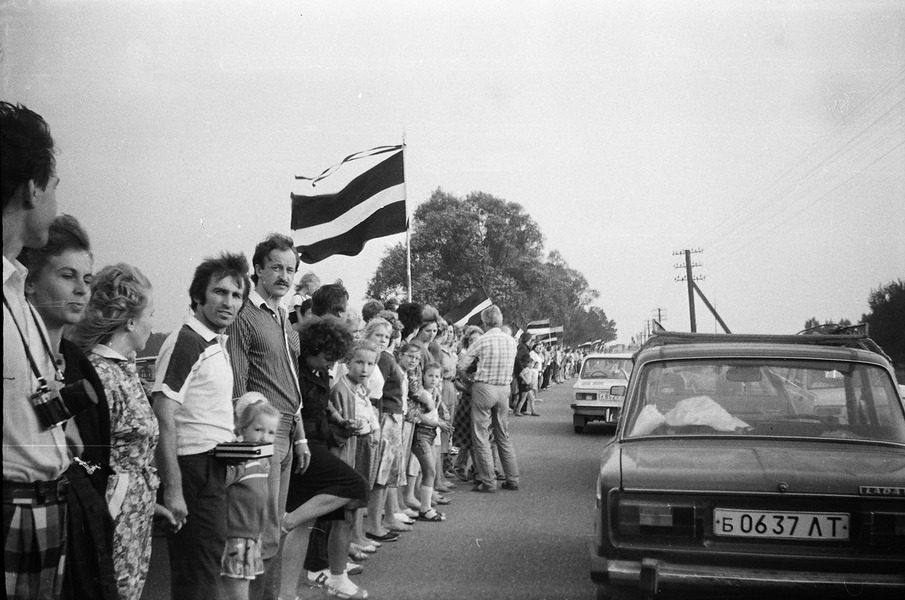
1905 Revolution
It started with the shooting of demonstrators in Riga on January 13, progressed to mass strikes in October and armed uprising in December. The revolution was aimed not only against the czarist authorities, but against the hated German barons. For in Latvia most did not feel primarily oppressed by Russia or Russians, but by the Baltic Germans —roughly seven percent of the population— who had instituted a feudal system with themselves at the top and Latvian-speakers being left mostly poor and landless.
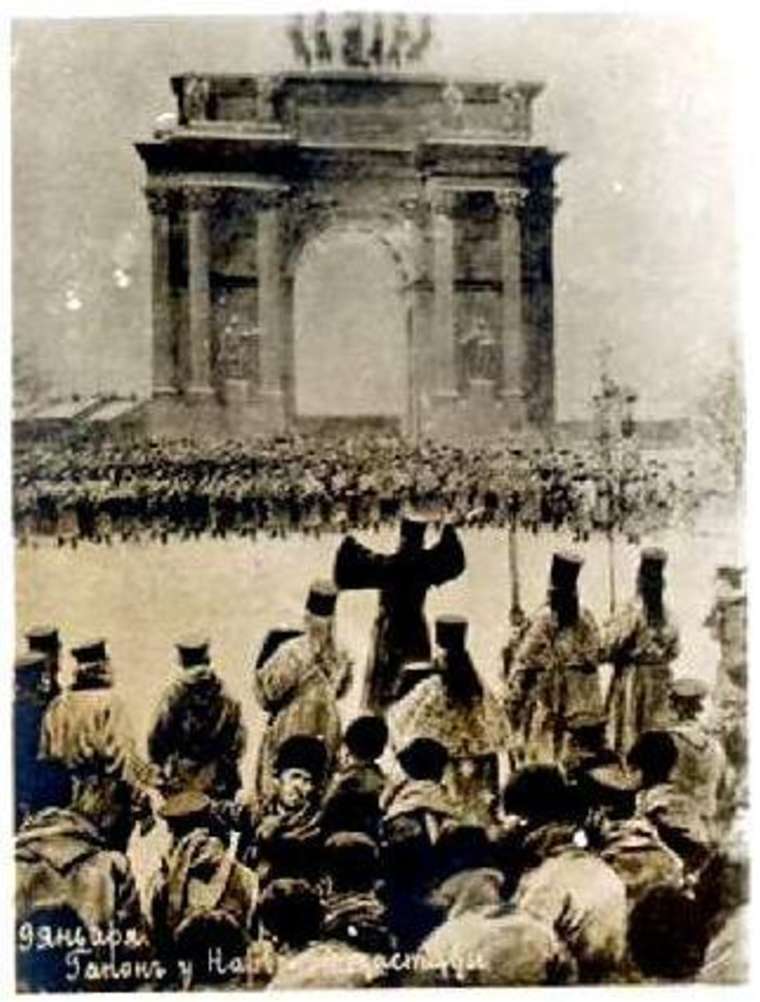
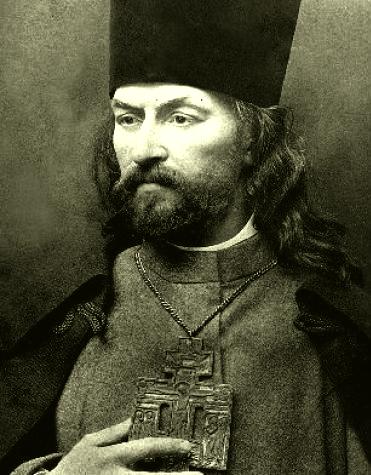
Left: Crowd of petitioners, led by Father Gapon, near Narva Gate, St. Petersburg. Right: Georgy Gapon, a Russian Orthodox priest. Cr. Wikimedia Commons.
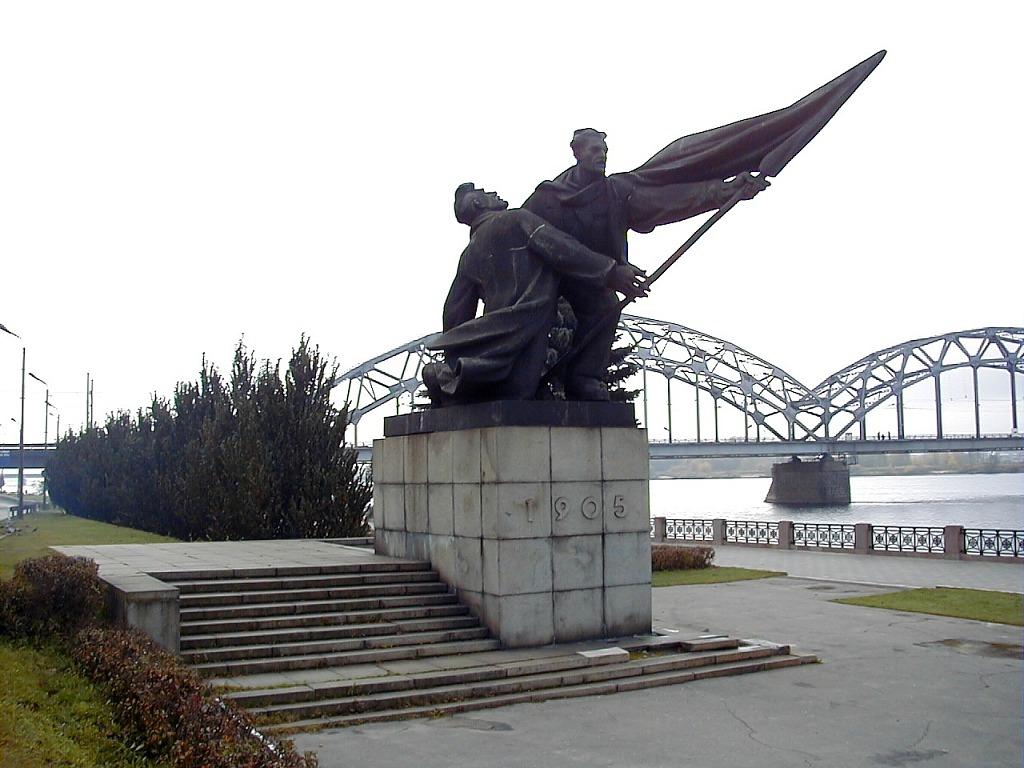
During the summer of 1905 the main revolutionary events moved to the countryside. 470 new parish administrative bodies were elected in 94% of the parishes in Latvia. The Congress of Parish Representatives was held in Riga in November. Mass meetings and demonstrations took place including violent attacks against Baltic German nobles, burning estate buildings and seizure of estate property, including weapons. In total 449 German manor houses were burned. (1)
Just to give you an idea of what these manors looked like, this is a surviving one called Aluksne New Castle commissioned by Alexander von Vietinghoff and built from 1859 – 1863 in the style of English neo-gothic:
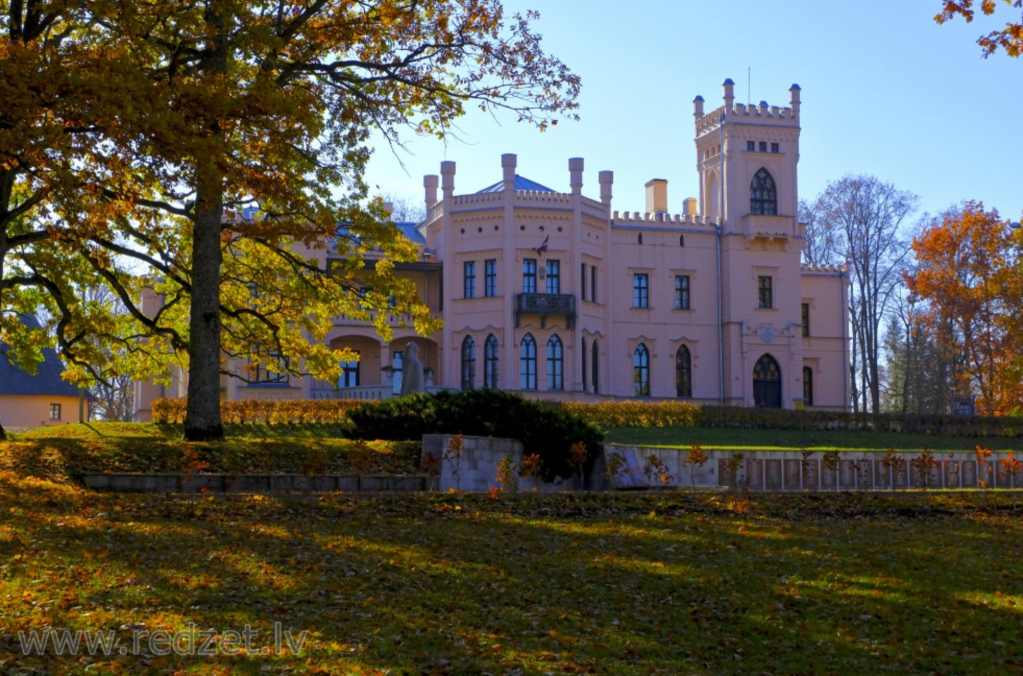
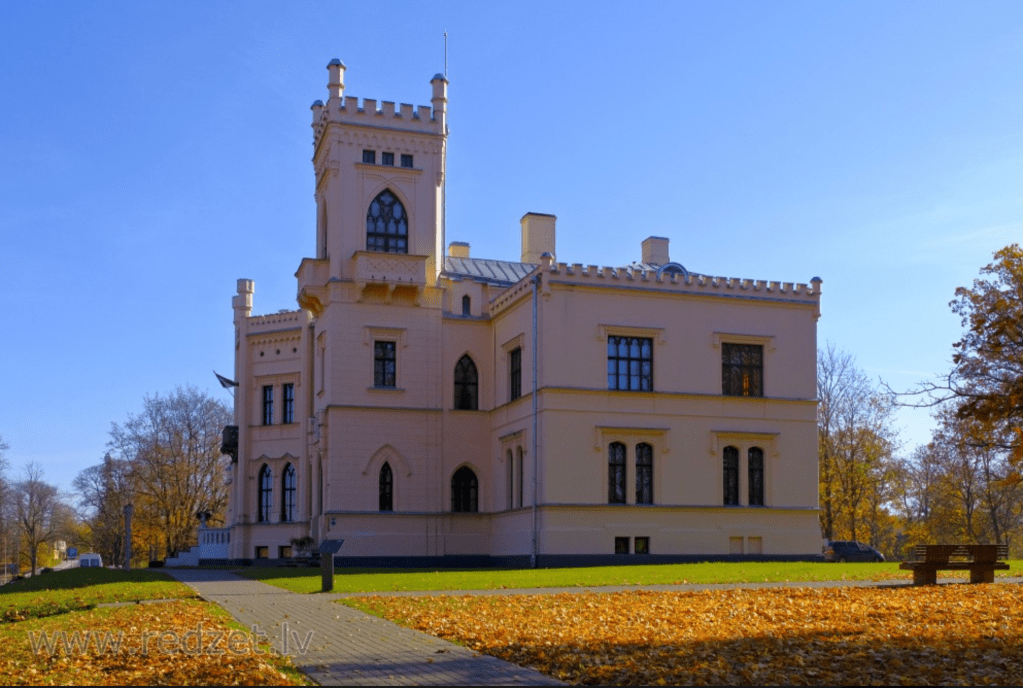
In the autumn of 1905 armed conflict between the German nobility and the Latvian peasants began in the rural areas of Vidzeme and Courland. In Courland, the peasants seized or surrounded several towns where they established revolutionary councils. In Vidzeme the fighters controlled the Rūjiena-Pärnu railway line. Altogether, a thousand armed clashes were registered in Latvia in 1905. (1)
Martial law was declared in Courland in August 1905 and in Vidzeme in late November. Special punitive expeditions by Cossack cavalry units and Baltic Germans were dispatched in mid-December to suppress the movement. They executed over 2000 people without trial or investigation and burned 300 houses and public buildings. The executed often were local teachers or peasant activists who had shown disrespect to German nobles, not necessarily hardened revolutionaries. 427 people were court martialed and executed. 2652 people were exiled to Siberia, over 5000 went into exile to Western Europe or the US.
1914-1918 First world War
On August 1, 1914 Germany declared war on Russia. Since Courland had a direct border with Germany it was immediately involved in warfare. By May of 1915, Germans captured Liepāja and Kuldīga.
1915-1916 Russian Imperial Army forms Latvian Rifle Regiments.
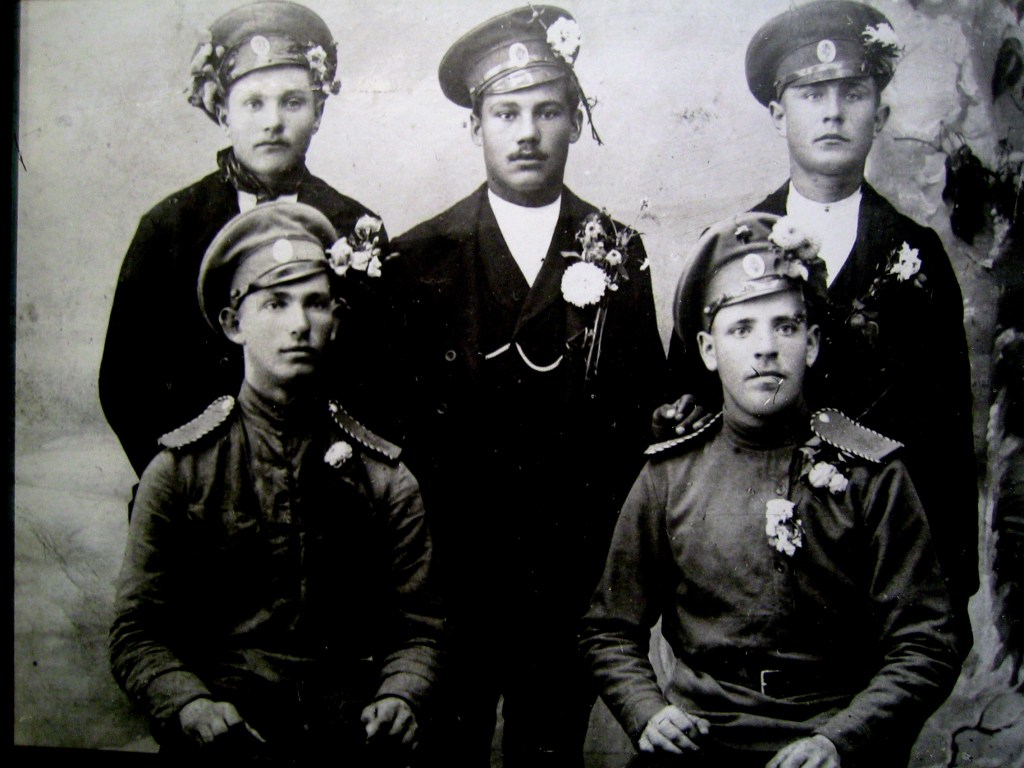
On June 29 the Russian Supreme Command ordered the whole population of Courland evacuated, and around 500,000 refugees fled to the east. Much of the crops and housing was destroyed by the army to prevent them from falling into the German hands. Some of the refugees settled in Vidzeme but most continued their way to Russia where they had to settle in primitive conditions, suffering from hunger and diseases.
On July 19, 1915, the Russian War Minister ordered the factories of Riga evacuated together with their workers. In the summer of 1915, 30,000 railway wagons loaded with machines and equipment from factories were taken away reducing the population of Riga by some 50%. This action effectively destroyed Riga as a great industrial center until the later industrialization under the Soviet regime. (1)
1917 Russian Revolution, Bolshevicks seize Estonia, Germans capture Riga, Baltic national assembiles demand independence from Russia. (2)
1918 Latvian National Council proclaims independence. (2)
1918-1919 Bolsheviks invade Baltic and capture Riga on May 22 1919. Germany is defeated at Wenden (Césis) by Estonian and Latvian troops.
1920 Baltic States sign peace treaties with Societ Russia. Moscow recognizes their independence. (2)
A survey in 1920 established that 56,7% of parishes had war damages. Population had decreased from 2,55 million to 1,59 million. The number of ethnic Latvians has never again reached the 1914 levels. 87,700 buildings were destroyed. 27% of the arable land laid in waste. Much of the industry was evacuated to Russia and lost forever. Ports were damaged by sunken ships, bridges blown up and railways damaged. 25,000 farms were destroyed, 70,000 horses, 170,000 cattle lost. (1)
1922 Democratic Contitution introduced, Latvia is admited to the League of Nations. (2)
1939 The Soviet Union and Nazi Germany signed the Molotov-Ribbentrop Pact, it included a secret protocol that consigned independent Latvia, Estonia, Lithuania and Finland to the Soviet influence. The Soviet’s red army crosses into Latvia in October.
1940 The Soviets install a government in Latvia. During the next 12 months, more than 32 thousand people were deported or executed, and entire families were sent to labor camps in Siberia. About 20,000 men were drafted into the Red Army. (3)
1941 German Nazis occupied all of Latvia. Jewish Holocaust begins: Latvian Jews, about 70,000 are executed between August and November. Many of them were shot in the Rumbula Forest in the most horrible way by the Nazis. The details of this atrocity can be read HERE.
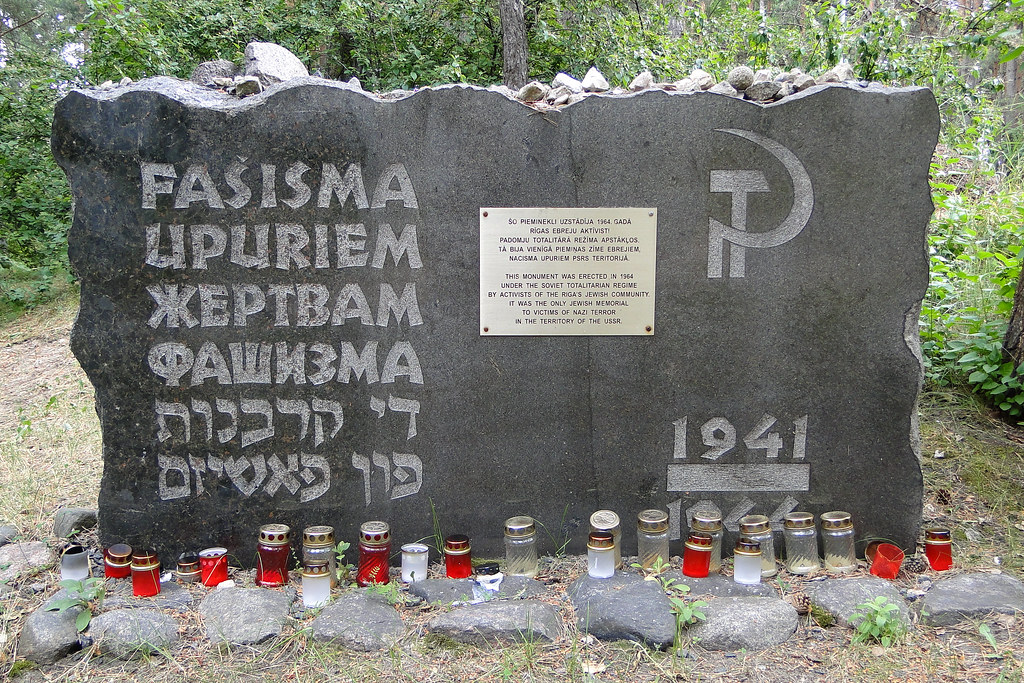
1944-1945 Soviet Army re-conquers the Baltic states, destroys attempts to restore national governments. Hundreds of thousands flee (160,000 flee to Germany and Sweden) to be replaced by Russian immigrants. (3)
1947 Family fams were liquidated and replaced by state controlled farms. If a farm was bigger than 20 acres (8 hectares), the family was classified as “Kulaks” (prosperous) More than 10,000 of these people of which about half were children were deported to Central Asia and Siberia by 1949.
Due to the Latvian well-developed infra-structure and educated specialists, Soviet’s move their most advanced manufacturing factories to Latvia.
1953 Stalin dies and he is replaced by Khrushchev. A proof know as ‘Thaw’ begins and enables some recovery of Baltic culture.
1970 The Soviet ‘Era of Stagnation’ affects Latvia. Industrial growth rates declined during the 1970s as heavy industry and the arms industry were prioritized while Soviet consumer goods were neglected. The value of all consumer goods manufactured in 1972 in retail prices was about 118 billion roubles. Historians, scholars, and specialists are uncertain what caused the stagnation, with some arguing that the command economy suffered from systemic flaws that inhibited growth. Others have argued that the lack of reform, or the high expenditures on the military, led to stagnation.
1960-1980 Isolationism
Latvia and all countries dominated by the Soviet Union were completely cut off from the Western world. Any desire of independence during this time was eradicated by the KGB’s internal intelligence security agency. So Latvians that had fled were the ones that started campaigning for Latvia’s independence. (3)
1985 Liberalization in the communist regime began in the mid-1980s in the USSR with the perestroika and glasnost instituted by Mikhail Gorbachev. In Latvia, several mass political organizations were constituted that made use of this opportunity – Popular Front of Latvia (Tautas Fronte), Latvian National Independence Movement (Latvijas Nacionālās Neatkarības Kustība) and Citizens’ Congress (Pilsoņu kongress). These groups began to agitate for the restoration of national independence. (1)
August 23, 1989
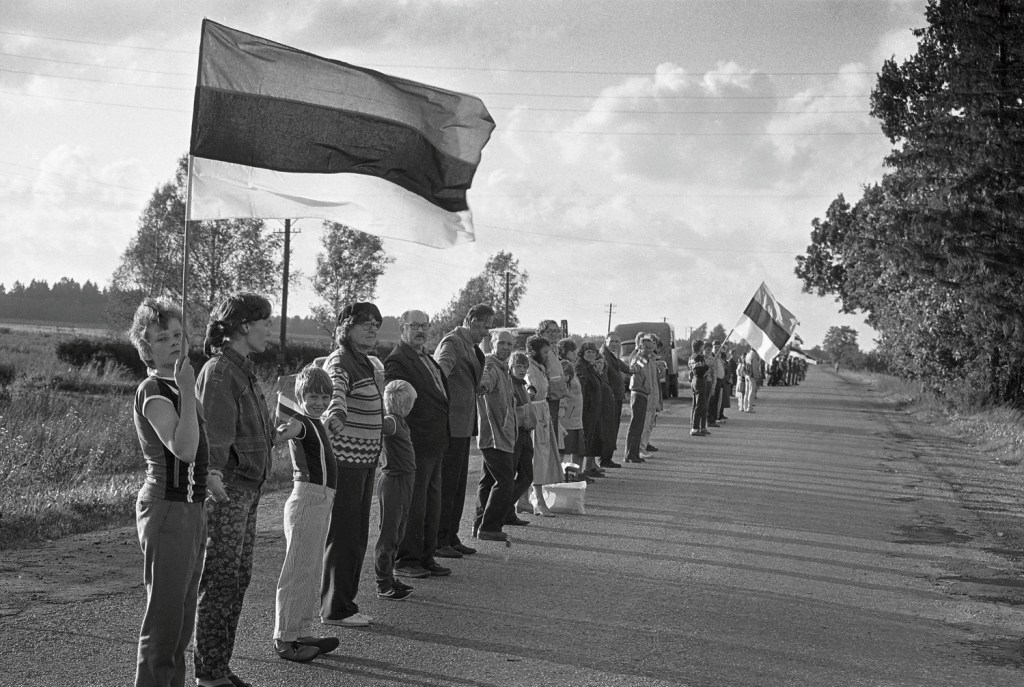
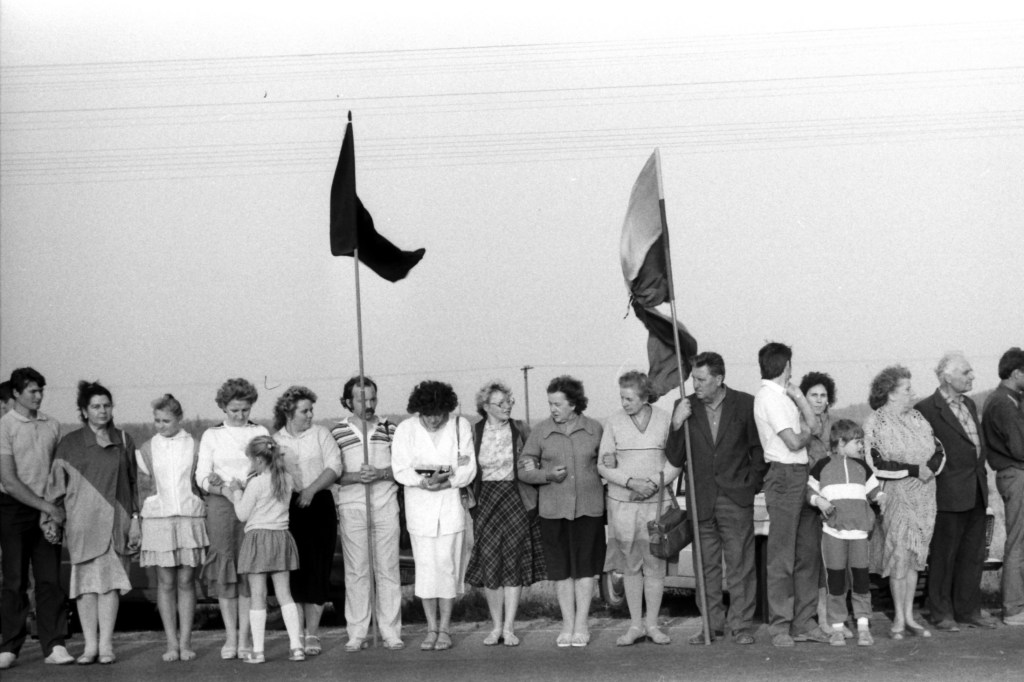
On the 50th anniversary of the Molotov-Ribbentrop pact to the fate of the Baltic nations, Latvians, Lithuanians and Estonians joined hands in a human chain, the Baltic Way, that stretched 600 kilometers from Tallinn, to Riga, to Vilnius. It symbolically represented the united wish of the Baltic States for independence.
This is the beautiful line of joined hands across the three countries at that time. Latvia on the top, Estonia (bottom left) and Lithuania.
May 4, 1990
The Latvian SSR Supreme Council, elected in the first democratic elections since the 1930s, adopted a declaration restoring independence that included a transition period between autonomy within the Soviet Union and full independence.
c Latvian independence was once again recognized by the Soviet Union.
September 18, 1991 Latvia joins the United Nations.
1992 Latvia demands the withdrawal of all Soviet troops.
At the end of 1999 in Helsinki, the heads of the European Union governments invited Latvia to begin negotiations regarding accession to the European Union.
2004 Latvia’s most important foreign policy goals, membership of the European Union and NATO, were fulfilled. On April 2, Latvia became a member of NATO and on May 1, Latvia, along with the other two Baltic States, became a member of the European Union.
2008 World Economic crisis hit Latvia very hard. Latvia had the highest jobless rate in the European Union at 20%. (3)
2010 Economic recovery (2)
2014 Laimdota Straujuma makes history as the first female prime minister. Riga becomes the European Capital of Culture and Latvia enter the Eurozone. (3)
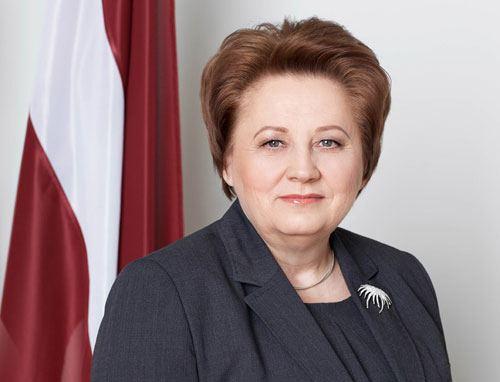
2015 Laimdota Straujuma resigns due in part to clashes over the federal budget and the Eu immigrants allowed legally into the country.
2016 Maris Kucinskis is elected prime minister. The following year Latvia ranks 14th in the world in the Ease of Doing Business Index, a project of the World Bank Group that tracks property rights protections and better business regulations.
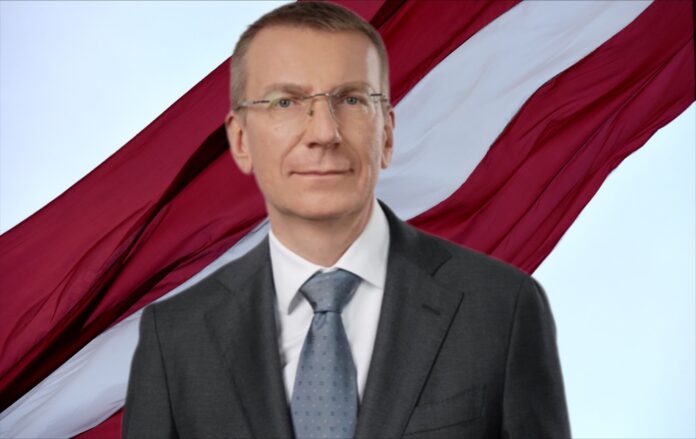
May 2023 The parliament elected Edgars Rinkevics as new President of Latvia, making him the European Union’s first openly gay head of state.
Thanks so much for joining me in learning about the history of this country. It’s incredible to think that this country is so young… 32 years old! It is so good to read a happy ending after such turmoil… I really wish them all the best!!!
Sources
(1) Wikipedia
(2) Book: Latvia, A Short History by Mara Kalnins. Hurst and Company, London 2015.
(3) Book: Cultures of the World: Latvia. Cavendish Square, New York 2019.


Hola, muy bueno este resumen de la dura historia de Letonia ( Latvia) cuanto maltrato por parte de los poderosos Imperios sufrió este hermoso país. Deseo que al pertenecer a la Unión Europea no tenga que pasar por lo que en la actualidad está ocurriendo con Ucrania.
Felicitaciones también por enviar la Danza que tradicionalmente presentan los ciudadanos de Latvia en un festival para dar a conocer de cultura. Es increíble. Hasta pronto, Aida Acuña.
LikeLike