
Song Festivals originated in Switzerland, Germany, and Austria but they acquired a much profound meaning in Latvia, transcending mere cultural practice to become a nationalist endeavor safeguarding their native cultural identity.
The idea of the song festival was taken up by Baltic German clergyman and author Juris Neikens, and in 1864 he organised the first gathering of Latvian men’s choirs in Dikļi. Six choirs of 120 singers and school children participated. Similar festivals took place in Matīši (1865), Rūjiena (1866), Jaunpils (1867), Smiltene (1868), and Cesvaine (1869). In 1870, Jānis Bētiņš organised the Kurzeme Song Festival in Dobele; 400 singers and a 40-member orchestra participated. The festival in Kurzeme is often called the dress rehearsal for the Nationwide Latvian Song Celebration. (1)
The All-Latvian Song Festival is a significant event in Latvian culture and social life. It has been held every five years since 1873, with the addition of the Latvian Dance Festival in 1948. The festival features choral and dance performances, as well as exhibitions of photography, art, and folk crafts.
Approximately 40,000 performers participate in the festival, which showcases a wide range of musical genres, including folk songs, classical choir songs, and modern popular songs. A cappella singing is a major emphasis of the festival, but modern popular songs have recently been incorporated into the repertoire as well. In addition to the musical and artistic performances, the All-Latvian Song Festival also features a festive parade. This parade is a colorful and joyous celebration of Latvian culture and unity. (2)
As one of the Baltic song festivals, it is also a part of the UNESCO Masterpieces of Oral and Intangible Heritage of Humanity since 2008.
Here are some relics from the first festival held. These were exhibited at the The Museum of the History of Riga and Navigation in Riga.
This is the original “Līgo” flag of the 1st All Latvian Singing Festival. 1873. Made in Germany, Leipzig. Silk, velvet, brocade, embroidered, tinted with color.

The following is the 1st All Latvian Singing Festival member badge. 1873.

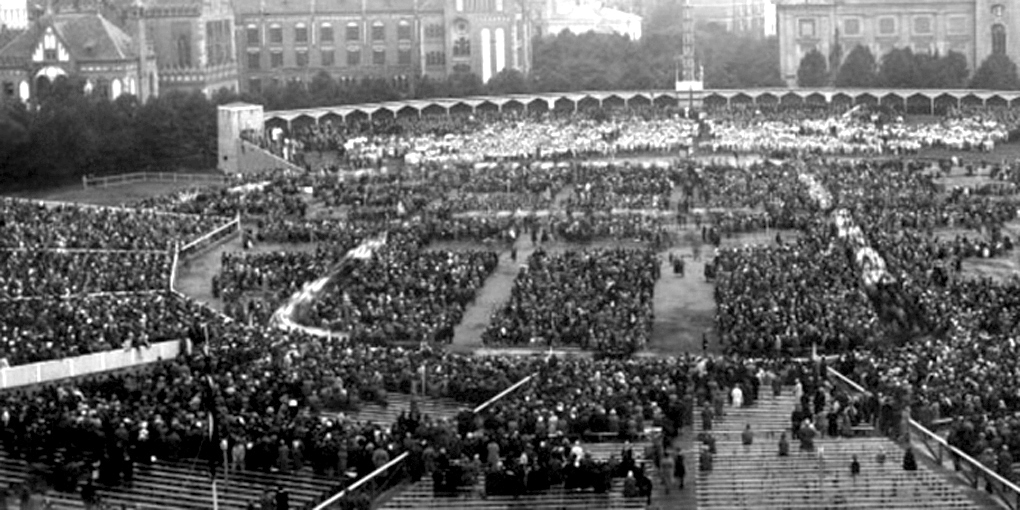
This is a photo of the singers at the Festival in 1931 via Wikipedia:
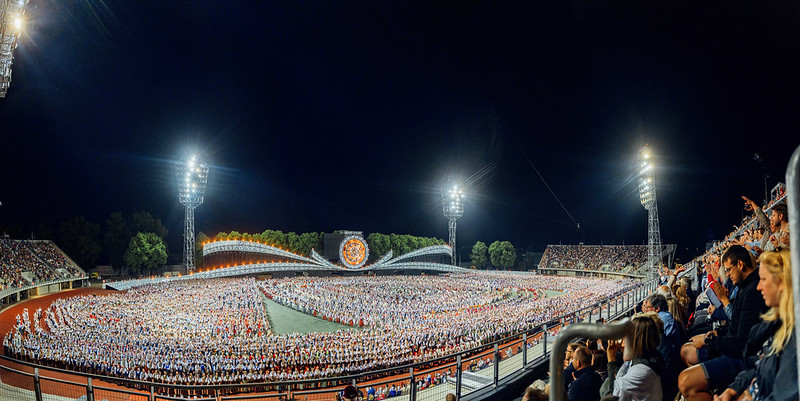
This year, the XXVII Nationwide Latvian Song and XVII Dance Festival, that marked the 150th year of the Songand Dance Festival tradition, took place in Riga from the 30th June to the 9th July. Look how impressive this photo is:

Can you imagine the sound… being there?!
HERE you can see the program of the 2023, The XXVII Nationwide Latvian Song and XVII Dance Festival. SO impressive!
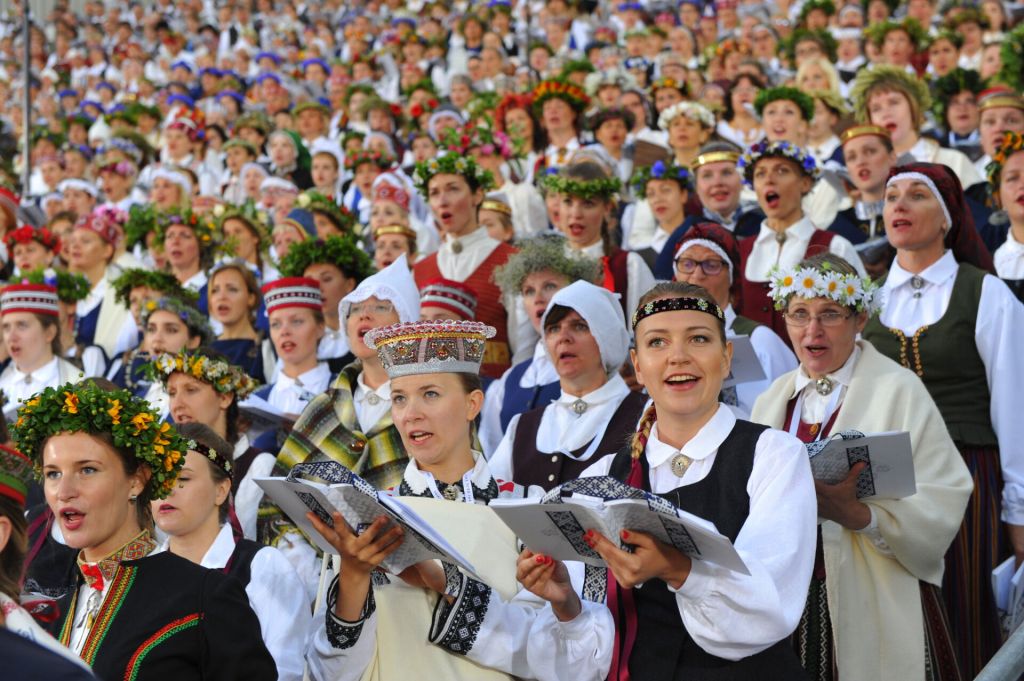
Cr. Latvian National Centre for Culture Archive.
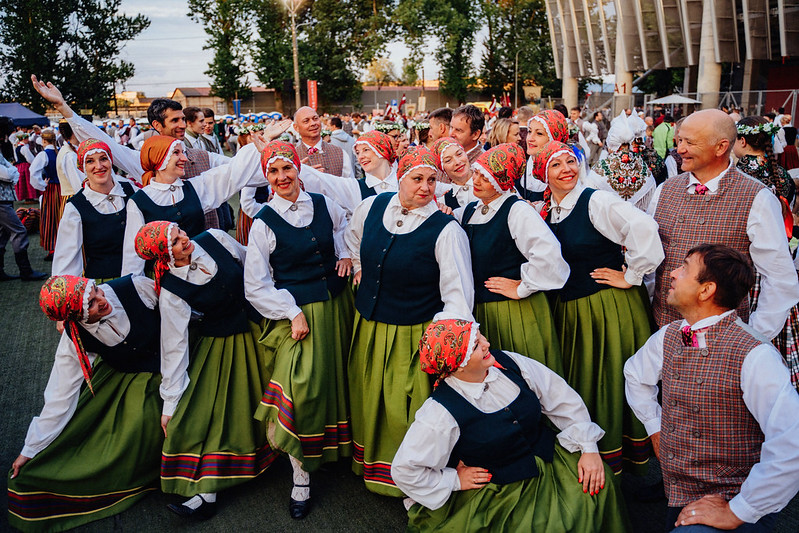
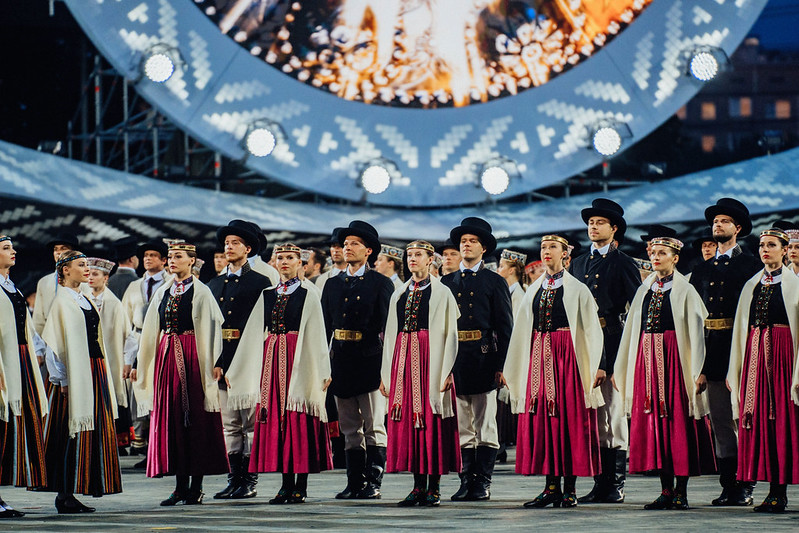
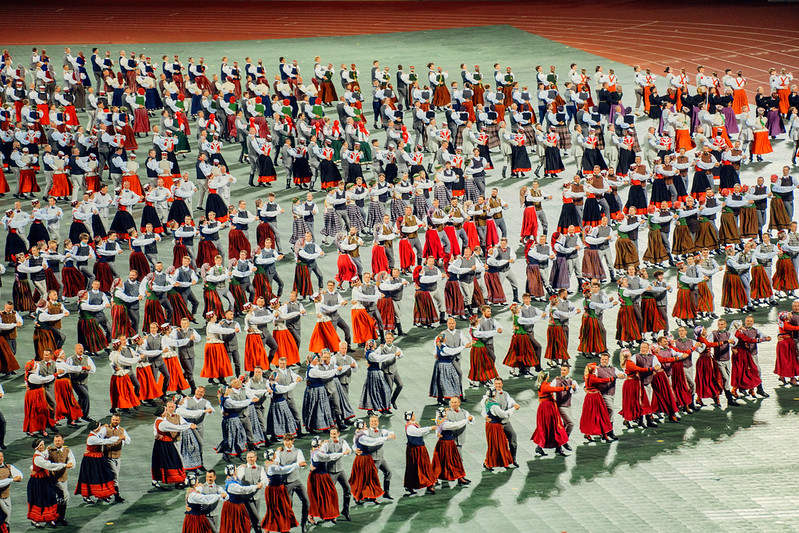
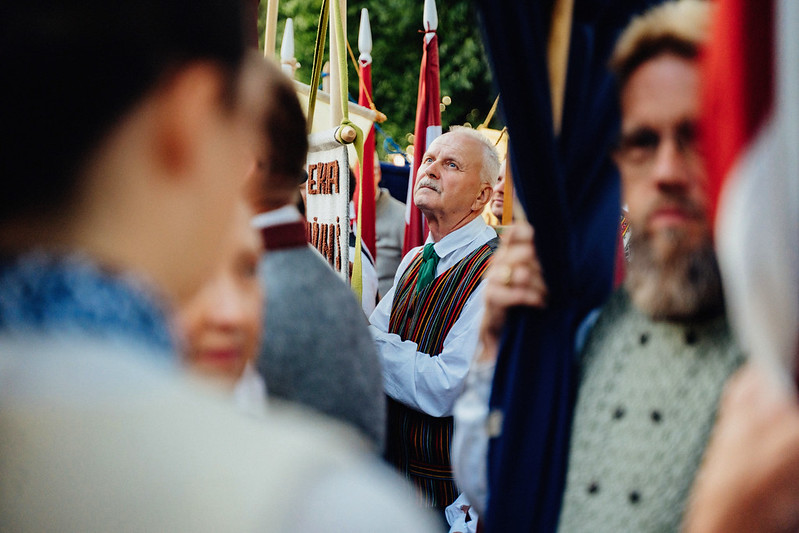
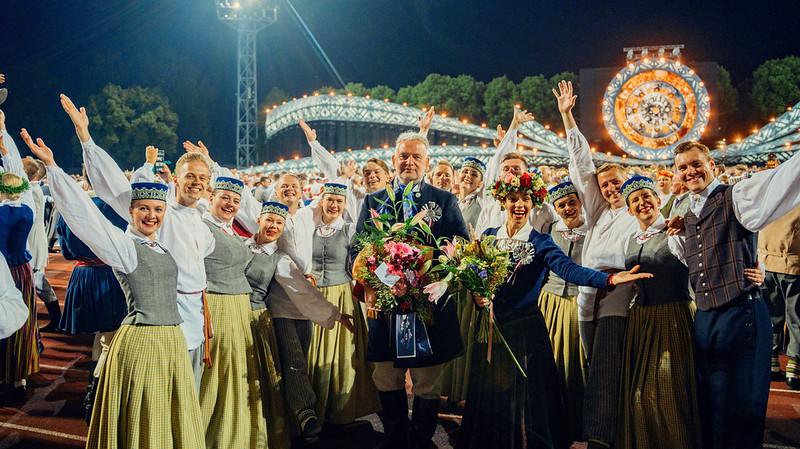
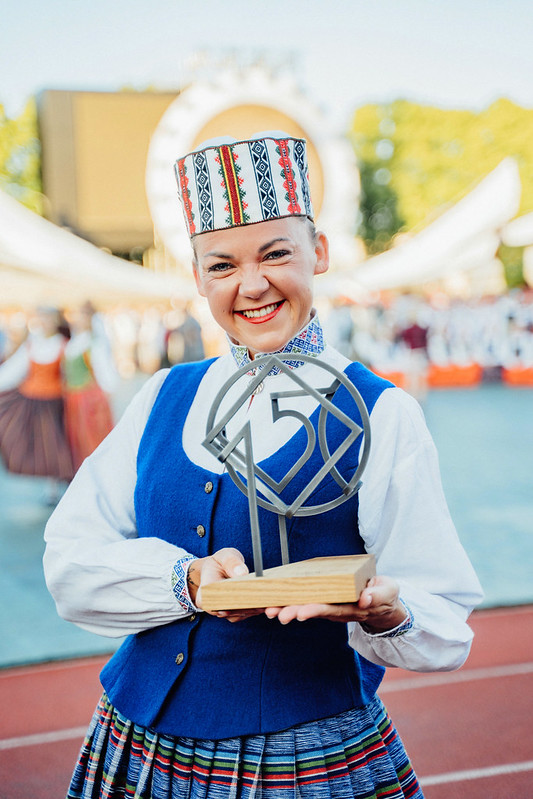
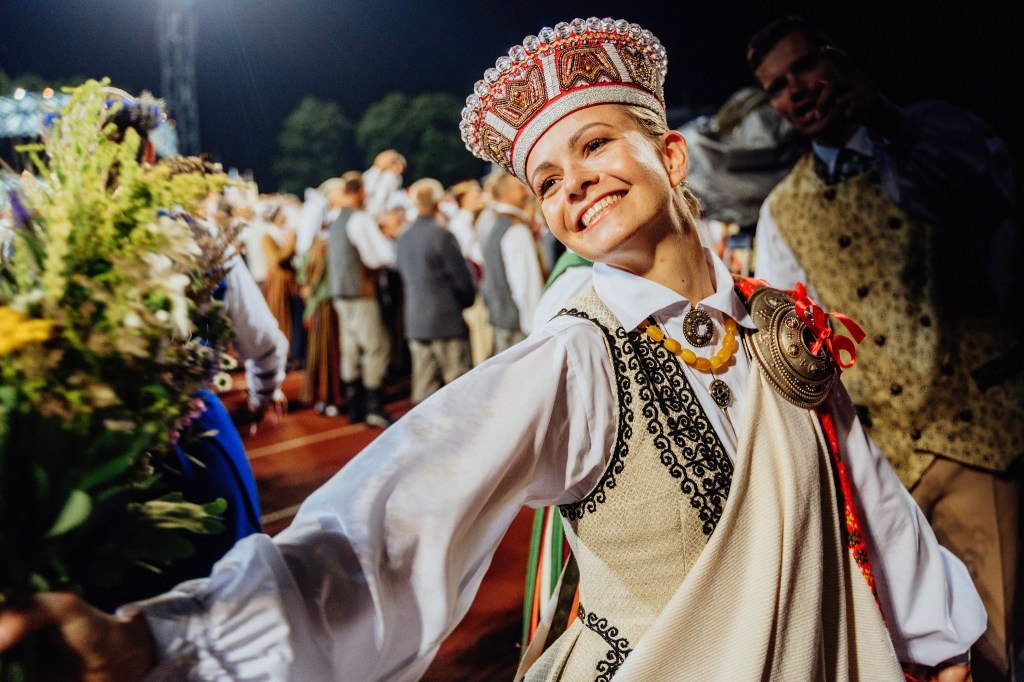
These are photos from the dancing I assume on the last day. I read that there were 667 dance troupes and 17,543 dancers!!! The following photos are from their official website, from their Flickr Account HERE. These were taken by Jānis Romanovskis. He must have been absolutely delighted! Just look at how amazing these photos are:
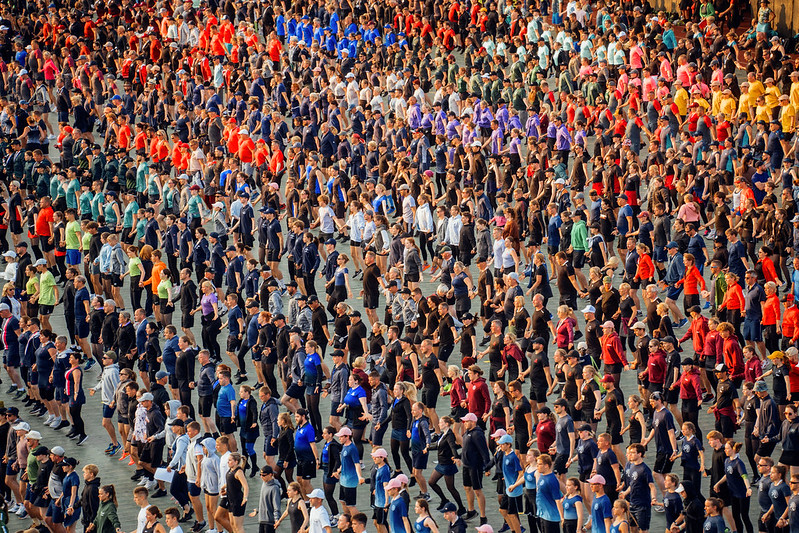
Cr. Latvian National Centre for Culture Archive: Jānis Romanovskis.

Cr. Latvian National Centre for Culture Archive: Jānis Romanovskis.

Cr. Latvian National Centre for Culture Archive: Jānis Romanovskis.
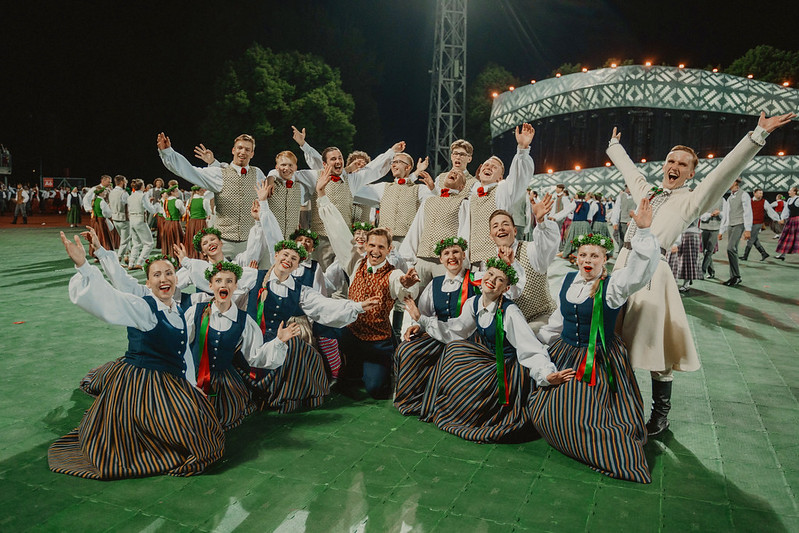
Cr. Latvian National Centre for Culture Archive: Jānis Romanovskis.
Cr. Latvian National Centre for Culture Archive: Jānis Romanovskis.
It is so gorgeous when they are dressed in their traditional clothing!
Cr. Latvian National Centre for Culture Archive: Jānis Romanovskis.

Cr. Latvian National Centre for Culture Archive: Jānis Romanovskis.





And now prepare yourself… here are some videos. The first one is the most impressive. I cried… I couldn’t believe how beautiful and how massive it was…
I know… how? How incredible… how beautiful that people can do this! How come we never see something as beautiful as this in our newscasts? The following two videos have singing and dancing:
This is “Broken Pines” by Emīls Dārziņš from 1904.
What this song says:
The wind broke the highest pines,
Which stood on the cliffs near the seashore –
After looking at them from afar, they wanted to give,
It can neither hide nor bend its back:
“You break us, you turn into a hostile one, –
The fight against you is not over yet,
The last moan is still longing in the distance,
Unrelenting hatred against power hisses in every branch!…”
And the tall pines after the break
For the ships emerged from the waters –
Against the storm the breast rose proudly,
The battle against the storm roars again:
“Soon waves you, hostile pretender –
We will give far away, where happiness!
You can divide us, you can break us –
We will give far where the sun rises!”
How this song came to be:
Emīls Dārziņš was a Latvian composer who despite facing financial difficulties and accusations of plagiarism, composed music that is deeply rooted in Latvian folk traditions. Dārziņš was inspired by the writings of Janis Rainis, a Latvian poet, and composed music for his work “Broken Pines.” He also wrote a number of choral pieces, which helped to shape Latvian choral music.
His compositions capture the spirit of the Latvian people, their struggles, their triumphs, and their enduring connection to their homeland. His work is beloved today and is included in the cultural canon of Latvia.
The song “Broken Pines” has been included in the program of the General Latvian Song and Dance Festival several times. (1)
With this last video I say goodbye. Listening to it, I thought of the Ukranian people… going through something so similar to what the Latvians went through years before… When does it stop? … When do we learn?
Credits
(1) www. ziesmusvetki.lv Official Website of the Latvian Song and Dance Festival.
(2) Wikipedia
 My Virtual World Trip