
Imagine walking in a city where one third of its buildings have the nature inspired art style of Art Nouveau! That is Riga… the city with the highest concentration of buildings in this style in the world… 800 buildings!
Art Nouveau, literally translating to “New Art” in French, was an international movement encompassing art, architecture, and applied arts, particularly decorative arts, that flourished between 1890 and 1910.
Key Characteristics:
Organic Forms: Inspired by nature, Art Nouveau heavily featured sinuous curves, flowing lines, and motifs derived from plants, flowers, insects, and other organic elements.
Asymmetry and Dynamism: The movement embraced asymmetry and whiplash lines, creating a sense of movement and energy.
Modern Materials: New materials like iron, glass, ceramics, and later concrete were used to create innovative and often large-scale designs.
Unity of the Arts: Art Nouveau sought to break down the traditional distinction between fine arts and applied arts, aiming for a cohesive aesthetic across all forms of artistic expression.
The term Art Nouveau first appeared in Belgium. This name was also used in France, however, other terms like “Belle Époque” (Beautiful Era) and “Style Guimard” (after famed architect Hector Guimard) also emerged. In Spain, it’s called Modernismo (Modernism), and in Germany Jugendstil (Youth Style) as it is also described in Riga.
So how did Riga come to have so many buildings in this style? I wondered the same! What happened was a combination of wealth with fast growth… imagine that between 1897 and 1913, Riga grew by 88%! It reached a population of 530,000 in 1914,making it the fifth largest city in the Russian Empire and the third largest in the Baltic region.
To accomodate all these people, Riga began to grow and grow building at one point 500 Art Nouveau buildings a year between 1910 and 1913. Imagine that! The expanding city possessed urban coherence, as it developed along a grid pattern, following strict building regulations (which stated, for example, that no house could be taller than six stories or 70 ft ( 21.3 m).
Stylistically, the Art Nouveau architecture of Riga is can be divided into four four Stylistically, the ART Nouveau buildings in Riga can be divided into four main categories: Eclectic or Decorative, Perpendicular or Vertical, National Romantic and Neo-Classical. Of course many buildings can have a mix!
Eclectic or Decorative
Riga’s first Art Nouveau building, designed by the architects Alfred Aschenkampff and Max Scherwinsky (both of German origin)fits into this style. It was completed in 1899 and is located on Audēju iela 7 (Audeju street) in the medieval part of the city. This is what it looks like:

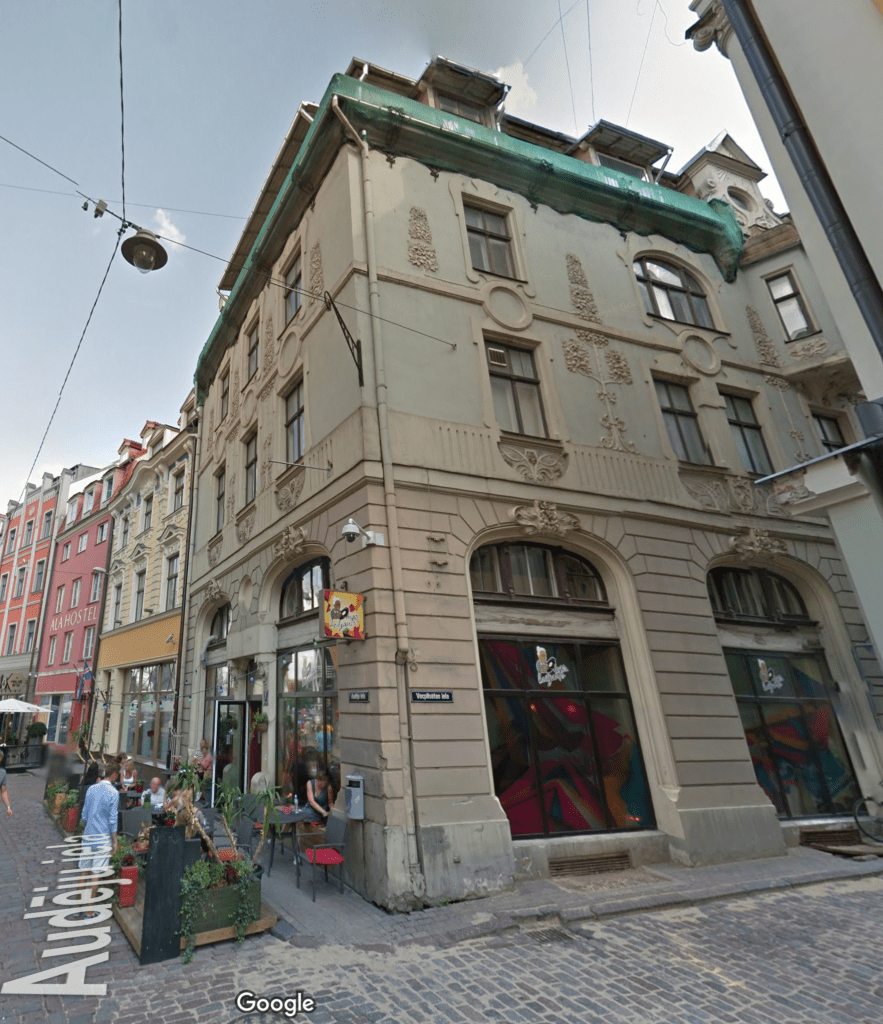
This early style that lasted until 1905, characterizes for changing very little of the shape of the building and by applying decorative elements of Art Nouveau to them. Towards the end of the period, floral and other nature-inspired elements of decoration became popular.
One of the most famous architects of Latvia isKonstantīns Pēkšēns and he worked in … 250 buildings in Riga alone! The following is considered to be one to be his most beautiful: 2 Smilšu Street dating from 1902 and also in this early style.
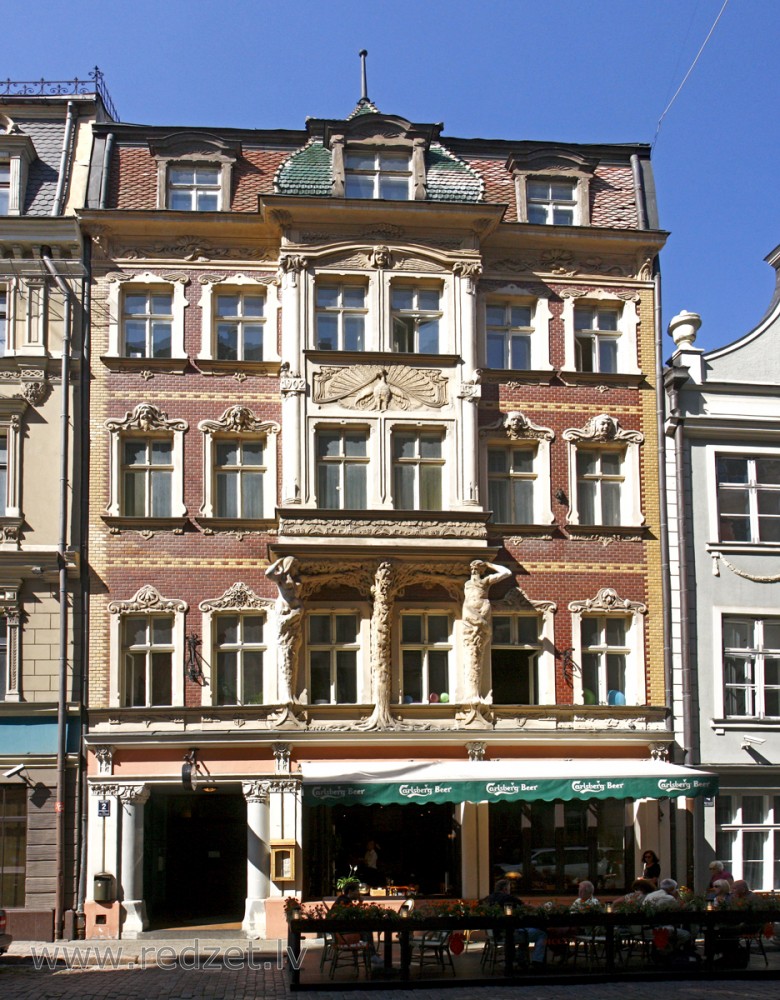
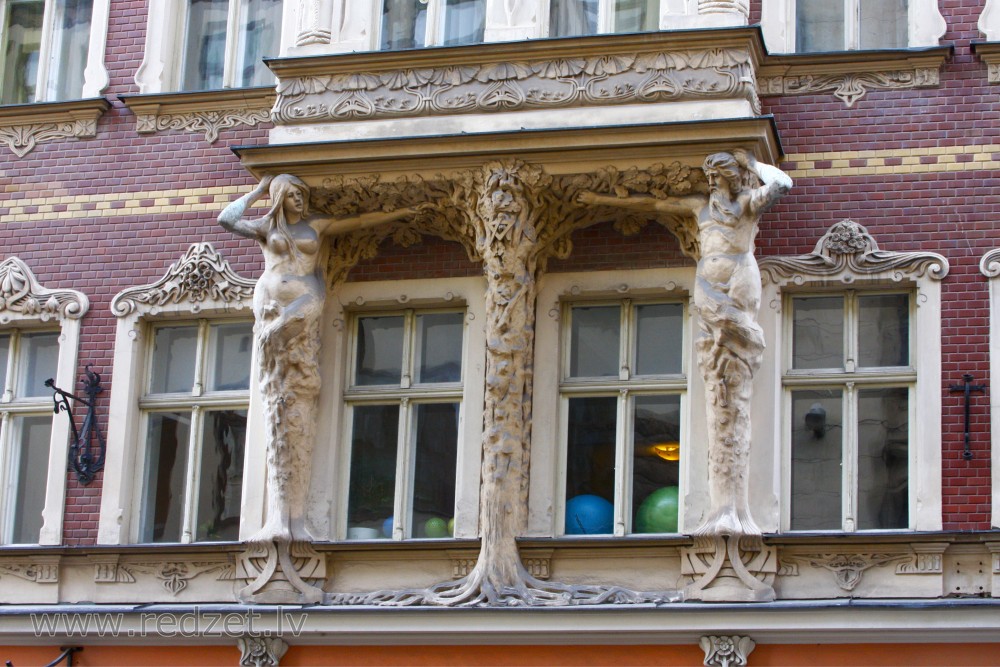

Albert iela (meaning Albert street) is a famous street where you can see many Art Nouveau buildings of this early style. Here is 13 Alberta iela also by Pēkšēns:
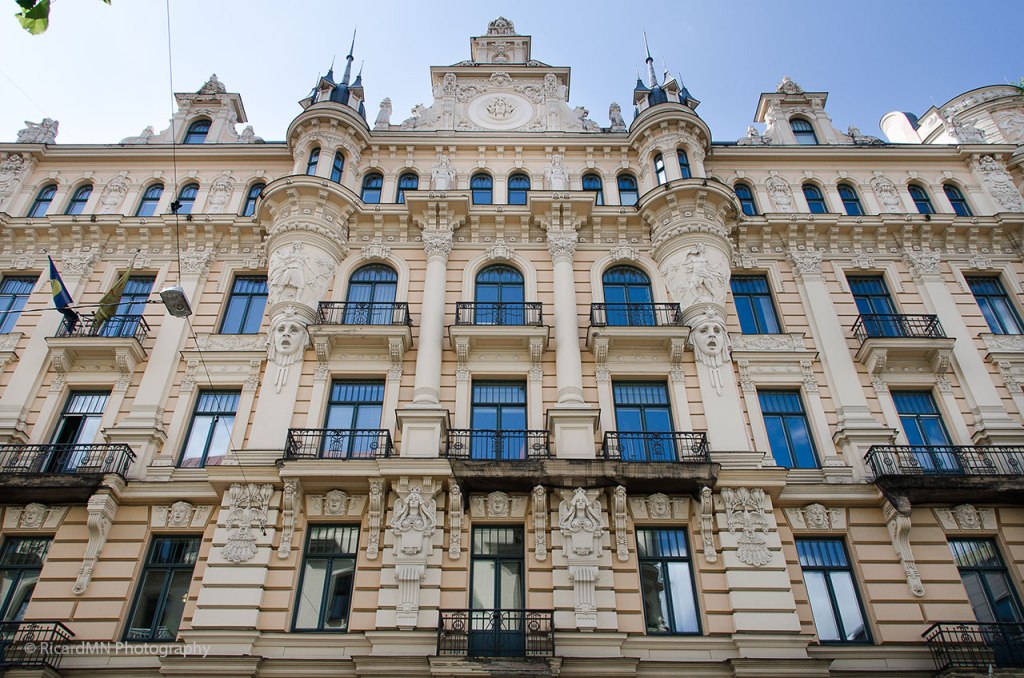
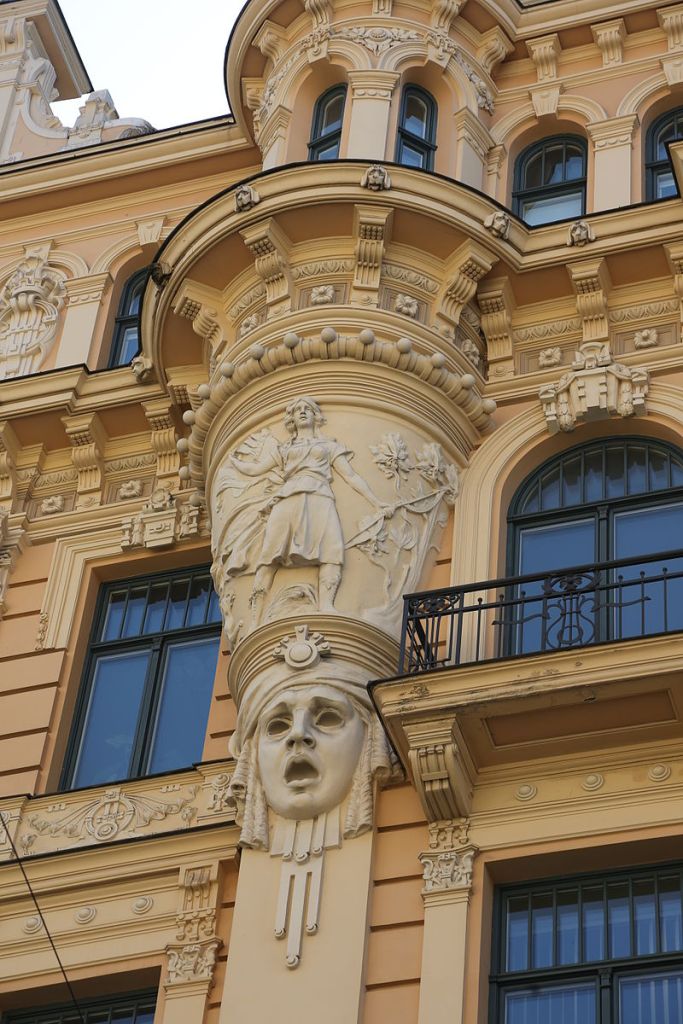

This is on Antonijas iela 8 also by Pēkšēns:
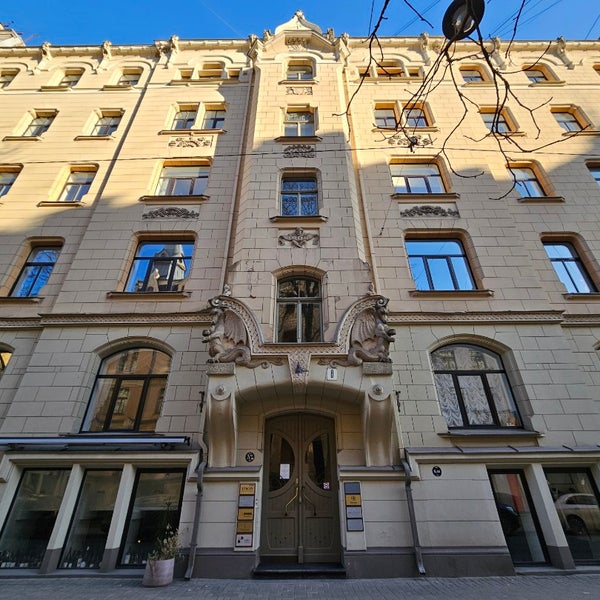
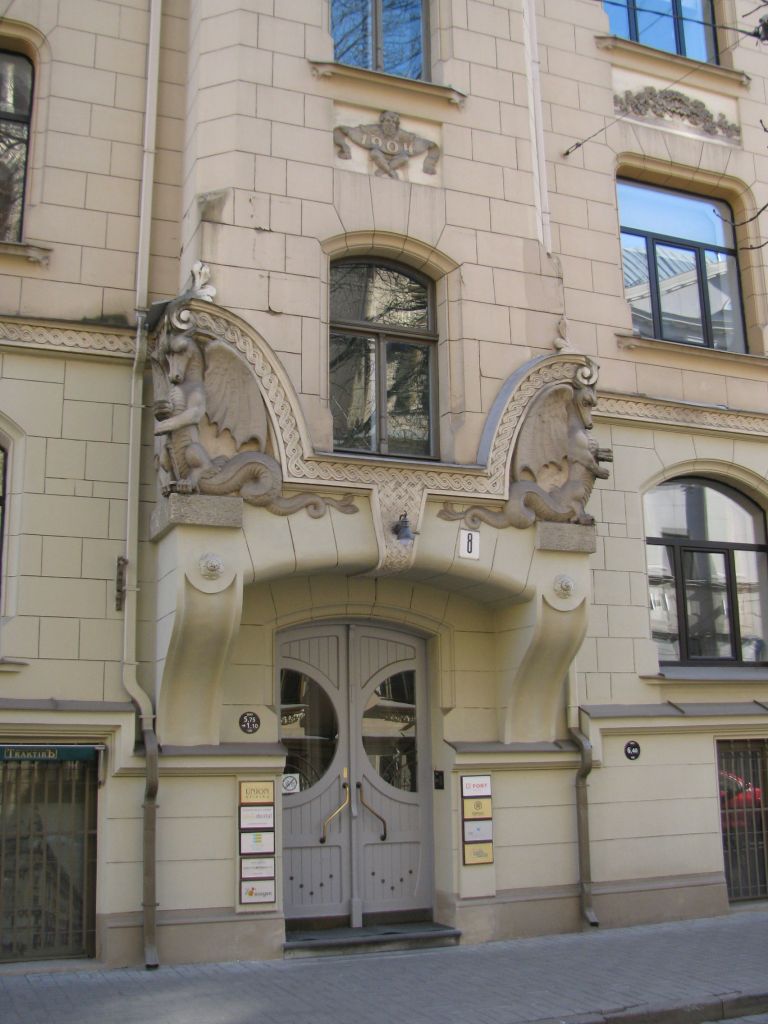
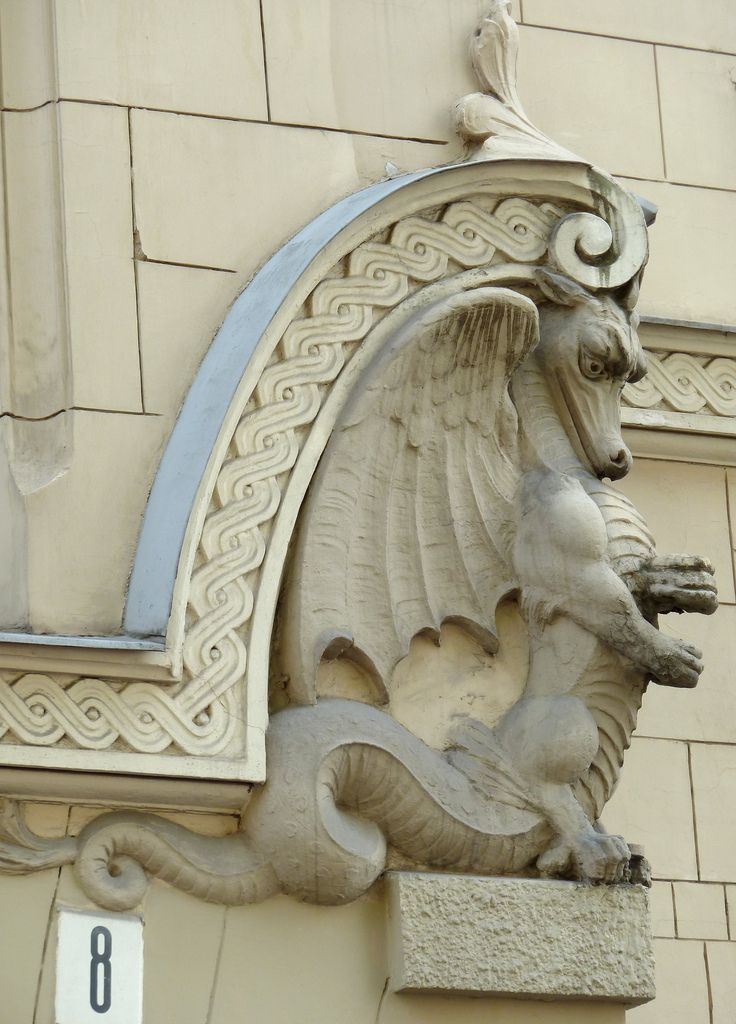
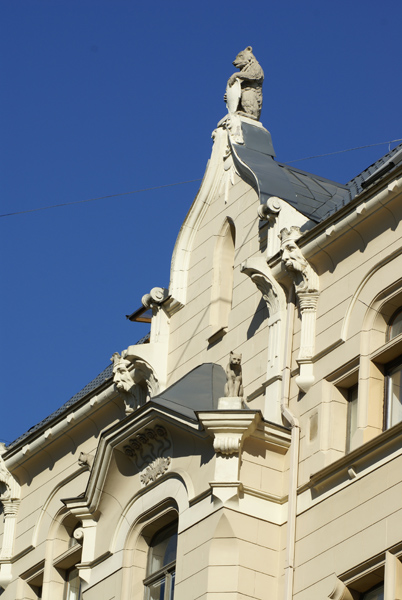
Loved those dragons!
The following are by Mikhail Eisenstein, starting with number 2 Albert iela:
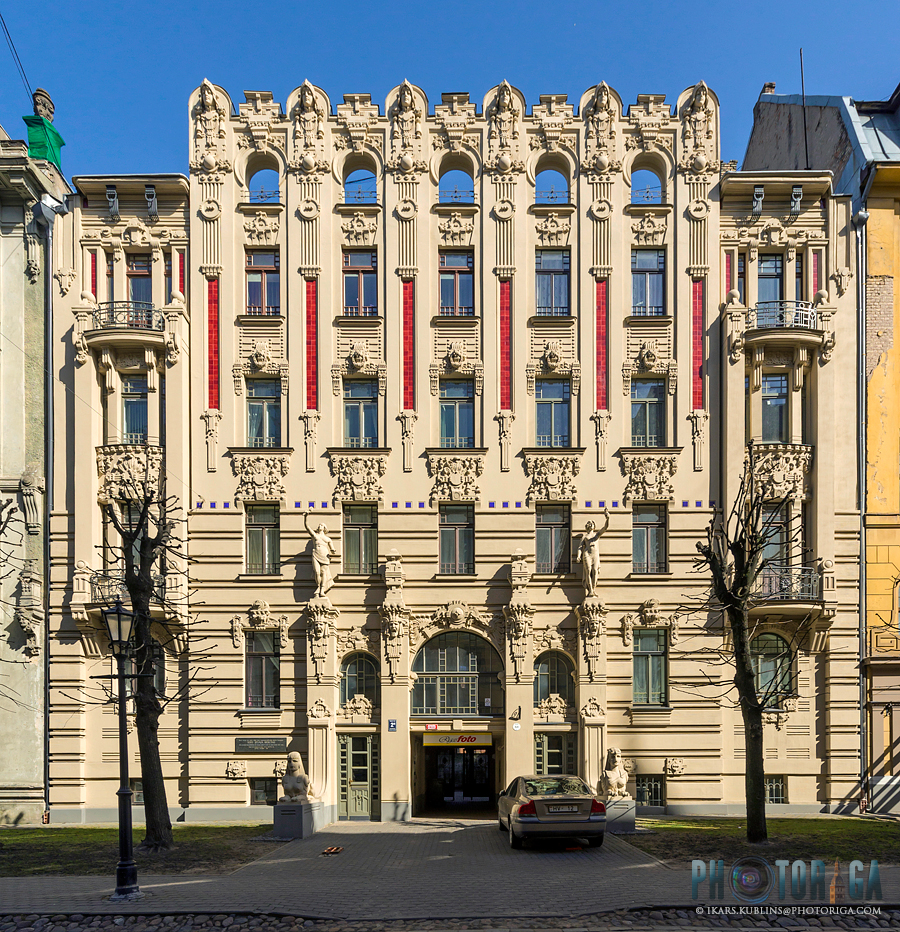
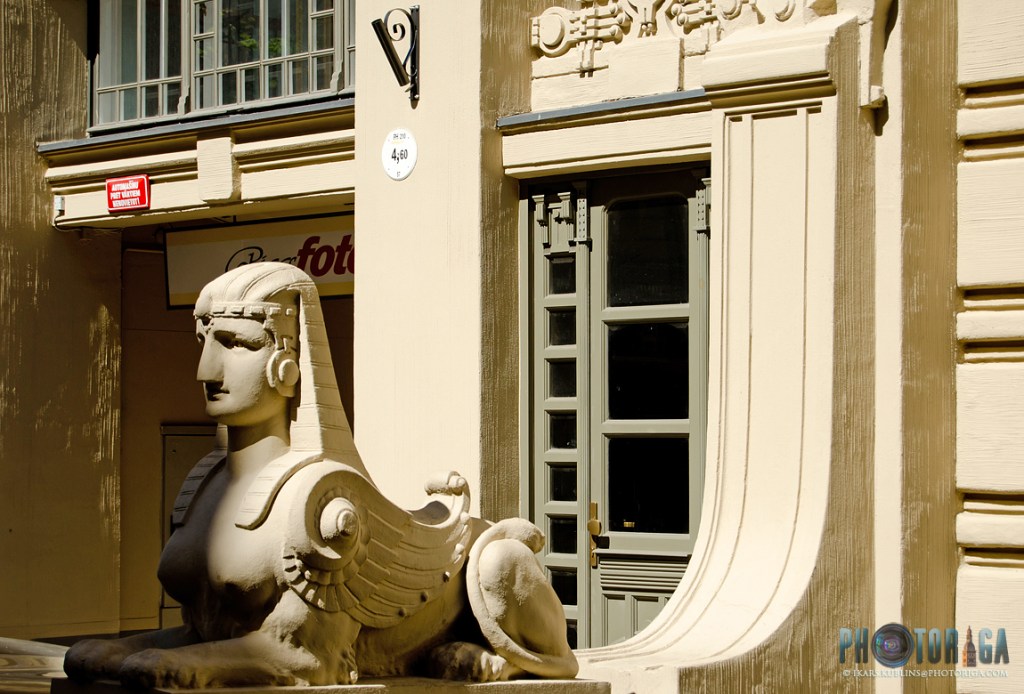
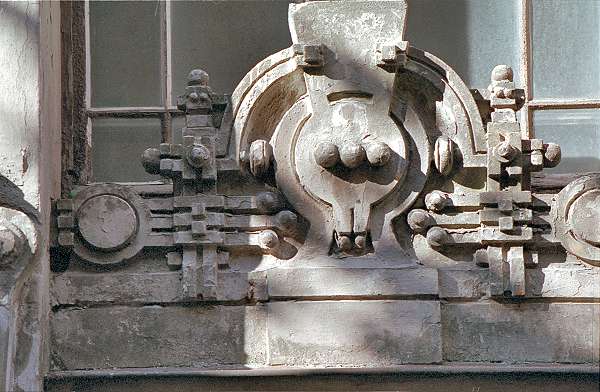
4 Albert iela:
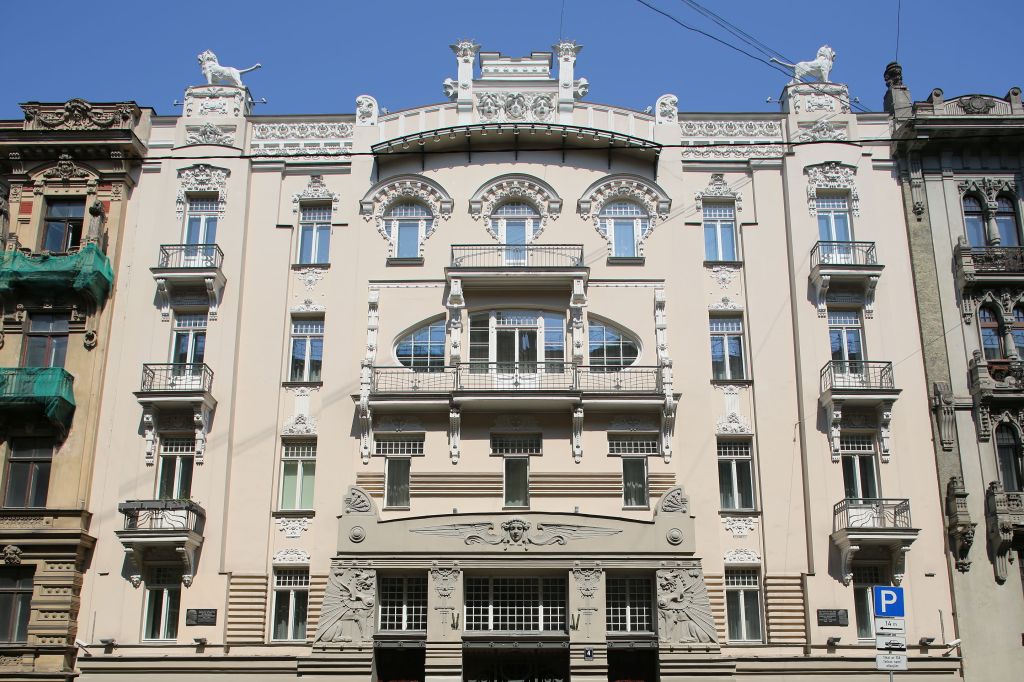


8 Albert iela:


I know… I am fighting the urge to book a flight to Riga right now!!! It’s so beautiful… but we can go there virtually right now! Ready? Just walk down Alberta Street with Google: HERE.
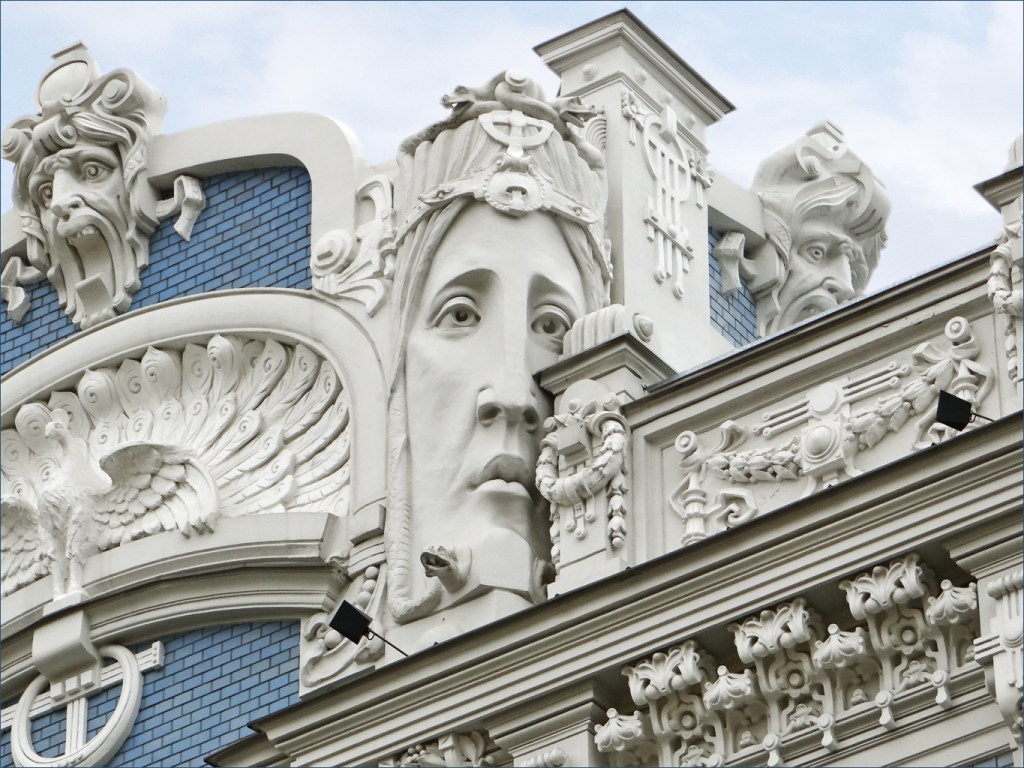
Now let’s go to another famous “Art Nouveau” street, Elizabetes iela with perhaps the most beautiful of all these buildings…
Elizabetes iela 10b:



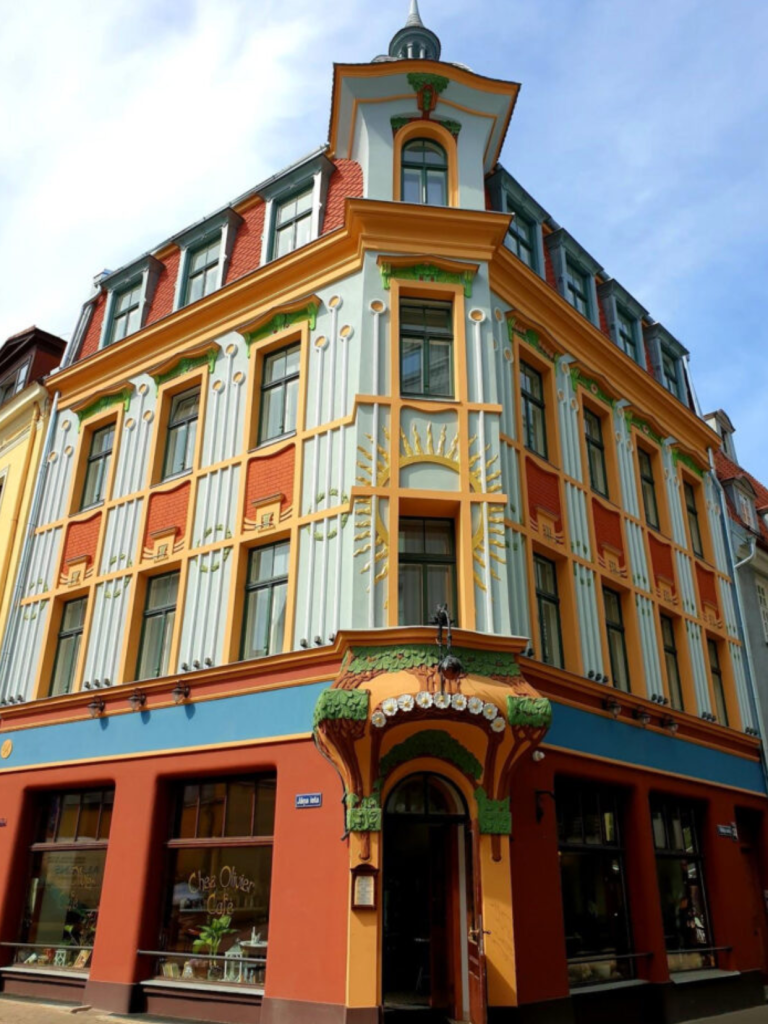
Perhaps the most colorful building award goes to Kalēju iela 23. This incredible building dating from 1903 and superbly restored in 1986 was designed by Paul Mandelstein.
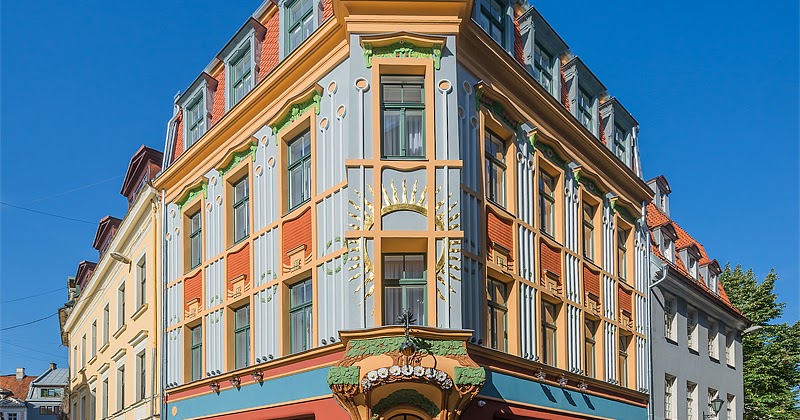

Perpendicular Art Nouveau
Under this style starting around 1906, Riga’s Art Nouveau shed its eclectic beginnings and embraced a more streamlined, rationalist approach. Facades became dominated by vertical lines, emphasizing height and grandeur. Gone were the chaotic decorations of earlier styles; instead, geometric ornaments were seamlessly woven into the architecture, creating a cohesive whole. This “modern” shift saw exteriors faithfully reflect the interior layout, breaking away from the tradition of facades as mere ornaments. Asymmetry became a popular feature, adding dynamism to the streetscapes. Material selection was meticulously considered, and decorative elements were highly stylized, reflecting the era’s penchant for sleekness.
This style is reflected in more than one third of the Art Nouveau buildings in Riga and many examples can be found in Brīvības Street, Ģertrūdes Street, Krišjāņa Barona and Aleksandrqa Čaka Street.
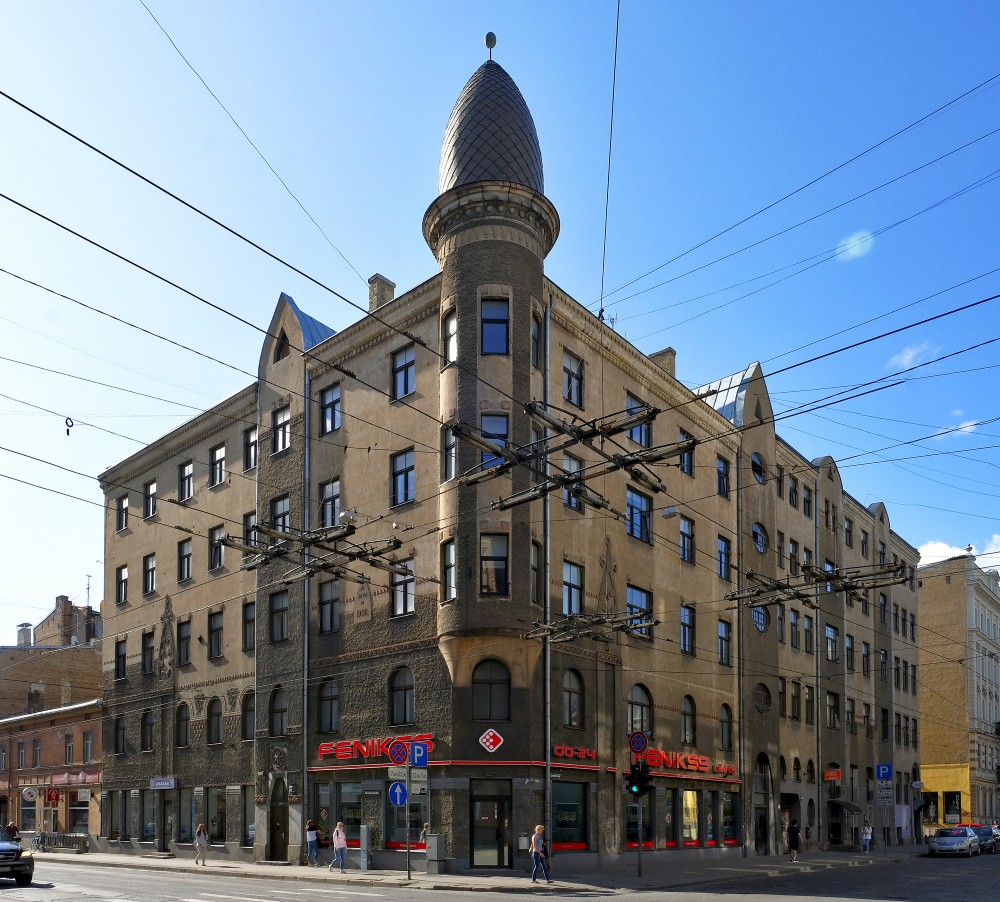
Konstantīns Pēkšēns and another reknown architect of this time, Eižens Laube (who was Pēkšēns student and worked in his architecture office) worked in this style. This is 46 Brīvības Street by Pēkšēns from 1907:

14 Tērbatas Street (1909) by Pēkšēns:
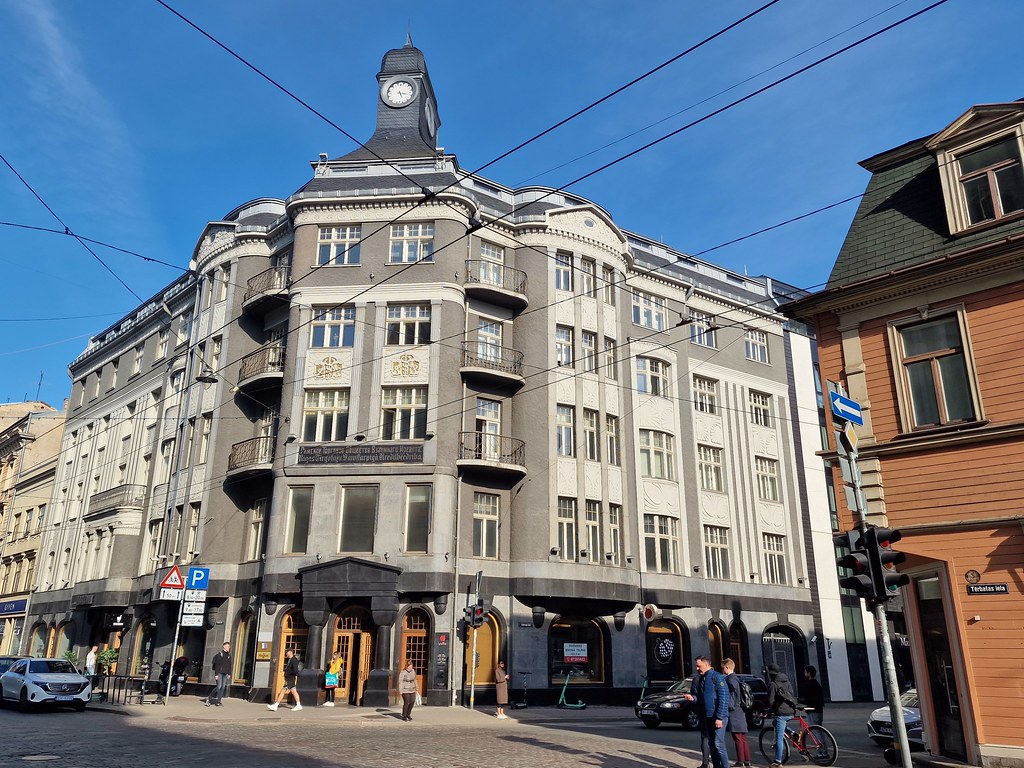
46, Ģertrūdes Street:
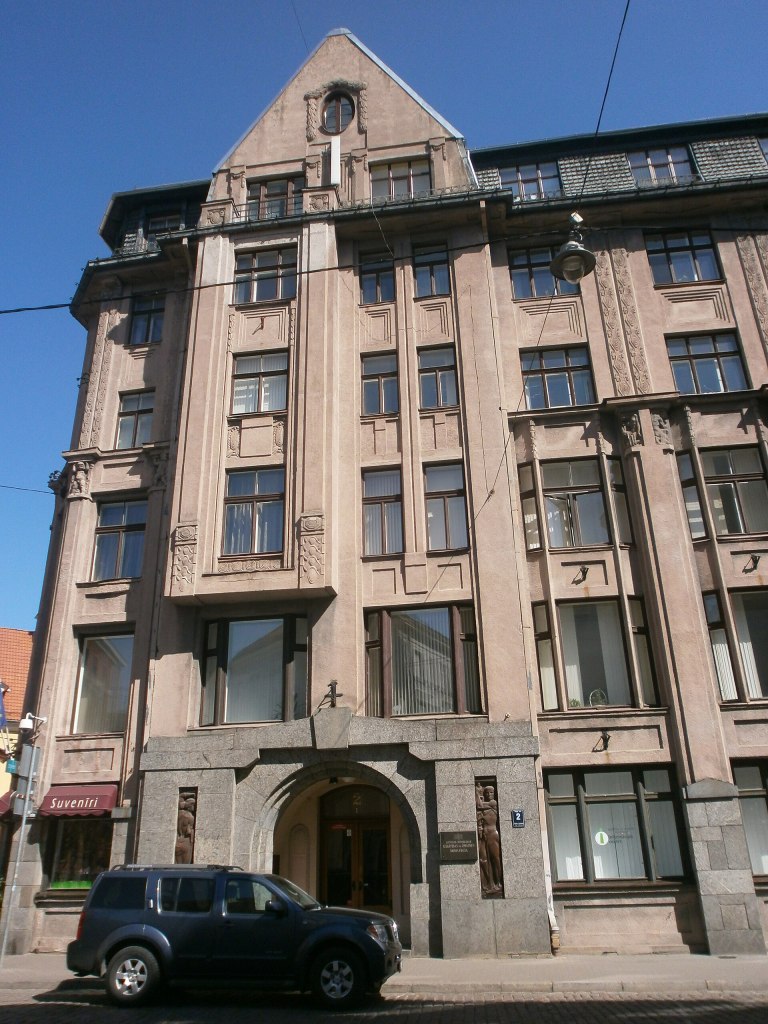
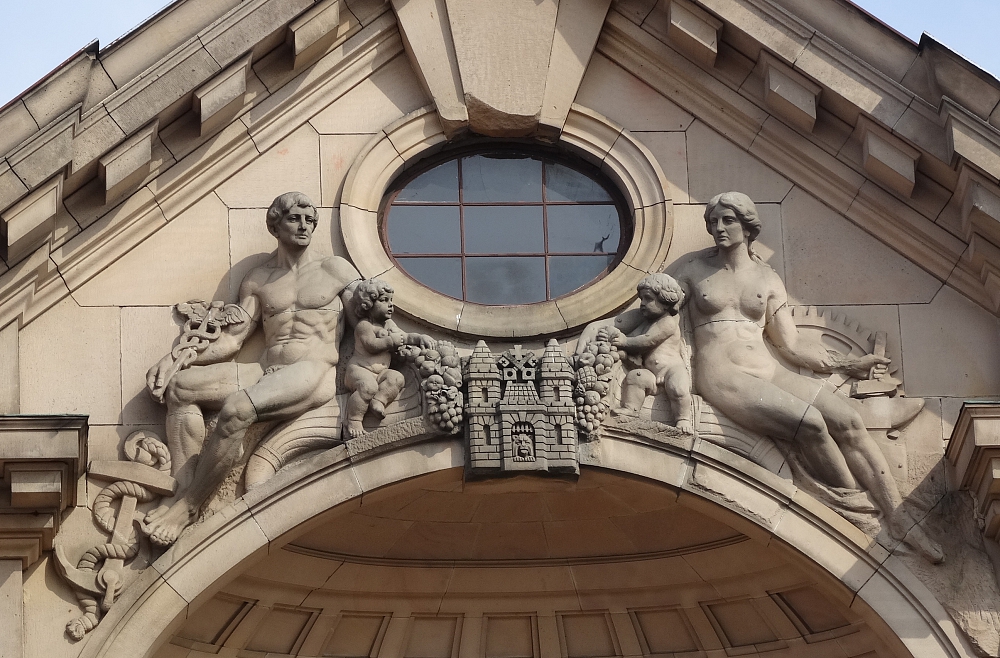
Another architect, E. Friesendorff built the following building that was completed in 1911. It houses the Ministry of Education today. The scultures of the exterior were made by August Volz.
National Romanticism Art Nouveau
A national awakening stirred in 19th century Latvia, sparking a conscious search for a unique Latvian identity. This cultural and political yearning, fueled further by the 1905 Revolution, manifested in art and architecture during the early 20th century. The National Romantic style emerged, blending seamlessly with Art Nouveau, though often considered distinct in the Latvian context.
Short-lived but vibrant, this style flourished between 1905 and 1911. Drawing inspiration from Finnish architecture, it aimed to craft a distinctly Latvian aesthetic. While influences are present, key features stand out: restrained decorations echoing local folk art, imposing structures, and natural materials. The sinuous forms typical of Art Nouveau recede, yet their echoes linger in subtle details.
Riga, the jewel of Art Nouveau, boasts between a third and a quarter of its buildings graced with the National Romantic touch. This style stands as a testament to a nation’s desire to express its unique identity through art and architecture. Pēkšēns was one of the originators of this stylistic trend. One of the first National Romantic buildings in Riga was the apartment house at 4 Lāčplēša Street (1905).


This is Vīlandes iela 10 also by Pēkšēns:
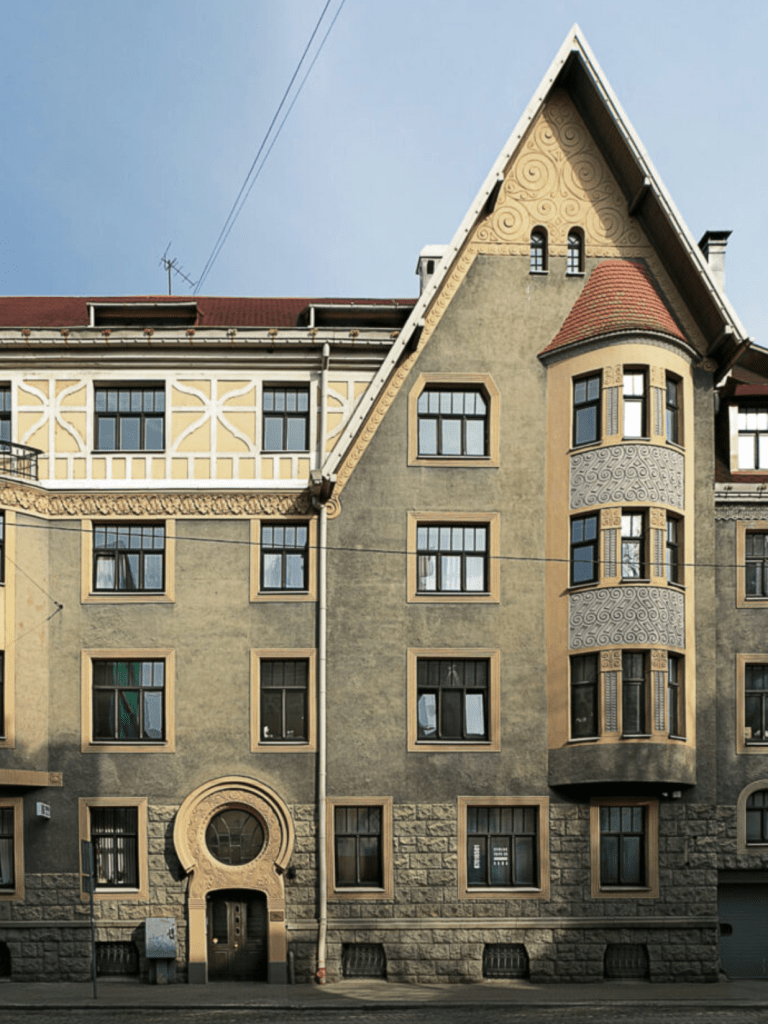
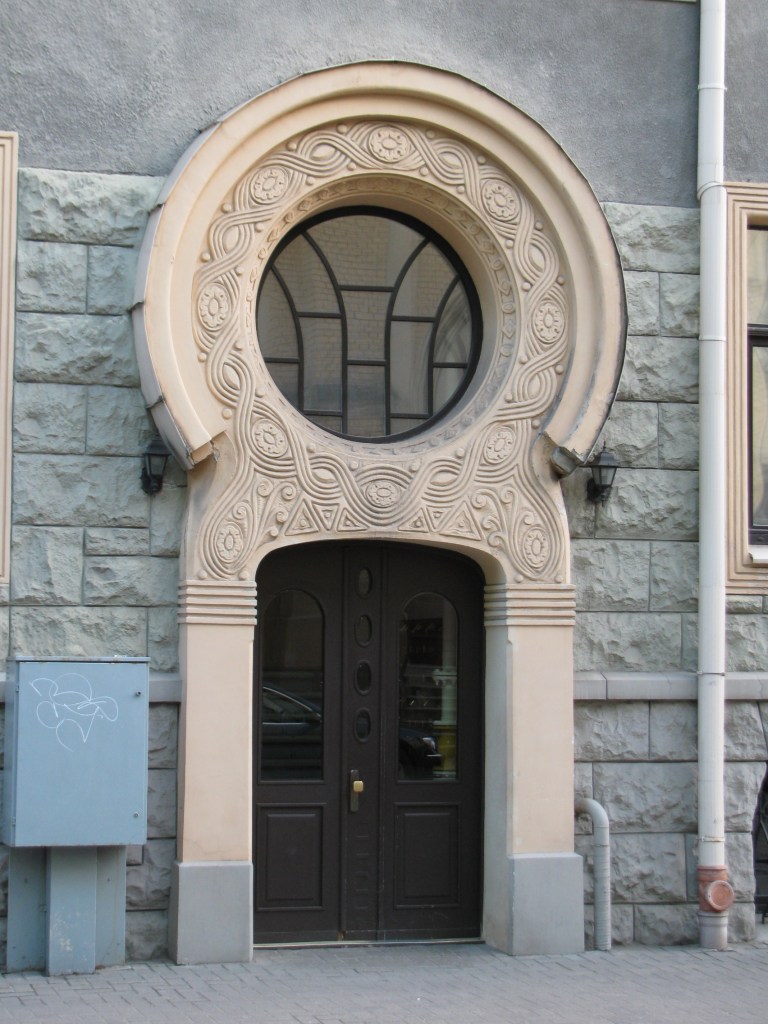
Today it is difficult to say how much of the architecture of those buildings was created by Pēkšēns and what was contributed by his young associates including Laube. It is known with certainty that six very interesting buildings at 23, Tallinas Street, 12, Alberta Street, 26, Aleksandra Čaka Street, 10, Kronvalda Boulevard, as well as 15/17, Tērbatas Street and 33/35, Tērbatas Street, are the result of creative cooperation with Eižens Laube.
12 Alberta iela, built in 1903, was Konstantīns Pēkšēns home during his last years it was designed by both Pēkšēns and Laube. Today it is the Center of Art Nouveau of Riga and you can delight in the the rooms of his house!!!
The façade of the monumental building boasts ornamental reliefs with stylised motifs of plants and animals occurring in Latvia.

The museum features an authentic interior of an Art Nouveau apartment and a modern digital exposition. The interior has fully captured the essence of Art Nouveau starting with the layout of rooms, original wall paintings and plafonds and ending with furnishings. The interior displays furniture, tableware, artworks, clocks, clothing, embroidery and other items used in Riga.
Shall we go inside? Yes please!
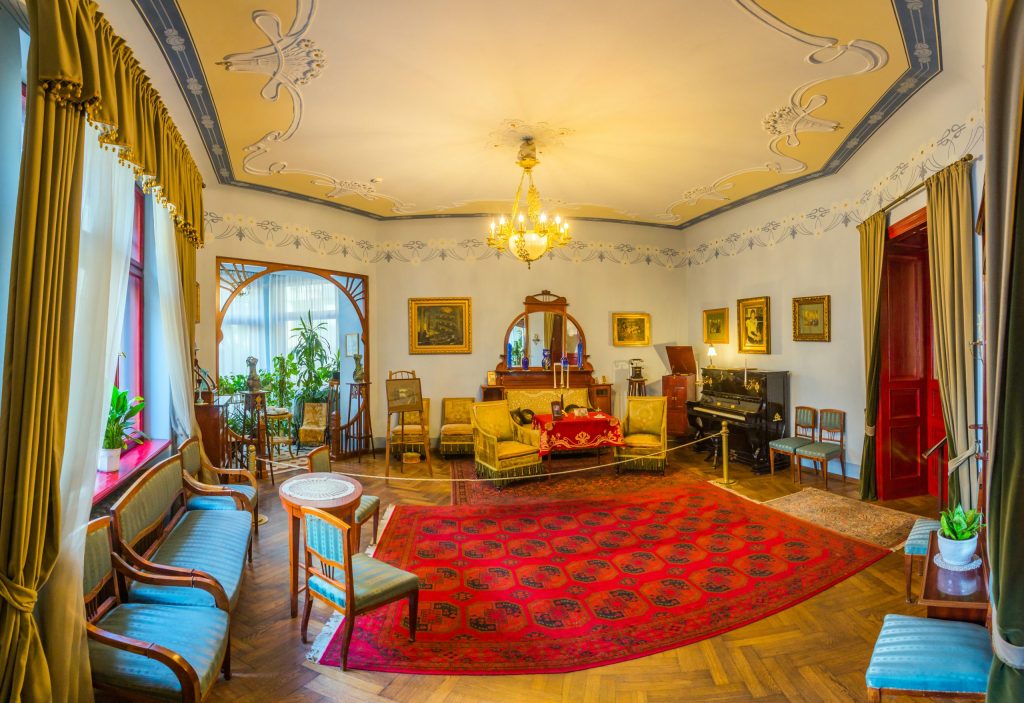
The Sitting Room
The finish of the sitting room features floral elements inspired by the Latvian nature. An ornamental frieze with daisy motifs is located on the upper part of the walls. The most splendid finish is that of the ceiling – a stucco decor with elements of daisy blossoms as well as a band of ornamental painting. An interesting accent of the room is the bay window. It is separated from the room with a wooden decor in the character of Art Nouveau. The original parquet flooring, tiles, doors, windows and heating pipes have been preserved. Authentic Art Nouveau items, originally used in Riga, have been placed in the room.


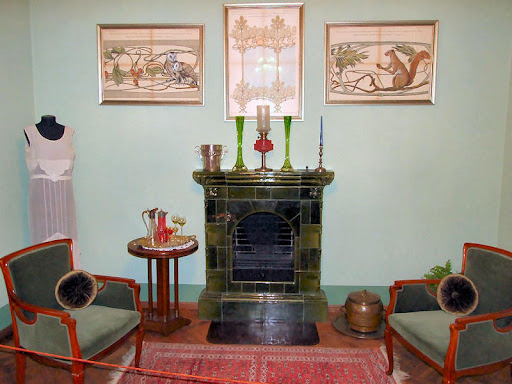
The Fireplace
The finish of the fireplace room features floral elements inspired by the diversity of trees in Riga. An ornamental frieze with chestnut leaf motifs is located on the upper part of the walls. The ceiling is adorned with a stucco decor with a rhombus-shaped rosette in the centre and a surrounding ornamental band as well as decorative painting with chestnut leaf motifs.

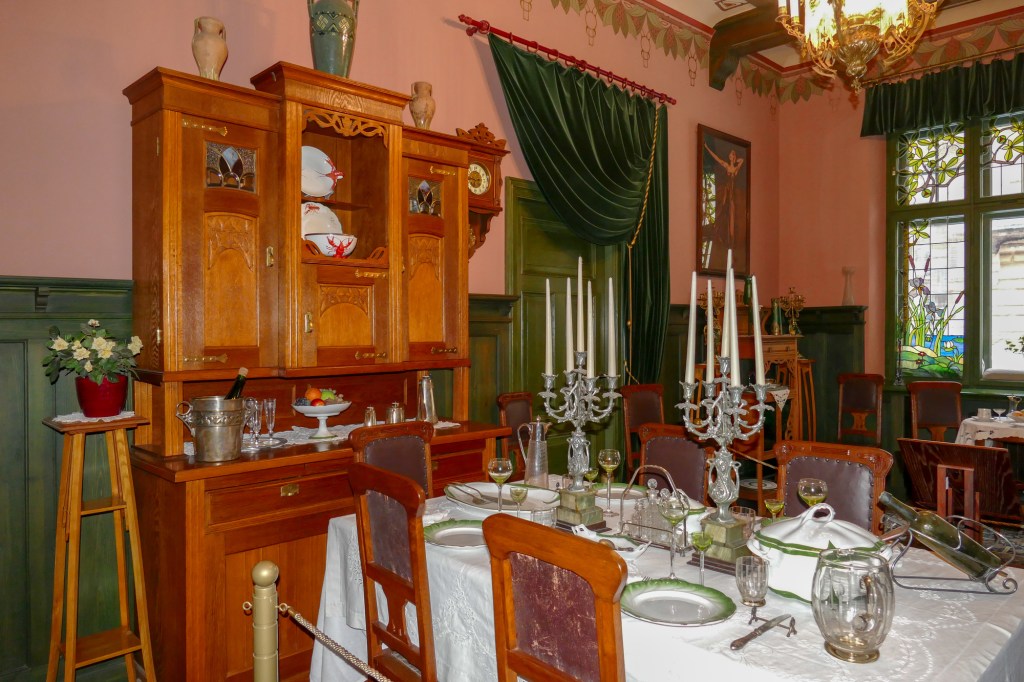
The Dining Room
This is the only room in the apartment which has two gorgeous still life paintings on the ceiling as well as stained glass windows. Decorative paintings, wooden (spruce) panels on the walls and pinewood beams on the ceiling have been renovated.

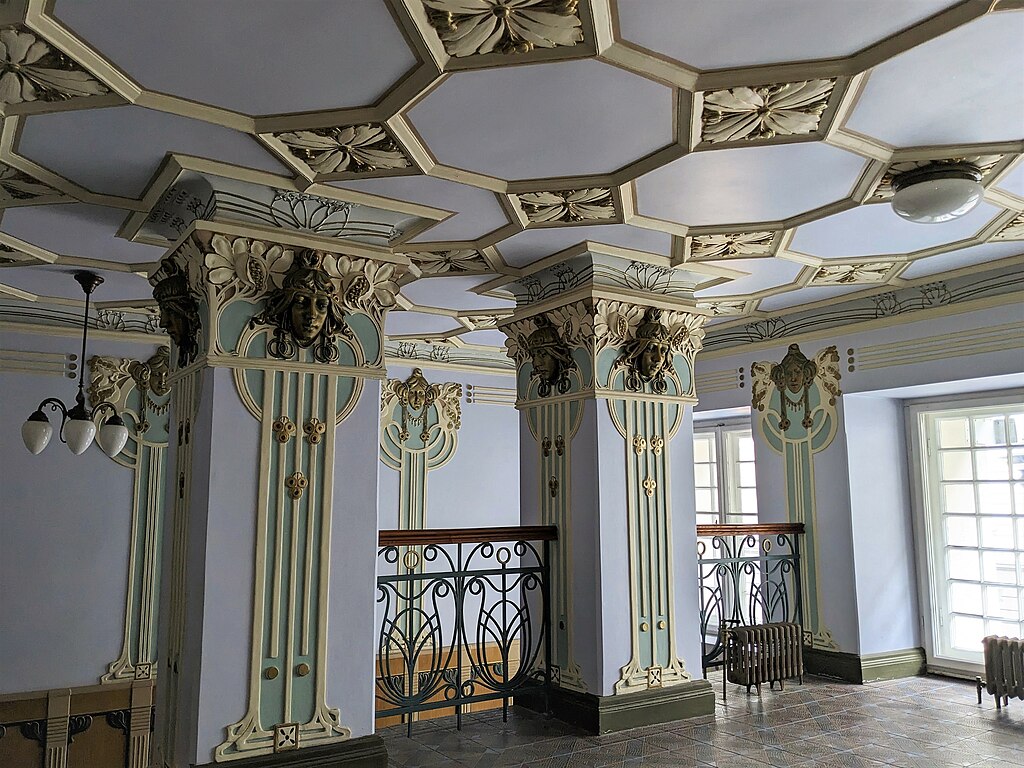
My favorite: The Staircase!


Much of the information and photos about this Museum came from its website: HERE if you want to see more.
Neo-Classical Art Nouveau
This was the last and the least represented yet a fascinating style. As a counterpoint to the earlier, exuberant decorative forms, this movement embraced the vocabulary of Classical architecture, prevalent in the 19th-century Russian Empire. While Riga rarely embraced true Neo-Classical buildings, architects often incorporated its monumental forms as a base, then adorned them with the distinct details and ornaments of late Art Nouveau. This unique blend resulted in buildings like grand bank structures, showcasing a restrained elegance.
A prime example of this building Latvian Public Radio (previously Riga Commercial Bank) on Dome Square designed by Paul Mandelstein in 1913:


I hope you enjoyed this thorough trip through Riga’s gorgeous Art Nouveau. To conclude our journey, enjoy this video summarizing it all…
 My Virtual World Trip
Excelente artículo del estilo Art Nouveau in Riga. En especial en la arquitectura y de algunas calles y arquitectos famosos.
Muchas fotografías que ayudan a distinguiéramos como era en sus diversos ejemplos.
Las escaleras y algunas decoraciones es fachadas son Expectaculares.
Felicitaciones por este nuevo artículo .
LikeLike