
In Rwanda, music is part of the process of living. It is a vehicle that has carried its tales, that illustrates its culture and sociopolitical structures, that connects individual to their spiritual world and that brings joy as a source of enjoyment and relaxation. Drums became Rwanda’s main object of music expression (as in many other African countries.)
Royal Drums (Ingabe)
According to oral tradition, when the Nyiginga clan founded the Tutsy Dynasty through by the King Gihanga Ngomijana in the 11th-century, his kingdom’s emblem featured two symbols: a hammer and the Nyamiringa, a musical instrument. Later, this was replaced by a single symbol, the Rwoga, a royal drum introduced to Gihanga by Rubunga, the keeper of sacred knowledge.
This royal drum that symbolized both the power of the king and the supremacy of Rwanda over its annexed territories, there existed a list of objects that gave evidence of victories won in combat.
Ruganzu II Ndori who lived in the 16th century introduced the latest significant royal drums, the Karinga (also Kalinga), the Karihejuru and the Bariba. They were established as a replacement of Rwoga drum that had been annexed by another king: King Ntsibura I Nyebuga from Nyabungo who attacked and later killed king Ndahiro II Cyamatare of Rwanda.
Though I was not able to find photos online, these are some images that come up as one writes Kalinga Royal Drums Rwanda:
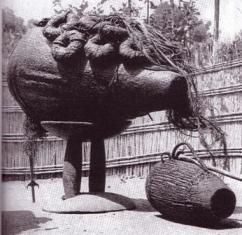
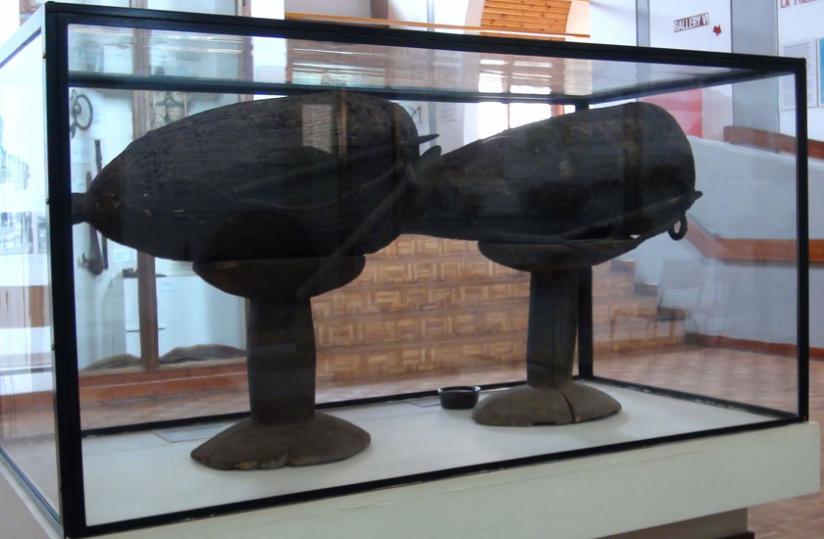
Drums of a similar shape used to play an important part in the king’s cult. The drums used for this purpose were known as ingabe and were even kept in a separate hut. They were not allowed to touch the ground and were rubbed with bull’s blood once a month. There are four ingabe: the karinga, the cyimumugizi, the mpatsibihugu and the kiragutse.
- The karinga is the most important and, according to oral tradition, dates back to the time of Ruganza II Ndori (1590-1617). It accompanied the King in his travels and even acquired several forenames in an attempt to personify it.
- The cyimumugizi is the oldest of the four and tradition has it that it was brought into use by Gihanga. During a battle it was saved while the karinga of the time (Rwoga) was destroyed. The cyimumugizi symbolises the female sex and the queen, while the karinga represents the male sex and the king.
- The mpatsibihugu and the kiragutse are much younger and were incorporated into the king’s cult by Kigeri IV Rwabugiri (1860-1896) to commemorate his father and his father’s victories respectively. One example of the latter is the legendary battle of Butembo. (1)
A Rwandan saying states “He is King who has the drums.” Karinga, the symbolic drum of the king of Rwanda, served three roles; it represented the kingdom as well as the monarch and the dynasty of the kings (Abanyinginya).
Many rituals surrounded the Karinga drum. It was stored in a house where the sacred fire was kept burning. The drums were sprinkled with bull’s blood to honore the drum and enhance its power. Even genitals of enemies were attached to the drums as a symbol of victory over enemies!
All ingabe drums were rarely brought out to the public; they were only beaten in special occasions, such as the celebration marking the beginning of the planting season to symbolize the rhythm of life. (2)
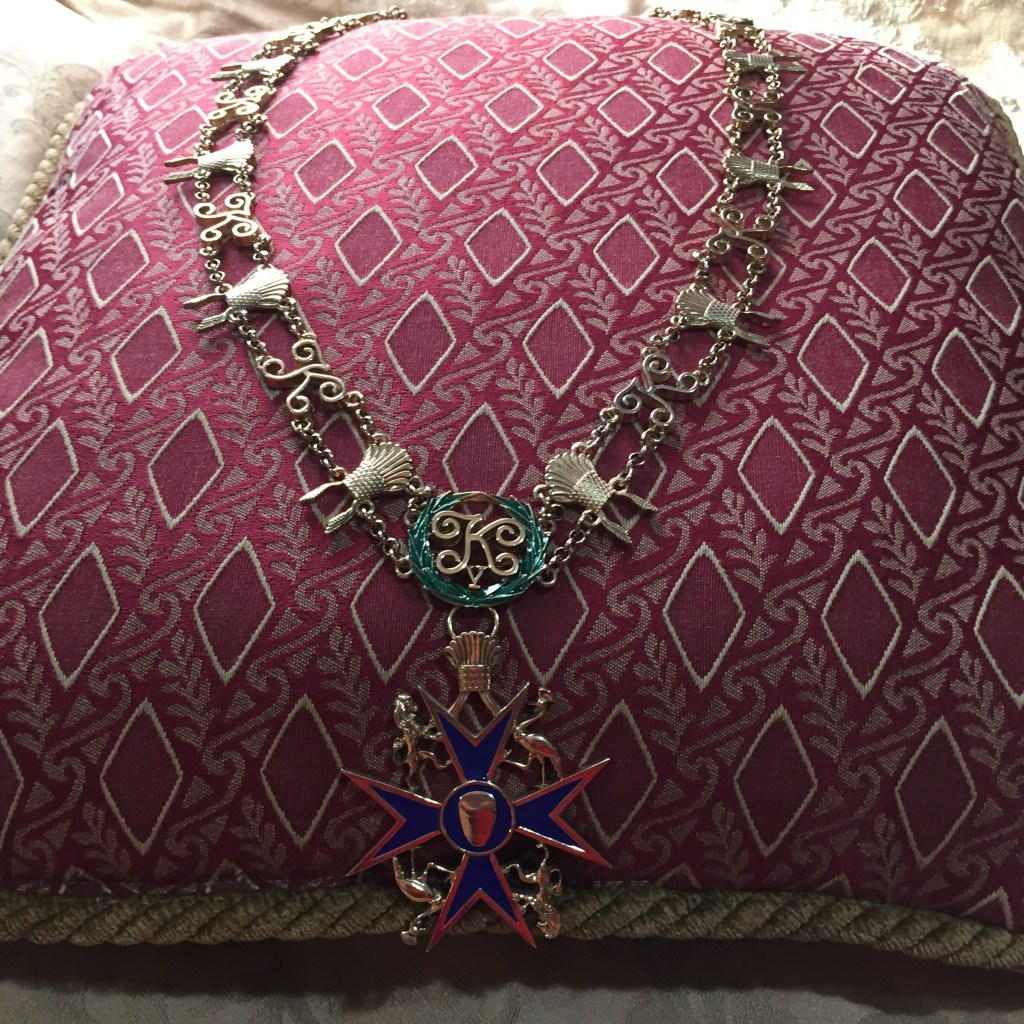
While looking for information about the Royal Drums I came upon a Royal order that was started by H.M. King Kigeli V in 1959. It states that:
There are two ranks in the Royal Order of the Drum (Kalinga in the native Kinyawrwandan). The higher rank is split into two parts, Grand Collar and Grand Cross, and the lower rank is Commander. A recipient of the Grand Collar is treated as an honorary member of the Royal House of Rwanda, while recipients of the Grand Cross and Commander are not. The Order may be granted as a hereditary award or as a non- hereditary honour. Nobility is conferred upon the grantee. (3)

Ritual Drums (Ingoma)
These drums were played by men on special occasions for:
Announcing Events: They were used to announce the arrival of the king or signal the start of important ceremonies and gatherings.
Marking Occasions: Specific drums were associated with particular events, such as harvests, victories, or mourning periods.
Communication: The drumming rhythms themselves could convey messages and instructions.
Social Cohesion: Drumming and the associated dances created a sense of unity and community.
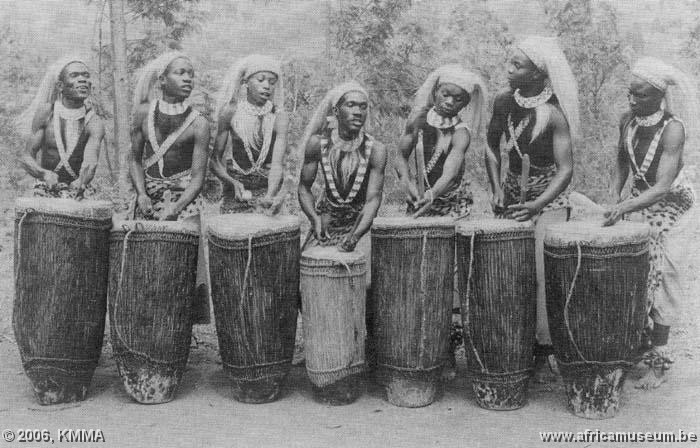
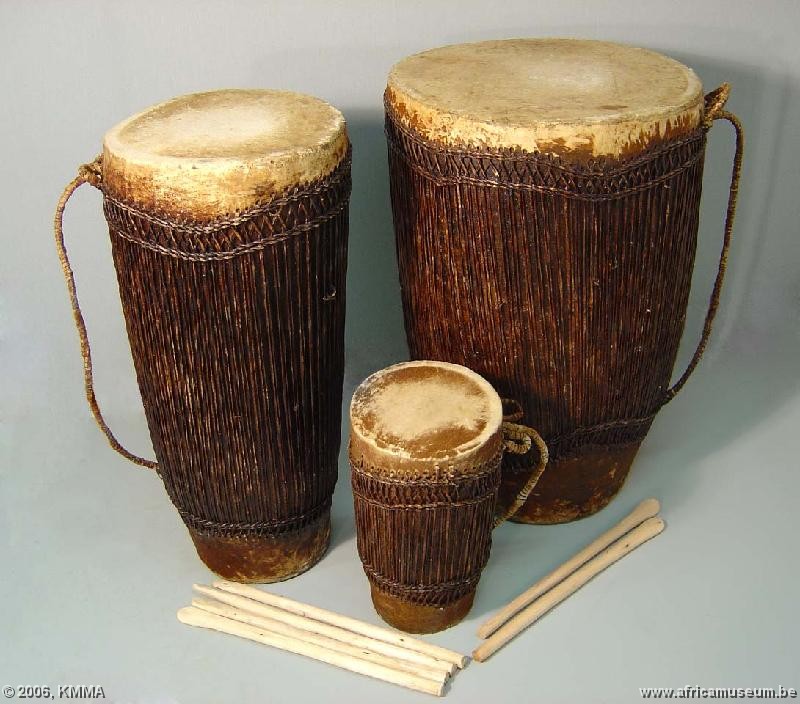
The ingoma ensemble that plays nowadays comprises eight to ten drummers, each with his own drum. There are three types of drum, each having a different pitch: the ishakwe, the inyahura and the igihumurizo.

- The ishakwe is the smallest (47 cm high) and has a high tone. There is always just one in the ensemble, with the task of establishing the rhythm and then playing an ostinato rhythm as the basis for the other drums.
- The inyahura (up to 78 cm high) has a medium tone and the ensemble usually has three or four of these. The leader of the ensemble plays this type of drum. He is also the one who plays the solo rhythm and ensures continuity between the various successive rhythms.
- The drums with the deepest tone are called the igihumurizo and are 85 cm high, although they have a much larger diameter than the inyahura. They usually play an invariable ostinato rhythm together with the inyahura.

Here you can see men performing different rhythms on Ingoma drums:
Process of Creating the Ingoma Drums
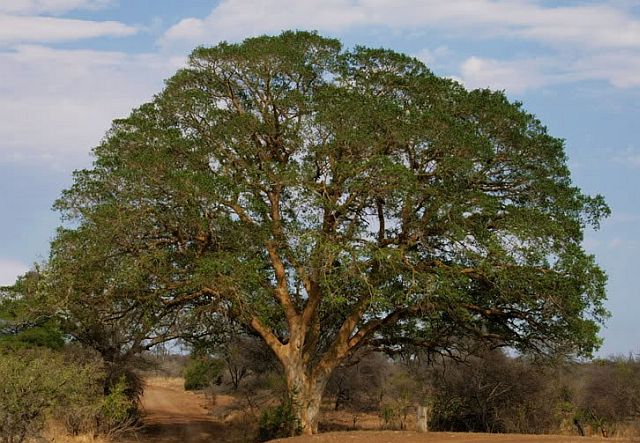
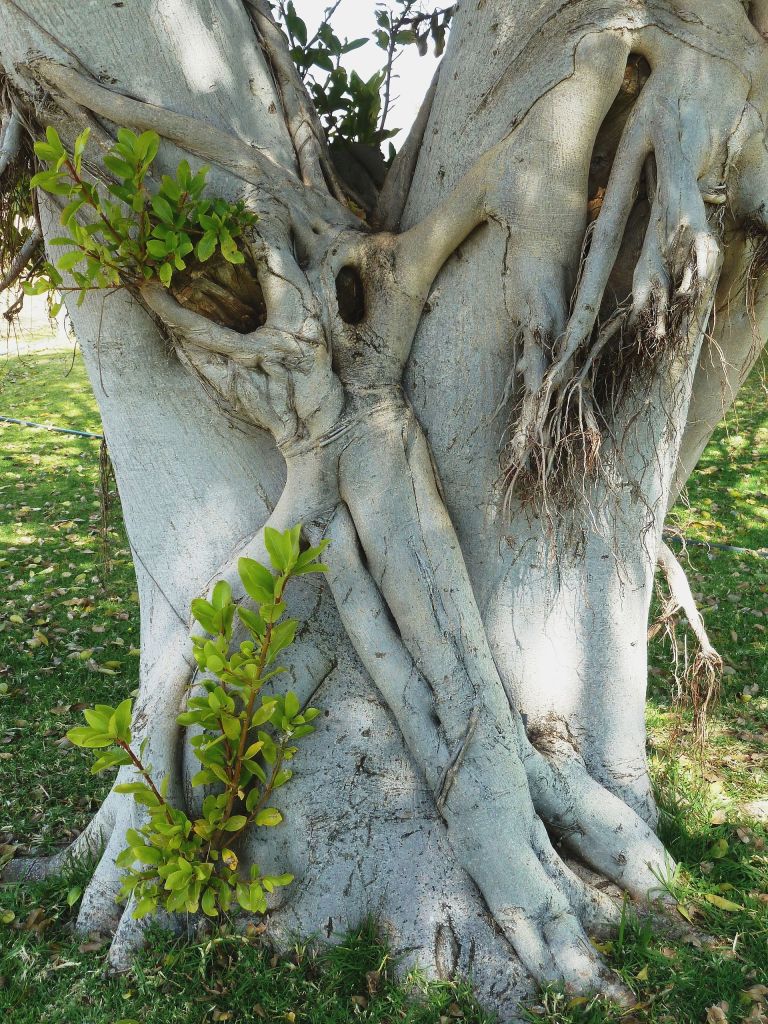
The drum-making process begins by felling an Umuvumu tree, a species found only in Rwanda’s south, known for its particularly robust timber. The tree is then hollowed out (a section of its trunk), carving it by hand so that the top is twice the diameter of the bottom. The size of the drum shell may vary from 40 to 130 cm high with a diameter of 50 to 70 cm at the top and 10 to 20 cm at the bottom.Next, the drumhead is fastened —made of cowhide, pelt facing up — with dozens of leather straps pulled taught around the drum’s body. Finally, cow’s blood is applied to it to help keep the straps in place and ensure that the acoustics remain sharp.
This Umuvumu tree is known in English as a Strangler Fig. It look slike this:

Cr. Wikimedia Commons
I searched and searched for the making of a Rwandan Ingoma drum, but I was not able to find one! This was the best I found: HERE.
Performing Ingoma drums or musical drums.
The border between these drums used for ritual or for enjoyment is blurred… as musical drums filled the air daily for the Karinga drum, king, and queen mother. They also marked special events: enthronements, victories, hero honors, mourning ends, harvests, and the Inyambo festival. In colonial times, the drums were also played to mark the beginning and end of the school day.
Ingoma Nshya: Ingoma gets female power!
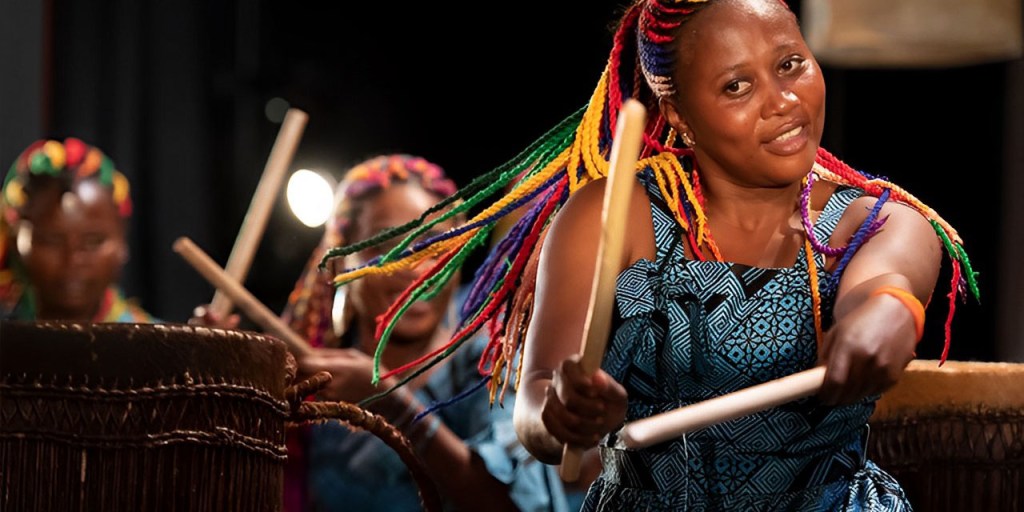
Ten years after the 1994 Genocide, Gakire Katese Odile (Kiki), a theatre artist, braved a traditional prohibition in Rwanda forbidding women from drumming, and created the group she has now dedicated her life to: Ingoma Nshya (which translates as “New Drum” and “New Power”).
From their website:
By giving birth to the Rwandan Woman Drummer, Kiki has modelled a new image for women in Rwanda, and a new tradition of gender equality: infused with respect, unity, and joy. These are women at the service of themselves, their own rights and their own dreams. This has been a singular achievement – a gain for both the country’s women and its culture. Today, Ingoma Nshya is not only the recognized leaders of the drumming sector, but they are breathing new life into Rwanda’s drumming heritage. They rescue nearly forgotten traditional repertoires and commission new ones. They are the sole group that drums on a daily basis. They are, in short, reinstating drumming as an art form in Rwanda. (4)
This is a beautiful video about them:
Another video of them in action:
Those smiles! ^ ^
Some beautiful photos of them:
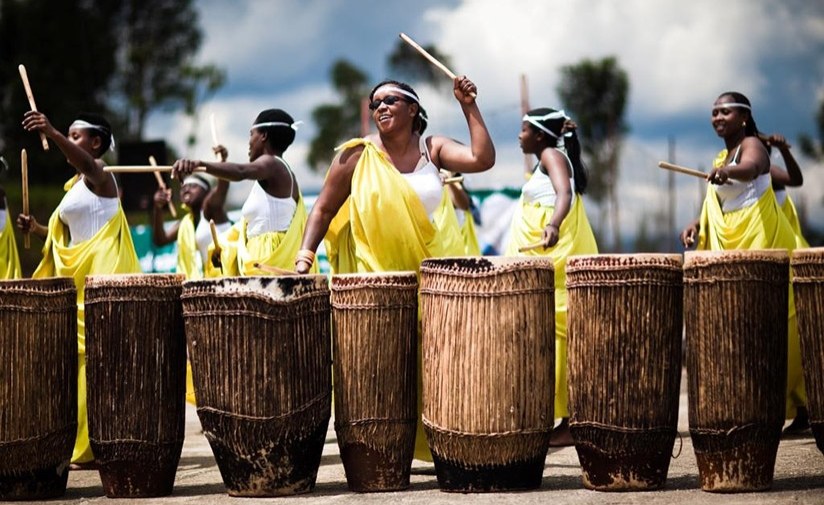


As the first video about Ingoma Nshya stated women have played a huge role in Rwanda’s healing and recovery as they became the majority. I read that this country has the biggest current women representation in the government in the world. I want to research more about the incredible women of this country…
As I researched about Rwanda’s drums, I discovered similarities between their use and symbolism of the drum and that of various countries in the Great Lakes region and Southern Africa. The I is dropped in Swahili and they are calle Ngoma Drums. The women of Rwanda are very famous… in the men department it seems Burundi Male Drum players are the best… There are many videos of them online. Stay tuned when we visit this country.
Thank you for coming along… I’m going to keep my ears open to see if they ever visit nearby…
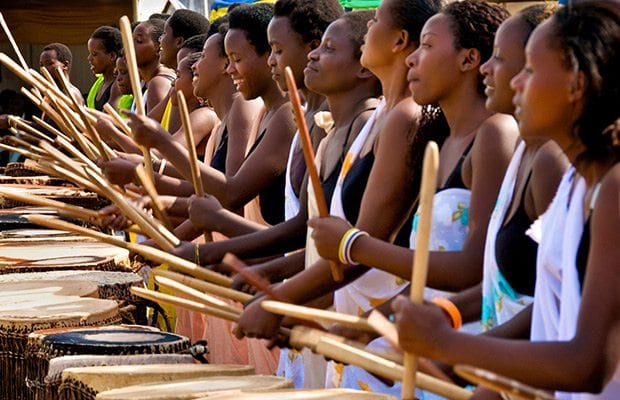
I take my leave with this incredible photo… can you hear the drums?!
Credits:
1. DEKKMMA Project. Digitization of the Ethnomusicological Sound Archive of the Royal Museum for Central Africa. HERE.
2. Book: Culture and Customs of Rwanda. By Julius O. Adekunle. Greenwood Press. 2007
3. Royal House of Rwanda Website. HERE.
4. Woman Cultural Centre Website. HERE.
 My Virtual World Trip
Excelente artículo sobre los Tambores de Rwanda , su elaboración, diferentes formas , incluyendo los más artísticos, también los tamaños varían. Lo que más me impresionó es la forma de tocarlos que han desarrollado las mujeres. Sus vestimentas , movimientos, Danzas y coreografías tan vistosas, la fuerza física y la destreza musical.
LikeLike
Muchas Gracias Mami! Si es muy hermoso ver la alegría y fuerza que emana de las mujeres al tocar los tambores!
LikeLike