I was very inspired by Minhwa, Korean Folk Art painting from the first time I saw it. So I decided to create my angel based on a combination of my top two favorite categories combined. They are Chaekgori (the scholar accoutrements) and the Munjado ideographs (the representation of the eight confucian virtues using stylized Chinese characters and symbolic imagery.) This mixed category exists in Minhwa Painting. Here is an example:

I wanted to know more about the eight connfucian virtues and I discovered that they are always represented in the same order (even though the ideograms look so different at times. Also that it is read from right to left and that Hyo (Filial Piety) is first becasue it is considered the highest virtue.
The Eight Confucian Virtues and Their Meanings:
1. 孝 (Hyo): Filial Piety:
Meaning: Respect and care for one’s parents and ancestors.
Symbols: Carp (a symbol of devotion), bamboo shoots.
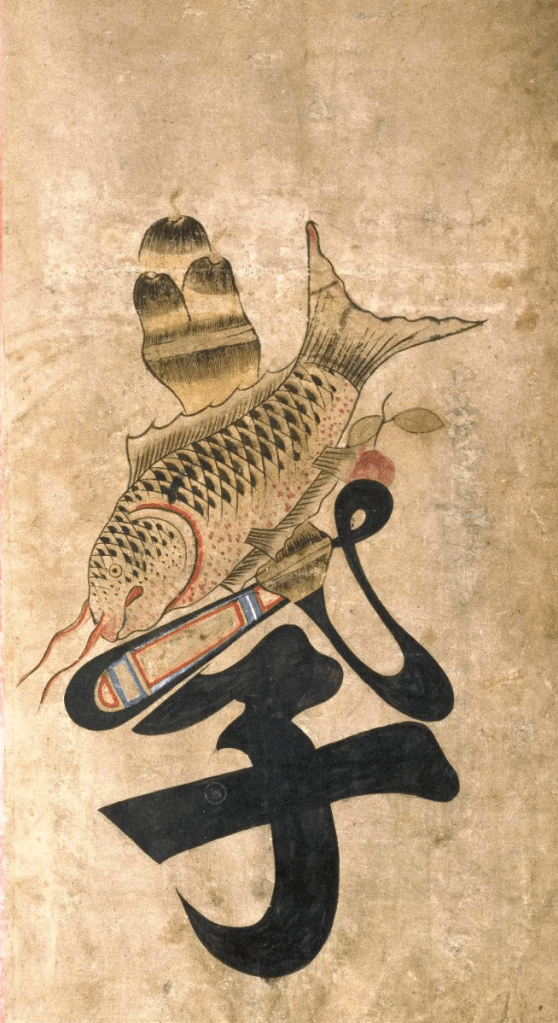
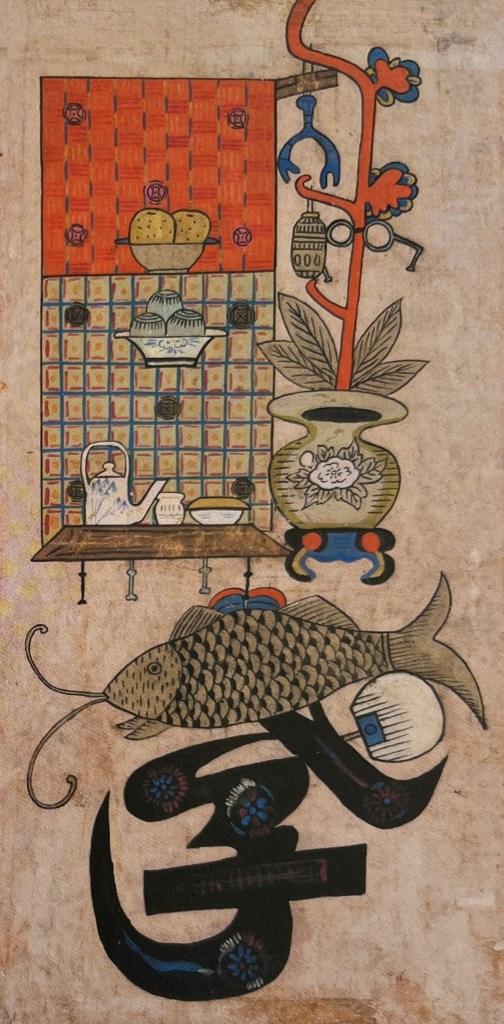
I found this great explanation for this virtue at the website: https://koreanfolkart.org/ It is so deep and profound:
Within and surrounding this character there are four objects related to four stories of filial piety:
A zither (stringed musical instrument) represents the story of the mythical Chinese Emperor Shun. As a young man, Shun always obeyed his blind father and abusive stepfamily. Because of his good behavior, Shun was chosen as heir to the emperor and given a five-string zither as a present.
The fish on top of the character symbolizes a filial son who, by lying on a frozen river, caught fresh carp to give to his unkind stepmother, earning her respect.
The bamboo shoot represents another son, who cried in a winter bamboo grove because he could not find a bamboo shoot to feed his ailing mother. His tears caused bamboo shoots to sprout up.
A fan resembling a lotus flower suggests a legendary figure who fanned his father’s bed in the summer and warmed the bed with his own body in the winter.
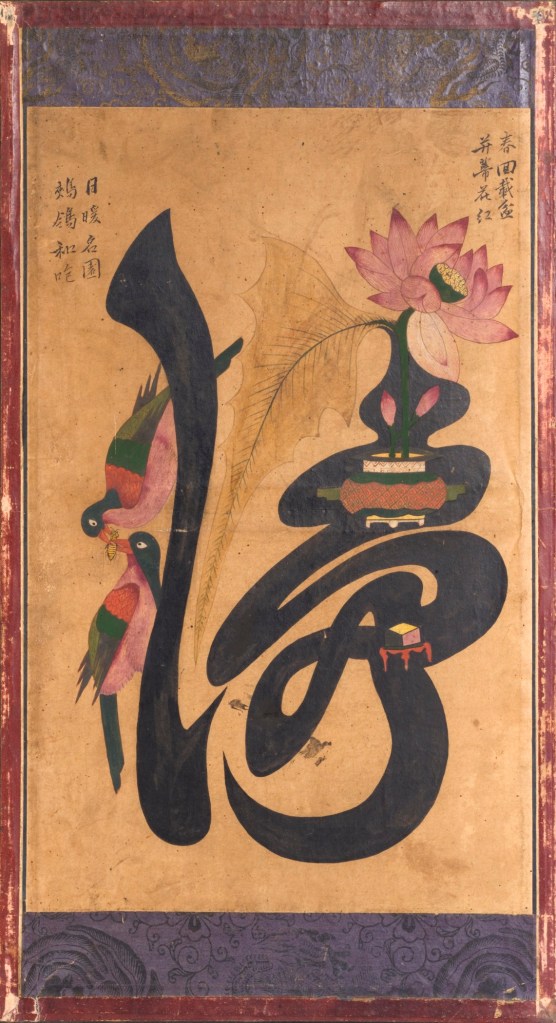
2. 悌 (Je): Brotherhood/Fraternal Respect:
Meaning: Respect and harmonious relationships among siblings and elders.
Symbols: depictions of birds, representing brotherly love.
3. 忠 (Chung): Loyalty:
Meaning: Faithfulness and dedication to one’s ruler or country.
Symbols: depictions of objects that represent loyalty to the king.
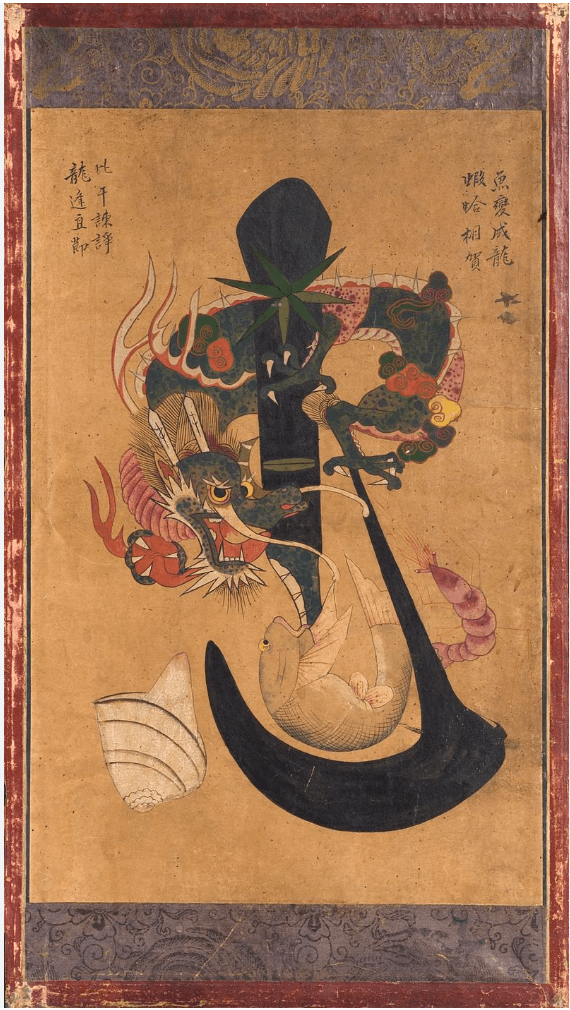
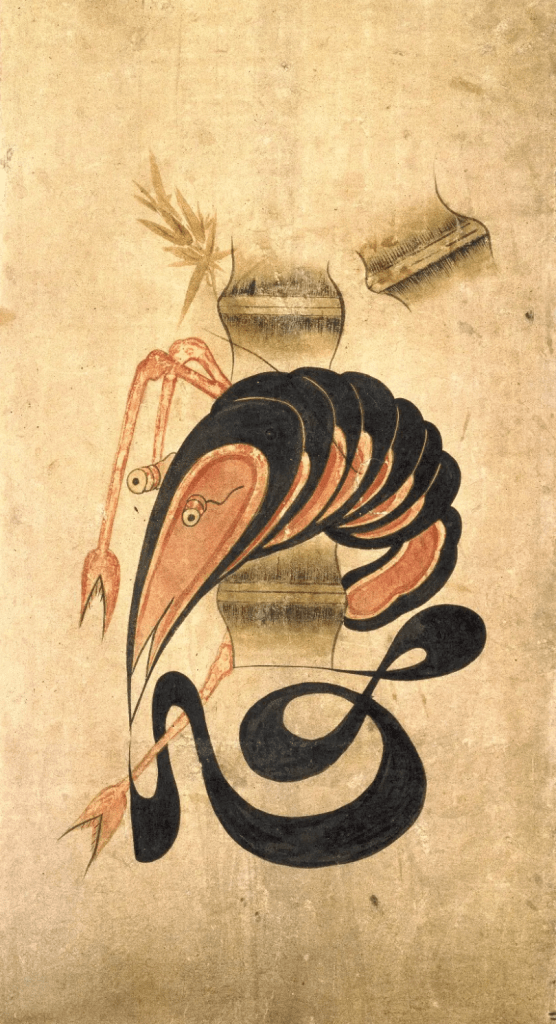
Royal Insignia:
Jade Tablets (圭, Gyu): Jade was highly prized in East Asian cultures and often associated with royalty. A jade tablet could symbolize the respect and obedience owed to the king.
Royal Robes and Belts: Depictions of royal garments or ornate belts could represent the authority of the king and the loyalty of those who served him.
Crowns or Headwear: Royal headwear would be a clear visual indicator of the king’s authority.
Military Symbols:
Weapons (Swords, Spears): These could symbolize the defense of the kingdom and the loyalty of soldiers to the king.
Battle Flags: Flags bearing royal emblems or colors would represent the military forces and their allegiance.
Armor: Representing the military and the protection of the king.
Court Objects:
Official Seals: Seals were used to authenticate documents and represent authority. A royal seal would symbolize the king’s power.
Court Tablets (笏, Hol): Officials held these tablets during court ceremonies, symbolizing their role in the government and their loyalty to the king.
Incense Burners: Used in court ceremonies, these can represent respect and reverence to the king.
Symbolic Animals:
The Phoenix (鳳凰, Bonghwang): This mythical bird is often associated with the emperor and royalty, symbolizing their virtue and authority.
The Dragon (龍, Yong): Another powerful mythical creature, the dragon is a traditional symbol of the emperor and imperial power.
It is interesting but I found that the shrimp was used in some Munjado under this virtue.
Plants:
Pine Trees: symbolizing unwavering loyalty, because of their evergreen nature.
4. 信 (Shin): Trust/Faithfulness:
Meaning: Honesty and reliability in one’s relationships.
Symbols: Fish (representing trust and sincerity) and a duck:
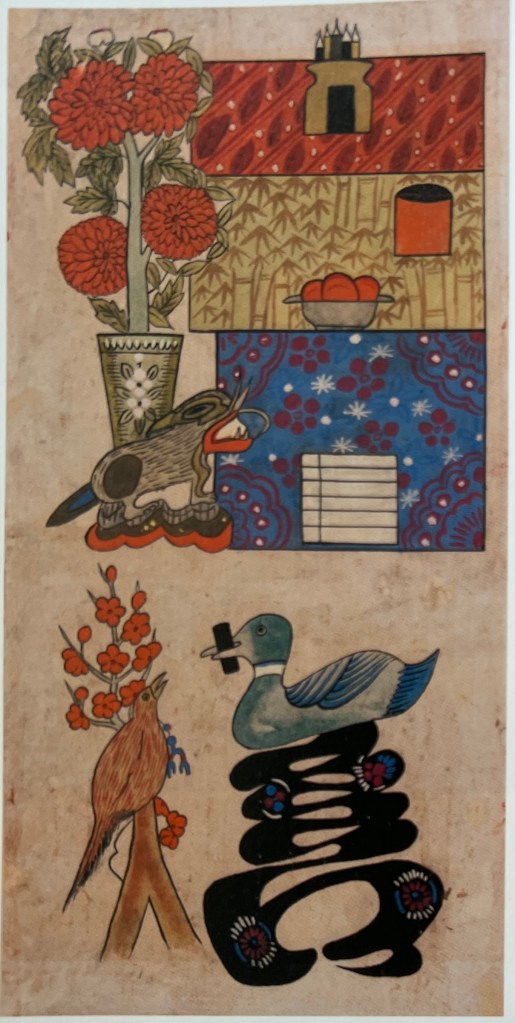
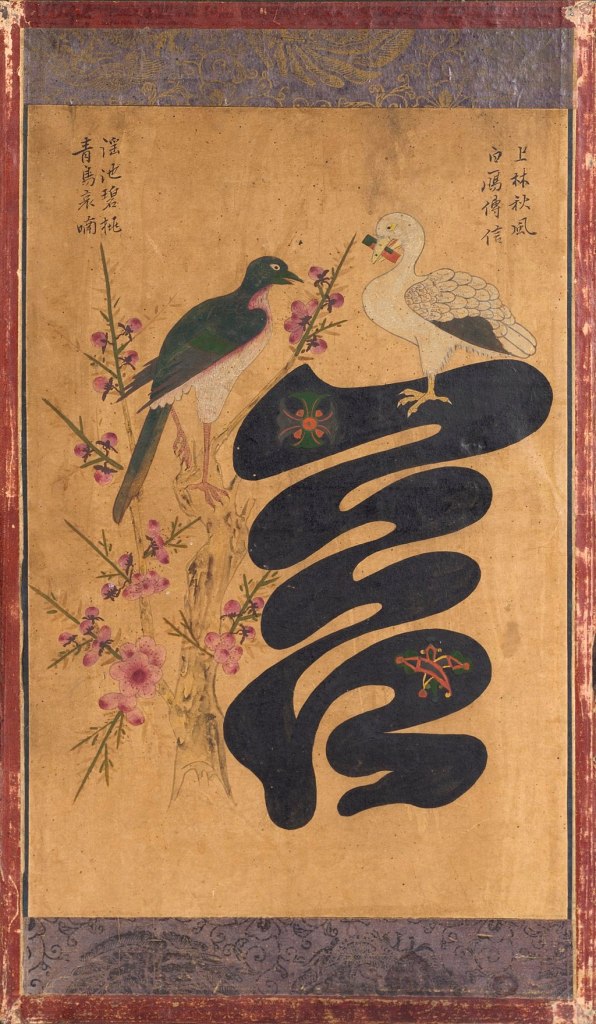
Fish represent trust and sincerity due to their perceived honesty (their eyes are always open) and their habit of swimming in groups, which can symbolize harmonious relationships.
Fish also symbolize keeping promises.
Ducks, especially in some East Asian traditions, can represent fidelity and loyalty, particularly in their paired nature. They often mate for life. The act of carrying something in its mouth can be interpreted as a symbol of delivering a message or keeping a promise, which aligns with the concept of faithfulness. It can also symbolize reliability.
5. ç: Propriety/Ritual:
Meaning: Proper etiquette, manners, and adherence to social norms.
Symbols: Peonies (representing propriety), ritual vessels.
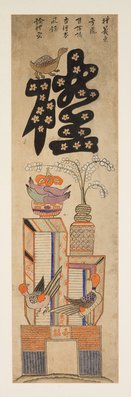
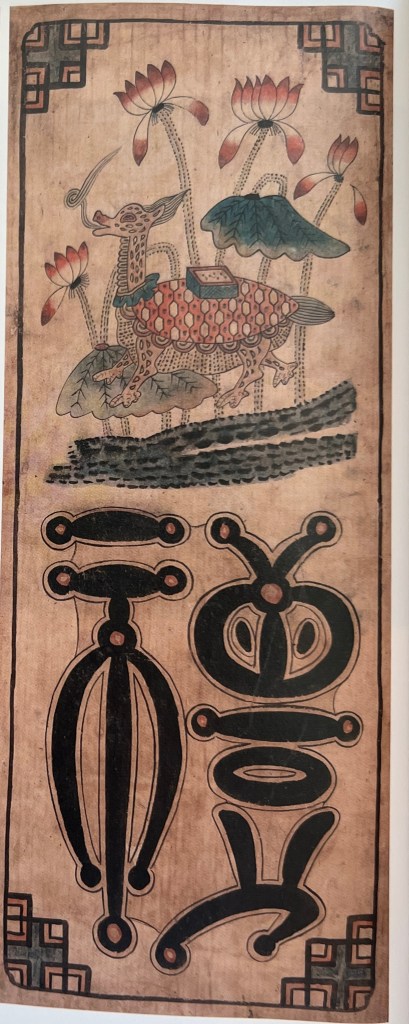
Ritual Vessels:
These represent the formal ceremonies and rituals that were an integral part of Confucian society. They symbolize the importance of following established protocols.
Peonies (牡丹, Moran):
Peonies are often associated with wealth, honor, and nobility. In the context of “Ye,” they symbolize the proper decorum and dignified behavior expected in social interactions.
Cranes were also used to represent Ye as the crane’s graceful and elegant demeanor could be interpreted as reflecting the proper decorum and refined manners.
It’s interesting because I think that animal looks like a turtle… but it is not really associated to a Confucian virtue. Instead it is more a symbol of longevity, stability, and wisdom.
6. 義 (Ui): Righteousness/Justice:
Meaning: Moral uprightness and doing what is right.
Symbols: depictions of tools of justice, or symbolic animals.
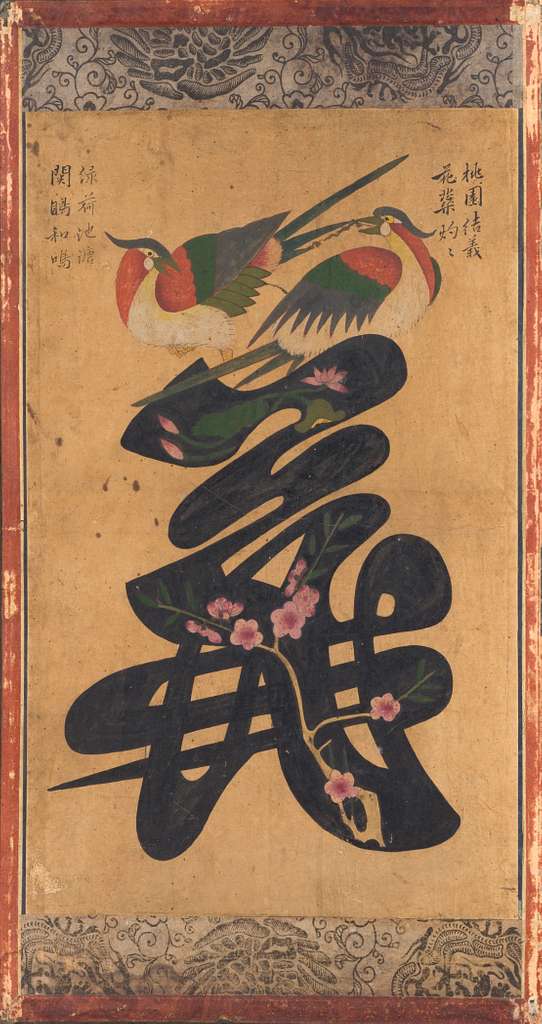
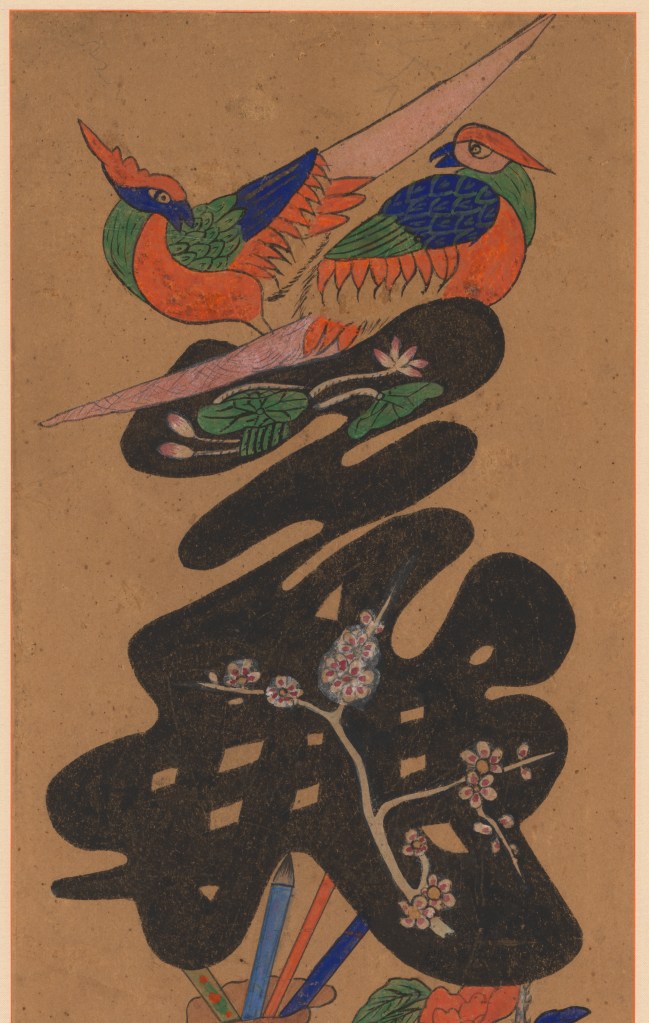
Weapons (Swords, Halberds):
These symbolize the ability to uphold justice and defend what is right. They represent the strength and resolve needed to act morally.
They can also represent the ability to cut down injustice.
Symbolic Animals:
Sometimes, animals associated with strength and justice, like the mythical “Haechi” (a Korean mythical lion that could distinguish between good and evil), might appear.
Animals that show strength, and the ability to fight against wrong, are often used. For example the Tiger.
Tools of Justice:
Depictions of objects associated with legal proceedings or moral judgment can also be present.
Strong, Straight Lines and Angles:
In some interpretations, the visual composition itself can contribute to the meaning of “Ui.” Strong, straight lines and sharp angles can symbolize the unwavering nature of righteousness.
7. 廉 (Yeom): Integrity/Honesty:
Meaning: Purity and incorruptibility.
Symbols: Lotus flowers (representing purity).
Sometimes a large bird is also used to depict integrity as a large, majestic bird can visually represent this sense of moral elevation. They can also represent a sense of being above the corrupting influences of the world.
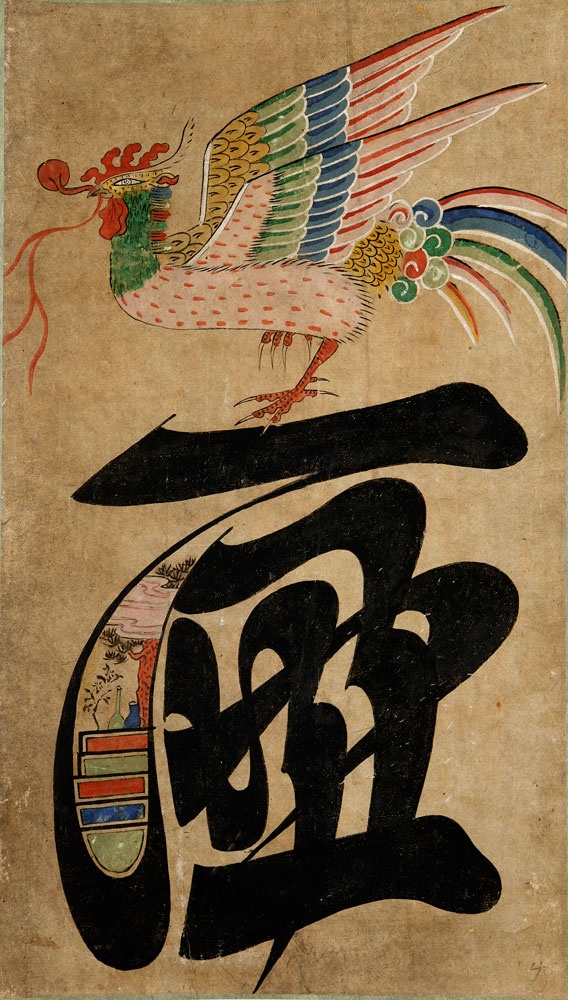
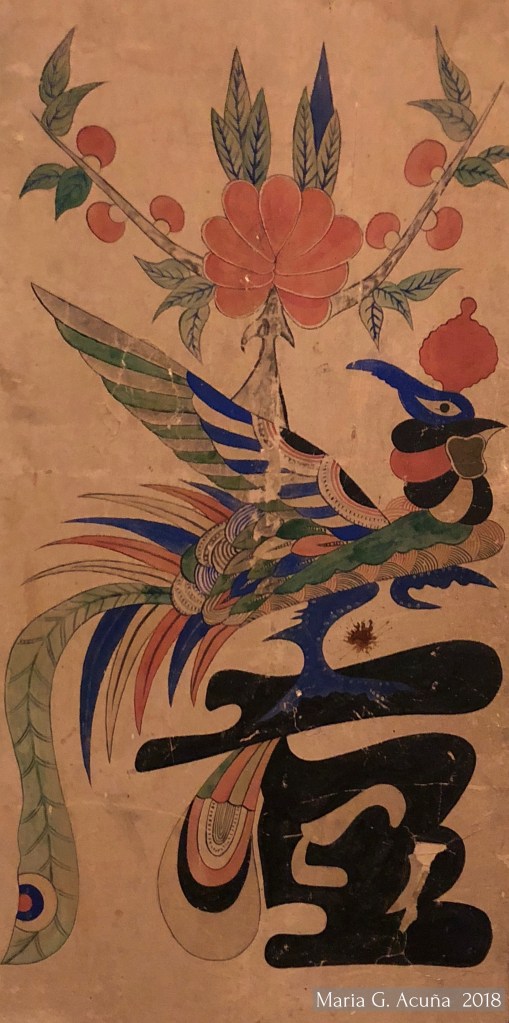
I also found crabs under this virtue.

And here is its symbolism:
Protection and Defense:
Crabs’ hard shells and pincers can symbolize protection and defense against harmful influences.
This aspect of their symbolism might be used to convey a sense of warding off evil or negative energy.
Tenacity and Perseverance:
Crabs’ ability to cling tightly to surfaces and their sideways movement can symbolize tenacity, perseverance, and the ability to overcome obstacles.
8.恥 (Chi): Shame/Sense of Shame:
Meaning: Awareness of one’s own shortcomings and the ability to feel shame for wrongdoing.
Symbols: depictions of dogs, or other animals that represent the ability to know right from wrong.

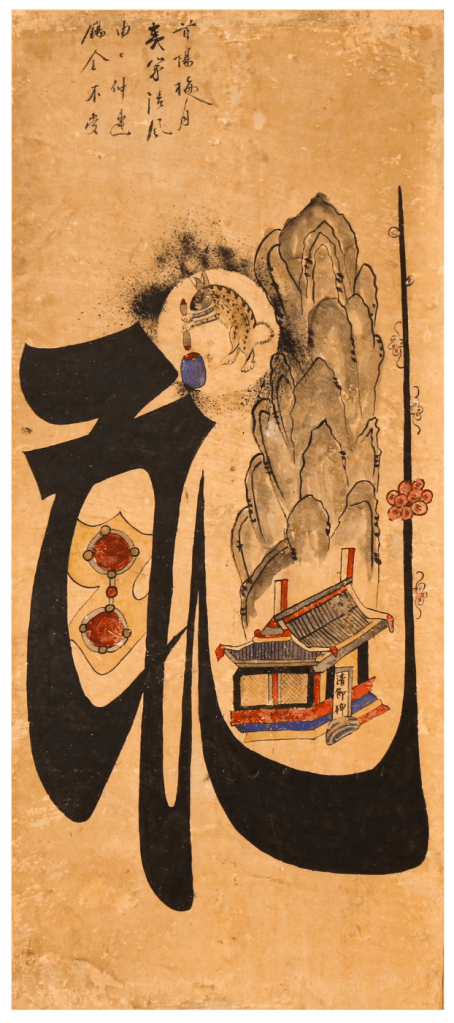
I don’t know about you but I see rabbits stirring something. Sadly I did not find any explanation of this sign as such. Rabbits symbolize fertility, and gentleness. What I did notice though was how they seem to be in circles… and outside of the circle is dirty (especially on the right one). So maybe they are cleaning their shame?
Creating my South Korean Angel
The Confucian virtue that caught my eye was integrity. I really loved those big birds on the ideographs and in particular this one:
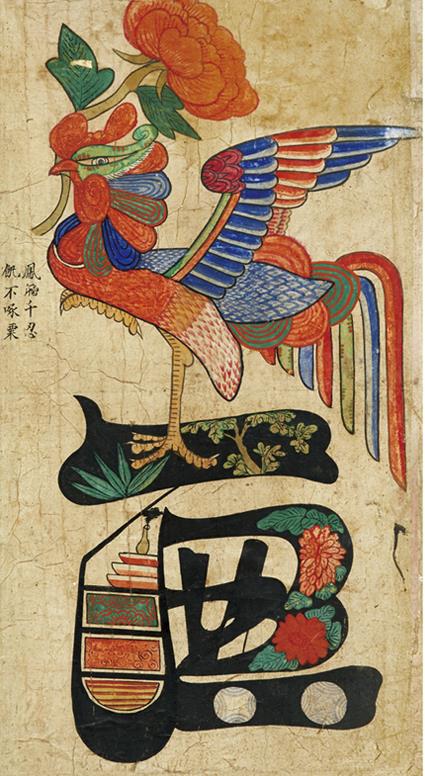
I immediately saw angel wings with all those textures. I also loved the color palette.
I decided to create a male angel and of course he would be wearing a Hanbok, the traditional clothing from Joseon times for a Nobleman. When I did my first search I came across this beautiful image:
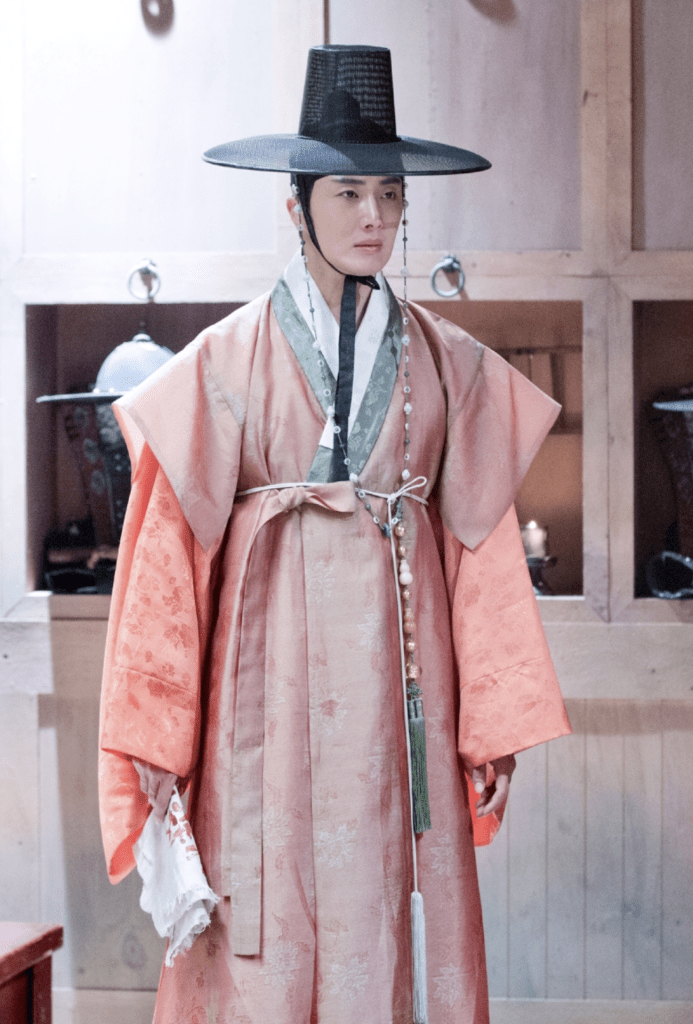
Isn’t he absolutely gorgeous? His name is Jung Il-woo (pronounced Jung ee-roo). He is my favorite Korean actor. And to me he is the most handsome man I have ever seen in a Hanbok. Here are other photos:
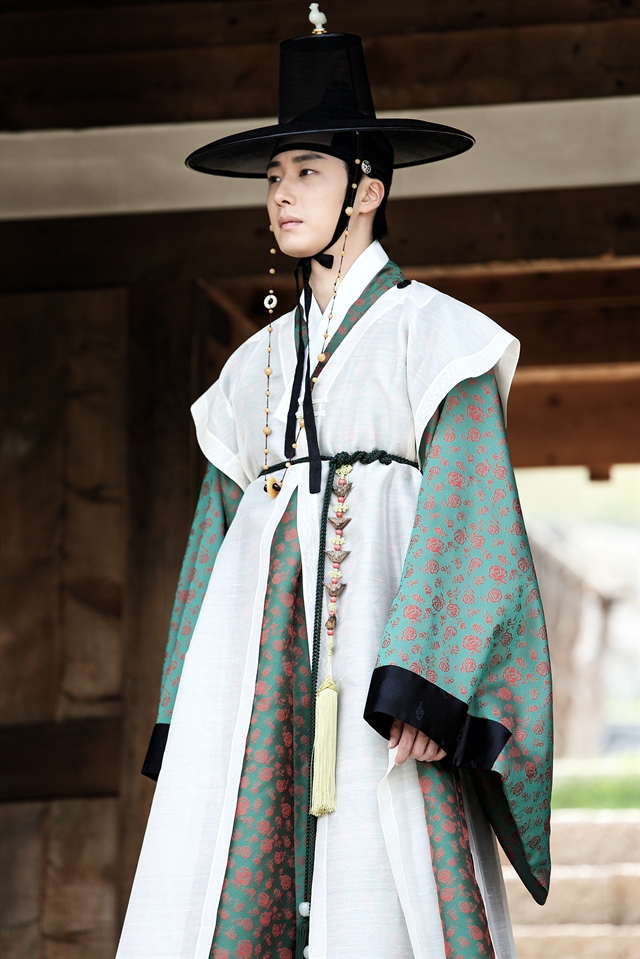
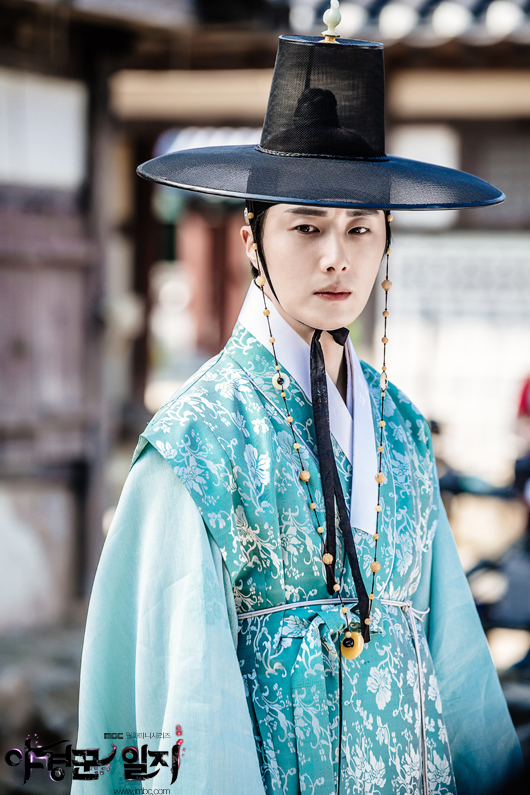
When I saw him in this drama, called “The Night Watchman’s Journal”, I was in awe of all the Hanbok colors! I had no idea…
Focus! ^ ^ (Telling myself!). (I may have to do an extra post on my favorite KDramas…)
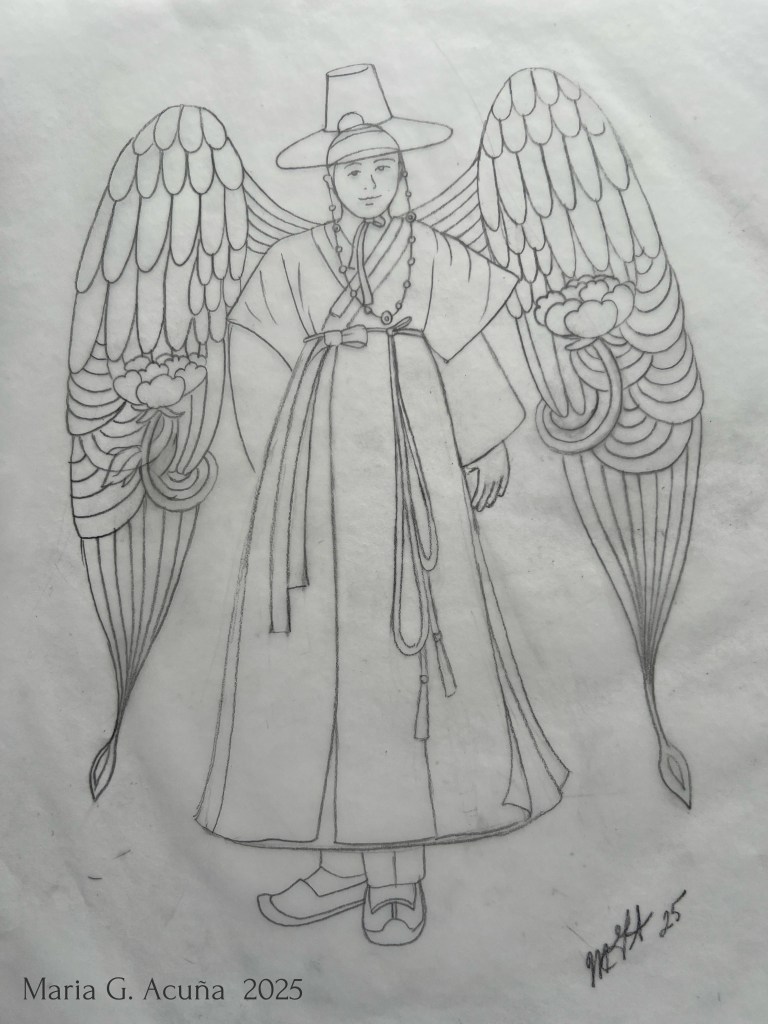
I really loved the peach color Hanbok with the gray and saw it with the bird’s really colorful wings. So I first did a sketch and drawing:
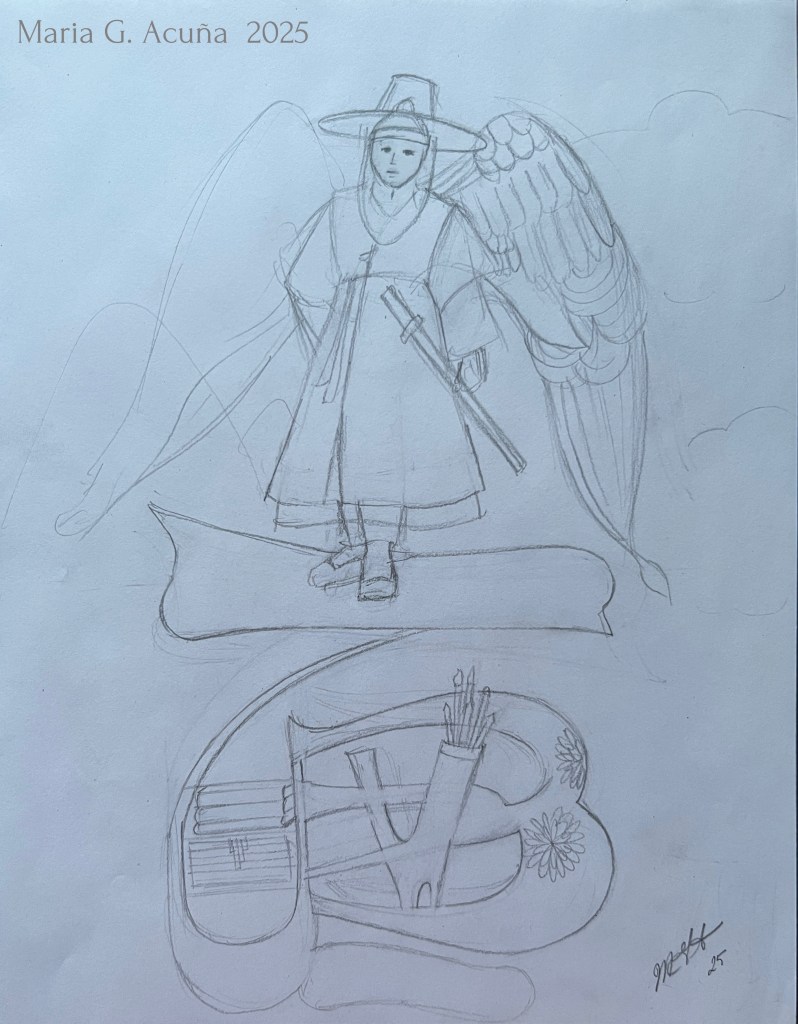

I thought he looked a bit short, so when I went on to trace it, I elongated his Hanbok:
I also traced the ideograph for the Confucian virtue: Integrity.

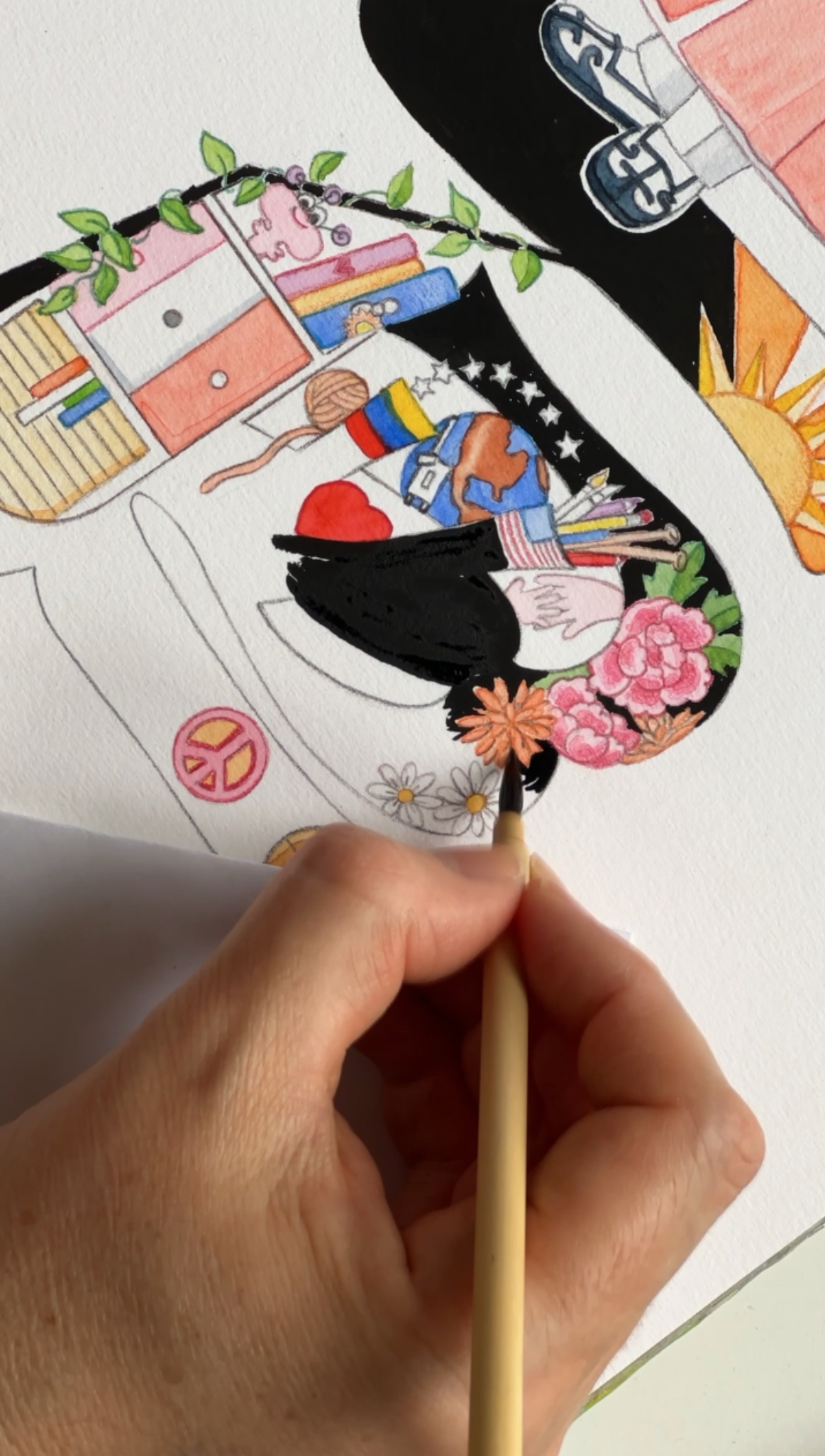
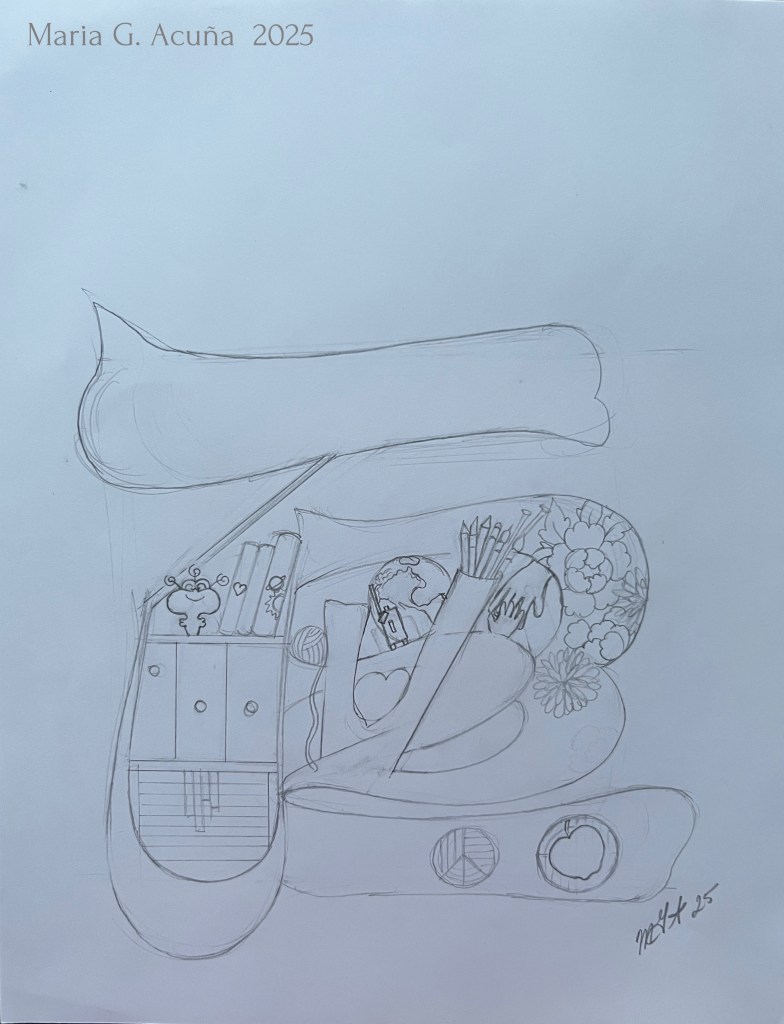
To draw this I was inspired in the shelves in my studio:
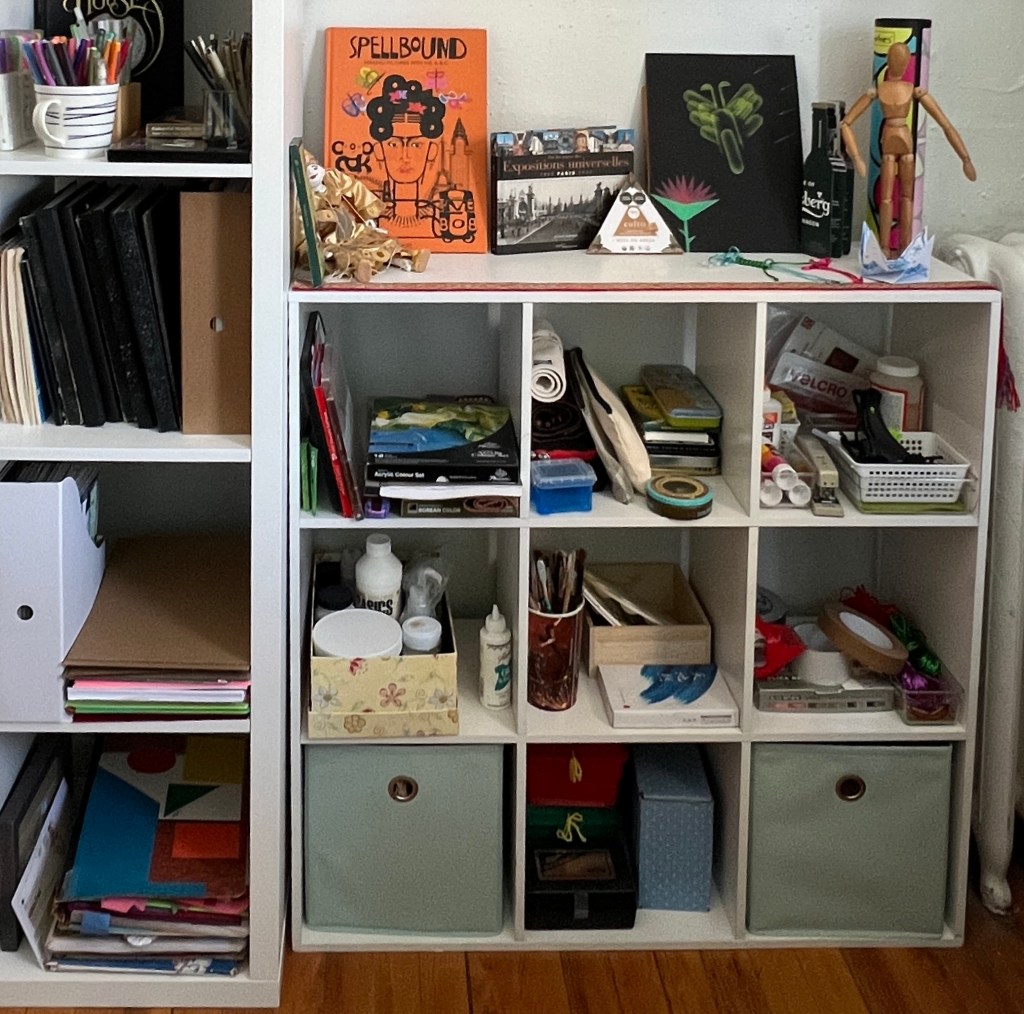
But also I placed certain things that are important to me like being a mother (the two hands), books as they represent wonder, wisdom and my love for teaching. Urix (the creature on the top left) is also there as it is my beloved companion and product of my imagination since I was a kid. The daisies represent my mother. Also the flags of my two countries: Venezuela and the United States. Notice that there are only 7 stars for Venezuela’s flag, this is to state that I left and knew the Venezuela Pre-Chavez (He changed our flag to have eight.) The Earth with a suitcase as I value travel greatly whether real or virtual… Etc!
I also placed peonies as they are often represented under integrity.
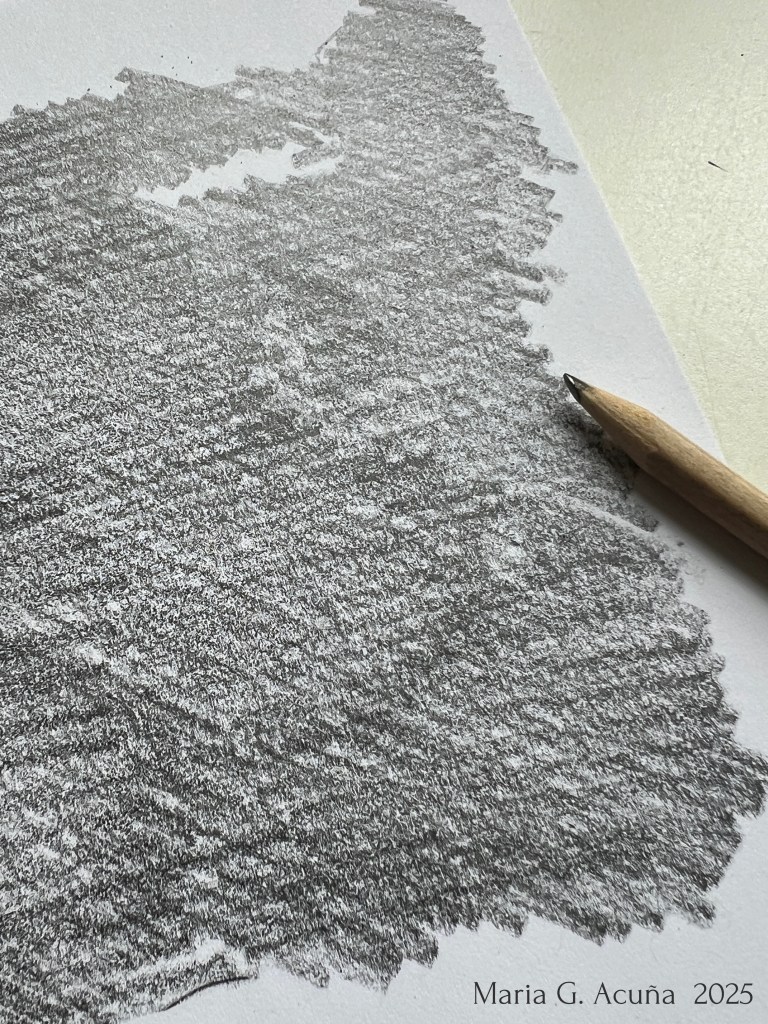
Then I reduced its size so I could place it on the watercolor block. And the other photo is the application of grafite to transfer the image.



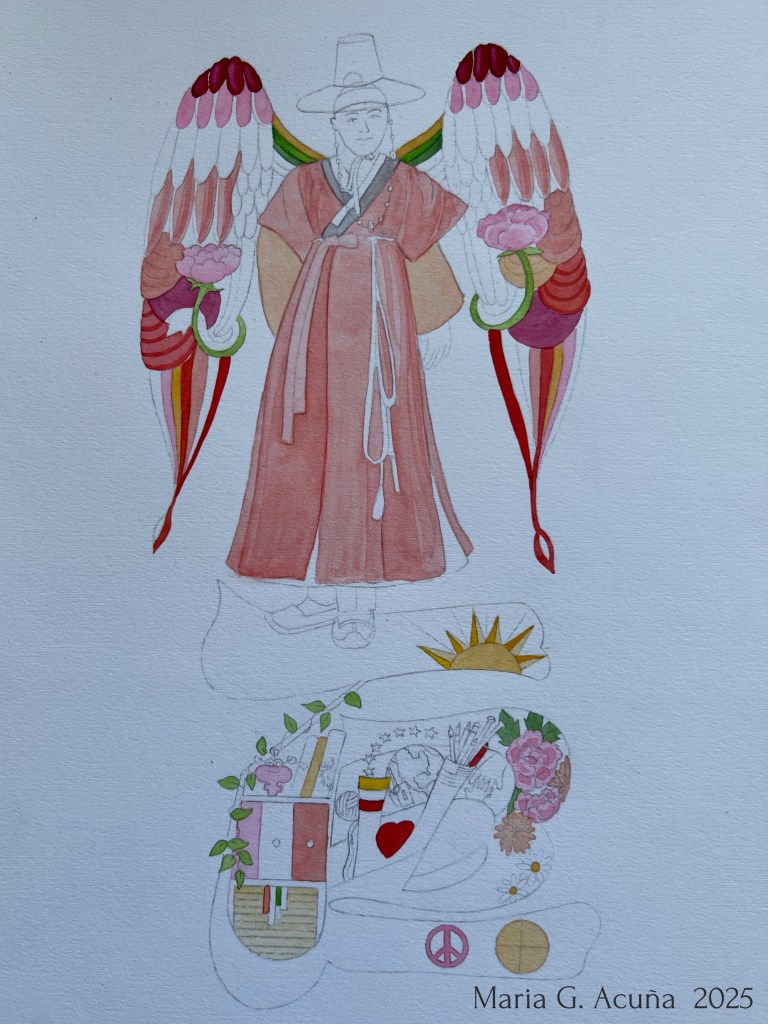
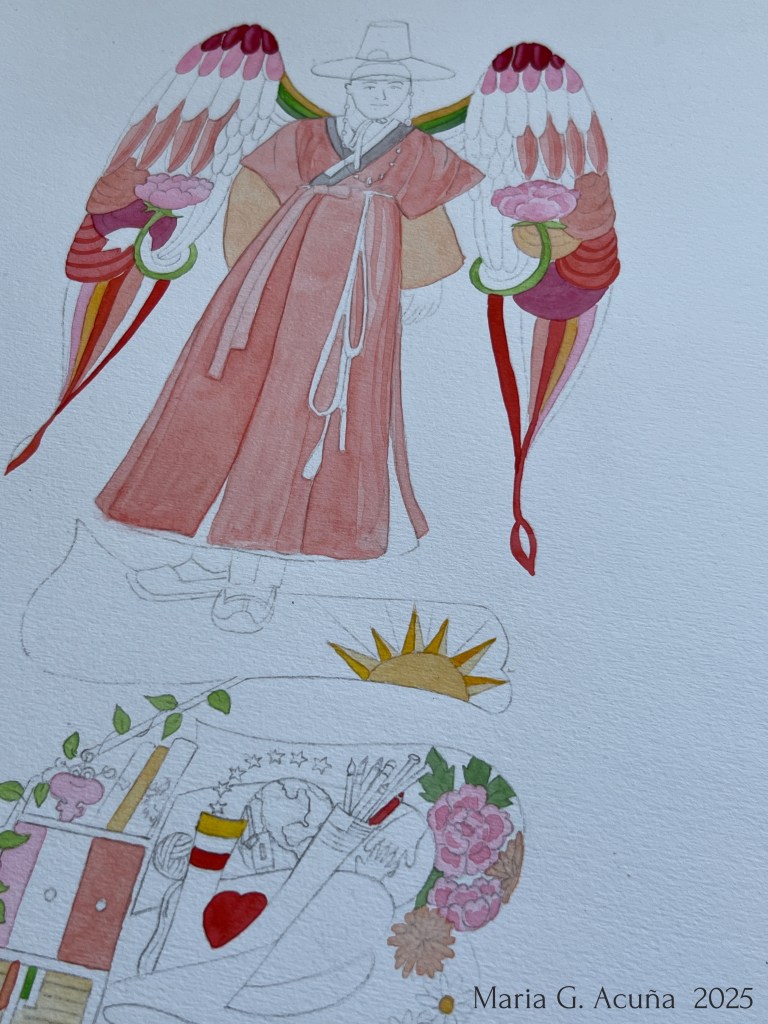
I have various timelapse videos, I will place some in my Instagram Post soon. But in general I first painted with watercolors and then used color pencils to define lines. Look at the difference before color pencils:

…and after:

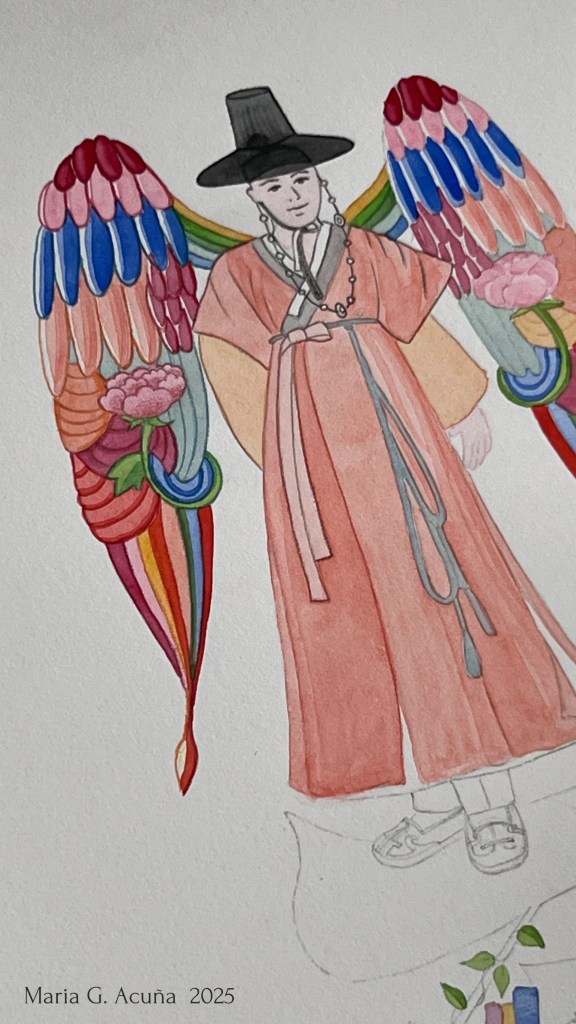

I actually use Korean watercolors for all my Angels. I bought a beautiful set when I visited Insadong, an area with a lot of art shops and craft stores.

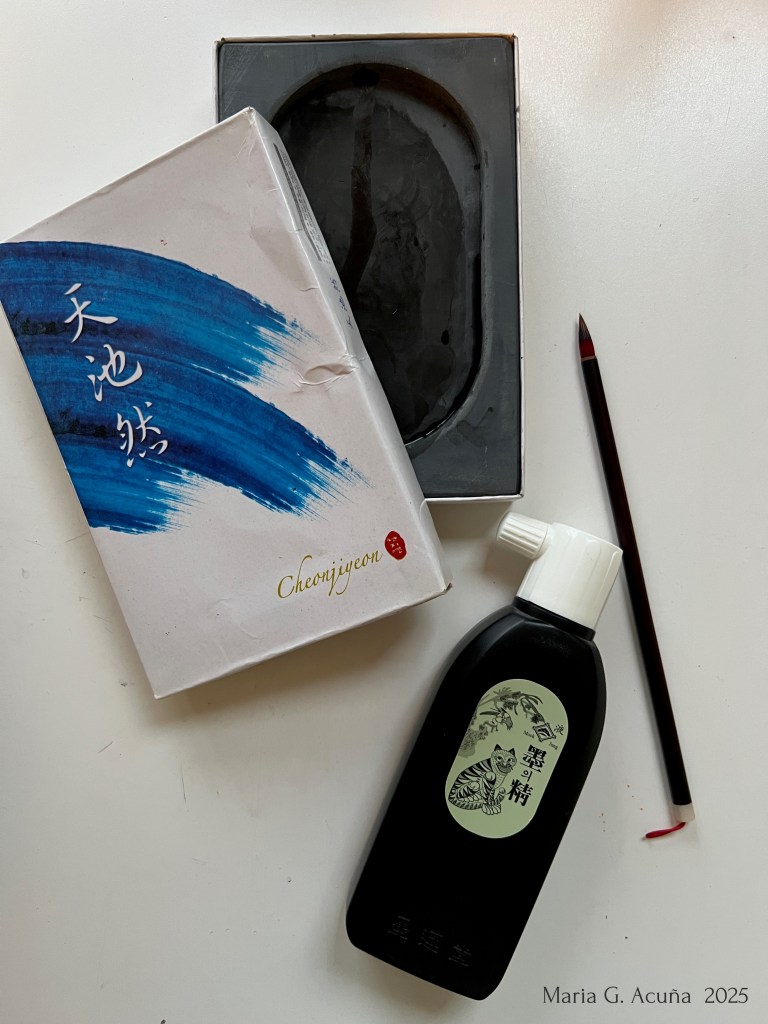
And yes… sis you notice what is on the ink bottle?! The Minhwa Tiger!!! The owner of the art store who helped me get all the materials gave me the ink well as a gift! I treasure these materials so much as I don’t know if I will be able to visit again.
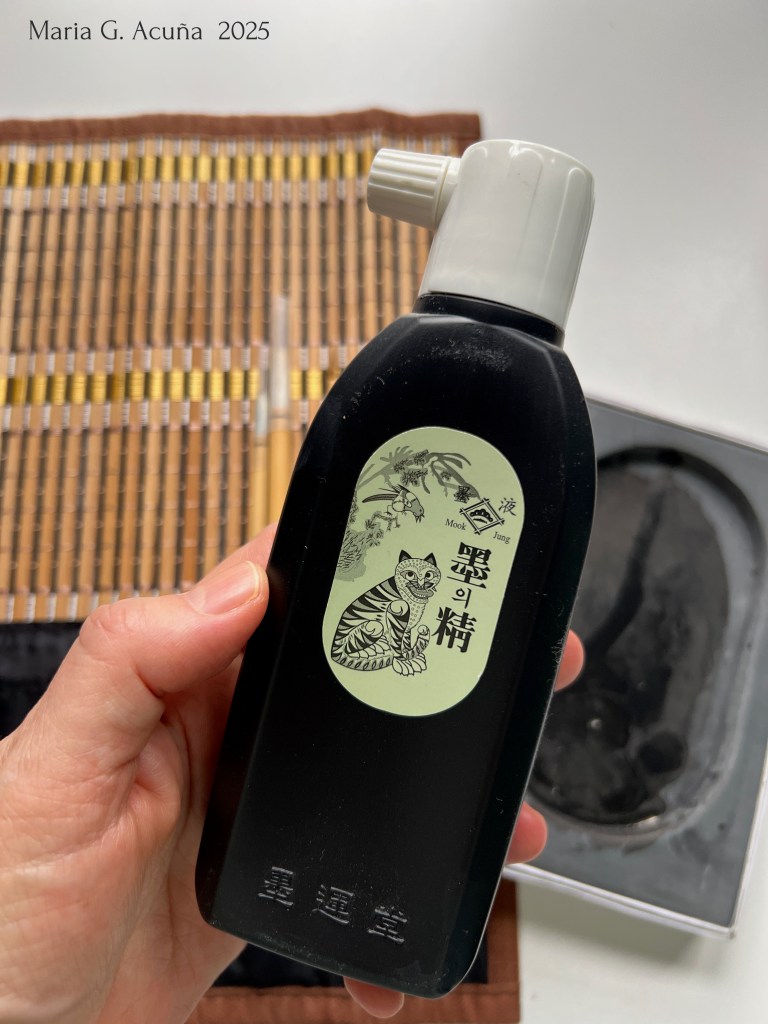
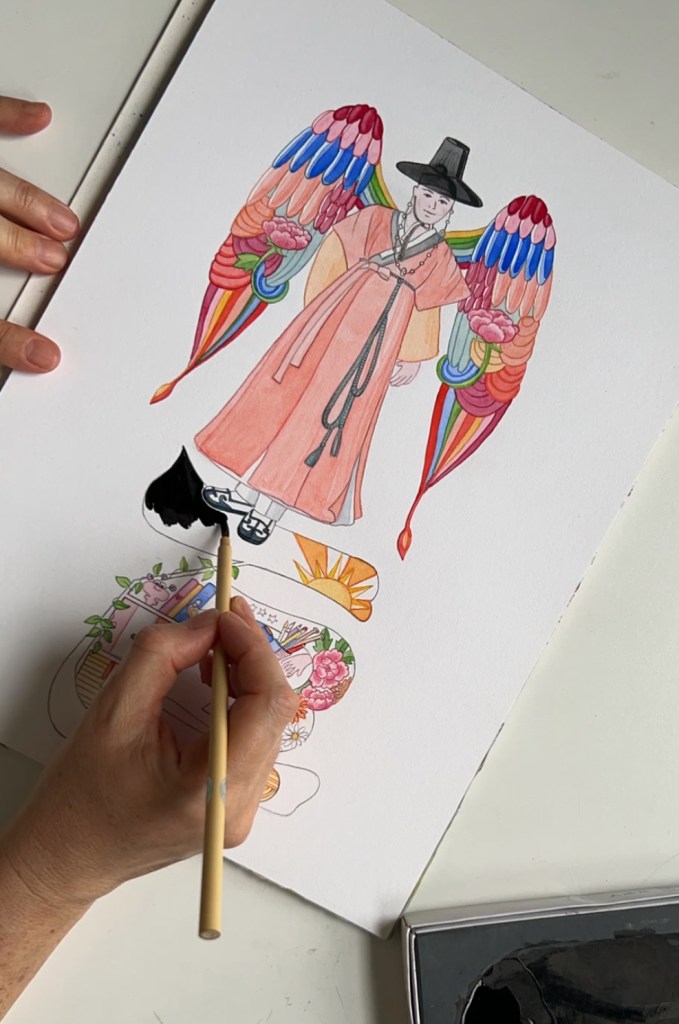
And talking about ink, adding it was the last step. I used a brush I bought there as well (Made in China.) They are amazing because they can look so rough and thick when they are dry and as soon as you dip in paint one can pain with absolute trust even in the smallest of places:
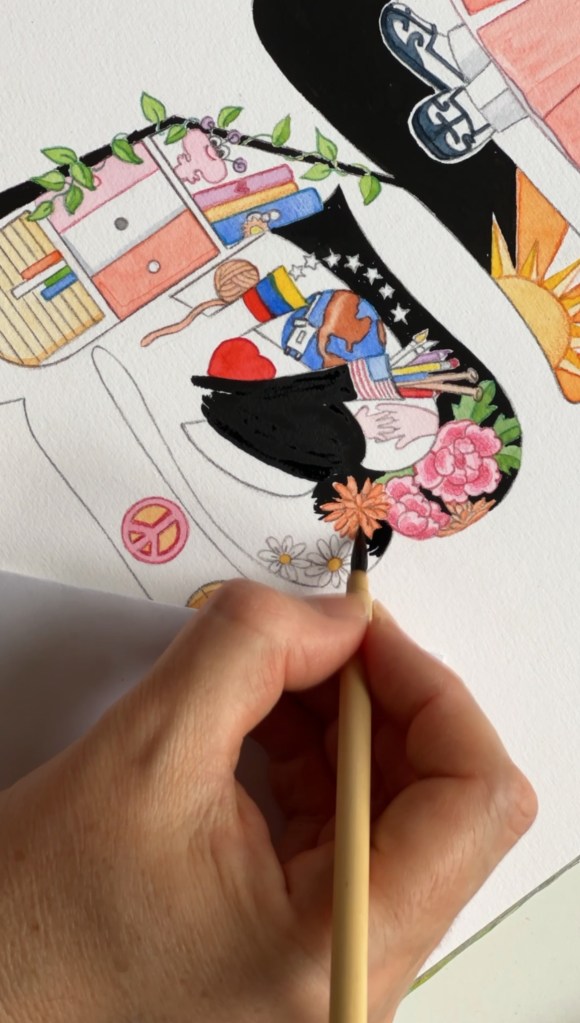
Yes! I painted all that with the brush! Make sure you see my Instagram videos… HERE.
And here it is…
My Korean Angel on the Ideograph Confucian Virtue of Integrity:


And with this Angel I say goodbye to South Korea.
I dedicate this angel to the Archangel Gabriel, after which I am so honored to be named. Tomorrow it is its day! May the beautiful light of this incredible Angel present in Judaism, Christianity and Islam continue to bring messages of unity and love to all. I also dedicate this painting to Jung Il-woo and the people of Korea with a wish of peace and prosperity, and unity.
With you both in prayer and energy… forever!
 My Virtual World Trip
Buenas noches ya en España.Ya terminé la lectura de los mandamientos de acuerdo con Confucio. Muy interesantes todos y en algunos encuentro coincidencias con las del cristianismo.
los dibujos son hermosos y como si fuera poco todo el simbolismo y la caligrafía con esa cadencia que parecen notas musicales.
Todo muy bien descrito en tu excelente Post.
Buenas noches y hasta pronto.
LikeLiked by 1 person
¡Muchas Gracias por tu comentario. si es verdad que tienen cosas en común. Para mi fué dificil elegir uno… pero esa belleza de pajaro me ayudó!
LikeLike
Beautiful art 🖼️!
LikeLike
Thank you! ^ ^
LikeLike